
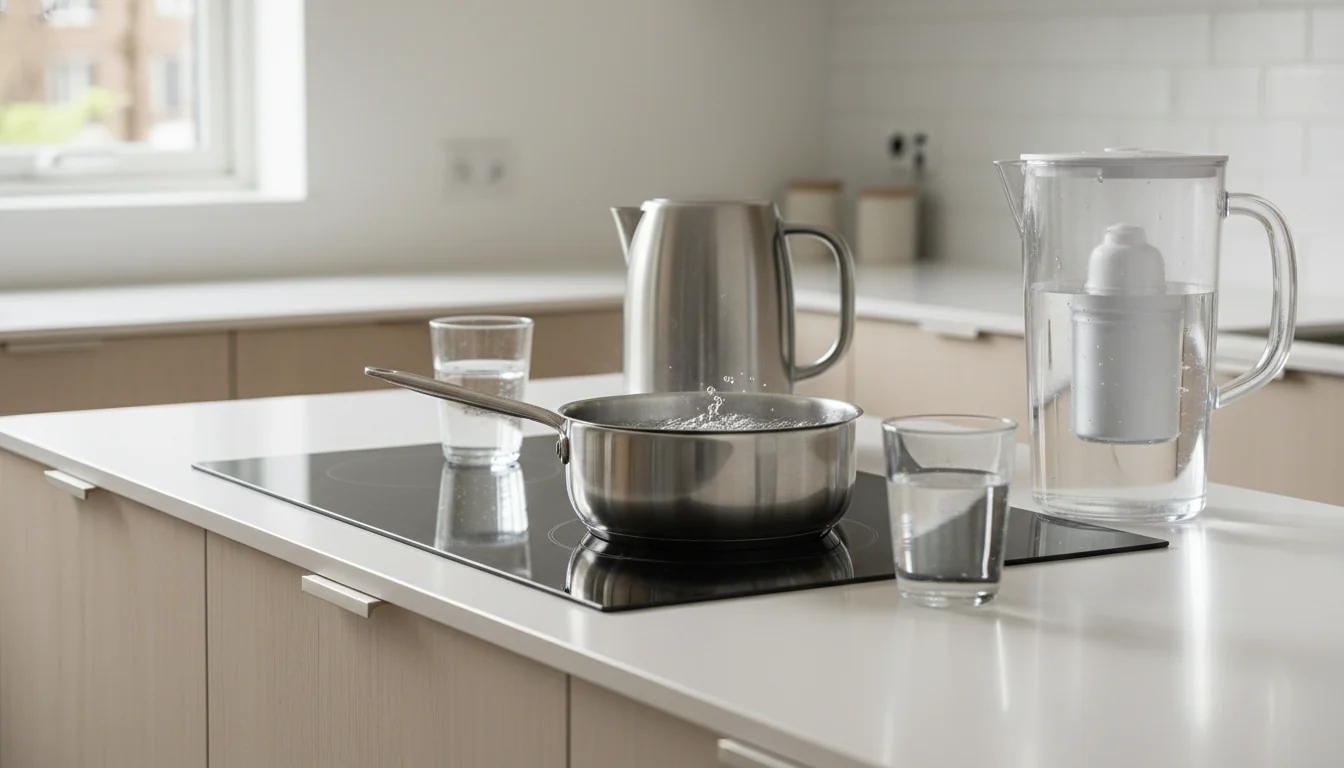
The question does boiling water remove microplastics came up in my own kitchen after I watched a pot of tap water roll for tea and wondered what boiling actually changes. Boiling feels like a universal fix, but water safety is more specific than that.
When readers ask does boiling water remove microplastics, I separate germs from particles. Boiling can be excellent for certain biological concerns when public health guidance calls for it, but tiny plastic particles are not alive, so the answer is not as simple as “boil it and forget it.”
My short answer to does boiling water remove microplastics is: boiling alone is not a dependable microplastic-removal method. Does boiling water remove microplastics in every home situation? No — I would pair good source water, appropriate filtration, and safer storage habits instead.
Key Takeaways
- Boiling water can help with many microorganisms, but it does not make plastic particles disappear.
- Microplastics are physical particles, so removal usually depends on separation, filtration, or settling methods.
- Some water chemistry may change during boiling, but I would not rely on boiling as a complete microplastic strategy.
- A filter’s actual claims, maintenance, and particle size performance matter more than marketing language.
- If a boil-water advisory is issued, follow local instructions first; microplastics are not the only safety issue.
What Boiling Actually Does
Boiling and microbes
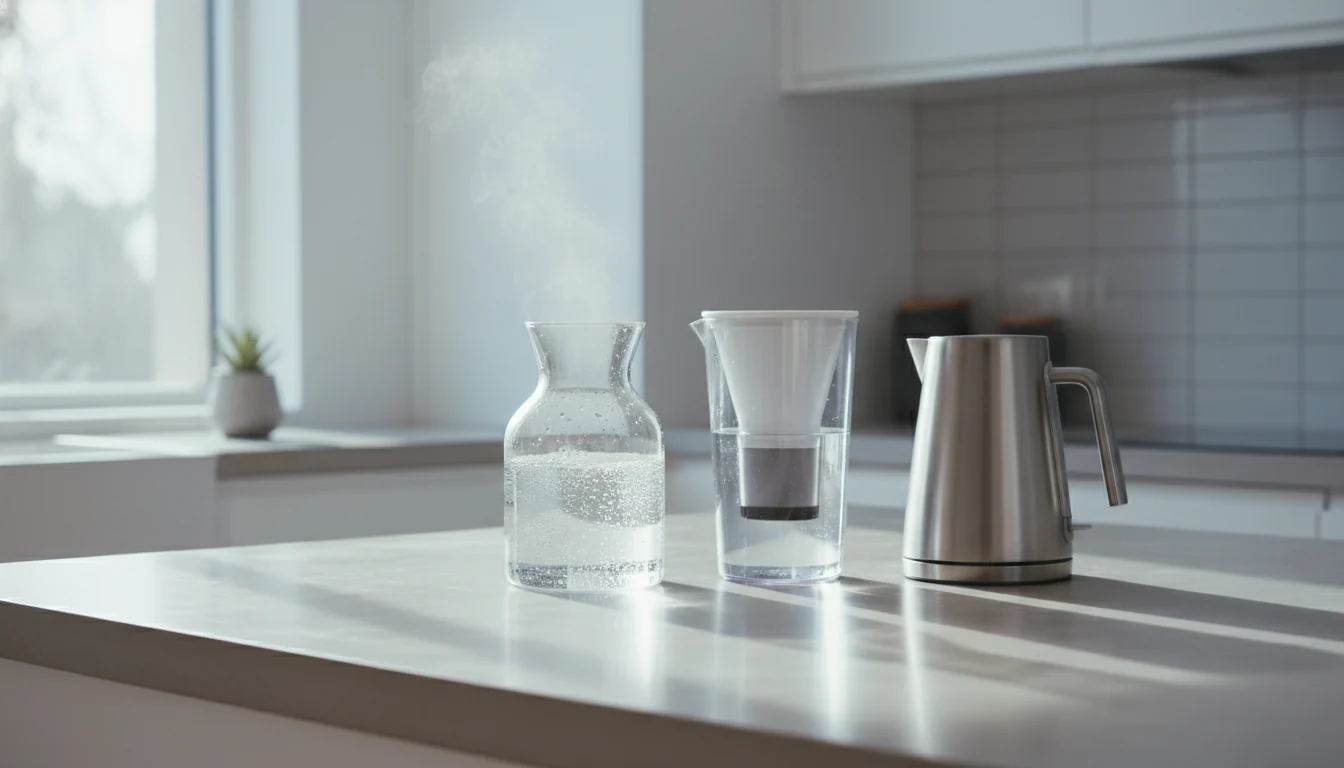
Boiling is mainly a heat treatment. It can inactivate many disease-causing organisms when done according to public health guidance. That is why boil-water advisories focus on bringing water to a rolling boil for a specified time.
Boiling and particles
Microplastics are particles, not germs. Heating them does not reliably remove them from the water. In some cases, boiling can concentrate non-volatile substances because water evaporates while solids remain.
My kitchen observation
When I boil water for tea, minerals can leave scale in the kettle. That visible scale is a reminder: boiling changes water, but it does not automatically remove everything. Some things stay behind.
Boiling is a treatment step, not a universal eraser.
The Direct Answer: Does Boiling Water Remove Microplastics?
Short answer
Boiling alone should not be treated as a reliable way to remove microplastics. It may alter conditions in the water, but without a separation step, particles can remain in the pot, kettle, or cup.
Why the confusion happens
People associate boiling with safety because it is useful for microbial risks. That association is fair, but it gets overextended. A particle problem usually needs particle removal.
What I do instead
For everyday drinking, I use filtration selected for the concern, then store water in glass or stainless steel. I boil water when I want hot water or when official guidance says to boil for microbial safety.
Boiling vs Filtering vs Bottled Water
Comparison table
| Method | What it can help with | What to watch |
|---|---|---|
| Boiling | Many microbial concerns when done correctly | Does not reliably remove physical particles |
| Filtration | Particles and contaminants depending on design | Claims and maintenance vary widely |
| Bottled water | Convenience and emergency backup | Plastic contact, storage heat, packaging waste |
My practical ranking
For microplastics, I think first about filtration and materials. For pathogens during an advisory, I follow official boiling guidance. For emergencies, I use safe available water and do not let perfect become the enemy of necessary hydration.
Why bottled water is not automatically better
Bottled water may still contact plastic bottles, caps, and storage conditions. I keep emergency bottles, but daily use in my home has shifted toward filtered tap water.
READ MORE Choosing A Water Filter For Microplastics Water Filtration & Treatment
When Boiling Water Is Still Important
Boil-water advisories
If your local water utility or health department issues a boil-water advisory, follow it. Those notices are often about microbial contamination risk, and that is a different problem than microplastics.
Outdoor and travel situations
Camping, travel, and emergency scenarios may require boiling, disinfection, filtration, or a combination. I do not rely on one method for every risk.
Medical and vulnerable situations
For infant formula, immune concerns, or medical situations, follow clinician and public health guidance. This isn’t medical advice — consult a professional if you have health concerns.
How Microplastic Removal Usually Works
Physical separation
Microplastic reduction generally depends on physically separating particles from water. That can involve filters, membranes, or other treatment designs. The exact size range matters because “microplastic” covers a broad category.
Filter design
A fine filter may capture more particles than a coarse screen, but flow rate, clogging, certification, and maintenance all matter. I look for specific performance claims instead of assuming a filter works because it sounds advanced.
Settling is limited
Some particles may settle, float, or cling to surfaces, but I would not use settling as my main home strategy. It is too inconsistent for daily drinking-water confidence.
Choosing a Better Filter Strategy
Step list: my filter selection process
- Identify the main concern: particles, taste, lead, PFAS, chlorine, microbes, or something else.
- Read the performance data sheet, not just the product name.
- Look for relevant NSF/ANSI certification or independent testing where available.
- Confirm the cartridge replacement schedule and real operating cost.
- Install and maintain it exactly as directed.
Standards and honesty
NSF/ANSI standards help because they tie claims to defined tests. But one certification does not cover every contaminant. I check the specific claim every time.
My filter mistake
Years ago, I bought a filter because the packaging looked serious. I later realized it mainly addressed taste and odor. Now I read the data sheet before buying, even if the box design looks trustworthy.
If the claim is vague, I treat the benefit as vague too.
Home Treatment Options Compared
Comparison table
| Option | Pros | Cons |
|---|---|---|
| Pitcher filter | Easy, affordable, no plumbing | Limited capacity; claims vary |
| Under-sink filter | Convenient daily use, larger cartridges | Installation and replacement cost |
| Reverse osmosis | Broad reduction potential when maintained | Wastes some water; slower flow; maintenance needed |
What I use most often
For everyday use, I prefer a maintained filter system feeding glass or stainless containers. I like that it changes the routine at the source instead of asking me to make a decision every time I am thirsty.
Replacement discipline
A filter past its service life is not a badge of thrift. I put replacement dates on my calendar because maintenance is where many good systems fail.
Step-by-Step: A Smarter Routine Than Boiling Alone
My everyday routine
- Start with the best available source water.
- Run drinking water through a filter chosen for the actual concern.
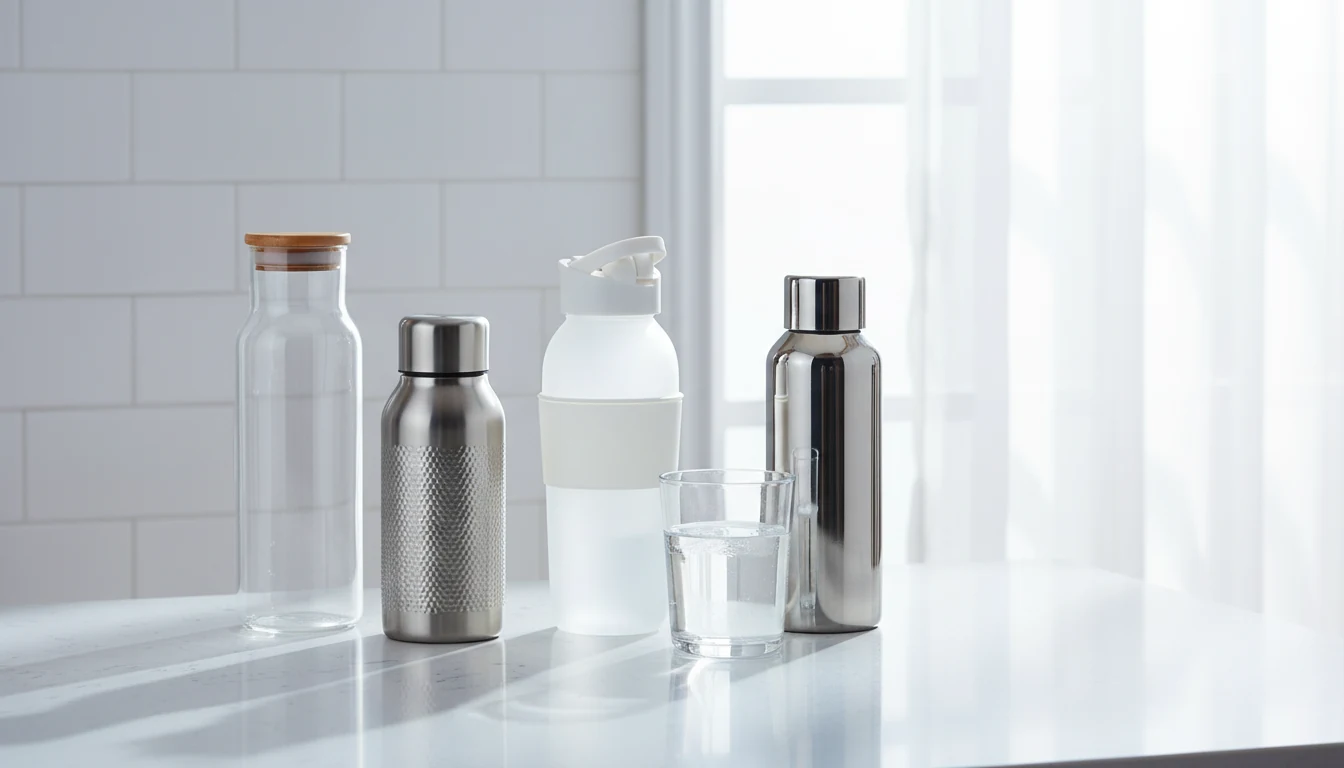
- Store filtered water in glass or stainless steel.
- Keep plastic bottles away from heat and sunlight.
- Boil only when I need hot water or when official guidance says to.
During an advisory
- Follow the local boil-water notice exactly.
- Use bottled water if officials recommend it or if boiling is not practical.
- Do not assume a standard home filter makes unsafe water safe unless it is designed for that risk.
- Resume normal use only when the advisory is lifted.
Why this works better
This routine keeps each tool in its lane: boiling for microbes and heat use, filtration for selected contaminants, and safer materials for storage.
READ MORE Boil Water Advisories Explained Home Water Quality & Safety
Common Myths About Boiling and Microplastics
Myth: boiling destroys plastic particles
Boiling water does not make particles vanish like steam. If particles are in the water and no separation step occurs, they may remain.
Myth: cloudy boiled water means microplastics
Cloudiness can come from minerals, air bubbles, or other causes. You cannot identify microplastics reliably by sight in a kitchen glass.
Myth: all filters solve the issue
Filters vary widely. A filter that improves taste may not be designed for very small particles. Read the actual claims.
Safety, Taste, and Daily Use
Kettles and materials
I prefer stainless steel or glass kettles with minimal plastic contact inside the water path. If a kettle has plastic parts touching hot water, I check the design and replace it when parts degrade.
Descaling matters
Mineral scale can affect taste and performance. I descale my kettle according to the manufacturer’s instructions, then rinse thoroughly. That is about maintenance, not microplastic removal.
Health note
For health-specific questions, especially about infants, pregnancy, immune conditions, or gastrointestinal symptoms, speak with a qualified professional. This isn’t medical advice — consult a professional if you have health concerns.
Is Boiling Water Right for Your Situation?
When I boil
I boil for tea, coffee, cooking, and official microbial-safety guidance. I do not boil as my primary microplastic treatment.
When I filter
I filter for everyday drinking because it fits the particle-removal logic better. The key is choosing a filter with transparent claims and replacing it on time.
When I use bottled water
I use bottled water for backup and travel when needed. I store it cool and shaded and avoid making it the daily default.
If you want to reduce single-use plastic, compare BPA-free reusable bottles, glass bottles, and stainless steel options before choosing.
As an Amazon Associate, Clean Water In Homes may earn from qualifying purchases.
Use the right tool for the right water problem.
FAQ
Does boiling water make microplastics safe?
Boiling is not a reliable way to make microplastics disappear or guarantee safety from particles. It is mainly useful for certain microbial concerns.
Should I boil filtered water?
For normal daily drinking, not usually unless you want hot water. During a boil-water advisory, follow local instructions even if you use a filter.
Can reverse osmosis remove microplastics?
Reverse osmosis systems can reduce many particles and dissolved substances when properly designed and maintained, but you should verify the specific product claims.
Is kettle water worse for microplastics?
Not automatically. The kettle materials, water source, plastic contact points, and maintenance matter. I prefer glass or stainless interiors with minimal plastic touching hot water.
Conclusion
My personal considerations
When I hear does boiling water remove microplastics, I think about matching the method to the problem. Boiling helps with heat and many microbe concerns, while microplastic reduction usually needs filtration and better storage choices.
My final recommendation
Do not rely on boiling alone for microplastics. Choose a suitable filter, maintain it, store water in glass or stainless steel, and follow public health boiling guidance when it is issued.