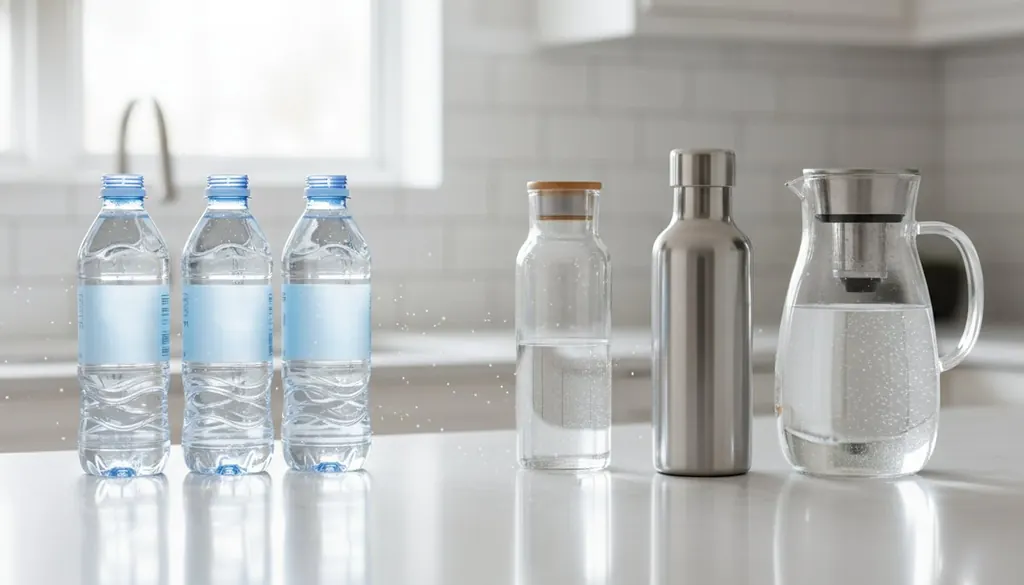

If you are trying to reduce microplastic exposure, the bottled water to avoid is usually not defined by one scary label. The bigger issue is the combination of brand transparency, bottle material, storage conditions, and whether the company publishes useful testing information.
This guide summarizes which bottled water brands and bottle types deserve extra caution based on the microplastic discussion already covered on Clean Water In Homes. “Avoid” here means “consider switching if microplastic reduction is your priority,” not that a brand is officially unsafe or recalled.
Bottled water brands to approach carefully
Testing summarized in our bottled water microplastics guide shows that microplastic counts vary by brand. If you want the lowest possible exposure, compare brands by published testing, bottle type, and packaging transparency before buying.
1. Evian plastic bottles
Evian is often viewed as a premium bottled water, but plastic packaging can still matter. If you choose Evian, glass packaging is generally the better microplastic-conscious option when available.
2. FIJI Water plastic bottles
FIJI is another premium brand where packaging and storage conditions matter. Avoid bottles that have been stored in heat or direct sunlight for long periods.
3. Aquafina
Aquafina is widely available, but shoppers focused on microplastic reduction should compare it against brands with clearer testing data and lower reported particle counts.
4. Smartwater
Smartwater can be a better-performing option in some comparisons, but it is still commonly sold in plastic. If microplastics are your main concern, compare it against glass bottled water and filtered tap water alternatives.
5. Dasani
Dasani is another common plastic-bottled brand. It may not be the highest concern in every comparison, but the same plastic-bottle caution applies.
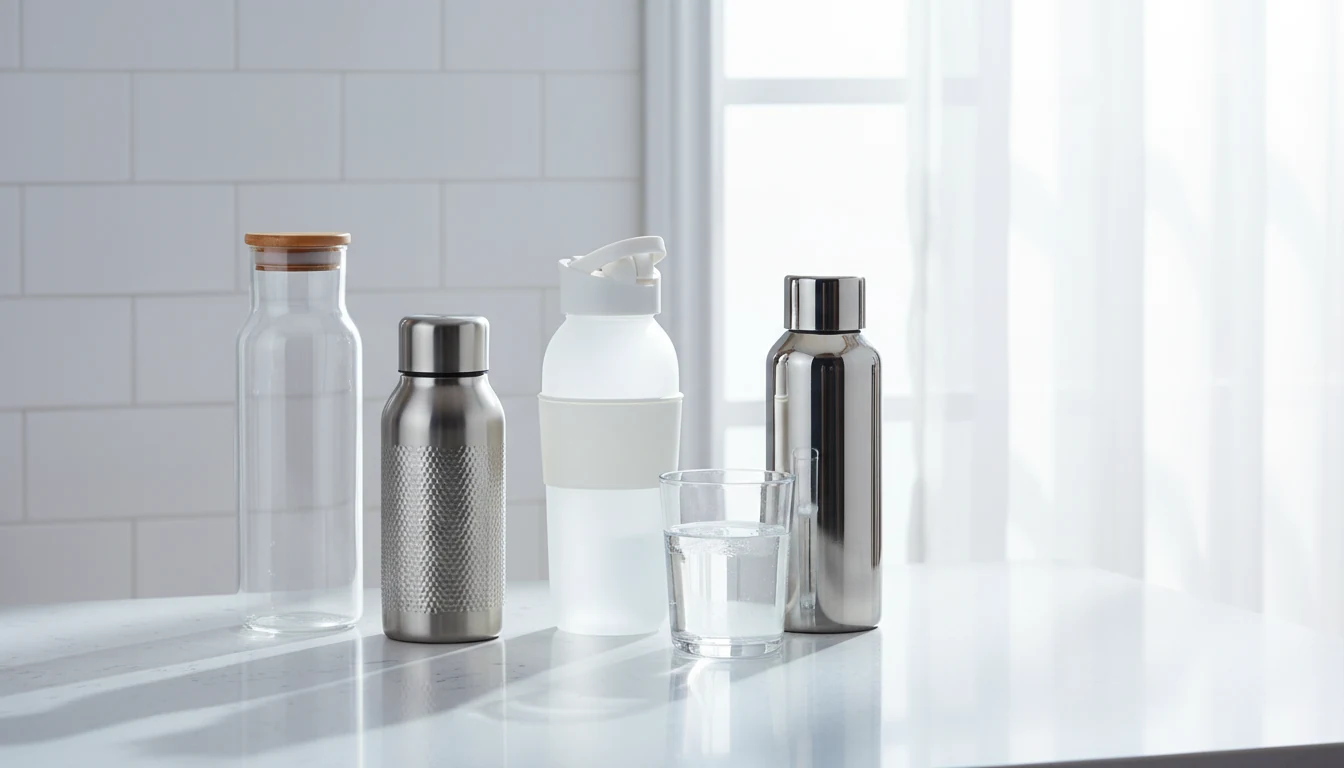
Bottle types to avoid when possible
- Plastic bottles stored in hot cars, warehouses, or direct sunlight.
- Old, scratched, or reused single-use plastic bottles.
- Brands that do not clearly explain their water source, filtration, or testing standards.
- Plastic bottled water when a glass bottle or quality home filter is practical.
What independent tests have actually found (updated October 2026)
Most “brands to avoid” lists online are opinion. The studies below are the main independent tests that named or measured bottled water, so you can judge the evidence for yourself. Each one tested specific samples at a specific time, so a result is a warning sign worth checking, not a permanent verdict on a brand.
Microplastics: the 2018 Orb Media / SUNY Fredonia study
In 2018, journalism nonprofit Orb Media worked with chemist Sherri Mason at the State University of New York at Fredonia to test 259 bottles from 11 brands bought in nine countries. Plastic particles turned up in 93% of the samples, at an average of about 325 particles per liter, and a few bottles held around 10,000 per liter. The brands tested were Aqua, Aquafina, Bisleri, Dasani, Epura, Evian, Gerolsteiner, Minalba, Nestlé Pure Life, San Pellegrino and Wahaha.
The study was not peer reviewed when it was released, and the International Bottled Water Association disputed it. Mason herself stressed that the point was the problem across the industry rather than any single brand. For brand-by-brand comparisons, see which bottled water has the least microplastics.
Nanoplastics: the 2024 Columbia and Rutgers study
In January 2024, researchers from Columbia University and Rutgers University published a study in the journal PNAS using a new laser-based imaging method that can see much smaller particles. They counted roughly 240,000 plastic particles in a typical liter of bottled water, about 90% of them nanoplastics, which is 10 to 100 times higher than earlier estimates. Only three brands were tested and the researchers chose not to name them, so this study tells you about bottled water in general, not which brand to skip. The bottled water industry said the method still needed wider scientific review.
PFAS (“forever chemicals”): Consumer Reports 2020 and the FDA in 2025
In October 2020, Consumer Reports tested 47 bottled waters (35 still and 12 sparkling) against its own strict benchmark of 1 part per trillion (ppt) of total PFAS. Sparkling waters came out worst. The highest result was Topo Chico Natural Mineral Water at 9.76 ppt, followed by Polar Natural Seltzer at 6.41 ppt and Tourmaline Spring Sacred Living Water at 4.64 ppt. Bubly Blackberry, Poland Spring Zesty Lime sparkling, Canada Dry Lemon Lime seltzer, Deer Park Natural Spring Water, La Croix and Perrier also came in slightly above 1 ppt. Several of those companies said their own testing showed lower or undetectable levels, and all of the results were within the bottled water industry’s own limits at the time.
More recent government data is more reassuring. In April 2025 the FDA reported testing 197 bottled water samples bought in U.S. stores in 2023 and 2024. Only 10 had detectable PFAS, and none were above the limits the EPA set for public tap water. The FDA did not name brands.
The rules are still moving. In May 2026 the EPA said it will keep its 4 ppt limits for PFOA and PFOS in public drinking water but proposed dropping limits on four other PFAS and giving some water systems until as late as 2031 to comply. Bottled water is regulated separately by the FDA. If PFAS is your main concern, a certified home filter is usually a more reliable fix than switching brands. See our guide to filters that remove microplastics, many of which also reduce PFAS.
Arsenic: Consumer Reports 2019
In April 2019, Consumer Reports reviewed arsenic results for more than 130 bottled waters. Six had levels of 3 parts per billion (ppb) or higher, which is the level Consumer Reports argues should be the limit: Starkey (Whole Foods), Peñafiel (Keurig Dr Pepper), Crystal Geyser Alpine Spring Water, Volvic, Crystal Creamery and EartH₂O. The legal limit for bottled water is 10 ppb.
Two of those brands had gone over the 10 ppb limit at some point. Starkey recalled more than 2,000 cases in 2016 and 2017. Peñafiel’s unflavored mineral water was pulled from shelves in 2019, and Keurig Dr Pepper said it then installed extra filtration. Arsenic occurs naturally in some underground sources, which is why mineral and spring waters are the usual places it shows up.
Recent recalls
Recalls are the clearest “avoid” signal because they cover specific products. In February 2026, Wisconsin-based Valley Springs Artesian Gold recalled 651,148 one-gallon and 2.5-gallon jugs, including its infant water and distilled water, after the FDA found they were bottled under insanitary conditions. The FDA classed it as a Class II recall, and the products were sold in Illinois and Wisconsin. Always check the lot or UPC against the official FDA notice rather than avoiding a whole brand forever.
Summary of the evidence
| Concern | Source and date | Brands named | What it means for you |
|---|---|---|---|
| Microplastics | Orb Media / SUNY Fredonia, 2018 | 11 global brands, all with particles in most samples | Plastic particles are an industry-wide issue, not a single brand |
| Nanoplastics | Columbia and Rutgers, PNAS, 2024 | 3 brands, not named | Counts are far higher than earlier tests could detect |
| PFAS | Consumer Reports, 2020 | Topo Chico, Polar, Tourmaline Spring and others above 1 ppt | Sparkling and mineral waters tested highest |
| PFAS | FDA, 2025 | Not named | 10 of 197 samples had detectable PFAS, none above EPA tap water limits |
| Arsenic | Consumer Reports, 2019 | Starkey, Peñafiel, Crystal Geyser Alpine Spring, Volvic and two regional brands | Mostly a mineral and spring water issue |
| Recall | FDA enforcement report, 2026 | Valley Springs (IL and WI) | Check lot numbers on large jugs |
How to check a brand yourself
- Read the brand’s water quality report. Many large brands publish an annual analysis listing what they test for and the results. If a brand will not share one when you ask, treat that as a red flag.
- Search the FDA recalls page for the brand name before buying in bulk, especially gallon jugs and smaller regional labels.
- Be pickier with sparkling and mineral waters if PFAS or arsenic worries you, since those categories have tested higher.
- Store bottles cool and out of the sun. Heat speeds up how quickly plastic sheds particles, whatever the brand. Our guide to plastics you should not drink from explains why.
FAQ
Is any bottled water brand completely free of microplastics?
No independent test has shown a plastic-bottled brand to be reliably free of microplastics. Water sold in glass tends to test lower, and a certified home filter is the most consistent way to cut your intake.
Is sparkling water worse than still water?
In the Consumer Reports PFAS testing, sparkling waters had the highest levels on average. That does not make every sparkling water unsafe, but it is a reason to check the brand’s testing if you drink a lot of it.
Should I stop drinking a brand that was named in a study?
Not necessarily. Results reflect the samples tested at the time, and several companies reported changes or lower levels afterwards. Use the findings as a reason to check the brand’s latest water quality report and the FDA recall list, then decide.
Cleaner alternatives
If your goal is lower microplastic exposure, start with these comparisons:
- Which bottled water has least microplastics?
- Healthiest bottled water to drink
- Glass vs stainless steel water bottles
- Does Brita actually work?
Bottom line
If you want to reduce single-use plastic, compare BPA-free reusable bottles, glass bottles, and stainless steel options before choosing.
As an Amazon Associate, Clean Water In Homes may earn from qualifying purchases.
The bottled water brands to avoid are the ones that give you the least confidence: unclear testing, plastic packaging, poor storage conditions, or no transparency. For most people, the safer long-term strategy is to compare low-microplastic bottled water brands, choose glass when practical, and use a reliable home filter where possible.
Related bottled water and microplastic safety guides
Continue comparing safer drinking-water options with these related guides:


