
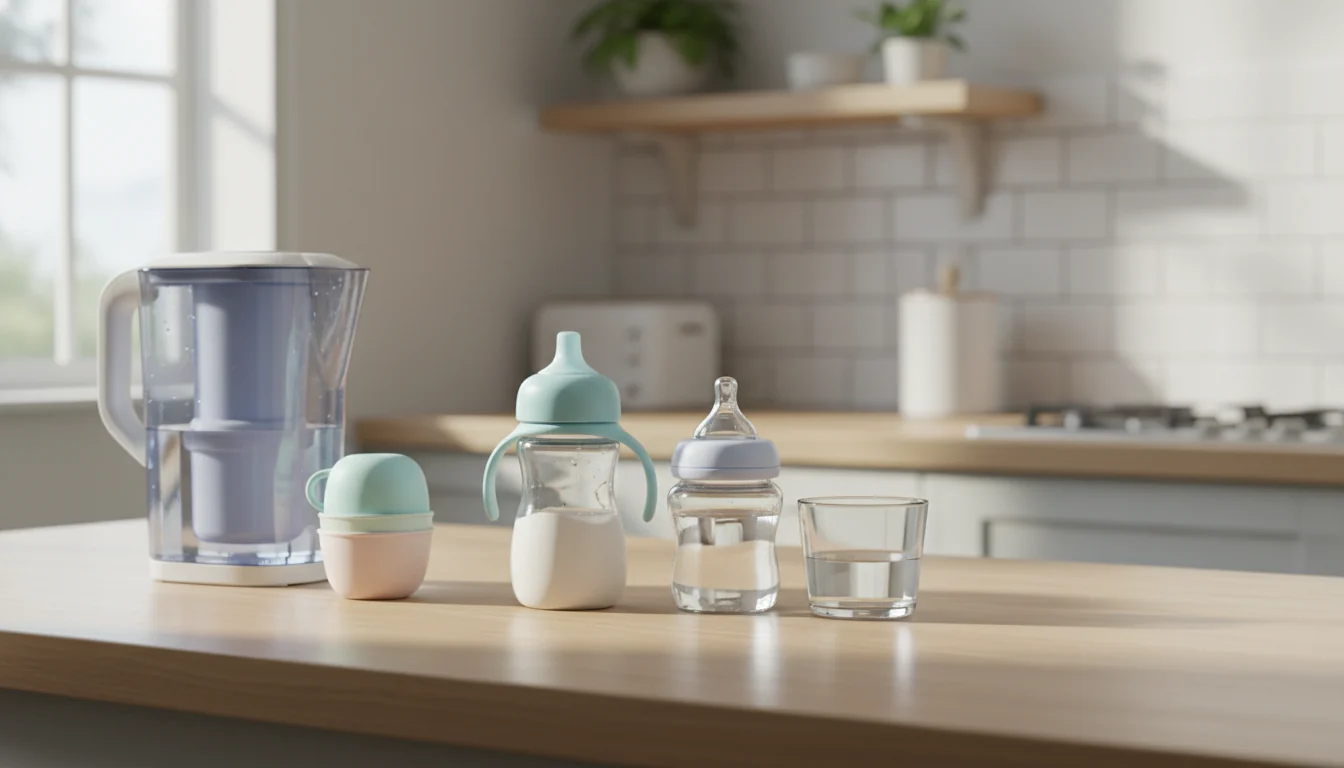
When I first shopped for the best bottled water for babies and toddlers, I expected one clear winner. Instead, I found confusing labels, vague words like “pure,” and small details that matter more than marketing.
In my kitchen, the best bottled water for babies and toddlers has never been the fanciest bottle. It has been the one with a clear source, simple treatment information, low sodium, sensible fluoride expectations, and safe storage.
I wrote this guide because I’ve made the mistake of grabbing whatever was on sale before a trip. Now I check labels first, especially when the water may be used for formula, toddler cups, or emergency backup; that is how I think about the best bottled water for babies and toddlers.
Key Takeaways
- For infant formula, follow your pediatrician’s and formula label’s directions; bottled water is not automatically sterile.
- Look for clear labeling, low sodium, and treatment information such as purified, distilled, reverse osmosis, or spring water.
- Fluoride is not “good” or “bad” in every situation; ask a pediatric dentist or pediatrician if you are unsure.
- Avoid heat-stored plastic bottles when possible, and rotate emergency bottled water instead of forgetting it in a garage.
- The safest choice is practical: appropriate water, clean preparation, correct formula mixing, and cautious storage.
What “best” really means for baby and toddler water
Age changes the decision
For newborns and young infants, water choices are mostly about formula preparation, cleanliness, and following medical guidance. Babies generally do not need plain water unless a clinician says so.
For toddlers, water becomes a daily drink. At that stage, taste, bottle material, fluoride exposure, and convenience all matter more because intake is more routine.
This isn’t medical advice — consult a professional if you have health concerns.
I start with the use case
I use different rules for different moments. Formula at home, a toddler bottle at the park, and a backup case for power outages are not the same job.
When I stopped treating all bottled water as interchangeable, choosing became much easier. The label had to match the purpose.
What I personally avoid
I avoid bottles that have sat in a hot car, bottles with damaged seals, and products that make vague health promises. I also avoid assuming “natural” means safer.
My rule is simple: if the label tells me almost nothing, I do not use it for the youngest drinkers in my house.
Main bottled water types explained
Purified water
Purified bottled water has been processed to meet a defined purity standard, often through reverse osmosis, distillation, deionization, or similar methods. For formula mixing, many parents choose purified or distilled water because the mineral profile is usually predictable.
I like purified water when the label states the treatment method. “Purified by reverse osmosis” tells me more than “clean and refreshing.”
Distilled water
Distilled water is boiled into steam and condensed, leaving many minerals behind. It is commonly used for appliances and sometimes chosen for infant formula because it is low in minerals.
The downside is taste. When I used distilled water in a toddler cup, my child noticed it tasted flat, so I kept it for formula prep and emergency use rather than everyday sipping.
Spring water
Spring water comes from an underground source and may contain naturally occurring minerals. Some families prefer the taste, but the mineral and fluoride content can vary by source.
If I buy spring water for a toddler, I check the label and the company’s water quality report when available. I do not assume every spring source is the same.
| Water type | Pros | Watch-outs |
|---|---|---|
| Purified | Predictable taste, often low minerals, common in stores | Check whether minerals were added back |
| Distilled | Very low mineral content, useful for formula prep | Flat taste, not always preferred by toddlers |
| Spring | Better taste for many families, naturally sourced | Mineral and fluoride levels vary by source |
Formula preparation and safety basics
Bottled water is not automatically sterile
This is one of the biggest misunderstandings I see. A sealed bottle may be clean and regulated, but it is not the same as sterile medical water.
For formula, I follow the formula label and pediatric guidance. In some situations, caregivers may be told to boil water and let it cool to the recommended temperature before mixing.
Do not dilute formula
Water safety also means mixing correctly. Too much or too little water can be dangerous for infants.
I once watched a tired caregiver “stretch” a bottle by adding extra water, and that mistake stuck with me. Formula instructions exist for a reason.
A simple formula-water checklist
- Wash your hands and use a clean preparation area.
- Check the formula label for water instructions.
- Use an appropriate bottled or tap water source.
- Measure water first, then add formula powder as directed.
- Feed, refrigerate, or discard prepared formula according to the label.
READ MORE Choosing the Safest Water for Baby Formula Home Water Quality & Safety
Fluoride, sodium, and minerals
Fluoride needs context
Fluoride can help protect teeth, but too much total fluoride during early tooth development may increase the chance of dental fluorosis. That does not mean every fluoridated water is unsafe; it means total exposure matters.
If a baby is mostly formula-fed, I would ask a pediatric dentist or pediatrician whether low-fluoride bottled water makes sense. The American Dental Association and pediatric professionals discuss this topic carefully because circumstances vary.
This isn’t medical advice — consult a professional if you have health concerns.
Sodium should be low
For babies and toddlers, I prefer bottled water with low sodium. Labels sometimes list sodium in milligrams per liter, or the company may provide a water quality report.
If the label does not disclose minerals, I do not automatically reject it, but I move it lower on my list. Transparency matters.
Added minerals can change taste
Some purified waters add minerals back for flavor. That can be fine for adults, but for baby use I want to know what was added.
A baby-water label should make the boring details easy to find.
How I choose a bottle at the store
Label clues I trust
I look for the water type, treatment process, source, bottling location, expiration or best-by date, and contact information. If the label mentions NSF/ANSI standards for a filter or process, I check that it is specific rather than decorative.
For bottled water regulation in the United States, FDA rules apply to products sold as packaged food, while EPA rules apply to public tap water. That difference is worth understanding.
Red flags I skip
I skip bottles with broken caps, cloudy contents, strange odors, or labels that rely on wellness claims. I also avoid buying dusty cases that look like they sat near a sunny storefront window.
My quick buying process
- Decide the purpose: formula, toddler drinking, travel, or emergency backup.
- Choose purified, distilled, or clearly labeled spring water.
- Check sodium, fluoride notes, source, and treatment details.
- Inspect caps and bottle condition.
- Store the case in a cool, dark place at home.
| Label item | Why it matters | My preference |
|---|---|---|
| Treatment method | Shows how water was processed | Specific method listed |
| Mineral details | Helps with fluoride and sodium questions | Low sodium, clear report |
| Bottle condition | Protects against leaks and contamination | Sealed, undamaged, not heat-stored |
Plastic bottle safety and storage
Heat is the enemy
I try not to store bottled water in a hot car or garage. Heat can affect taste and may increase concern about chemicals moving from plastic into water.
For toddlers, I pour water into a clean reusable cup when practical. It reduces single-use waste and keeps the bottle from being chewed.
Rotate emergency water
Emergency bottled water is useful, but it should not be forgotten forever. I write the purchase month on the case and rotate it into normal use before it gets old.
That small habit saved me once during a storm week. Instead of finding mystery bottles in the basement, I had clean, recent water ready.
Open bottles need care
Once opened, bottled water is no longer protected by a sealed cap. I refrigerate opened bottles and avoid letting toddlers sip directly from a bottle that will be saved for later.
Travel, daycare, and real life
Travel water strategy
For road trips, I pack more water than I think I need and keep it inside the air-conditioned cabin, not the trunk when possible. I also bring a clean measuring container for formula.
Travel is where convenience can tempt sloppy habits. I plan ahead so I am not mixing formula on a questionable sink counter.
Daycare communication
If daycare provides water, I ask what source they use and how bottles are cleaned. If I send bottled water, I label it clearly and include preparation instructions.
This is not about being difficult. It is about making sure everyone follows the same routine.
Toddler taste matters
Toddlers drink more willingly when water tastes familiar. If we switch brands suddenly, I have seen my child reject a cup for no dramatic reason beyond taste.
READ MORE Best Water Bottles for Toddlers Bottled Water & Safer Bottles
Environmental trade-offs
Single-use bottles have a cost
Bottled water can be useful, but single-use plastic creates waste. I treat it as a tool, not my default daily system.
At home, a certified filter and safe reusable bottle may reduce packaging. On the road, bottled water still has a place.
Recycling is not perfect
I recycle empty bottles, but I do not pretend recycling solves everything. Reducing unnecessary bottles is better than relying on perfect recycling.
Practical middle ground
My middle ground is bottled water for formula needs, travel, and emergencies, plus filtered tap water for routine family drinking when our local water quality supports it.
The best water choice is the one that is safe, realistic, and repeatable on a tired Tuesday.
Is the best bottled water for babies and toddlers right for you?
Choose bottled water when it solves a real problem
Bottled water makes sense when your tap water is under an advisory, you are traveling, your clinician recommends a specific approach, or you need predictable low-mineral water for formula.
It may not be necessary if your local tap water is safe, you use an appropriate certified filter, and your pediatrician has no concerns.
Ask when health conditions are involved
If you want to reduce single-use plastic, compare BPA-free reusable bottles, glass bottles, and stainless steel options before choosing.
As an Amazon Associate, Clean Water In Homes may earn from qualifying purchases.
Premature infants, immune concerns, special formulas, and medical conditions change the conversation. In those cases, I would not rely on a blog article or a bottle label alone.
This isn’t medical advice — consult a professional if you have health concerns.
FAQ
Is distilled water always best for baby formula?
Not always. Distilled water is low in minerals, which can be useful, but you should follow the formula label and your pediatrician’s advice. In some cases, water preparation instructions matter more than the bottled water type.
Should toddlers drink bottled water every day?
They can, but it is not automatically better than safe tap or properly filtered water. I prefer a balanced approach that considers local water quality, bottle waste, taste, and cost.
Is fluoride-free bottled water better for babies?
It depends on total fluoride exposure and dental guidance. Families using powdered formula frequently may want to ask a pediatric dentist or pediatrician about low-fluoride options.
Can I use spring water for a baby?
Possibly, but check the label and preparation guidance. Spring water can vary in minerals, sodium, and fluoride, so I prefer transparent brands and professional advice for infants.
Conclusion
My personal-considerations angle
When I choose bottled water for a baby or toddler, I do not chase the prettiest label. I look for clarity, low sodium, sensible fluoride context, intact packaging, and storage I can trust.
My final-recommendation angle
For many families, purified or distilled water is the simplest bottled option for formula prep, while clearly labeled spring or purified water can work for toddlers. The real goal is not a perfect brand; it is a safe routine you can repeat.