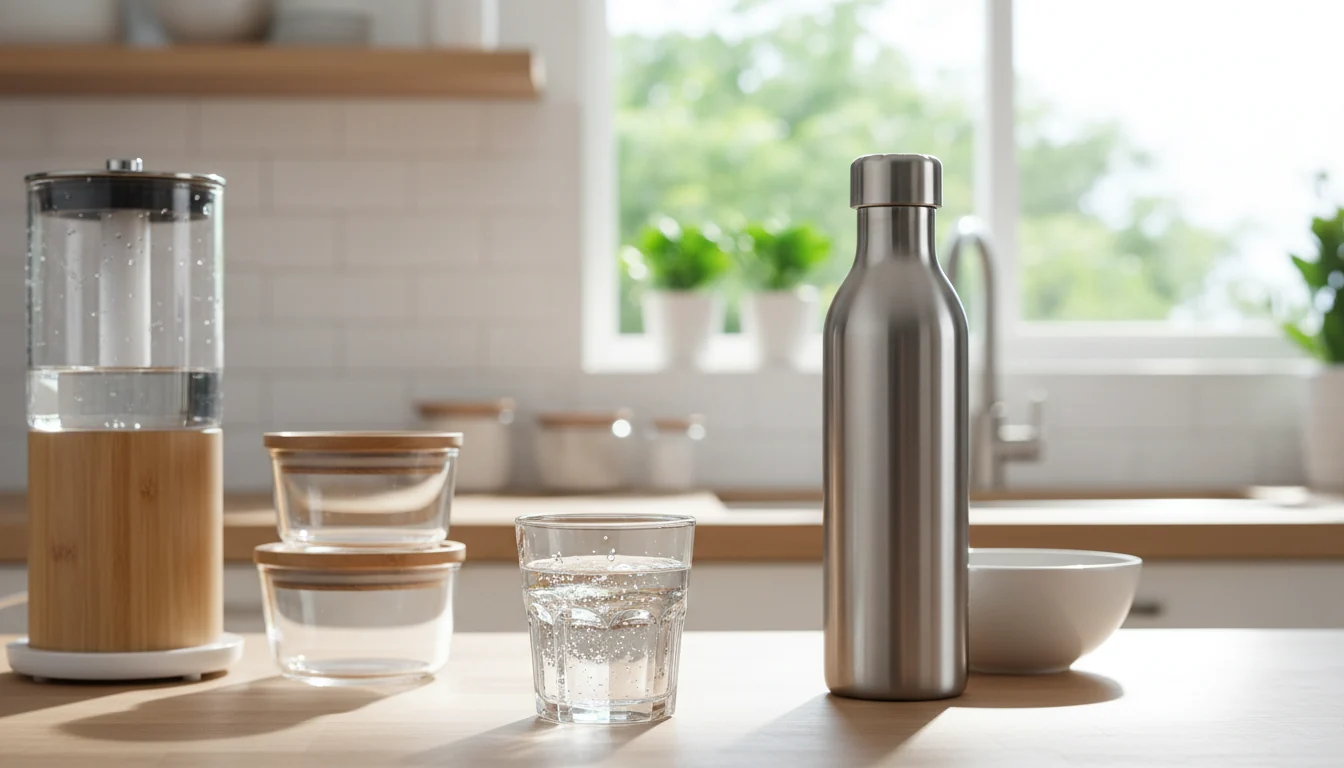
I started looking into microplastics and your health after realizing how many everyday drinking choices touched plastic: bottled water, pitcher parts, fridge lines, reusable lids, takeout cups, and storage containers. I did not want a scare story; I wanted a usable home plan.
The more I read about microplastics and your health, the more I saw two truths at the same time. Researchers are taking the topic seriously, but many practical questions are still unsettled, especially around dose, particle size, and long-term effects.
So my approach to microplastics and your health is cautious and boring in the best way: reduce obvious exposures, choose better materials when convenient, avoid overheated plastic, and keep drinking enough clean water. Microplastics and your health should lead to smarter habits, not constant anxiety.
Key Takeaways
- Microplastics are widespread, but individual health risk is still an active area of research.
- I avoid medical overclaims and focus on exposure-reduction habits that are easy to repeat.
- Drinking-water choices matter, but food packaging, household dust, and air can also contribute.
- Filters, bottles, and storage practices should be chosen based on real design and stated performance claims.
- If you have specific health concerns, talk with a qualified medical professional.
What Microplastics Are
The basic definition
Microplastics are small plastic particles that come from larger plastic items breaking down or from tiny plastic materials made for specific uses. They can vary by polymer type, shape, size, and chemical additives.
Nanoplastics and why size matters
Nanoplastics are even smaller particles. Size matters because it may affect where particles travel, how they interact with tissues, and how difficult they are to measure. I avoid pretending home testing can answer all of that.
Where they show up
Microplastics have been discussed in drinking water, bottled water, foods, indoor dust, outdoor air, and packaging. Water is one piece of the bigger exposure picture.
The goal is not to live in a plastic-free bubble; the goal is to remove the easy, repeated sources.
What We Know About Health Concerns
Why scientists are studying them
Scientists are studying whether particles, additives, and hitchhiking contaminants could affect inflammation, the gut, endocrine systems, or other biological processes. That does not mean every exposure causes harm; it means the questions are worth investigating carefully.
What remains uncertain
The biggest uncertainty for everyday readers is dose and relevance. Particle size, chemistry, surface condition, and total exposure all matter. It is not honest to turn early research into a simple one-line diagnosis.
Medical disclaimer
This isn’t medical advice — consult a professional if you have health concerns. If you are pregnant, caring for an infant, immunocompromised, or managing a medical condition, ask a clinician about your specific water and food choices.
Common Exposure Routes at Home
Drinking water and bottles
Water can contact plastic through bottles, caps, filters, storage tanks, tubing, and pitchers. My first home change was not dramatic: I stopped leaving plastic bottles in warm places and moved daily drinking to glass and stainless steel.
Food storage and heating
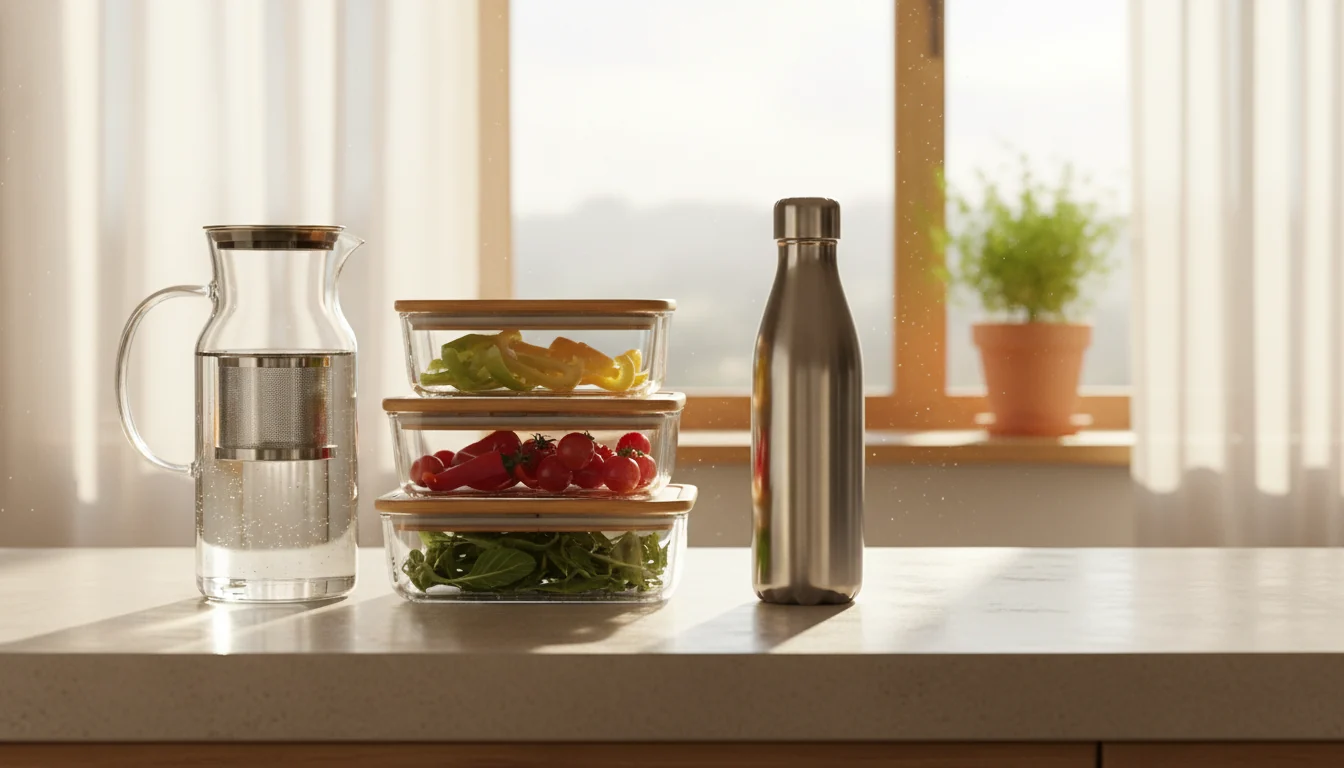
Heating food in plastic is another habit I changed. I used to microwave leftovers in plastic containers because it was convenient. Now I transfer food to glass or ceramic because heat and plastic are not a combination I need for daily meals.
Dust and textiles
Household dust can carry fibers from synthetic textiles and household materials. I cannot control every fiber, but I can vacuum with a good filter, wet-dust surfaces, and ventilate when practical.
Practical Risk Reduction Without Panic
Step list: my first week of changes
- Stop storing bottled water in hot cars or sunny rooms.
- Choose one glass or stainless bottle for daily drinking.
- Replace scratched plastic food containers used for hot foods.
- Check water filter claims instead of assuming all filters work the same.
- Improve cleaning routines for bottle caps, straws, and gaskets.
Why I start with heat
Heat is easy to control. I noticed the biggest behavior change when I simply made a “no plastic bottles in the car” rule. It reduced warm-bottle drinking and made my reusable bottle habit more automatic.
What I do not stress over
I do not throw away every plastic item overnight. Sudden purges can waste money and create more stress than benefit. I replace high-contact, worn, or heated plastic first.
READ MORE Water Bottle Leaching Microplastics Bottled Water & Safer Bottles
Drinking Water Choices Compared
Comparison table
| Choice | Potential benefit | Limitation |
|---|---|---|
| Bottled water | Useful for travel and emergencies | More plastic contact and packaging waste |
| Filtered tap water | Less single-use plastic, convenient at home | Filter claims vary by product and maintenance |
| Glass-stored water | Lower plastic contact after filling | Breakable and heavier to handle |
My daily choice
At home, I use filtered tap water and store or drink it from glass or stainless steel. The most noticeable benefit was consistency: I stopped buying cases of water “just in case” and had fewer half-empty bottles around.
Emergency exception
Emergency water is different. I still keep it, but I rotate it and store it cool. In a true emergency, safe hydration is the priority.
Filters, Standards, and Claims
NSF/ANSI language
When a filter mentions NSF/ANSI certification, I look for the exact standard and contaminant reduction claim. Certification for chlorine taste and odor is not the same as certification for lead, cysts, particulates, or microplastic-related claims.
Performance data sheets
A performance data sheet tells me more than the front of the box. I look for what was tested, under what conditions, and what maintenance schedule is required. A neglected filter can become a weak link.
Step list: how I evaluate a filter
- Identify my water concern: taste, lead, sediment, PFAS, particulates, or something else.
- Read the manufacturer’s performance data sheet.
- Look for independent certification where available.
- Check cartridge replacement cost and schedule.
- Choose the simplest system I will maintain correctly.
A filter is only as good as its claim, installation, and maintenance schedule.
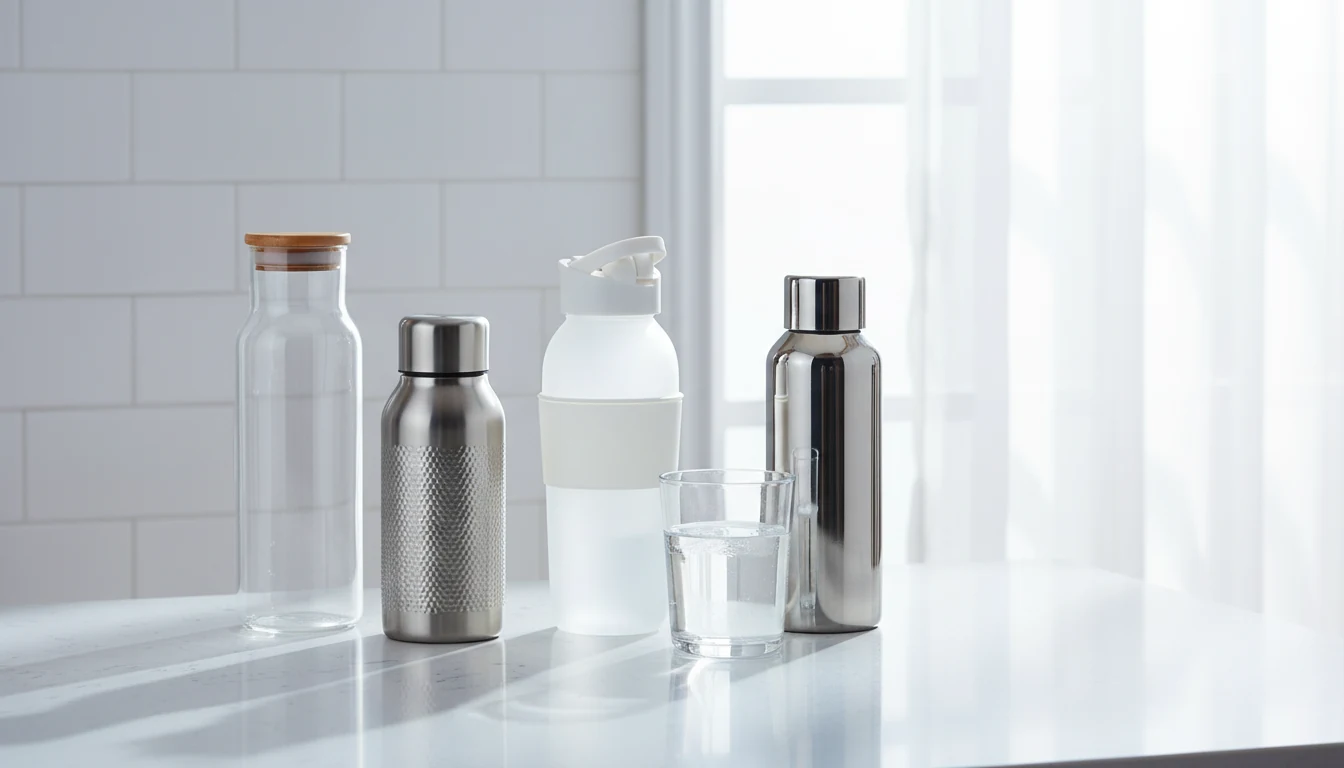
Materials I Prefer for Daily Use
Bottle and cup comparison
| Material | Why I like it | What I watch |
|---|---|---|
| Glass | Clean taste, low odor, easy visual inspection | Breakage and weight |
| Stainless steel | Durable, travel-friendly, long-lasting | Dents, hidden liners, cap materials |
| Plastic | Lightweight and cheap | Scratches, heat, age, and reuse habits |
My first-hand bottle test
I kept one glass bottle at my desk and one stainless bottle by the door for a month. The glass bottle made water taste neutral, while the stainless bottle won for errands. The experiment worked because each bottle had a clear job.
Caps and small parts
Even when the main bottle is glass or steel, the cap may be plastic or silicone. I choose simpler caps, replaceable gaskets, and wide openings because cleaning matters.
Health Language I Trust
Red flags in articles and ads
I distrust claims that promise detox miracles, guaranteed disease prevention, or instant “microplastic removal” without details. Strong claims need strong evidence and clear testing information.
Better wording
Better wording sounds like this: “may reduce,” “designed to capture,” “certified for,” “evidence is developing,” and “talk to a professional.” That is less exciting, but more honest.
When to ask a clinician
If symptoms, pregnancy, infant feeding, kidney disease, immune issues, or other medical concerns are involved, a doctor is the right source. Water articles are not medical care.
This isn’t medical advice — consult a professional if you have health concerns.
Cleaning, Ventilation, and Household Habits
Beyond water
Because microplastics may come from more than water, I also look at dust and cleaning. A HEPA-style vacuum, damp cloth dusting, and regular laundering can be sensible steps without turning the home upside down.
Laundry and textiles
Synthetic fabrics can shed fibers. I do not plan my life around that, but I do avoid buying unnecessary synthetic throw blankets and I clean lint traps carefully.
Kitchen storage
I use glass containers for hot leftovers and keep plastic for dry, cool, low-contact storage when needed. That one change felt realistic and stuck.
READ MORE Choosing A Home Water Filter Water Filtration & Treatment
Is Microplastics and Your Health a Reason to Change Everything?
When changes make sense
Changes make sense when they are low-cost, low-stress, and repeated often: better bottles, less heat, better filter maintenance, and fewer disposable plastics.
When changes go too far
Changes go too far when they create fear, guilt, or expensive purchases that do not match your actual exposure. I would rather see a family make three steady improvements than chase perfection.
My final frame
I treat this as a household hygiene issue, not a panic button. Small repeated choices can reduce avoidable contact while the science continues to mature.
If you want to reduce single-use plastic, compare BPA-free reusable bottles, glass bottles, and stainless steel options before choosing.
As an Amazon Associate, Clean Water In Homes may earn from qualifying purchases.
Calm, repeated habits beat dramatic one-week overhauls.
FAQ
Are microplastics proven to harm human health?
Research is ongoing. Scientists are investigating possible effects, but everyday risk depends on exposure level, particle properties, and individual circumstances. Avoid simple scare claims.
Can a water filter remove microplastics?
Some filters may reduce particles, but it depends on design, pore size, and tested claims. Read the performance data sheet and look for relevant independent certification where available.
Is bottled water worse than tap water for microplastics?
It depends on the bottle, source, handling, and storage. I avoid heat-stressed bottles and use filtered tap water in glass or stainless steel for daily drinking when possible.
Should I see a doctor about microplastic exposure?
For general exposure reduction, start with practical habits. If you have symptoms, pregnancy concerns, infant-feeding questions, or a medical condition, consult a qualified professional.
Conclusion
My personal considerations
I care about microplastics and your health, but I care about calm decisions even more. The changes that stuck for me were simple: avoid hot plastic, choose glass or stainless for daily drinking, and maintain filters properly.
My final recommendation
Do not let uncertainty freeze you. Reduce the obvious exposures, keep drinking safe water, and be wary of anyone selling certainty where the science is still developing.