
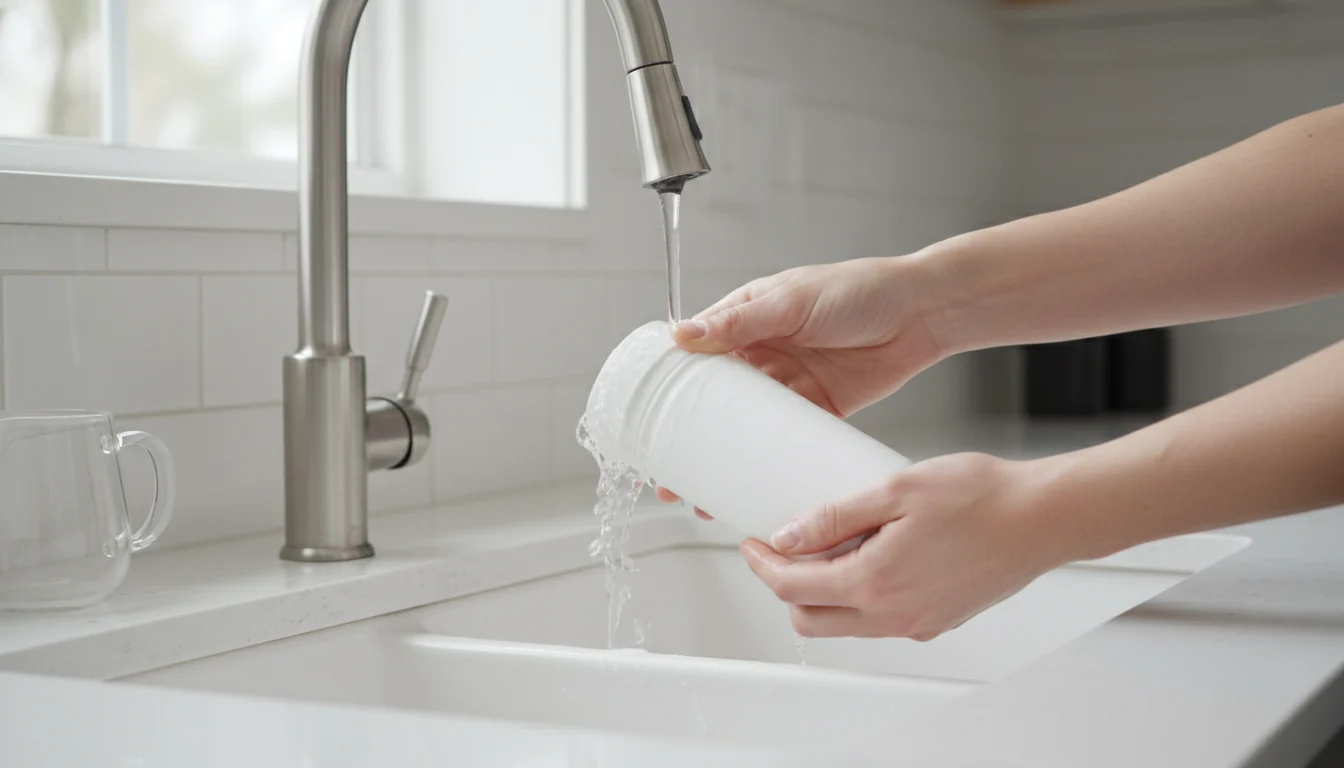
A new water filter is not always ready for your glass the moment it comes out of the package. Many filters need flushing first. Flushing rinses loose carbon dust, wets the filter media, clears trapped air, and helps the filter settle into normal flow.
If you have ever seen gray water, black specks, or cloudy first pours from a new filter, that is usually why the instructions tell you to discard the first water. It can look alarming, but with many carbon filters, a little loose media at the start is expected.
Key takeaways
- Always follow the specific flushing instructions that came with your filter.
- Most new carbon filters need rinsing, soaking, or several discarded batches before drinking.
- Black specks during the first flush are often loose carbon fines, but they should clear.
- If water stays cloudy, tastes strange, leaks, or never runs clear, stop and troubleshoot.
Why flushing matters
Water filters contain media such as activated carbon, ion exchange resin, membranes, or sediment layers. During shipping, tiny particles can loosen. Dry media may also trap air, which slows flow or makes water look cloudy.
Flushing helps move those first loose particles out of the system. It also prepares the filter for more consistent performance. Skipping this step can leave you with odd taste, slow filtration, or black specks in the first glasses.
Before you start
Read the manual or label. I know that sounds basic, but flushing instructions vary a lot. Some pitcher cartridges need soaking. Some faucet filters need water run through them for several minutes. Some refrigerator filters require discarding a certain number of gallons. Reverse osmosis systems can have more detailed startup steps.
Also wash your hands, inspect the filter packaging, and make sure O-rings or gaskets are seated correctly. Never use a damaged cartridge.
How to flush a pitcher filter
- Rinse the cartridge if the instructions call for it.
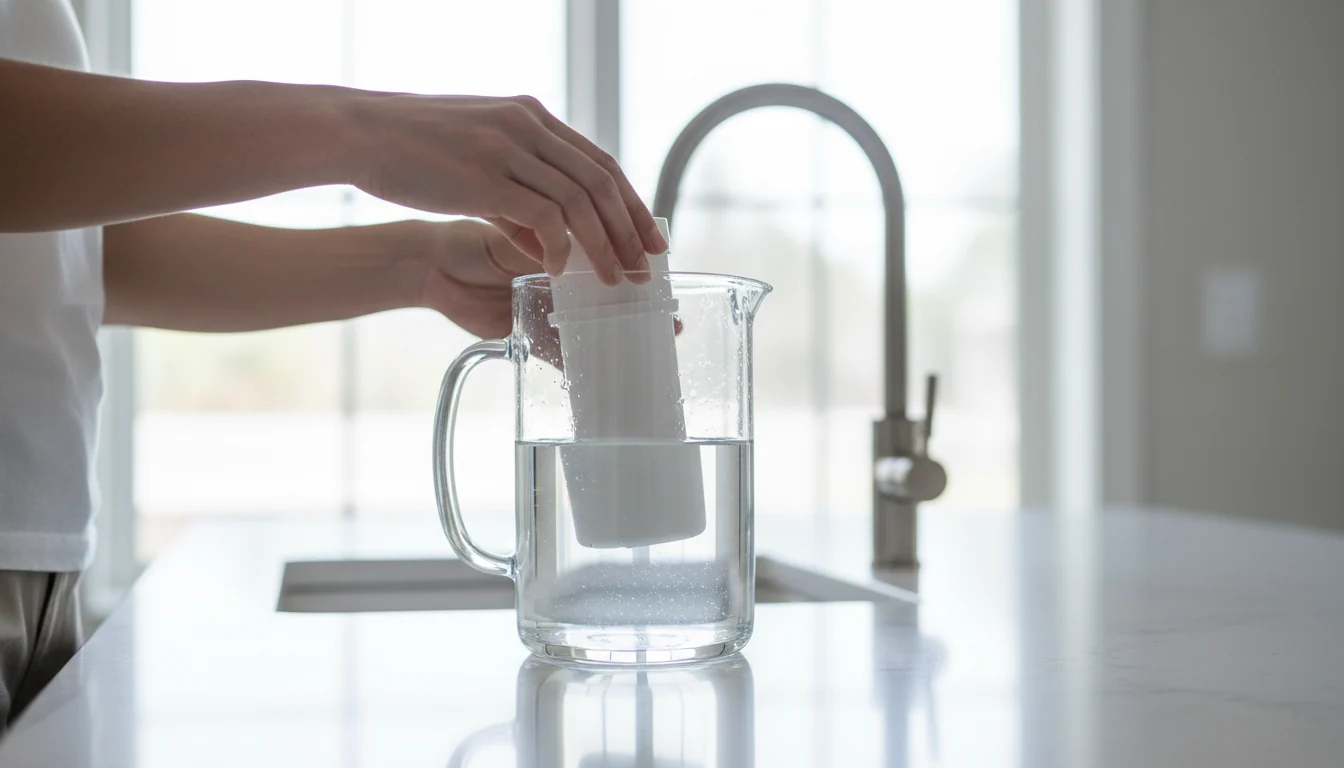
- Soak it if required, usually in clean cold water.
- Insert it firmly into the reservoir.
- Fill the pitcher and let it filter through.
- Discard the first one or more batches according to the directions.
- Wash the pitcher reservoir and lid regularly.
If the filter floats, sputters, or flows extremely slowly, it may have trapped air. Re-soaking or gently tapping the cartridge under water can help, but follow the brand instructions.
How to flush a refrigerator water filter
Refrigerator filters often need a larger flush than pitchers. After installing the cartridge, run water through the dispenser and discard it until the required amount has passed. The water may sputter at first as air leaves the line.
Use a large measuring container if you want to keep track. Also discard the first batches of ice after changing a fridge filter because the ice maker may contain water from before the new filter was fully flushed.
How to flush a faucet-mounted filter
Install the faucet filter according to the adapter instructions, then run cold water through the filtered setting for the recommended time. Do not use hot water unless the manufacturer clearly allows it.
Watch for leaks around the adapter and housing. If water sprays from the connection, turn it off, reseat the washer or adapter, and try again.
How to flush an under-sink filter
For a simple under-sink carbon filter, the process is usually to open the dedicated faucet and let water run for the specified time. For multi-stage systems, each cartridge may have its own startup instructions.
With reverse osmosis systems, startup can involve filling and draining the storage tank one or more times. Do not shortcut this. RO systems need time to rinse preservatives, carbon fines, and air from the system.
How to flush a countertop gravity filter
Some gravity systems require priming the filter elements before use. That may involve forcing water through the element, soaking it, or running and discarding initial batches. Because designs vary, this is one place where the manual matters a lot.
If water barely moves, the element may not be fully primed. If the system uses washers or wing nuts, check that parts are assembled in the correct order.
What is normal during flushing?
Normal first-use signs can include:
- Gray or dark water during the first flush
- Small black carbon specks that clear quickly
- Sputtering from trapped air
- Temporary cloudiness from air bubbles
- Slower flow until the media fully wets
What is not normal is persistent leaking, a strong chemical smell, damaged plastic, water that never clears, or filter media escaping continuously.
Do not forget the housing
A new cartridge in a dirty housing is not a clean setup. When replacing filters, wipe or wash the pitcher, reservoir, filter housing, dispenser tray, and spout where practical. For refrigerator and under-sink systems, follow safe cleaning instructions and avoid contaminating the clean side of the filter.
FAQ
Can I drink the first water from a new filter?
I would not unless the manufacturer specifically says it is ready immediately. Most filters tell you to discard the first water.
Are black specks after a new filter dangerous?
They are often loose carbon fines, especially in carbon filters. They should clear after proper flushing. If they keep appearing, contact the manufacturer or replace the cartridge.
Should I flush with hot or cold water?
Use cold water unless the instructions say otherwise. Hot water can damage some filters.
Why is my new filter so slow?
It may have trapped air, dry media, a protective cap left in place, incorrect installation, or a clogged prefilter. Check the manual and reseat the cartridge.
My bottom line
Flushing a new water filter is a small step that prevents a lot of confusion. Read the instructions, run or discard the recommended amount, watch for leaks, and wait until the water runs clear and tastes normal before making it your daily drinking water.