
If your tap water suddenly tastes like dirt, soil, or musty leaves, I know how unsettling that can be. Water should taste clean and neutral. When it starts tasting earthy, the first question is usually whether it is unsafe. The honest answer is: not always, but it is worth investigating.
Earthy taste can come from harmless seasonal compounds in a water source, a dirty faucet aerator, stagnant plumbing, or private well issues. Sometimes the water is still within drinking water standards, but the taste is unpleasant enough that you need a practical fix.
Key takeaways
- Dirt-like or musty tap water taste is often linked to naturally occurring earthy compounds, algae activity, or source-water changes.
- If only one faucet tastes bad, start with the faucet aerator and local plumbing.
- If every cold tap tastes earthy, check with your water utility or consider a certified filter for taste and odor.
- If you use a private well, sudden taste changes are a reason to inspect and test the water.
Common reasons tap water tastes like dirt
Seasonal changes in the water source
Many communities draw water from reservoirs, rivers, or lakes. During warm weather, heavy rain, drought, or seasonal turnover, naturally occurring organic material can affect taste. Utilities often refer to compounds such as geosmin or MIB when discussing earthy or musty tastes. These compounds can be noticeable at very low levels and may not mean the water is unsafe by themselves.
That said, your nose and taste buds are useful warning systems. If the taste is new, strong, or paired with odor, discoloration, or illness concerns, do not ignore it.
Algae-related taste and odor
Algae in source water can contribute earthy, musty, or pond-like flavors. Water utilities monitor and treat source water, but taste can sometimes slip through even when the water meets regulatory requirements.
If your utility has a website or alert system, check for notices about seasonal taste and odor events. You can also call and ask whether other customers have reported the same issue.
Sediment or disturbance in water mains
Construction, hydrant flushing, water main repairs, or pressure changes can stir up sediment. This may cause dirty, earthy, rusty, or mineral-like taste. It may also come with cloudy or discolored water.
If you see particles or brown water, avoid doing laundry until it clears. Run cold water for a short period and contact your utility if it does not improve or if they have not announced maintenance.
A faucet aerator that needs cleaning
Sometimes the problem is not the water supply at all. The small screen at the end of your faucet can trap grit, mineral scale, and biofilm. That buildup can make water taste stale or earthy.
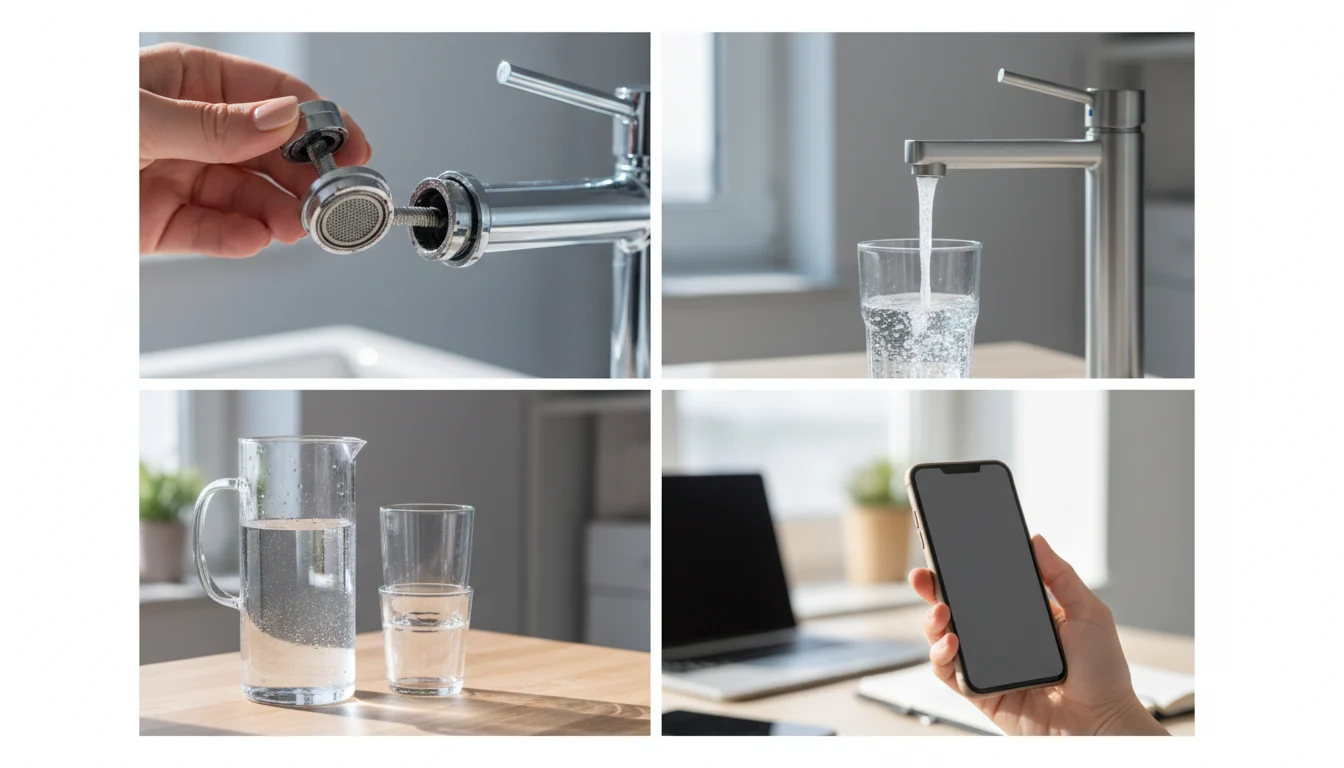
Unscrew the aerator, note how the parts fit together, rinse away debris, and soak mineral scale in vinegar if the manufacturer materials allow it. Then compare the taste with and without the aerator.
Stagnant water in household plumbing
Water that sits in pipes overnight or while you are away can taste flat, metallic, or earthy. Try running the cold tap until the water is noticeably colder, then taste again. Use cold water for drinking and cooking, not hot water from the tap.
If the taste disappears after flushing one faucet, the issue may be local to that line. If it remains throughout the home, keep investigating.
What to do first
Start with a quick comparison. Taste cold water from more than one faucet. If you can, compare an indoor faucet, an outdoor spigot, and a neighbor’s water. This helps separate a house issue from a neighborhood issue.
Next, check whether the problem is only in filtered water, only in unfiltered water, or both. A saturated pitcher or refrigerator filter can sometimes create stale flavors if it is overdue for replacement.
When a filter can help
For municipal water that is otherwise considered safe, an activated carbon filter can often improve earthy, musty, chlorine, and general taste issues. Look for filters that are certified to relevant NSF/ANSI standards for the claims you care about. A pitcher, faucet filter, countertop filter, refrigerator filter, or under-sink carbon filter may all help depending on your budget and space.
If the taste is from a private well or unknown contaminant, do not rely on taste alone. Test first, then choose treatment based on results.
Special note for private wells
If you are on a well, dirt-like taste may be related to surface water intrusion, sediment, organic matter, or changes in the aquifer. After flooding, nearby excavation, casing damage, or sudden changes in taste, odor, or appearance, I would arrange testing through a certified lab or local health department guidance.
A sediment filter may help with particles, and carbon may help with taste, but the right solution depends on the actual water test.
When to stop drinking it until you know more
I would be more cautious if earthy taste comes with a sewage smell, fuel or chemical odor, blue-green water, visible slime, persistent brown water, or official advisories. Also be cautious for infants, pregnant people, immunocompromised people, or anyone with health concerns. In those cases, contact your water utility, local health department, or a qualified water professional.
FAQ
Is dirt-tasting tap water dangerous?
Not necessarily. Earthy taste can come from natural compounds that are mainly aesthetic. But taste alone cannot prove water is safe, so check for utility notices, visible changes, and whether the issue is widespread.
Why does my cold water taste earthy but hot water does not?
Taste can vary by plumbing route and temperature. For drinking, use cold tap water and heat it separately if needed. Hot tap water can pick up more from plumbing and water heaters.
Will boiling remove a dirt taste?
Boiling is not a dependable fix for taste and odor compounds, and it does not remove many dissolved substances. A suitable carbon filter is often more practical for taste improvement.
Should I replace my filter?
If the taste is mainly in filtered water or your filter is overdue, yes, replace it and clean the reservoir or housing. Old filters can make water taste worse.
My bottom line
When tap water tastes like dirt, I start simple: compare faucets, clean the aerator, flush the cold line, check local utility notices, and replace any overdue filter. If the problem is house-wide, sudden, or connected to a private well, testing and a call to the right local water authority are the safest next steps.