
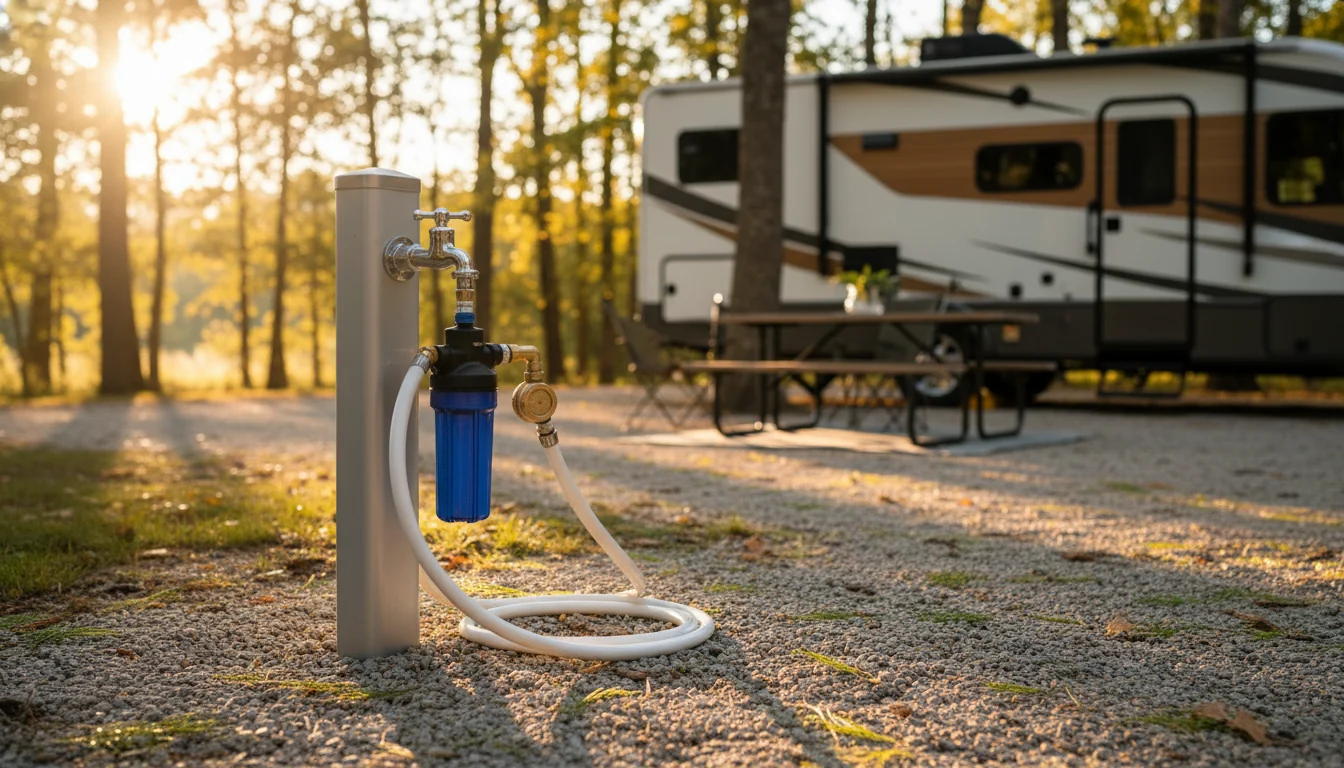
Campground water can be perfectly fine one stop and taste like hose, chlorine, iron, or mud the next. That is why I like having an RV water filter setup that is simple, portable, and easy to maintain. It will not turn every unknown source into ideal drinking water, but it can make normal campground water much more pleasant and help protect your RV plumbing from sediment.
The best RV water filter for camping depends on how you travel. A weekend camper may be happy with an inline carbon filter. A full-time RVer may want sediment prefiltration, better carbon capacity, and a dedicated drinking water filter inside.
Key takeaways
- A basic RV setup usually includes a drinking-water-safe hose, pressure regulator, and inline filter.
- Sediment filtration helps protect plumbing when campground water is gritty or rusty.
- Carbon filters can improve taste and odor, especially chlorine and hose-like flavors.
- Filters need replacement, flushing, and proper storage to stay useful.
What RV water filters can and cannot do
Most common RV filters focus on sediment, taste, and odor. They may reduce chlorine, particles, and some unpleasant flavors depending on the media and certification. They are not all designed to make unsafe water safe.
If a campground has a boil water advisory, a questionable well, flood conditions, or visible contamination, do not assume a simple inline filter is enough. Follow local advisories and use water from a safer source.
Best RV filter types
Inline hose filters
These are the familiar blue or white filters that connect between the campground spigot and your RV hose or inlet. They are affordable and easy to use. Many contain granular activated carbon and a sediment screen.
They are best for casual camping and general taste improvement. The downside is limited capacity and variable performance. I treat them as a convenient first layer, not a complete water treatment system for every situation.
Canister filters
Canister systems use replaceable cartridges inside a housing. They can offer better sediment control, more media, and more flexibility. For example, you might use a sediment cartridge before a carbon block.
They take more setup space and need winterizing, but they are a nice upgrade for frequent RVers.
Two-stage RV filters
A two-stage setup usually puts sediment first and carbon second. That makes sense because sediment can clog carbon quickly. If you camp in areas with sandy, rusty, or variable water, this is often more satisfying than a single inline filter.
Under-sink drinking water filters
Some RV owners filter all incoming water lightly, then use a separate under-sink or countertop drinking water filter for taste. I like this approach because it separates plumbing protection from drinking water quality.
Do you need a pressure regulator?
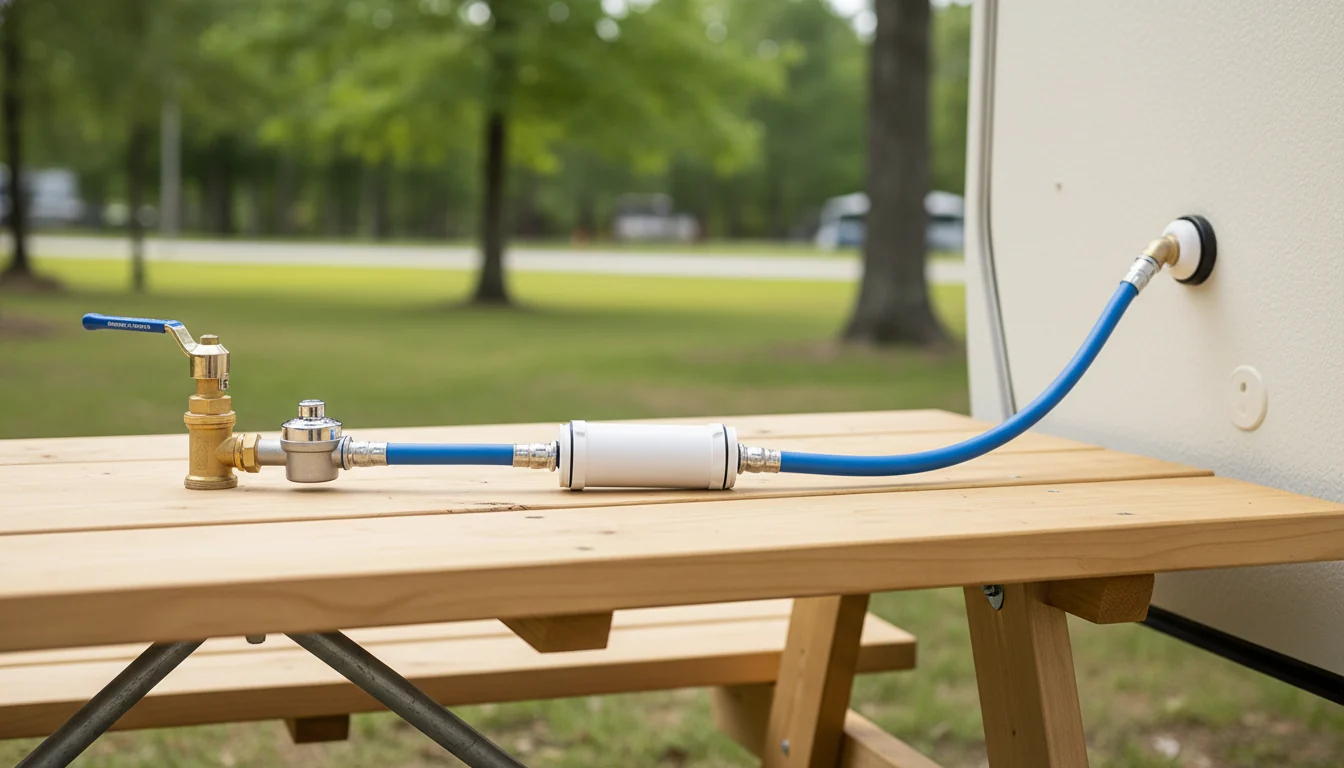
Yes, I consider a pressure regulator part of a smart RV water setup. Campground water pressure can vary, and high pressure can stress RV plumbing. A regulator is not a filter, but it protects your system.
Many people place the regulator at the spigot before the hose. Follow your RV and regulator instructions.
Setup order
A common setup is:
- Campground spigot
- Pressure regulator
- Drinking-water-safe hose
- Inline filter or canister system
- RV city water inlet
Some campers place the filter before the hose to reduce hose taste; others place it near the RV to protect the filter from ground contact. The best order can depend on your gear, but keep everything clean and off dirty surfaces when possible.
What to look for when buying
Look for:
- Drinking-water-safe materials
- Clear micron rating for sediment claims
- Carbon filtration for taste and odor
- Certifications or credible test data for specific claims
- Adequate flow rate for showers and sinks
- Standard hose fittings
- Replaceable cartridges if you camp often
- A design that drains and stores cleanly
I also check replacement availability before buying. A filter is only as convenient as the cartridges you can actually get.
Maintenance tips
Flush a new filter before use. Let water run until carbon dust and air clear according to the instructions. After a trip, drain the filter as directed and store it in a clean place. Do not let a used filter sit in heat for weeks and then assume it is fresh.
Replace filters based on time, gallons, taste changes, flow reduction, or the manufacturer schedule. If a filter freezes, cracks, grows slime, or smells bad, replace it.
Camping with a freshwater tank
Filtering water before it enters the tank can reduce sediment and improve taste, but the tank still needs routine sanitation. A filter does not replace tank maintenance. If water sits in the tank for a long time, it can taste stale even if it was filtered going in.
FAQ
Can I drink water from an RV inline filter?
Often, yes, if the source is potable and the filter is designed for drinking water. But an inline filter is not a guarantee against every contaminant or unsafe source.
How often should I replace an RV water filter?
Follow the manufacturer schedule and replace sooner if flow drops, taste changes, the filter has been stored poorly, or campground water is very dirty.
Do RV filters remove bacteria?
Many common RV filters are not designed for reliable bacteria removal. If microbiological safety is a concern, use treatment designed and verified for that purpose.
Should I filter water before or after the hose?
Both setups are used. I prefer keeping the hose drinking-water-safe either way and making sure the filter stays clean, supported, and flushed.
My bottom line
For most campers, the best RV water filter setup starts with a safe hose, pressure regulator, and a good inline or two-stage filter. If you camp often, upgrade to sediment plus carbon and keep a separate drinking water plan for the best taste.