
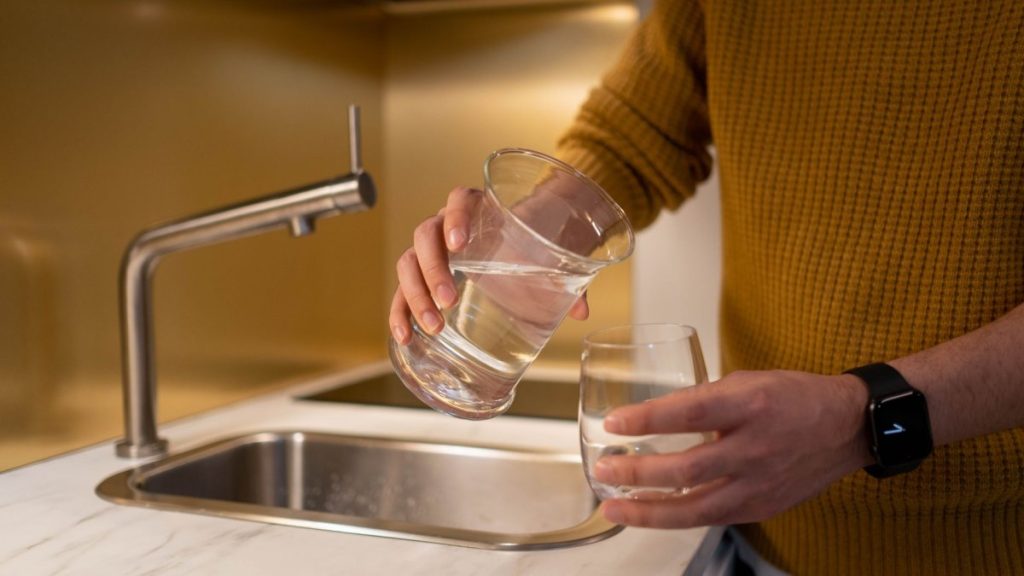

You may have seen a forum thread claiming ZeroWater doesn’t touch PFAS, right next to a certificate claiming 99.7% reduction. Both can be partly true, because “ZeroWater” now means two different generations of filters. The newer one is certified for far more than the older one.
Quick answer: Yes, but only the current Culligan with ZeroWater Technology filters, which are IAPMO certified to NSF/ANSI 53 for Total PFAS. Older legacy ZeroWater filters carry a narrower claim, covering PFOA and PFOS. Check your exact model’s listing before you rely on it.
Does ZeroWater Actually Remove PFAS?
Yes, if you have the current Culligan with ZeroWater Technology filter. IAPMO certifies it to NSF/ANSI 53, and under that standard it cuts Total PFAS by 99.7%.
The older ZeroWater filters, the ones that thread into the bottom of legacy pitchers, are a different product. Their listed claims are narrower, and the steps below show you how to check yours.
“Certified” also doesn’t mean “guaranteed in your kitchen.” Your starting PFAS level, your water’s total dissolved solids and how worn the filter is all matter. The sections ahead cover what the certificate proves, why forums disagree, how ZeroWater stacks up against Brita and reverse osmosis, and when you should pick something else.
What Does the Total PFAS Certification Prove?
It proves an accredited lab put the filter through a standardized test and it passed for a defined group of compounds. It does not promise results for every PFAS or every home.
In Culligan’s definition, “Total PFAS” covers exactly seven compounds: PFOA, PFOS, PFHxS, PFNA, PFHpA, PFBS and PFDA. That’s a solid list, and it includes PFOA and PFOS, the two best-known PFAS. But thousands of PFAS exist, and the certificate says nothing about the ones that aren’t named.
NSF/ANSI 53 is the health-effects standard for filters. IAPMO, WQA and NSF are among the bodies that certify against it, so an IAPMO mark is a real third-party check, not a marketing badge.
Percent reduction also isn’t the same as “safe.” The EPA’s enforceable limits for PFOA and PFOS are 4 parts per trillion each. A filter that cuts 99.7% of a high starting level can still leave a small amount behind, which is why knowing your water’s actual PFAS number matters.
How Does the 5-Stage Filter Work?
It pushes water through three kinds of media: activated carbon, KDF and a mixed-bed ion exchange resin. The resin does most of the dissolved-contaminant work, while carbon and KDF handle chlorine, some metals and organic compounds.
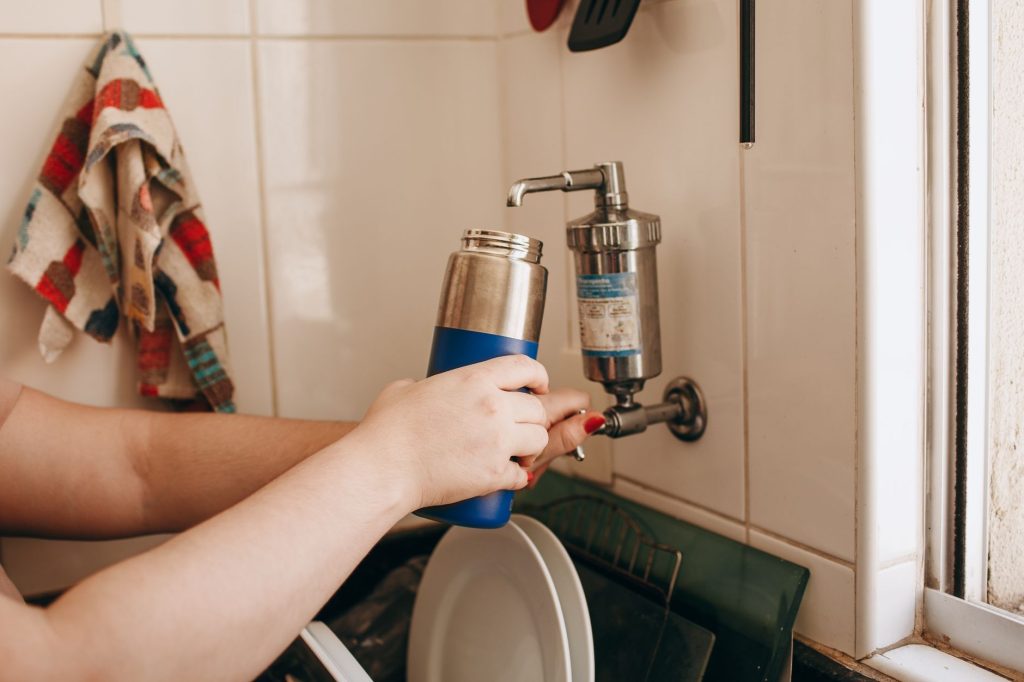
The mixed-bed resin trades unwanted dissolved ions for harmless ones. That’s why filtered water reads close to zero on a TDS meter, and why the filter wears out faster than a plain carbon one. It’s busy pulling out nearly everything dissolved.
The current Culligan line is certified under NSF/ANSI 42, 53 and 401. Claims include chlorine, lead, mercury, hexavalent chromium (chromium 6), fluoride, nitrate and nitrite, cadmium, copper, zinc, select pharmaceuticals and Total PFAS.
It is not certified for everything. Bacteria and viruses aren’t on the list, so don’t treat a pitcher as a fix for microbiologically unsafe water.
Certifications differ from model to model, so read the listing for the exact one you own. The lineup runs from 7-, 10- and 12-cup pitchers up to 22-, 32- and 40-cup dispensers, and a claim on one size doesn’t automatically carry over to another.
Why Do Some People Say ZeroWater Doesn’t Filter PFAS?
Because older ZeroWater filters were certified only for PFOA and PFOS, while the newer Culligan line is certified for Total PFAS. Forum posts often blur the two, so a complaint about one gets pinned on the other.
The official ZeroWater site lists its 5-stage filters as IAPMO R&T certified for lead, hexavalent chromium, mercury and PFOA/PFOS under NSF/ANSI 53, plus chlorine under NSF/ANSI 42. That’s a real claim, just a smaller one than Total PFAS.
Compatibility adds to the confusion. New Culligan filters don’t fit legacy pitchers and dispensers that use bottom-threaded filters, and those older models are now treated as legacy products. So you can’t just buy a new filter to upgrade an old pitcher. Here’s how to sort out which one you have:
- Find your model. Check the bottom of the pitcher, the box or your order history.
- Look at the filter. Note whether it’s a Culligan with ZeroWater filter or an older threaded one.
- Search the certification listing. Look up the product in the IAPMO or NSF database.
- Match filter to pitcher. Listings are tied to specific combinations, not a brand name.
- Read the claims. See whether yours says Total PFAS or just PFOA/PFOS.
If you own a legacy pitcher, it isn’t a scam. It’s a product with an older, narrower certificate.
Does Real-World Performance Match the Certification?
Mostly, as long as you replace the filter on time. Certification reflects lab conditions, so your results depend on your local water and how worn the filter is.
There’s some independent support. In Water Filter Guru’s Tap Score lab test, the Culligan ZeroWater eliminated fluoride and uranium. Water Filter Guru also ranked it the best budget PFAS pitcher, at under $25 upfront.
The weak spot is filter life. Once the resin is spent, protection can fall off without any obvious change in taste, so don’t stretch it. A TDS meter is a handy rough guide: when filtered water starts reading well above zero, the resin is running out. But it measures dissolved solids, not PFAS. Treat it as a replacement reminder, not a safety test.
Cost per gallon matters too. Clearly Filtered’s pitcher filter lasts 100 gallons, five times longer than ZeroWater’s. If your tap water has a high TDS, a ZeroWater filter will run out sooner, and the cheap pitcher gets pricier to run.
How Does ZeroWater Compare with Brita and RO?
ZeroWater is an inexpensive pitcher with a Total PFAS certification, which few pitchers carry. Brita’s standard filter isn’t certified for PFAS, and reverse osmosis suits heavier contamination.
| Option | PFAS Certification | Worth Knowing |
|---|---|---|
| Culligan with ZeroWater | IAPMO, NSF/ANSI 53, Total PFAS (99.7%) | Under $25 upfront; shorter filter life |
| Culligan MaxClear | IAPMO, NSF/ANSI 53, Total PFAS (99.6%) | Also certified for lead and microplastics |
| Brita standard | Not certified for PFAS | Fine for taste and chlorine |
| Brita Longlast+ | Some PFAS reduction certification | Check the exact claim on the box |
| Clearly Filtered pitcher | WQA, PFOA/PFOS | 100 gallon filter life |
| AquaTru Carafe | IAPMO, NSF/ANSI 53, PFOA/PFOS | Water Filter Guru’s top PFAS pick |
| Waterdrop G3 P800 (under-sink RO) | IAPMO, NSF/ANSI 53, PFOA/PFOS | 800 GPD tankless; about $0.11 per gallon in filters |
If your goal is the cheapest certified entry point, ZeroWater wins. If you want a gravity filter that adds microplastics to the certified list, MaxClear is the one. I’d skip the standard Brita for PFAS entirely.
Choose reverse osmosis when a test shows high PFAS, when you drink and cook with a lot of water, or when you’re tired of swapping filters every few weeks. It costs more upfront and needs plumbing, but you get longer-life filters and a steady flow.
Does ZeroWater Add Microplastics or Have a Lawsuit?
Nothing in the research behind this article shows that ZeroWater adds microplastics, and there’s no confirmed lawsuit to point to. Treat both claims as unverified until you see primary sources.
- Microplastics: Pitchers are plastic, so some people worry about shedding. ZeroWater’s certified claims don’t include microplastic reduction, while Culligan MaxClear’s do. If microplastics are your concern, that’s the certified route.
- Lawsuits: Search court dockets and official regulator pages rather than forum summaries. If you can’t find a docket, don’t repeat the claim.
- “Scam”: The label ignores the certifications. The real issue is legacy versus current filters.
How Do I Know If My Tap Water Has PFAS?
Test it. Public water customers can read their utility’s annual water quality report (the Consumer Confidence Report), while well owners need a certified lab test.
- City water: Check the latest report from your utility. Some list PFAS results and some don’t, so call if it’s missing.
- Well water: Order a lab test, such as one from Tap Score, since no utility is monitoring your supply.
- Use the result: Low levels may be handled by a certified pitcher. High levels point toward reverse osmosis.
- Retest: Do it if your water source changes, or after you’ve swapped filters and want to confirm they’re working.
Tap Score’s review also walks through how to tell whether a filter is working, with separate guidance for public water systems and private wells. It’s worth a read before you buy.
Common ZeroWater and PFAS Myths
Most myths come from treating a certificate as a blanket guarantee or from trusting your senses. Here are the ones to drop.
- “It tastes clean, so the PFAS is gone.” PFAS have no taste or smell, so your tongue can’t tell you anything. Only a certification and a lab test can.
- “Zero TDS means zero PFAS.” A TDS reading shows dissolved solids, not PFAS.
- “Boiling takes care of it.” Boiling doesn’t destroy PFAS, and as water evaporates the concentration can actually creep up.
When to Stop and Call a Professional
Get professional help if testing shows PFAS above the EPA limits, if you have a private well near a likely source, or if someone in the home is especially vulnerable. A pitcher is a stopgap in those cases, not a plan.
Specific signs to act on:
- A lab report shows PFOA or PFOS above 4 parts per trillion.
- Your well is near an airport, firefighting training site, landfill or industrial facility.
- Your utility issues a PFAS notice or violation.
- You’re pregnant, feeding an infant formula or have a weakened immune system, and want medical guidance on exposure.
A certified water treatment professional can size a whole-house or under-sink system. For health questions, talk to your doctor or your state health department.
The Bottom Line: Who Should Trust ZeroWater for PFAS
If you own a current Culligan with ZeroWater filter and replace it on schedule, it’s a credible, certified, low-cost PFAS option. Confirm your model’s listing first.
If you have a legacy pitcher, verify what it’s certified for instead of assuming it matches the new filters. Test your water first, then match the filter to what you find. Tap Score makes the same call: if lead, chromium, mercury or PFAS are your main worries, a Culligan with ZeroWater filter could be a good fit.
Check current options, prices and reviews for pfas water filter pitchers side by side before deciding what fits your home best.
As an Amazon Associate, Clean Water In Homes may earn from qualifying purchases.