
Quick takeaways
- Small kitchens need compact filters with easy cartridge access, not just strong filtration claims.
- Under sink carbon filters are simpler than reverse osmosis systems and often fit better in tight cabinets.
- Reverse osmosis can be excellent for certain concerns, but it needs more space, a storage tank or tankless unit, and more installation planning.
- Measure before buying, including room to twist cartridges off.
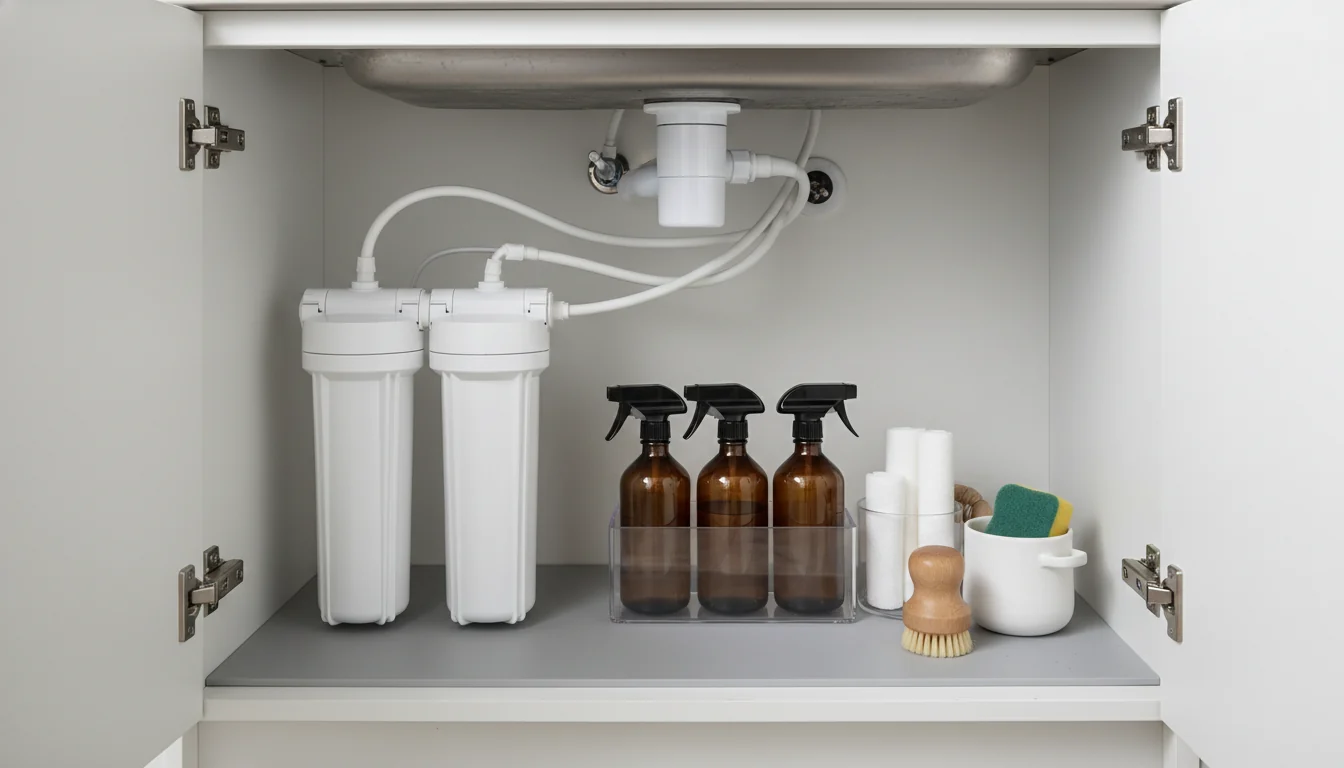
Under sink filters are appealing because they keep the counter clear and provide filtered water right at the sink. In a small kitchen, though, every inch under the cabinet already has a job. There may be a disposal, drain trap, cleaning supplies, trash bags, and a maze of pipes. The best under sink water filters for small kitchens are the ones that fit, remain serviceable, and match the water problem you are trying to solve.
I would rather have a slightly simpler system that I can maintain than a huge system crammed into a cabinet where cartridge changes become a wrestling match.
Start with your water goal
Before shopping, decide what you want the filter to do. If the goal is better taste and less chlorine odor, a compact carbon block under sink filter may be enough. If testing shows specific contaminants, choose a system certified for those contaminants. If you want broad dissolved solids reduction, reverse osmosis may be appropriate, but it is not the smallest or simplest option.
No filter is best at everything. Matching the filter to the concern is the whole game.
Main under sink filter types
Direct-connect under sink filters
These connect to the cold-water line and send filtered water through your existing faucet. They save counter space and avoid drilling a separate faucet hole. They are convenient, but they filter all cold water from that faucet, including water used for rinsing vegetables or quick hand rinses. That may shorten cartridge life.
Dedicated faucet systems
These send filtered water to a separate small faucet. They are efficient because you only use filtered water when you choose. The challenge is installation. You need an existing hole or permission to add one. In rentals or stone countertops, that may not be realistic.
Reverse osmosis systems
RO systems can reduce many dissolved substances, depending on design and maintenance. Traditional systems need a storage tank, multiple cartridges, and a drain connection. Tankless RO systems can save space but still require careful installation and enough cabinet clearance.
For a small kitchen, I would only choose RO if the water concern justifies it and the space truly works.
Measure like you mean it
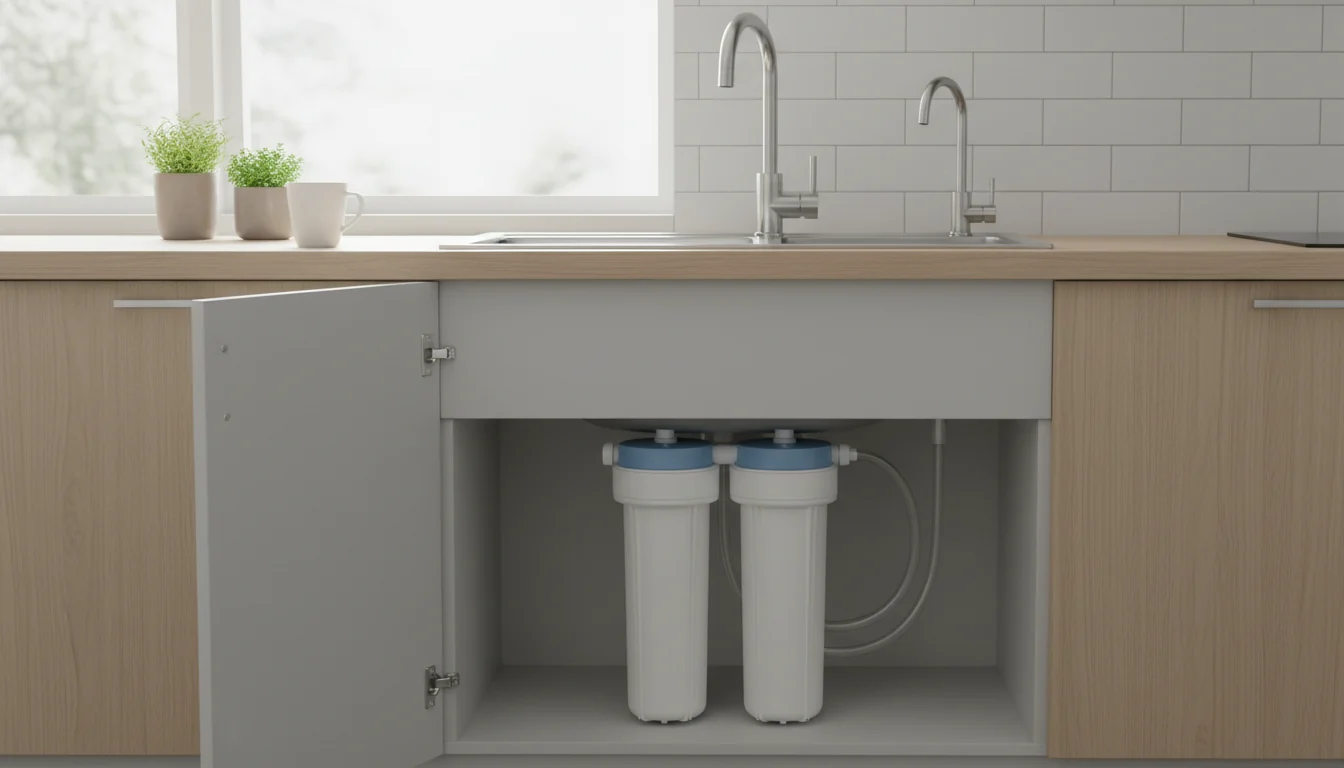
Measure cabinet height, width, and depth. Then look at the filter dimensions and add room for hoses and cartridge changes. Some cartridges drop down; others twist sideways. If you cannot remove the cartridge without uninstalling the system, you will hate maintenance.
Also check whether the system must be mounted vertically. A compact filter is not compact if it needs a perfect wall space you do not have.
Installation considerations
If you own the home and are comfortable with basic plumbing, many under sink filters are manageable. If you rent, get permission before installing anything that changes plumbing under the sink. Even reversible changes can cause problems if a leak occurs.
Use the included fittings, follow instructions exactly, and check for leaks repeatedly after installation. Place a dry paper towel under connections and inspect it after a few hours. A slow drip in a cabinet can cause damage before you notice.
Cartridge cost and access
Replacement cartridges are the long-term cost. Check price, lifespan, availability, and whether the system uses proprietary filters. I also prefer systems where cartridges are easy to change without turning the cabinet into a plumbing project.
Set reminders. Under sink filters are easy to forget because they are hidden. Hidden is beautiful until maintenance disappears too.
What about water pressure?
Some filters reduce flow more than others. If your kitchen pressure is already weak, look for flow rate information and user reports about slowdown. RO systems especially can have slower production unless they include a tank or pump design.
Best choice by situation
For better taste in a tiny condo kitchen, I like a compact carbon direct-connect filter. For homeowners with an extra faucet hole and daily drinking water needs, a dedicated faucet carbon system is tidy and efficient. For tested concerns that call for RO, choose the most compact RO system you can maintain properly.
FAQ
Are under sink filters better than pitchers?
They are usually faster and more convenient, but they cost more and require installation. Pitchers are simpler for renters and very tight kitchens.
Can I install an under sink filter in an apartment?
Maybe, but ask permission if it changes plumbing. A faucet filter or pitcher may be safer for strict leases.
Do under sink filters remove hard water?
Most carbon under sink filters do not soften water. Reverse osmosis may reduce dissolved minerals, but a softener is the standard whole-home hardness solution.
How often do cartridges need replacement?
Follow the manufacturer’s schedule. Usage and water quality can affect lifespan.
My bottom line
For small kitchens, the best under sink water filter is compact, accessible, and chosen for a specific water concern. Measure carefully, think through cartridge changes, and do not buy more system than your cabinet or your water problem requires.