
Quick takeaways
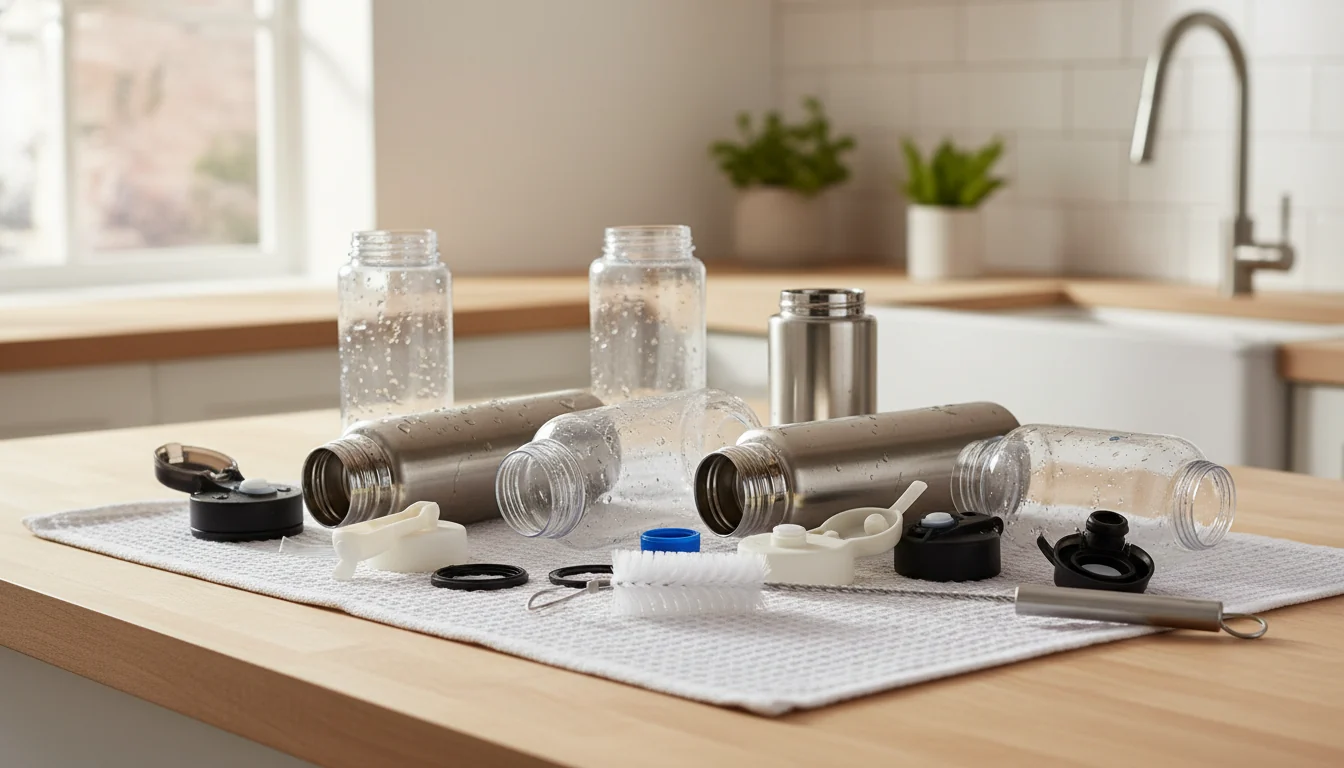
- Clean the bottle body, lid, straw, gasket, and mouthpiece, not just the part that holds water.
- Let every part dry fully before reassembling. A closed damp bottle can develop odors.
- Use a bottle brush for narrow bottles and a straw brush for straw lids.
- Follow the manufacturer’s dishwasher instructions, especially for insulated bottles and painted finishes.
Learning how to clean a water bottle properly is less about fancy cleaners and more about not ignoring the hidden parts. The bottle body may look fine while the lid gasket, straw, or bite valve is quietly collecting residue. I have seen enough mystery smells from reusable bottles to know the lid is usually the culprit.
A clean bottle makes drinking water more pleasant and helps the bottle last longer. Here is the routine I use at home.
Daily cleaning routine
Empty leftover water at the end of the day. Rinse the bottle with warm water, add a small amount of dish soap, scrub the inside with a bottle brush, and rinse thoroughly. Wash the lid separately. If the lid has a straw, remove it if possible and run warm soapy water through it.
Place all parts on a clean towel or drying rack and let them air dry completely. Do not close the lid on a damp bottle and put it in a dark cabinet. That is how odors start.
Deep cleaning routine
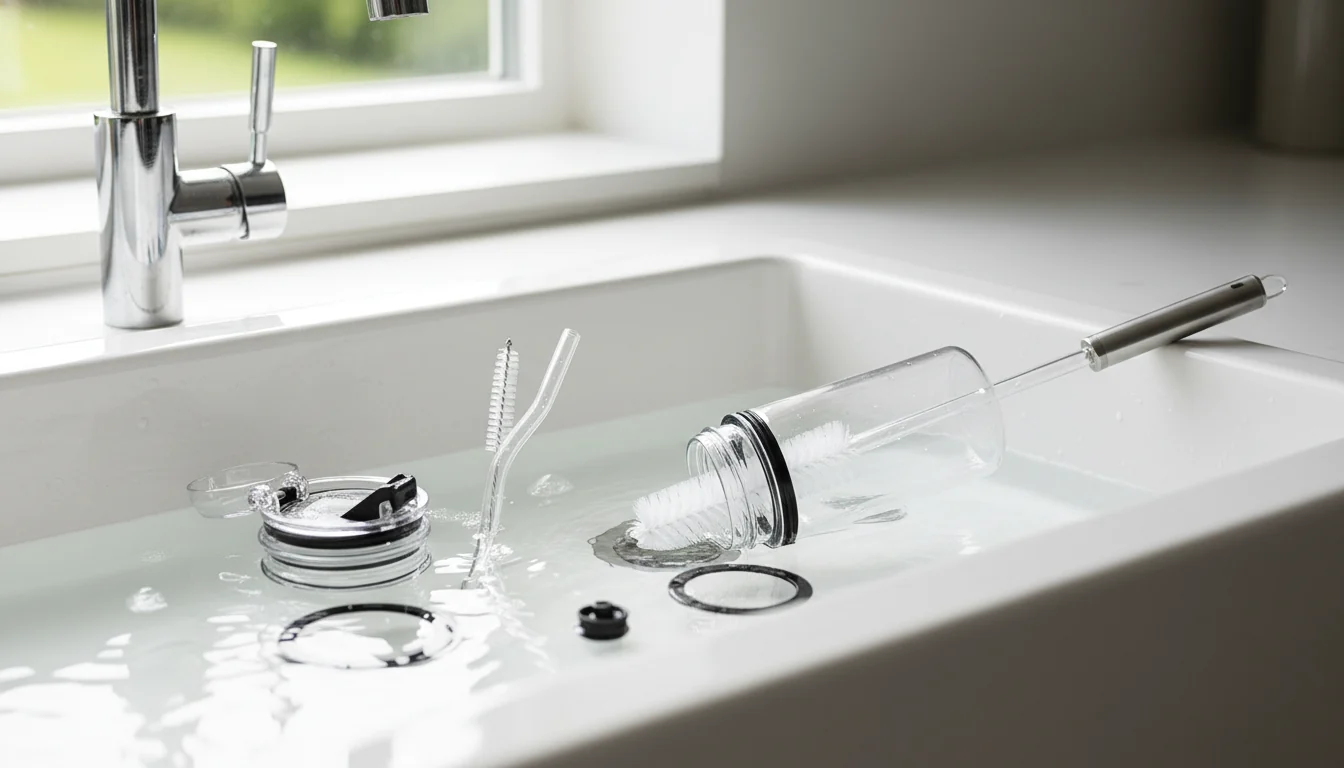
Once a week, or sooner if the bottle smells, take the lid apart as much as the manufacturer allows. Remove silicone gaskets, straws, and mouthpieces if they are designed to come out. Wash each part with warm soapy water. Use a small brush for grooves and narrow channels.
For stubborn odors, soak parts in a mixture of warm water and baking soda. Rinse well afterward. Some people use diluted vinegar for mineral film, but do not mix vinegar with bleach or other cleaners. Keep it simple and safe.
Dishwasher or hand washing?
Many plastic and glass bottles are dishwasher-safe, but not all. Insulated stainless steel bottles may have hand-wash instructions to protect insulation, paint, or seals. Always check the care label.
Even when a bottle body can go in the dishwasher, lids often need extra attention. Dishwasher spray may not reach inside a straw channel or under a gasket. I treat the dishwasher as helpful, not magic.
Cleaning straw lids
Straw lids are convenient, but they are the most cleaning-sensitive style. Remove the straw, scrub it with a straw brush, wash the mouthpiece, and check the valve area. If the straw is cloudy, cracked, or permanently smelly, replace it.
If your child uses a straw bottle at school, inspect it regularly. Sticky drinks make cleaning much harder than plain water. If a bottle is used for milk, smoothies, or sports drinks, clean it immediately and thoroughly.
Cleaning stainless steel bottles
Use warm water, dish soap, and a soft bottle brush. Avoid harsh abrasives that scratch the interior. For odors, baking soda and warm water can help. For tea or coffee stains in bottles rated for those drinks, follow the manufacturer’s cleaning guidance.
Do not use chlorine bleach unless the manufacturer specifically allows it and provides dilution instructions. Many bottle makers advise against bleach, especially with stainless finishes and lid parts.
Cleaning glass bottles
Glass is easy to inspect and often dishwasher-safe. Remove silicone sleeves if the instructions say to, because moisture can get trapped between glass and sleeve. Check the mouth and threads for residue.
If glass breaks, discard it carefully. Do not try to salvage a chipped drinking rim.
Cleaning plastic bottles
Plastic can scratch and hold odors over time. Use a soft brush, not a harsh scouring pad. Replace plastic bottles that are cracked, deeply scratched, cloudy, sticky, or smell bad after cleaning.
BPA-free plastic is still plastic; it needs normal care and replacement when worn.
How to remove odors
First, disassemble the lid. Most odors live there. Soak the parts in warm water with baking soda, then scrub and rinse. Leave everything open to dry in fresh air. If odor remains after repeated cleaning, replace the lid, straw, gasket, or bottle.
What not to do
Do not leave sweet drinks in a bottle overnight. Do not store bottles sealed while damp. Do not assume a quick rinse cleans a straw lid. Do not use boiling water unless the manufacturer says the material can handle it. Do not ignore damaged gaskets, because they can leak and trap residue.
FAQ
How often should I clean my water bottle?
For daily use, wash it daily. Deep clean weekly or whenever it smells, looks dirty, or has held anything besides plain water.
Can I just rinse it if I only drink water?
A rinse is better than nothing, but regular washing is still smarter because your mouth, hands, and environment contact the bottle.
Why does my bottle smell even after washing?
Check the lid, gasket, straw, and mouthpiece. Hidden parts often hold odor.
Is vinegar safe for cleaning bottles?
Diluted vinegar can help with mineral film and some odors, but rinse well and do not mix it with other cleaners. Follow the bottle maker’s instructions.
My bottom line
The right way to clean a water bottle is to clean every part, dry every part, and replace worn pieces when needed. A simple brush, mild dish soap, and a drying routine solve most problems. If a bottle is too complicated to clean, I would rather choose a simpler one.