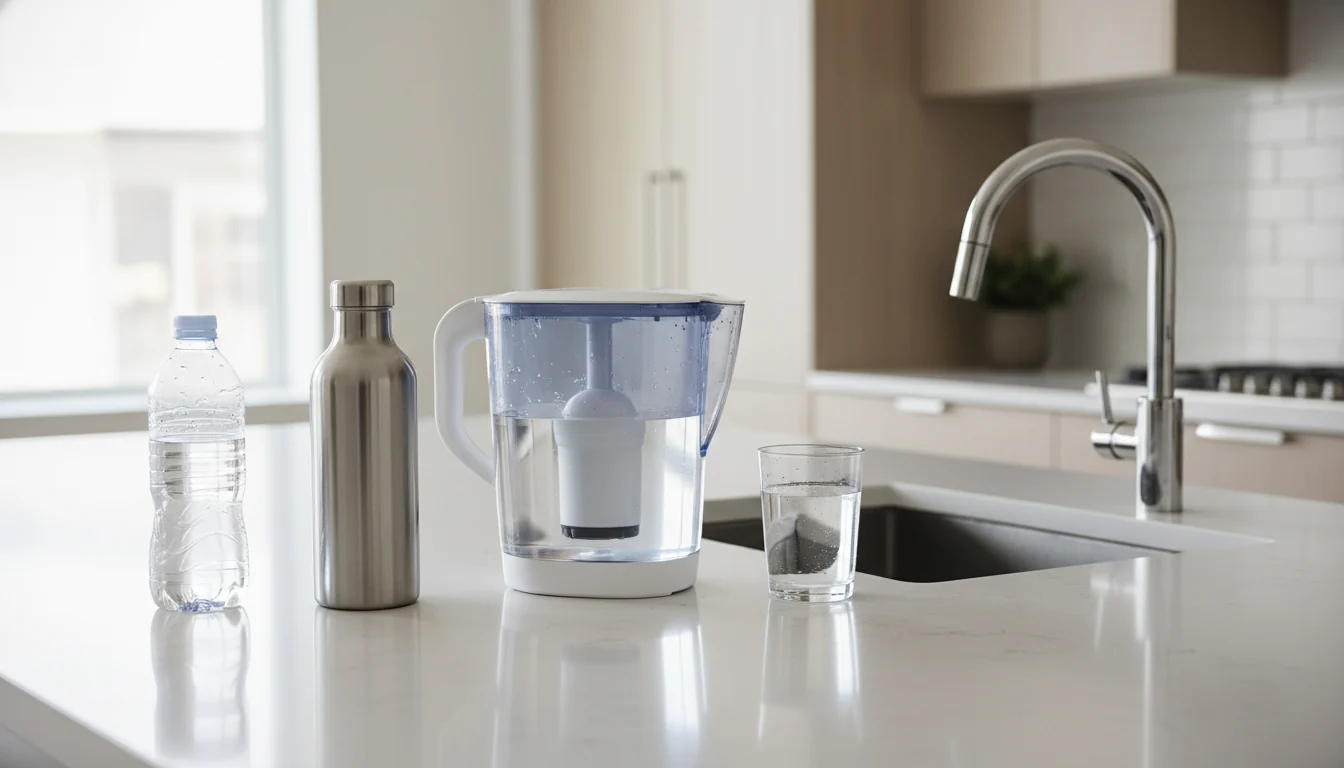
I do not think bottled water is automatically better than filtered water, and I do not think filtered water is automatically better in every situation. The better choice depends on your source water, your filter, your storage habits, and why you need the water.
For daily home use, filtered tap water is often the more practical choice. It is convenient, reduces single-use plastic, and can taste excellent with the right filter. Bottled water still has a place for emergencies, travel, boil water advisories, and situations where the tap source is temporarily unreliable.
Key takeaways
- For everyday drinking at home, filtered tap water is usually more economical and convenient.
- Bottled water is useful for emergency storage and travel, but it is not automatically purer.
- Filtered water quality depends on the starting water and the filter’s certified performance.
- Bottled water quality depends on source, treatment, bottling, storage, and handling.
Bottled water: the advantages
Convenience away from home
Bottled water is easy. You can buy it almost anywhere, hand it to guests, keep it in a car for short periods, or bring it when you do not trust a temporary water source.
Emergency usefulness
For storms, plumbing work, water main breaks, or boil water advisories, sealed bottled water can be a practical backup. I like having some emergency water stored, especially if you live in an area with outages or severe weather.
Consistent taste for some brands
Some people prefer the taste of a particular bottled water because of its mineral profile or treatment method. Taste is personal, and if a brand helps someone drink more water, I understand the appeal.
Bottled water: the drawbacks
Bottled water can be expensive over time, creates packaging waste, and takes storage space. It can also be affected by heat and storage conditions. I avoid leaving plastic bottles in hot cars or direct sun.
Another misconception is that bottled water always comes from a pristine mountain spring. Some bottled water is spring water; some is treated municipal water; some is purified by processes such as reverse osmosis. The label tells part of the story, but not always as much as people assume.
Filtered water: the advantages
Better daily economics
Once you buy the system, filtered tap water usually costs less per glass than buying single-use bottles. Replacement filters still cost money, but the daily habit is easier on the budget for many households.
Less plastic waste
Using a filter with a reusable bottle can dramatically reduce the number of disposable bottles you bring home. That matters if you drink water throughout the day.
Customizable treatment
You can choose a filter based on your water. Carbon for chlorine taste and odor, certified lead reduction where needed, reverse osmosis for broader dissolved solids reduction, sediment filtration for particles, and so on.
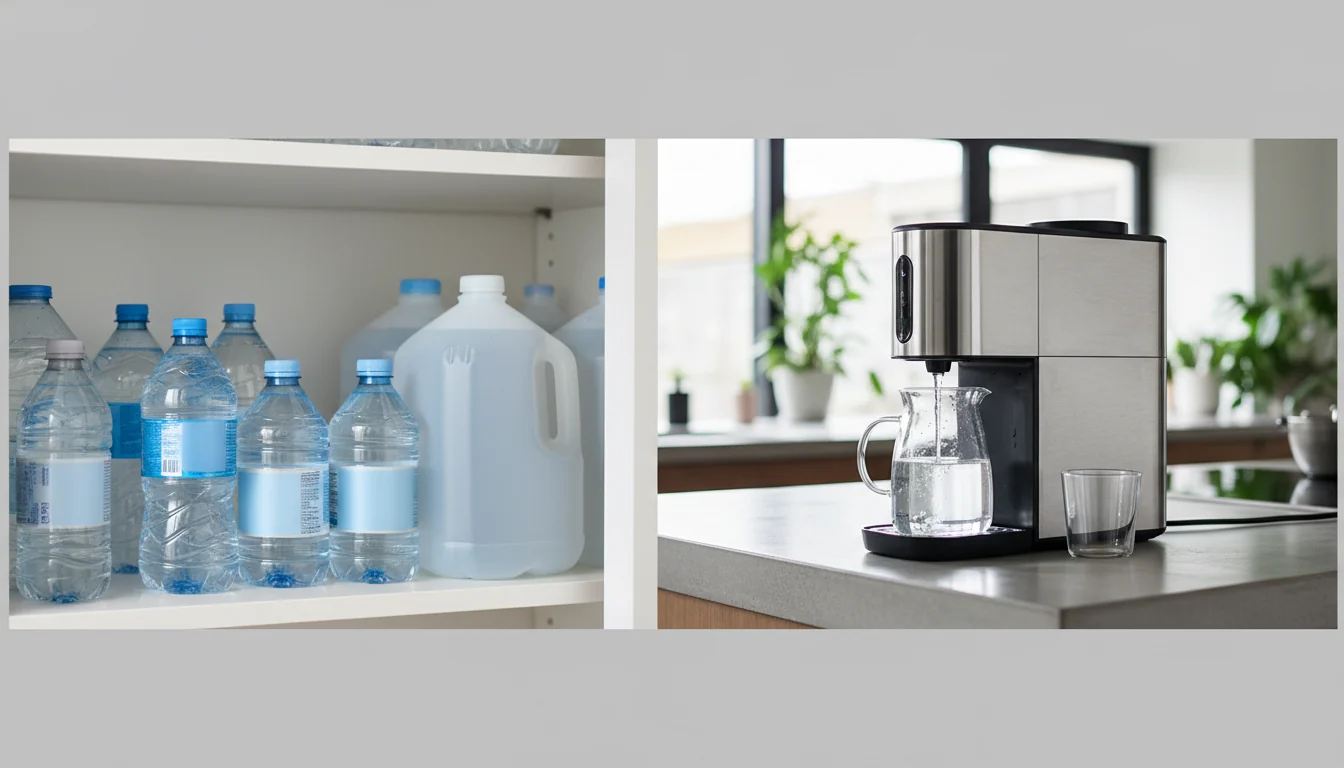
Filtered water: the drawbacks
A filter only helps if it is the right filter and it is maintained. An old cartridge can slow down, taste stale, or stop performing as expected. Some filters improve taste but do not address the contaminant you are worried about.
Filtered water also depends on tap availability. If your home water is shut off or under an advisory, your normal filter may not be enough.
Safety comparison
Municipal tap water in many places is regulated and tested, and bottled water is regulated too, but through a different framework. Neither category should be treated as perfect in all circumstances.
If you are on city water, review your local water quality report and choose filters certified for your concerns. If you are on a private well, test the water regularly and after major changes such as flooding or nearby construction. For bottled water, store it as directed and rotate emergency supplies.
Taste comparison
Taste is where filters often shine. A good carbon filter can reduce chlorine taste and odor, which is one of the biggest complaints about tap water. Reverse osmosis can make water taste very neutral, though some people prefer minerals added back.
Bottled water taste varies widely. Spring water, mineral water, purified water, and alkaline water can all taste different. Better taste does not necessarily mean better safety; it just means your palate prefers it.
Environmental and storage considerations
Filtered water plus a reusable bottle is usually the lower-waste daily routine. Bottled water involves packaging, transport, storage, and disposal or recycling.
That said, emergency bottled water can prevent panic buying when something goes wrong. I see bottled water as a backup tool, not my first choice for every normal day.
When I would choose bottled water
I would choose bottled water during a boil water advisory if instructed, during travel where tap quality is uncertain, after a plumbing contamination event, or as part of emergency preparedness. I would also use it temporarily while waiting for test results if my well water suddenly changed.
When I would choose filtered water
I would choose filtered water for everyday drinking, coffee, tea, cooking, filling reusable bottles, and reducing chlorine taste. It is especially appealing if you have a filter matched to your water quality report or test results.
FAQ
Is bottled water always safer than filtered tap water?
No. Safety depends on the source, treatment, storage, and handling. Filtered tap water can be excellent when the source is appropriate and the filter is maintained.
Is filtered water cheaper?
Usually for daily use, yes, though the exact cost depends on your system and replacement filters.
Should I keep bottled water at home?
I think keeping some emergency water is wise. That does not mean relying on disposable bottles for every normal glass.
Can a filter replace bottled water during an advisory?
Not always. Follow the advisory instructions. Some filters are not designed for microbiological risks or emergency contamination.
My bottom line
For daily life, I prefer filtered tap water and a reusable bottle. For emergencies and travel, bottled water has a useful role. The best setup is not bottled versus filtered forever; it is filtered water for normal routines and safe stored water for the times when normal routines break.