
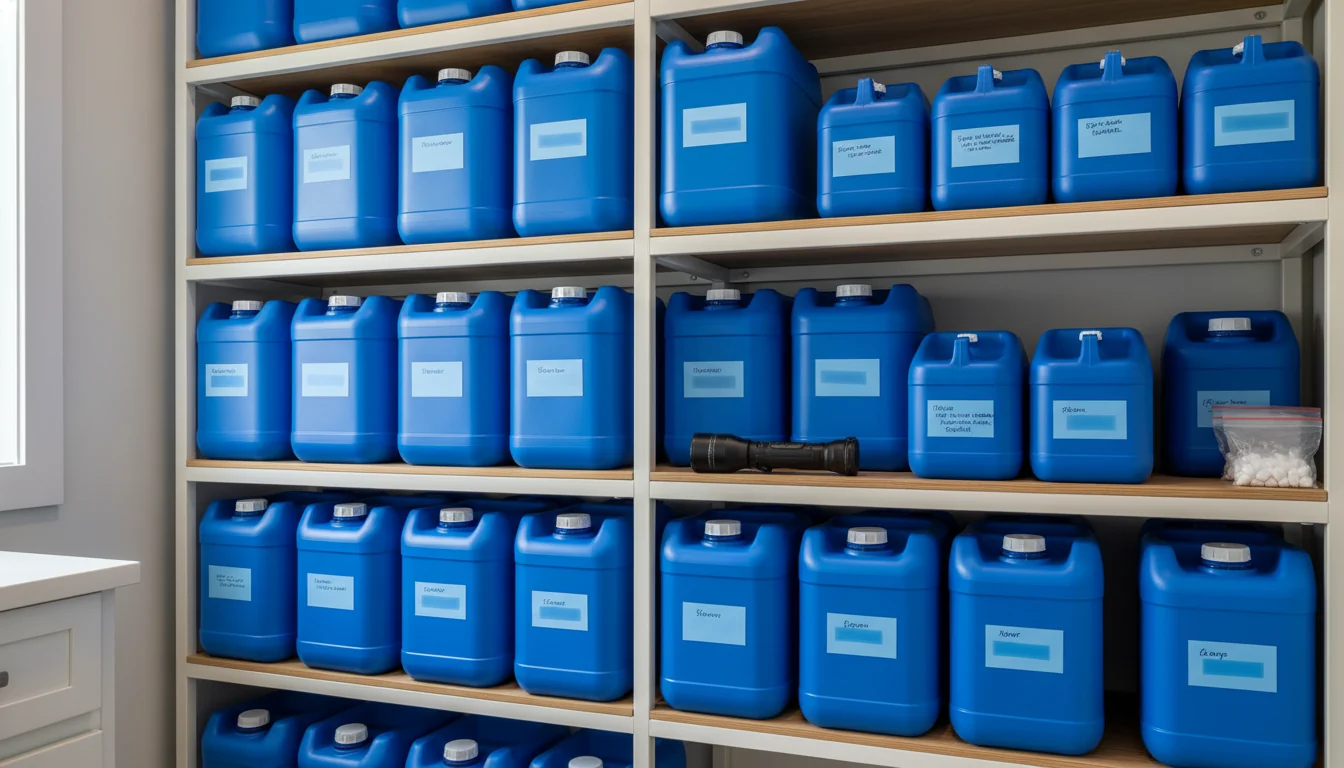
Emergency water storage is one of those home projects that feels boring until you need it. Then it becomes one of the most useful things you own. A storm, broken main, frozen pipe, wildfire evacuation, or boil water advisory can make normal tap water unreliable fast. Having clean stored water buys you time and calm.
The best emergency water storage containers for home are not always the biggest ones. They are the containers you can safely fill, move, clean, label, store, and rotate. A 55-gallon drum sounds impressive, but it is not helpful if you live in a small apartment and cannot move it or access it during an outage.
Key takeaways
- Use containers made for drinking water, not random bins or old chemical containers.
- Mix portable containers with larger storage if you have space.
- Label fill dates and rotate according to container and local guidance.
- Store water away from heat, fuel, chemicals, and direct sunlight.
What makes a good emergency water container?
A good container should be food-grade, sturdy, sealable, and easy to clean. It should also fit your home. I would rather have several manageable containers than one huge container I cannot lift or drain.
Look for materials intended for potable water. Many emergency containers are made from high-density polyethylene. Some are opaque blue because darker plastic helps limit light exposure. Clear containers can be fine for short-term use, but long storage in bright light is not ideal.
Best types of containers
Portable water jugs
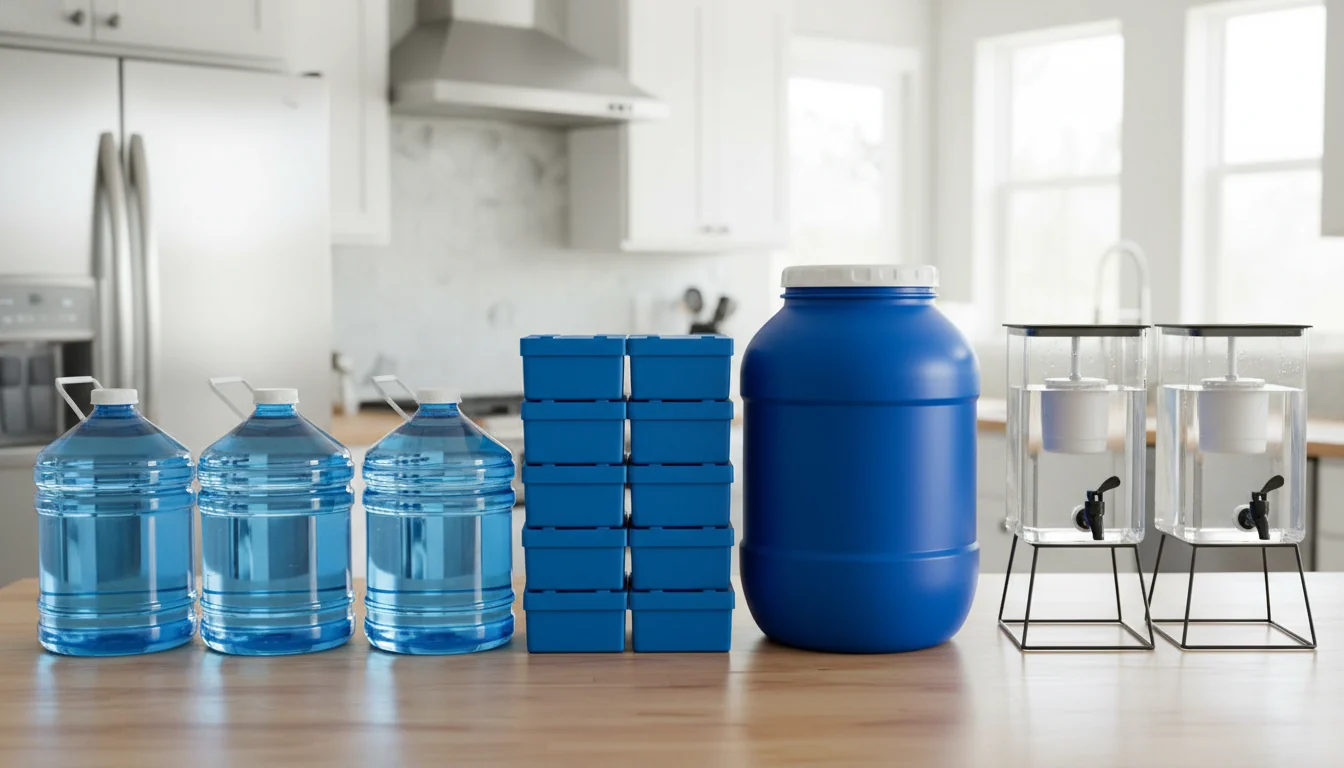
Portable jugs in the 5 to 7 gallon range are a classic choice. They are large enough to matter but still movable for many adults when full. I like them for garages, closets, and evacuation loading.
Choose jugs with comfortable handles, reliable caps, and a stable shape. A built-in spigot is convenient, but make sure it does not leak and can be cleaned.
Stackable water bricks
Stackable containers are great for apartments, closets, and organized shelves. They let you distribute weight and store water in smaller units. If one container leaks or gets contaminated, you have not lost all your water.
The downside is cost. Stackable systems can be more expensive per gallon than basic jugs.
Larger drums
Large drums can store a serious amount of water for households with garage or basement space. They are best when you have a plan for filling, treating if needed, and dispensing. A drum pump or siphon can make access much easier.
Do not put a large drum somewhere weak flooring, heat, freezing, or chemical fumes are concerns. Water is heavy, and big containers become permanent once filled.
Collapsible containers
Collapsible containers are useful as backup storage because they take little room when empty. I do not rely on them as my only emergency water because they can be less durable and harder to dry fully. But they are handy when you have warning before a storm and want to fill extra water.
Sealed store-bought water
Commercial bottled water is simple emergency storage. It is easy to distribute and does not require filling. The downsides are plastic waste, cost over time, and storage bulk. Keep it cool and rotate it.
How much water should you store?
Emergency recommendations vary by agency and situation, so I avoid pretending there is one perfect number for everyone. A common starting point is planning for drinking, basic food prep, hygiene, pets, and any special needs for several days. If you live in a hot climate, have infants, use medical equipment, or care for pets, you may need more.
I like building storage gradually. Start with a manageable amount, then add capacity as space and budget allow.
Cleaning and filling basics
Use new drinking-water containers or containers that previously held only potable water. Do not repurpose milk jugs for long-term storage; they are hard to clean well and can break down. Never use containers that held chemicals.
Wash containers according to the manufacturer’s instructions. Fill with safe tap water if your supply is currently safe. Leave enough headspace if freezing is possible. Seal tightly and label the date.
If you are storing water long term, follow local public health or emergency management guidance on treatment and rotation. Private well users may need different steps than municipal water users.
Where to store emergency water
Store water in a cool, dark place away from gasoline, paint, pesticides, cleaning products, and strong odors. Plastic can sometimes pick up smells from its environment. Avoid direct sunlight and high heat.
Also think about access. If all your water is buried behind holiday boxes, you may not reach it quickly. Keep some containers easy to grab.
FAQ
Can I store water in any plastic container?
No. Use containers intended for drinking water. Random plastic bins may not be food-grade, may leak, or may be hard to sanitize.
Are glass containers good for emergency water?
Glass is taste-neutral, but it is heavy and breakable. I prefer durable water storage containers for emergency use.
How often should I rotate stored water?
Follow the container maker and local emergency guidance. I label dates so rotation does not become a guessing game.
Do I need both filters and stored water?
They solve different problems. Stored water helps when water is unavailable. Filters may help when water is available but tastes bad or needs specific treatment. During advisories, follow official instructions.
My bottom line
The best emergency water storage containers for home are safe, manageable, and actually stored where you can use them. Start with drinking-water-safe jugs or stackable containers, label them clearly, keep them cool, and build a system you can maintain without stress.