
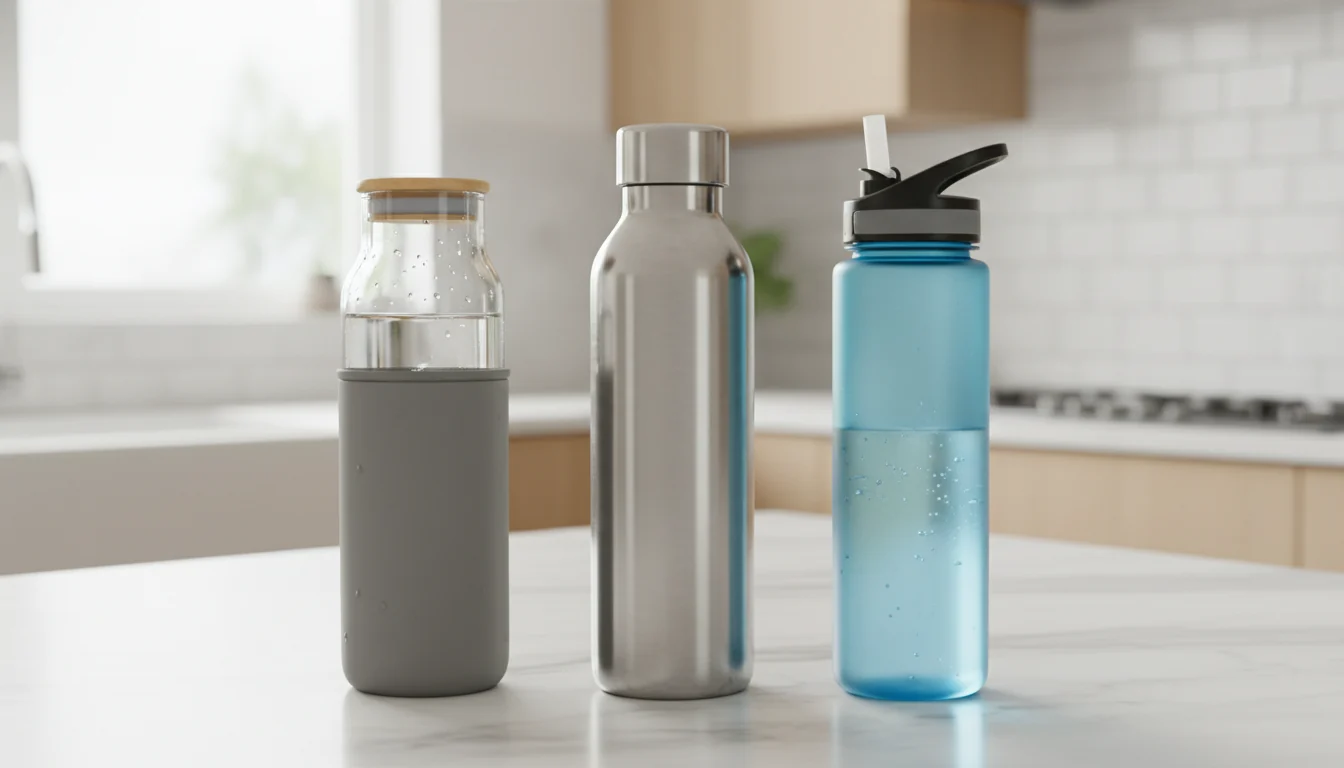
I have carried every kind of bottle, and the glass vs stainless steel vs plastic water bottle choice is not as simple as “one is best.” Each material has a place, but each also has trade-offs you feel in daily life.
When readers ask me about glass vs stainless steel vs plastic water bottle safety, I start with how the bottle will actually be used. A desk bottle, gym bottle, school bottle, and hiking bottle do not need the same material.
My own glass vs stainless steel vs plastic water bottle preference changed after I dropped glass on tile, tasted old coffee in stainless steel, and watched a plastic bottle warp in a hot dishwasher. Those small annoyances taught me more than any marketing slogan.
Key Takeaways
- Glass usually tastes cleanest and is easy to inspect, but it is heavier and breakable.
- Stainless steel is durable and great for temperature control, but quality, lining, and cleaning matter.
- Plastic is light and inexpensive, but heat, scratches, odor, and chemical concerns make careful use important.
- The safest everyday choice depends on your setting: home, school, travel, sports, or emergency backup.
- No bottle is maintenance-free; cleaning habits often matter as much as material.
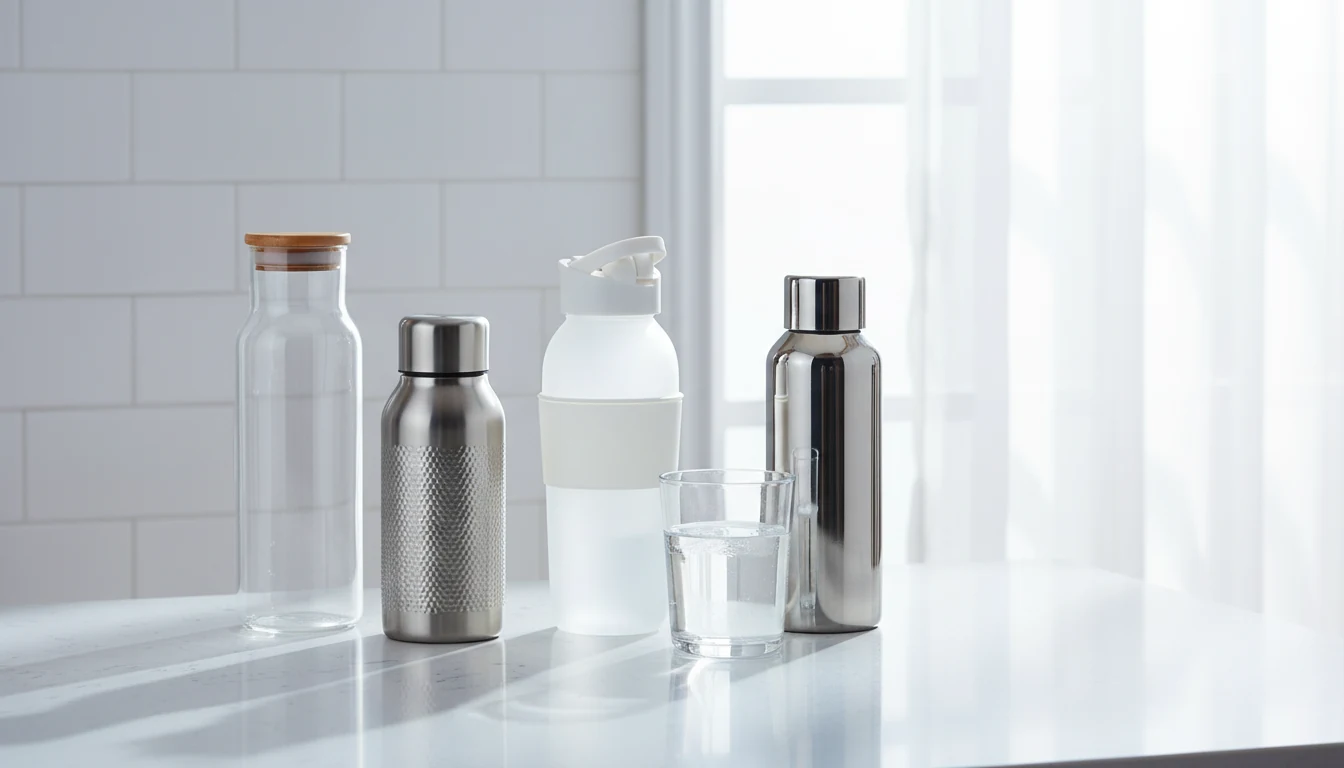
The simple material overview
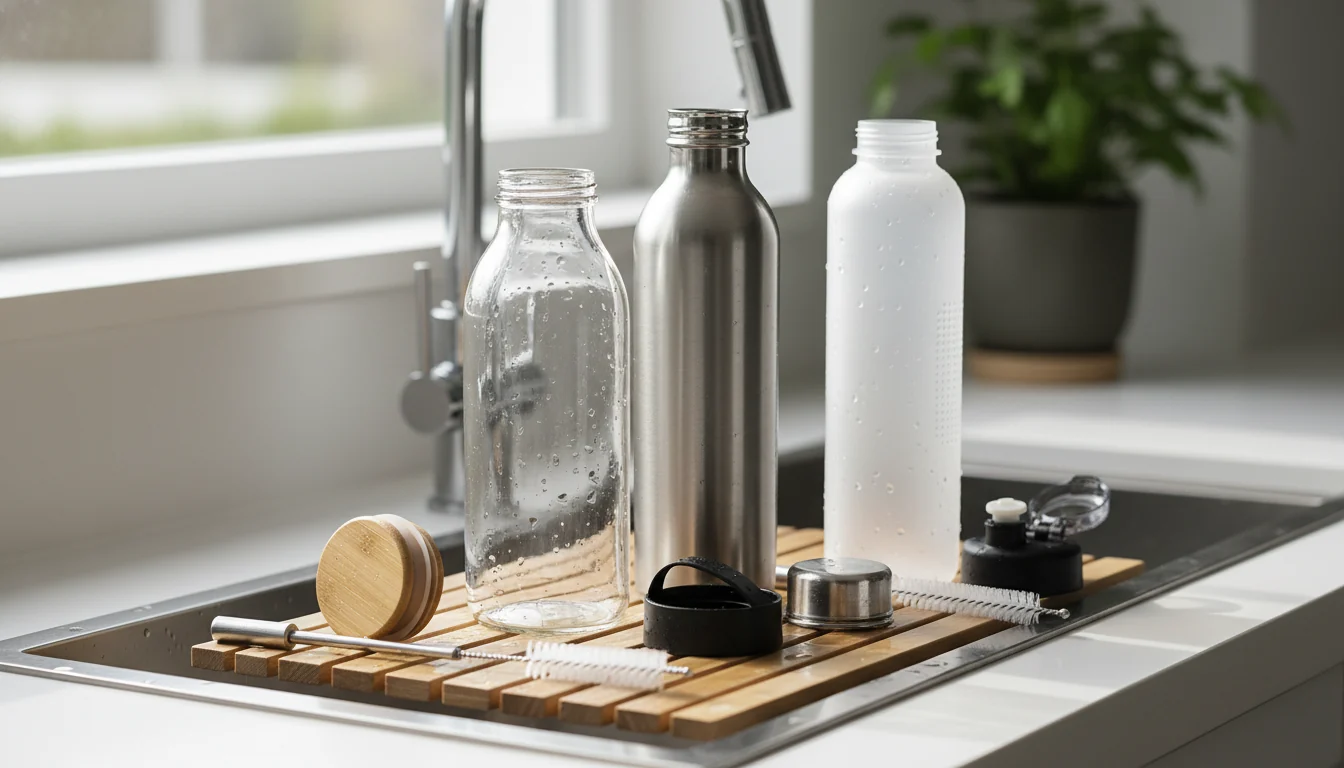
Glass bottles
Glass is nonporous, easy to see through, and usually gives water the cleanest taste. Borosilicate glass is often used for better thermal resistance, though it can still break.
I like glass at my desk because I can see whether it is clean. The downside is that I treat it carefully around kids and hard floors.
Stainless steel bottles
Stainless steel bottles are popular because they are tough and often insulated. Food-grade stainless steel, commonly 18/8 or 304, is the typical material to look for.
In my experience, stainless steel is the best all-day carry option when I need durability. I just make sure the cap, gasket, and straw parts are easy to clean.
Plastic bottles
Plastic bottles are lightweight and affordable. Tritan-style copolyester, polypropylene, and other plastics are common in reusable bottles, while PET is common for single-use bottled water.
Plastic can be practical, but I avoid heat, deep scratches, and old cloudy bottles. I also look for BPA-free claims while remembering that BPA-free does not answer every chemical question.
The best bottle material is the one that fits your real routine without creating hidden maintenance problems.
Taste, odor, and daily drinking experience
Glass tastes the cleanest
When I compare plain water side by side, glass usually tastes the most neutral. It does not hold coffee, sports drink, or lemon flavor the way some caps and plastics can.
That clean taste is why I keep a glass bottle near my desk. It encourages me to drink more water because nothing tastes stale.
Stainless steel can hold smells in parts
The metal body may clean well, but silicone gaskets, straws, and lids can trap odors. I once blamed a stainless bottle for a sour smell until I removed the gasket and found the real problem.
That fix changed my cleaning routine. Now I disassemble lids weekly.
Plastic scratches can trap odor
Plastic can pick up smell from flavored drinks and dishwasher heat. Scratches make cleaning harder because tiny grooves can hold residue.
| Material | Taste strengths | Taste drawbacks |
|---|---|---|
| Glass | Very neutral, easy to inspect | Can feel fragile for travel |
| Stainless steel | Good for cold water, insulated options | Lids and gaskets may retain smell |
| Plastic | Light and convenient | Can hold odors and scratch over time |
Safety considerations without scare tactics
Glass safety
Glass does not contain BPA and is chemically stable for normal water use. The obvious safety issue is breakage, especially around children, gyms, pools, and cars.
A silicone sleeve helps with grip but does not make glass unbreakable. I learned that after one dramatic kitchen drop.
Stainless steel safety
Good stainless steel is a strong option, especially when it is unlined or clearly food-grade. If a bottle has an interior coating, I want to know what that coating is.
People with specific metal sensitivities should ask a clinician for guidance. This isn’t medical advice — consult a professional if you have health concerns.
Plastic safety
Plastic concerns include heat exposure, wear, additives, and microplastic shedding. Regulatory agencies such as the FDA oversee food-contact materials, but everyday use still matters.
I do not panic about every plastic bottle, but I do avoid using scratched plastic for years. Replacement is part of safe plastic ownership.
READ MORE Are BPA-Free Bottles Really Safer? Bottled Water & Safer Bottles
Durability, weight, and portability
Home and desk use
At home, glass wins for me because taste and visibility matter more than impact resistance. A wide-mouth glass bottle is easy to clean and pleasant to drink from.
For a home office, weight is not a big issue. I am not carrying it miles.
School, gym, and commuting
For commuting and gym bags, stainless steel is usually my first pick. It survives bumps and keeps water cold.
For young kids, I prefer stainless steel or a carefully chosen plastic bottle over glass. The risk of broken glass often outweighs the taste advantage.
Hiking and travel
Plastic is hard to beat for ultralight travel, but stainless steel wins when I need durability and insulation. I choose based on whether weight or toughness matters more.
| Use case | Best fit | Why |
|---|---|---|
| Desk or bedside | Glass | Clean taste and easy inspection |
| Gym or commute | Stainless steel | Durable and often insulated |
| Lightweight travel | Plastic | Low weight and inexpensive replacement |
Cleaning and maintenance
Cleaning matters more than branding
A premium bottle with a dirty cap is not safer than a cheap bottle washed well. I look for wide mouths, removable gaskets, and simple lids.
Bottle brushes and straw brushes are not optional in my house anymore. They are what keep bottles from becoming science projects.
My weekly cleaning process
- Empty the bottle and rinse it with warm water.
- Remove the cap, gasket, straw, and bite valve if present.
- Wash all parts with dish soap and a bottle brush.
- Scrub small channels with a straw brush.
- Air-dry every piece fully before reassembly.
When I retire a bottle
I retire glass if it chips, stainless if the interior coating flakes or the bottle develops damage I cannot inspect, and plastic if it becomes cloudy, scratched, warped, or smelly.
A bottle is only as clean as its hardest-to-reach gasket.
Temperature control and insulation
Stainless steel is the cold-water champion
Vacuum-insulated stainless steel keeps water cold far longer than single-wall glass or plastic. For summer errands, that is a big quality-of-life upgrade.
I once left an insulated bottle in the car during a long appointment and came back to cold water. That sold me on stainless for hot weather.
Glass is pleasant but not rugged
Glass feels clean and elegant, but it is not ideal when temperature swings, drops, or outdoor use are likely. Some borosilicate bottles handle temperature change better, but caution still applies.
Plastic can warp with heat
Many plastic bottles are labeled top-rack dishwasher safe, but I still avoid high heat when I can. Heat can shorten useful life and affect shape, seals, and taste.
Environmental impact and waste
Reuse beats single-use
Any durable reusable bottle can reduce single-use bottle waste if you actually use it. The best environmental bottle is the one you keep, clean, and carry.
Glass and stainless steel often last longer, while plastic may need replacing sooner. But a heavy bottle left at home helps nobody.
Repairable caps matter
I value brands that sell replacement lids, gaskets, and straws. A failed cap should not send a good bottle body to the trash.
Recycling limitations
Glass, steel, and plastic recycling depend on local systems. I avoid making blanket claims because recycling rules vary by location.
READ MORE How to Choose a Reusable Water Bottle Home Water Quality & Safety
Cost and value
Upfront price
Plastic is usually cheapest, glass sits in the middle, and insulated stainless steel can cost more. Price does not always equal safety, though.
I would rather buy a simple, cleanable bottle than an expensive one with a complicated lid I never fully wash.
Value is not the sticker price; it is the bottle you will trust, clean, and keep using.
Long-term cost
A stainless steel bottle that lasts years can be inexpensive over time. A plastic bottle replaced frequently may cost more than expected.
Hidden costs
Consider brushes, replacement lids, sleeves, and the annoyance cost of leaks. A bottle that leaks once in a work bag loses my trust quickly.
How to choose your best bottle
Match the bottle to the person
Kids need impact resistance and easy cleaning. Desk workers may value taste. Athletes may need one-handed drinking and insulation.
There is no universal winner because “best” depends on the user.
My decision process
- Decide where the bottle will be used most.
- Choose the safest practical material for that setting.
- Inspect the lid design before buying.
- Confirm it fits your cup holder, bag, or fridge shelf.
- Plan how you will clean and dry it.
My practical picks
For desk water, I choose glass. For errands and gym use, I choose stainless steel. For backup lightweight travel, I accept plastic with careful heat and replacement habits.
Is glass vs stainless steel vs plastic water bottle choice right for you?
If you want the cleanest taste
Choose glass if you are mostly drinking at home, at a desk, or in a controlled setting. Add a protective sleeve, but still treat it as breakable.
If you want the most durable daily carry
Choose stainless steel if you commute, exercise, travel, or want cold water for hours. Prioritize food-grade stainless, cleanable lids, and replaceable parts.
If you want to reduce single-use plastic, compare BPA-free reusable bottles, glass bottles, and stainless steel options before choosing.
As an Amazon Associate, Clean Water In Homes may earn from qualifying purchases.
If you need light and affordable
Choose plastic if weight, price, or kid-friendly handling matters most. Avoid heat, replace worn bottles, and clean carefully.
FAQ
Is stainless steel safer than plastic for water bottles?
Often it is a strong choice because it is durable and heat-resistant, but quality and cleaning matter. Plastic can still be practical if it is used carefully and replaced when worn.
Does glass water taste better?
In my experience, yes. Glass tends to taste the most neutral because it is nonporous and easy to inspect, though caps can still affect flavor.
Are BPA-free plastic bottles completely safe?
BPA-free is helpful information, but it does not answer every question about heat, scratches, or other additives. I still avoid old, damaged, or heat-exposed plastic bottles.
Can kids use glass water bottles?
Some older kids can use protected glass bottles responsibly, but I generally prefer stainless steel or sturdy plastic for younger children because breakage risk is real.
Conclusion
My personal-considerations angle
I keep more than one bottle because my life has more than one setting. Glass sits on my desk, stainless steel goes in my bag, and plastic is reserved for lightweight situations where it makes sense.
My final-recommendation angle
If you want one everyday winner, stainless steel is the most versatile. If taste is your top priority, choose glass. If weight and price matter most, choose plastic carefully and replace it before it gets worn out.