
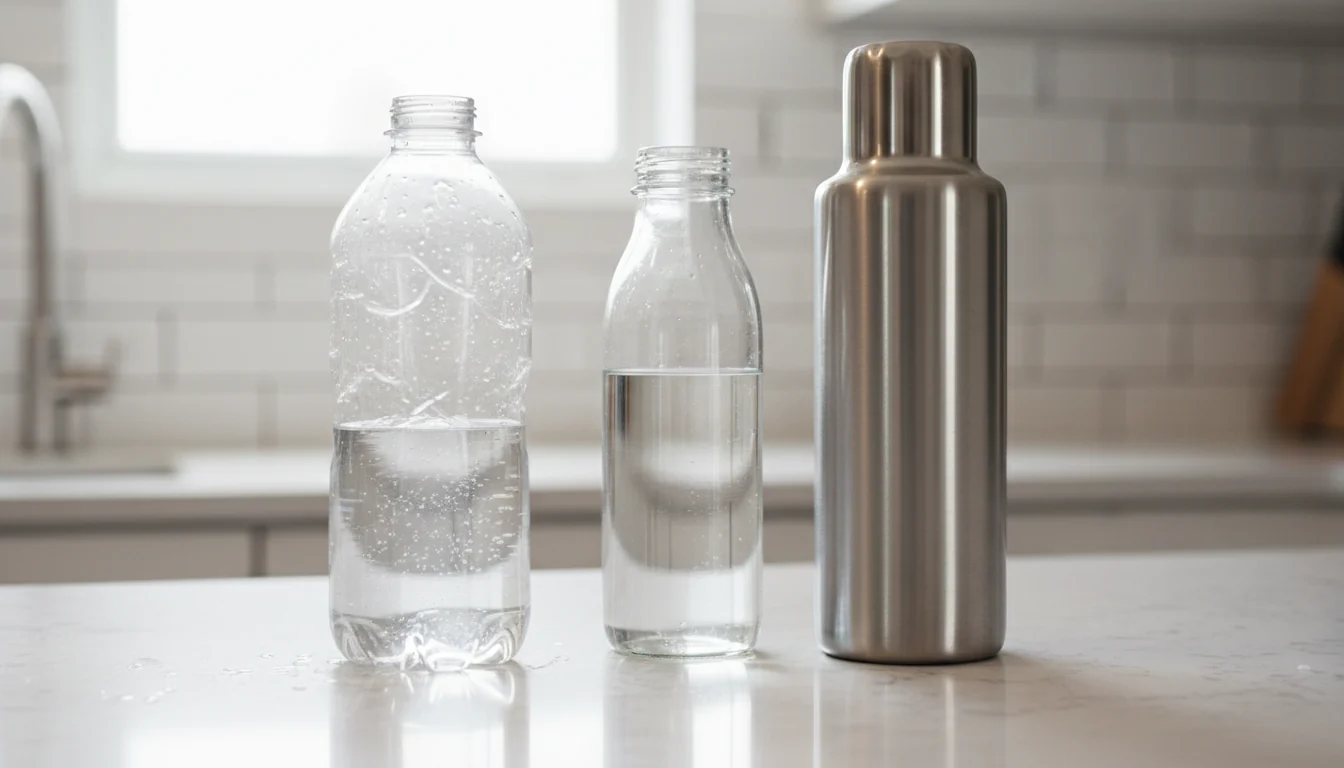
I first paid attention to water bottle leaching microplastics after I left a case of bottled water in a warm car and noticed the bottles had softened slightly. I could not see particles, and I did not run a lab test, but the experience changed how casually I treated plastic bottles.
In my kitchen, water bottle leaching microplastics is now a practical risk-management topic, not a panic topic. I still care about hydration first, but I choose cooler storage, fewer single-use bottles, and better reusable materials when I have the choice.
What I want to share here is the same checklist I use with my family: how water bottle leaching microplastics may happen, which bottle habits matter most, and when a glass, stainless steel, or well-certified filter setup makes sense. Water bottle leaching microplastics is not about perfection; it is about reducing avoidable contact.
Key Takeaways
- Plastic bottles can shed tiny particles, especially when they are stressed by heat, abrasion, squeezing, age, or repeated use.
- I avoid storing bottled water in hot cars, garages, sunny windows, and near appliances that warm the plastic.
- Glass and stainless steel are my preferred daily-use bottle materials when breakage, weight, and budget allow.
- Filters may help with some particle reduction, but performance depends on the exact filter design and certification claims.
- Health research is still developing, so I use cautious language and focus on practical exposure reduction rather than fear.
What Water Bottle Leaching Microplastics Means
The plain-English version
Microplastics are very small plastic fragments. When I talk about bottle leaching, I mean particles or plastic-related compounds moving from the bottle material, cap, liner, or handling wear into the water. Some people use “leaching” for chemicals only, but everyday readers often use it for particles too, so I explain both.
Why bottles are a common concern
Plastic water bottles are lightweight, cheap, and convenient. They are also thin and easy to stress. In my own routine, the most obvious stressors have been heat, repeated squeezing, and carrying the same crinkled disposable bottle for days.
What I do not claim
I am not claiming every bottle is unsafe or that every sip creates a measurable health problem. EPA, FDA, WHO, and academic researchers continue to evaluate microplastics in drinking water, and the science is still evolving.
My rule is simple: if I can lower plastic contact without making hydration harder, I do it.
How Plastic Bottles May Shed Particles
Heat and sunlight
Heat is the first thing I changed. I used to keep emergency bottled water in the trunk. Now I rotate emergency water more carefully and store daily drinking water indoors because heat can stress plastic and may increase migration of unwanted substances.
Friction, squeezing, and reuse
A disposable bottle is not designed to be a long-term canteen. When I reused one for a week, the bottle became cloudy and creased. That was enough visual evidence for me to stop treating single-use bottles as durable gear.
Caps, threads, and liners
The bottle body is not the only contact point. Caps, threads, and liners can scrape against each other. When I compare bottles, I look at the whole drinking path: bottle wall, cap interior, straw, gasket, and any plastic spout.
Bottle Types Compared
Quick material comparison
| Bottle type | Pros | Cons |
|---|---|---|
| Single-use PET plastic | Light, inexpensive, widely available | Not ideal for heat, long reuse, or rough handling |
| Stainless steel | Durable, reusable, good for travel | Can dent; interior lining matters on some models |
| Glass | Very low taste transfer, easy to clean | Heavier and breakable without a sleeve |
My practical preference
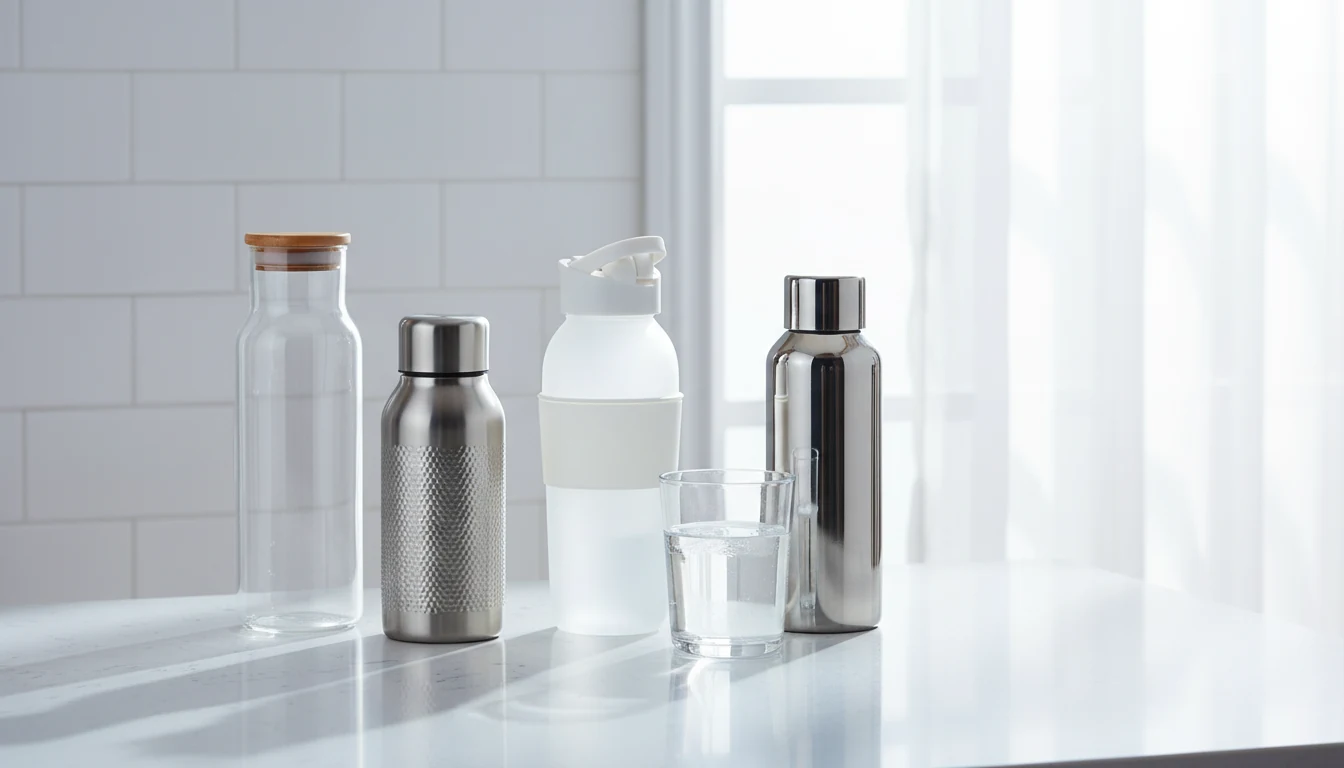
At my desk, glass wins. In the car or on walks, stainless steel wins. For emergencies, I still keep some packaged water, but I store it cool, rotate it, and do not pretend it is the best everyday option.
When plastic still has a role
There are times when bottled water is the safest available water: travel disruptions, boil-water notices, disaster kits, or questionable tap sources. I do not shame anyone for using bottled water when the alternative is dehydration or unsafe water.
The Habits That Matter Most
Step list: my lower-contact bottle routine
- Store bottled water in a cool, shaded indoor space.
- Avoid leaving bottles in hot cars, garages, patios, or direct sun.
- Use single-use bottles once when possible, then recycle where accepted.
- Switch daily drinking to glass or stainless steel.
- Wash reusable bottles gently and replace worn caps, straws, and gaskets.
Small mistakes I corrected
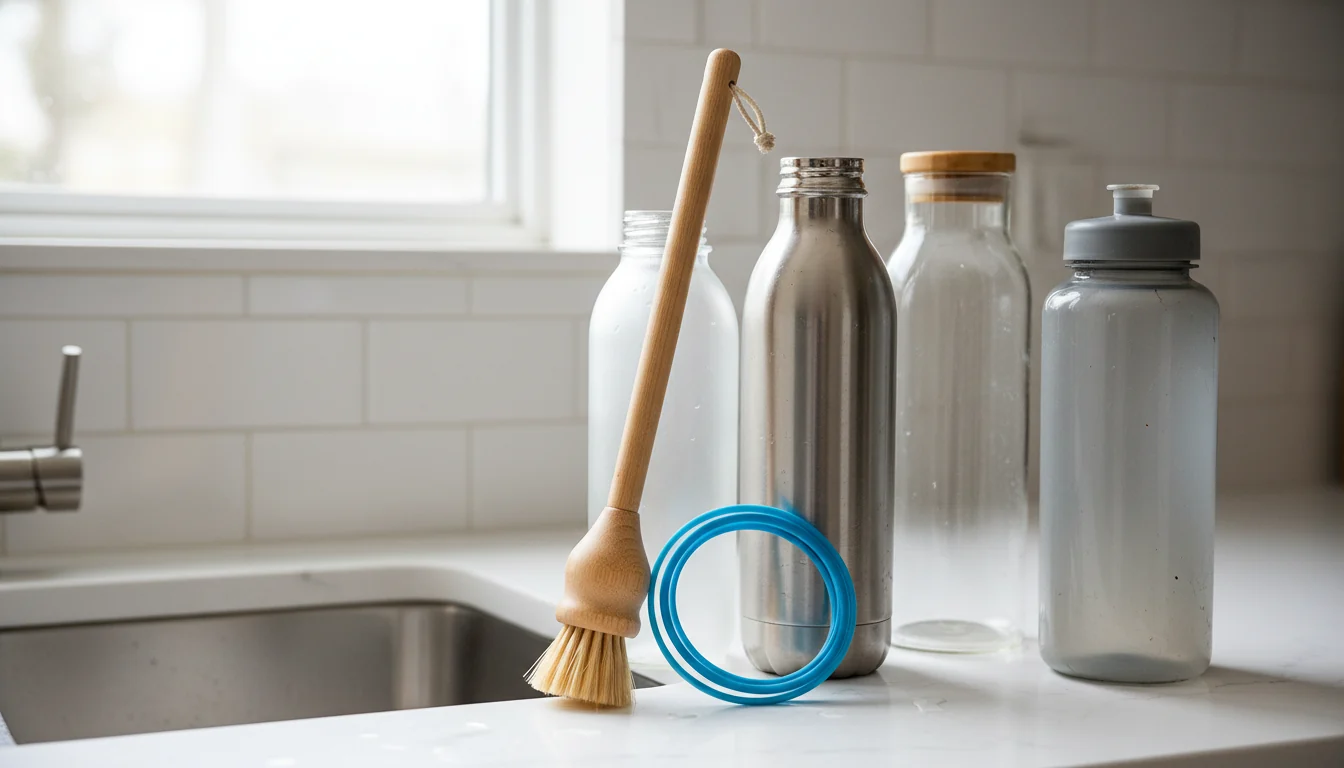
I used to wash plastic lids with very hot water and aggressive scrubbing pads. Now I use mild soap, a soft brush, and a drying rack. If a cap smells, cracks, or gets sticky, I replace it rather than trying to rescue it forever.
Storage matters more than people think
The simplest improvement is boring: keep bottles cool. It costs nothing, does not require a new product, and reduces avoidable stress on the material.
READ MORE Safer Water Bottle Materials Bottled Water & Safer Bottles
Filtration and Microplastics
What filters may help with
Some filters are designed to reduce particulate matter, and certain high-quality systems can physically capture very small particles. But not every pitcher, faucet filter, or fridge cartridge makes the same claim. I look for clear performance information, not vague “clean water” wording.
Certifications to understand
NSF/ANSI standards are useful because they define specific reduction claims. A filter certified for one contaminant is not automatically certified for microplastics or every particle size. I check the product’s performance data sheet before assuming anything.
My home setup
I use filtered tap water for most daily drinking and fill stainless or glass bottles from that. The biggest benefit I noticed was consistency: fewer disposable bottles came into the house, and I stopped finding half-used plastic bottles in bags and cup holders.
Choosing a Safer Everyday Bottle
What I look for first
My checklist is simple: material, cap design, cleaning access, replacement parts, and whether the company clearly states what touches the water. If a bottle has a complicated plastic straw assembly, I think harder about cleaning and wear.
Comparison table for daily use
| Feature | Better choice | Watch-out |
|---|---|---|
| Main body | Glass or unlined stainless steel | Thin disposable plastic for daily reuse |
| Lid | Simple, replaceable parts | Hidden gaskets that trap grime |
| Cleaning | Wide mouth opening | Narrow necks that need special brushes |
Budget guidance
You do not need a luxury bottle. One sturdy bottle that you actually clean and carry beats five trendy bottles sitting in a cabinet. I would rather spend modestly on a wide-mouth stainless bottle than overbuy features I will not maintain.
The safest bottle is the one you will use, clean, and not leave baking in the sun.
Care, Cleaning, and Replacement
Step list: how I clean reusable bottles
- Rinse the bottle as soon as possible after use.
- Wash with warm water, mild dish soap, and a soft bottle brush.
- Remove gaskets or straws if the design allows it.
- Air-dry fully with the cap off.
- Inspect for cracks, odors, rust spots, peeling liners, or worn silicone.
When I replace parts
I replace caps and gaskets sooner than the bottle body. A good stainless body can last a long time, but lids take abuse. If the drinking spout looks scratched or the gasket stays slimy after washing, I do not keep negotiating with it.
Dishwasher caution
Some bottles say dishwasher safe, some do not. I follow the manufacturer’s instructions because high heat and harsh detergents can shorten the life of plastics, coatings, printed markings, and seals.
Safety, Health, and Common Sense
What health research can and cannot say
Researchers are studying how microplastics may interact with the body, but risk depends on particle size, chemistry, dose, and exposure route. I avoid dramatic claims because the evidence is still being refined.
This isn’t medical advice — consult a professional if you have health concerns.
My balanced approach
I do not try to eliminate every possible particle from life. I reduce the obvious sources: overheated bottles, old disposable bottles, scratched plastic drinkware, and unnecessary single-use packaging.
Children, pregnancy, and sensitive situations
For babies, children, pregnancy, immune concerns, or medical conditions, I would talk with a pediatrician or qualified clinician about water choices. Practical caution is reasonable; fear-based decisions are not helpful.
Environmental Impact
Less plastic waste
When I switched from cases of bottled water to a refill routine, the trash and recycling bin changed immediately. That was the most visible result I noticed: fewer crinkly bottles around the house.
Reuse has to be realistic
A reusable bottle only helps if you use it enough to justify making and shipping it. I keep one primary bottle and one backup. That keeps the solution simple instead of turning sustainability into another buying habit.
Emergency water still matters
I still believe in keeping emergency water. The difference is that I store it carefully, rotate it, and do not use it as my everyday default.
READ MORE Home Water Storage Basics Home Water Quality & Safety
Is Water Bottle Leaching Microplastics Right to Worry About?
When concern is useful
Concern is useful when it leads to easy improvements: cooler storage, better bottle materials, less reuse of disposable bottles, and smarter filter choices. Those are all within reach.
When concern becomes noise
Concern becomes noise when it turns every drinking decision into stress. Clean water, enough water, and safe handling still come first. A perfect bottle does not help if you stop drinking enough.
My bottom line
I treat plastic-bottle particle exposure like many home water issues: not a reason to panic, but a good reason to upgrade habits.
If you want to reduce single-use plastic, compare BPA-free reusable bottles, glass bottles, and stainless steel options before choosing.
As an Amazon Associate, Clean Water In Homes may earn from qualifying purchases.
I do not need perfect water habits; I need repeatable ones.
FAQ
Can I see microplastics in bottled water?
Usually, no. Microplastics can be too small to see. Cloudiness, scratches, or bottle wear may signal material stress, but visibility is not a reliable test.
Is it safe to drink bottled water left in a hot car?
If it is the only safe water available, hydration may matter most. For routine use, I avoid drinking bottles that have been heat-stressed and I do not store water in hot cars.
Do glass bottles eliminate microplastics?
Glass reduces contact with a plastic bottle body, but lids, sleeves, filters, and filling sources may still include plastic parts. It is a reduction step, not a magic shield.
Should I throw away all plastic bottles?
No. Use what you need responsibly. I focus first on avoiding heat, long reuse of disposable bottles, and unnecessary single-use plastic.
Conclusion
My personal considerations
For my own home, the biggest wins were simple: store water cool, stop reusing disposable bottles, and keep a glass or stainless bottle ready. Those changes made the habit easier, not harder.
My final recommendation
If water bottle leaching microplastics worries you, start with the habits that cost little: cool storage, gentle cleaning, fewer disposable bottles, and a reusable bottle you will actually maintain.