
When people ask me how much plastic you drink per year, I usually start with a calmer answer than the headlines give. I do not believe in scaring families with shaky numbers, but I do believe in making everyday water choices less plastic-heavy.
I have spent enough time comparing bottled water, tap water, pitcher filters, and under-sink systems in my own kitchen to know that how much plastic you drink per year depends on habits more than one magic estimate. Bottle type, water source, filter choice, storage, heat, and plumbing all matter.
So in this guide, I’ll walk you through how much plastic you drink per year in practical terms: where the exposure can come from, what you can reasonably change, and what I would not lose sleep over. The goal is simple: reduce avoidable plastic contact without turning water into a daily anxiety project.
Key Takeaways
- There is no single trustworthy number for every household because microplastic exposure varies by water source, bottle material, storage, and filtration.
- Bottled water can add plastic contact through packaging, caps, handling, and heat exposure; tap water has different risks tied to source and plumbing.
- Filters certified to relevant NSF/ANSI standards are easier to trust than vague “microplastic reducing” marketing claims.
- Glass, stainless steel, and well-maintained filtration can reduce unnecessary plastic contact in daily drinking water.
- Microplastics are an emerging concern, but health effects are still being studied; use cautious language and practical risk reduction.
Why “Per Year” Estimates Are So Hard To Pin Down
Water Habits Are Personal
One person drinks mostly tap water from a stainless bottle. Another buys cases of single-use bottled water and leaves them in a hot car. Those two people may both drink plenty of water, but their plastic contact points are very different.
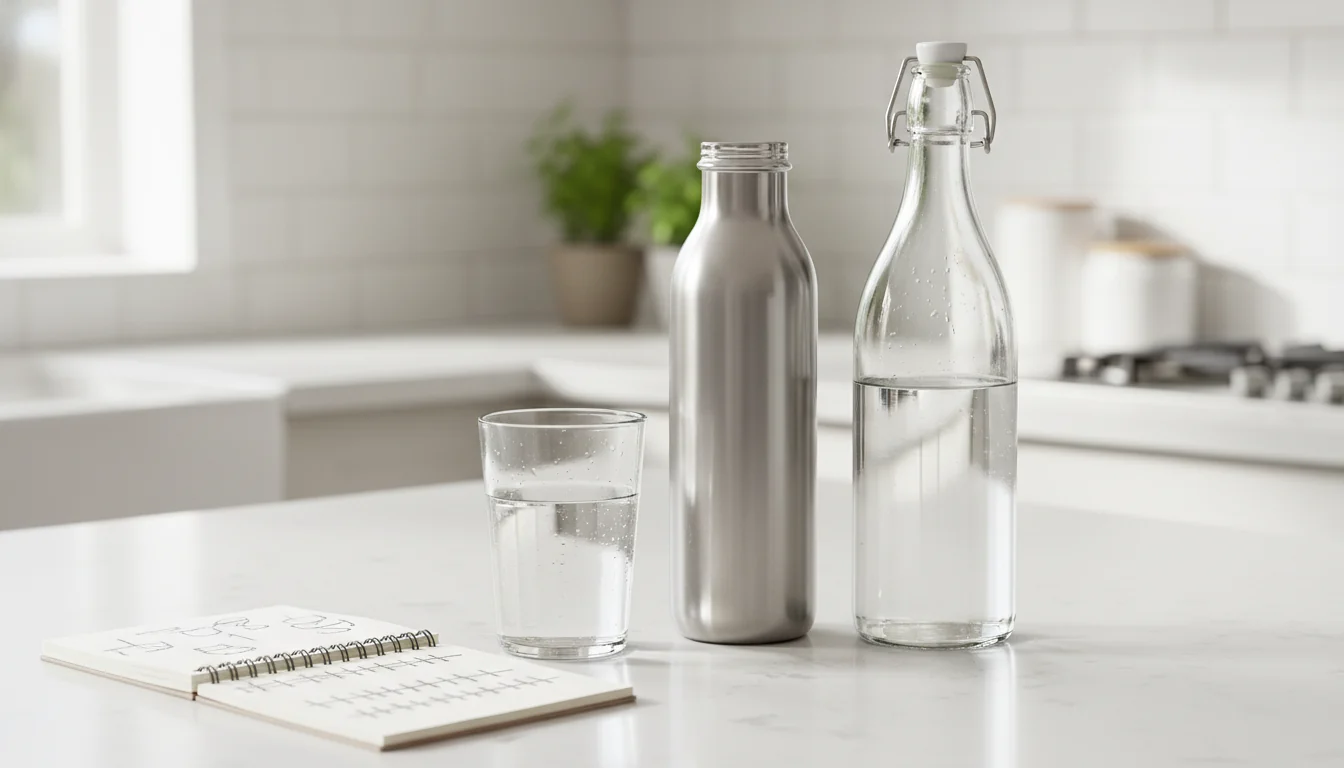
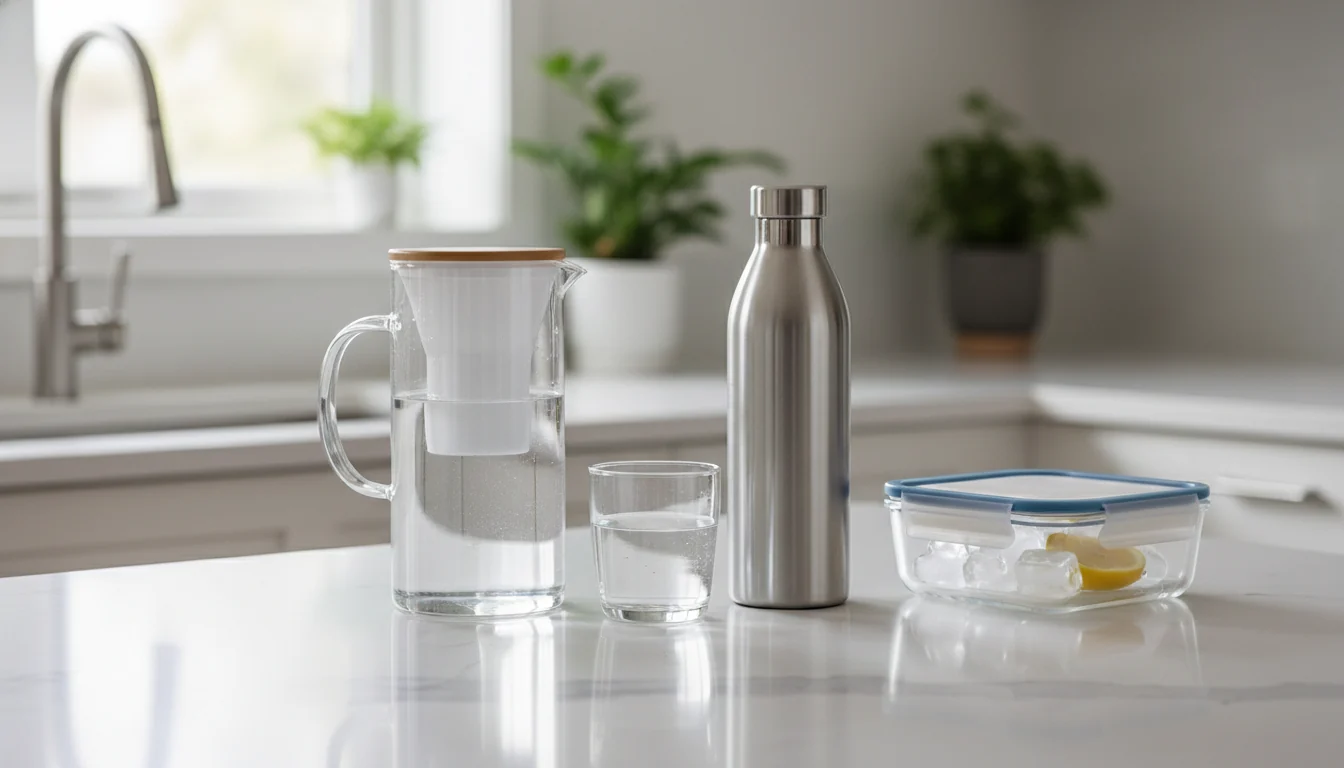
In my own home, the biggest change was not a fancy gadget. It was moving filtered tap water into a glass pitcher in the fridge and using stainless bottles for errands. That one routine cut down the number of disposable bottles we touched each week.
Microplastics Are Measured In Different Ways
Researchers use different sampling methods, particle sizes, and lab techniques. Some tests count tiny fragments that others may miss. That makes simple comparisons tricky.
I avoid repeating dramatic particle counts unless I can trace the method and context. For a homeowner, the more useful question is: “Where can I reduce plastic contact without guessing?”
Your Source Water Matters
Tap water from a protected municipal system is not the same as private well water, and neither is the same as bottled spring water stored in plastic. If you want a grounded starting point, review your local water quality report or test your well water through a qualified lab.
Where Plastic Gets Into Drinking Water
Packaging And Bottles
Single-use plastic bottles are convenient, but they create repeated contact between water and plastic. Caps, bottle walls, transport, and storage conditions can all affect what ends up in the water.
I once compared two cases of bottled water in my garage: one stored cool and one accidentally left near summer heat. I did not run a lab test, but the warm case tasted flatter and smelled more “plastic-like,” so I stopped storing bottles anywhere hot.
Household Plumbing And Fixtures
Plastic components can show up in plumbing, filter housings, faucet parts, refrigerator lines, and tubing. That does not mean every home has a serious problem, but it does mean the water path matters.
Everyday Handling
Scratched plastic bottles, old plastic pitchers, and dishwasher-damaged containers can shed more than newer, smoother materials. When a plastic bottle looks cloudy, gouged, or warped, I retire it.
Small water habits compound. The goal is not perfect water; it is fewer unnecessary plastic contact points.
Tap Water, Bottled Water, And Filtered Water Compared
The Everyday Tradeoff
Here is the simple comparison I use when deciding what to drink daily.
| Water Choice | Practical Pros | Practical Cons |
|---|---|---|
| Tap water | Usually affordable, regulated if municipal, low packaging waste | Taste varies, may need filtration, private wells need owner testing |
| Bottled water | Portable, useful in emergencies, predictable taste for some brands | More plastic contact, waste, storage concerns |
| Filtered tap water | Can improve taste and reduce selected contaminants | Requires maintenance and the right filter for the job |
What I Use Most Often
For daily drinking, I prefer filtered tap water stored in glass. For road trips, I carry stainless steel bottles. I still keep bottled water for emergencies, but I store it cool and rotate it.
When Bottled Water Makes Sense
Bottled water can be a reasonable backup during boil-water advisories, travel, or emergency kits. I just do not treat it as automatically “cleaner” than good tap water.
How To Estimate Your Own Plastic Contact
Step 1: Count Your Plastic Bottles
Use this simple audit for one normal week:
- Count every single-use plastic water bottle you drink.
- Count plastic sports bottles, plastic pitchers, and plastic-lined travel cups you use daily.
- Note whether any bottles are exposed to heat or sunlight.
- Multiply the weekly single-use bottle count by 52 for a rough yearly habit picture.
- Mark which uses are easy to replace with glass, stainless steel, or filtered tap water.
This will not calculate particles. It will show your plastic contact pattern, which is more actionable.
Step 2: Map The Water Path
Write the path your water takes: source, plumbing, filter, container, storage, cup. Each step is a place to reduce plastic exposure or improve maintenance.
Step 3: Prioritize The Easiest Swap
My first swap would be the highest-frequency one. If you drink three disposable bottles daily, start there. If you use a scratched plastic pitcher every day, replace that first.
READ MORE Safer Reusable Bottles For Daily Drinking Bottled Water & Safer Bottles
Filters And Microplastic Reduction
Look For Specific Claims
The best filter choice depends on what you want removed. NSF/ANSI standards help because they tie claims to a test protocol. For particulate reduction, look for filters that clearly state the particle size or standard behind their claim.
Filter Types I Consider
| Filter Type | Where It Helps | Watch-Out |
|---|---|---|
| Carbon block | Taste, chlorine, some chemicals, some particles depending on design | Not all carbon filters are equal; check certification and micron rating |
| Reverse osmosis | Broad reduction for many dissolved contaminants and particles | Wastes some water and needs membrane maintenance |
| Ultrafiltration | Fine particle reduction without removing all minerals | Performance depends on membrane pore size and upkeep |
Maintenance Is Not Optional
A neglected filter can become a weak link. I write the replacement date on painter’s tape and stick it inside the cabinet. That tiny habit has saved me from guessing more than once.
A filter is only as trustworthy as its certification, fit, and maintenance schedule.
Safer Storage Choices I Prefer
Glass For The Fridge
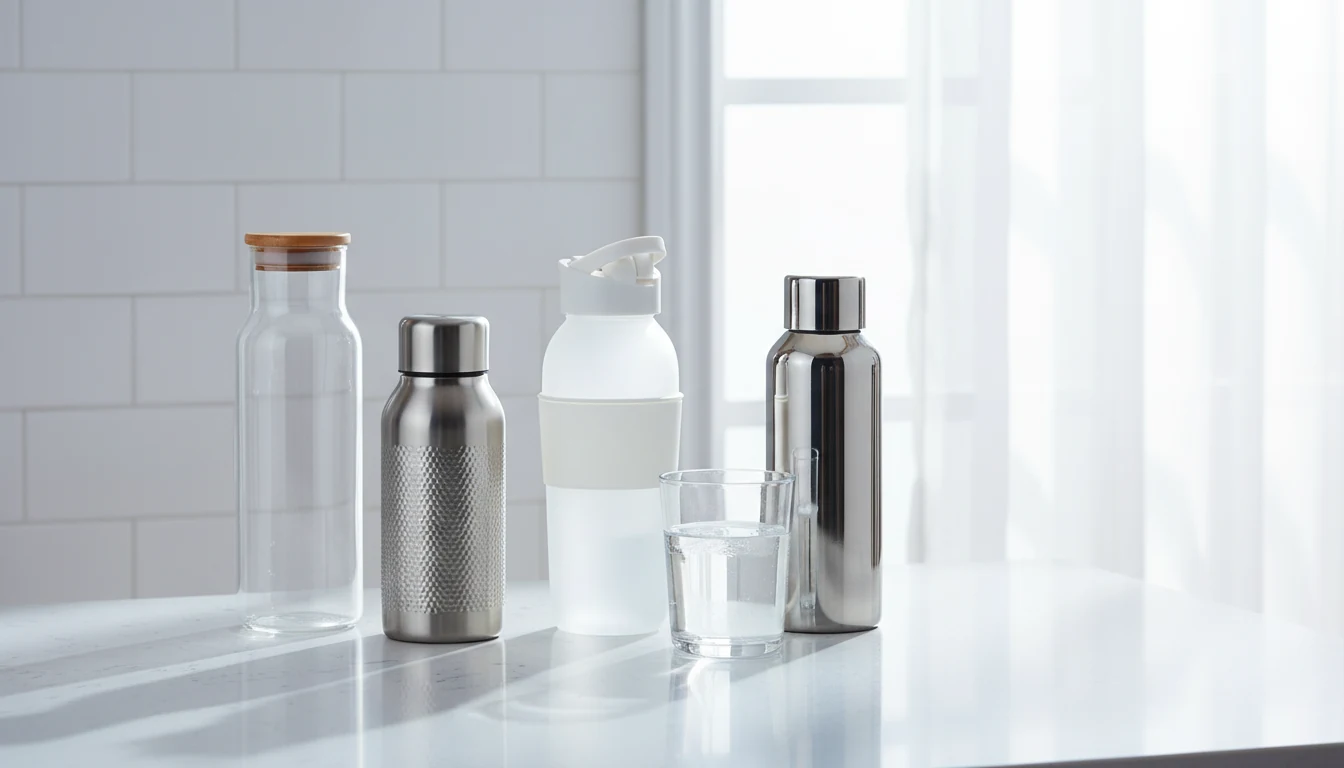
Glass is my favorite for home storage because it does not scratch like plastic and does not add a plastic taste. Borosilicate glass handles temperature changes better than ordinary glass, though it still needs common-sense care.
Stainless Steel For Travel
Stainless steel is durable and practical. I look for food-grade stainless interiors and avoid bottles with heavily scratched plastic straws or worn lids.
Plastic Only When It Makes Sense
Plastic is not evil. It is lightweight, cheap, and useful for emergencies. I just avoid heat, repeated abrasion, and long-term daily use when better options are easy.
Cost: What Reducing Plastic Actually Costs
Low-Cost Changes
The cheapest change is behavior: stop storing bottled water in hot places, stop reusing crinkly single-use bottles, and replace damaged plastic containers.
Mid-Range Changes
A good glass pitcher, stainless bottle, or certified pitcher filter can be a moderate one-time expense. Replacement cartridges are the recurring cost to plan for.
Higher-Cost Changes
Under-sink reverse osmosis or ultrafiltration systems can cost more up front. They may be worth it if your water report, taste issues, or household priorities justify the investment.
| Approach | Upfront Cost Pattern | Ongoing Cost Pattern |
|---|---|---|
| Reusable bottle swap | Low to moderate | Minimal unless parts wear out |
| Pitcher or countertop filter | Low to moderate | Cartridge replacements |
| Under-sink system | Moderate to higher | Filters, membranes, possible service |
Health And Safety: What I Say Carefully
What We Know And Do Not Know
Microplastics are being studied in water, food, air, and human exposure pathways. It is reasonable to reduce avoidable exposure, but it is not honest to claim that one filter or bottle swap guarantees a health outcome.
This isn’t medical advice — consult a professional if you have health concerns.
Children, Pregnancy, And Sensitive Groups
If you are choosing water for infants, pregnant people, or medically sensitive family members, use extra caution and ask a qualified clinician or local water authority when needed. Formula preparation, lead, nitrates, and microbial safety can matter more urgently than microplastics.
Do Not Ignore Bigger Water Risks
Lead, bacteria, arsenic, nitrates, and PFAS can be more actionable depending on your location. Microplastics matter, but they should not distract from known contaminants in your actual water.
Environmental Impact Of Drinking Less Plastic
Fewer Bottles, Less Waste
Reducing bottled water use usually reduces packaging waste. It can also reduce hauling, storage, and disposal burdens.
Emergency Water Still Has A Place
I keep emergency water because resilience matters. The difference is that I do not treat emergency storage as my everyday drinking system.
Choose Durable, Repairable Gear
A bottle you use for years beats a trendy bottle you replace every season. I like simple lids, replaceable gaskets, and wide mouths that are easy to clean.
The most sustainable bottle is the safe one you actually keep using.
READ MORE How To Choose A Home Water Filter Water Filtration & Treatment
Is How Much Plastic You Drink Per Year The Right Question?
A Better Question
Instead of chasing one number, ask: “Which parts of my routine put water in contact with plastic most often?” That question leads to changes you can make today.
My Practical Rule
If a plastic contact point is frequent, warm, scratched, or unnecessary, I try to replace it. If it is occasional and useful, I manage it with good storage and common sense.
If you want to reduce single-use plastic, compare BPA-free reusable bottles, glass bottles, and stainless steel options before choosing.
As an Amazon Associate, Clean Water In Homes may earn from qualifying purchases.
A Simple Weekly Routine
- Fill glass containers with filtered water for the fridge.
- Wash stainless bottles daily and dry them open.
- Keep emergency bottled water cool and shaded.
- Replace filters on schedule.
- Review your water report once a year.
FAQ
Can I calculate exactly how much plastic I drink per year?
Not accurately at home. You can estimate your plastic contact habits, but particle counts require specialized sampling and lab methods.
Is bottled water always worse for microplastics?
Not always, but bottled water usually adds more packaging contact than filtered tap water. Storage conditions and bottle handling matter.
Do all water filters remove microplastics?
No. Check the filter’s certification, micron rating, and contaminant reduction claims. Marketing language alone is not enough.
Should I stop drinking water because of microplastics?
No. Hydration is important. Use practical exposure reduction steps rather than avoiding water or making fear-based choices.
Conclusion
My Personal Considerations
When I think about how much plastic you drink per year, I do not chase a perfect number. I look at habits: how often I use plastic, whether it gets hot, how old it is, and whether I have a better option nearby.
My Final Recommendation
Start with the easiest high-frequency change: filtered tap water in glass at home and stainless steel on the go. Then maintain your filter, store emergency bottles wisely, and keep your attention on the water risks that are most relevant to your home.