
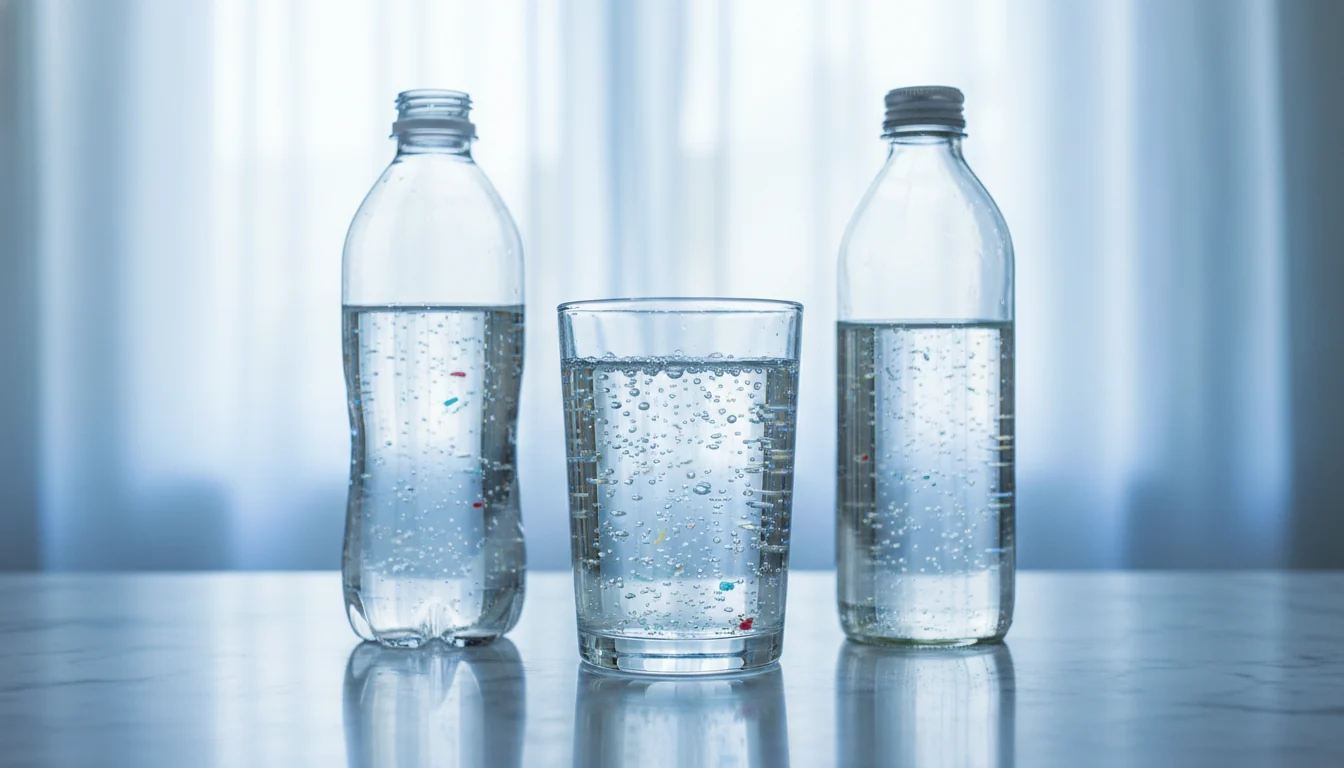
Sparkling water feels like the clean upgrade: no sugar, no artificial colors, no sticky soda habit. But I get a version of this question all the time: does carbonation make microplastics worse?
My short answer: carbonation itself is not the main issue. The bigger questions are the container, the processing, the cap or liner, and how often you drink it. A plastic bottle of sparkling water has different risk points than a glass bottle. A can has different tradeoffs than a SodaStream-style setup. And if you drink sparkling water every day, the small choices add up.
I am not here to panic anyone out of a harmless habit. I am here to help you choose the cleaner, smarter option without wasting money.
Read more: What Are Microplastics in Drinking Water?
Key Takeaways
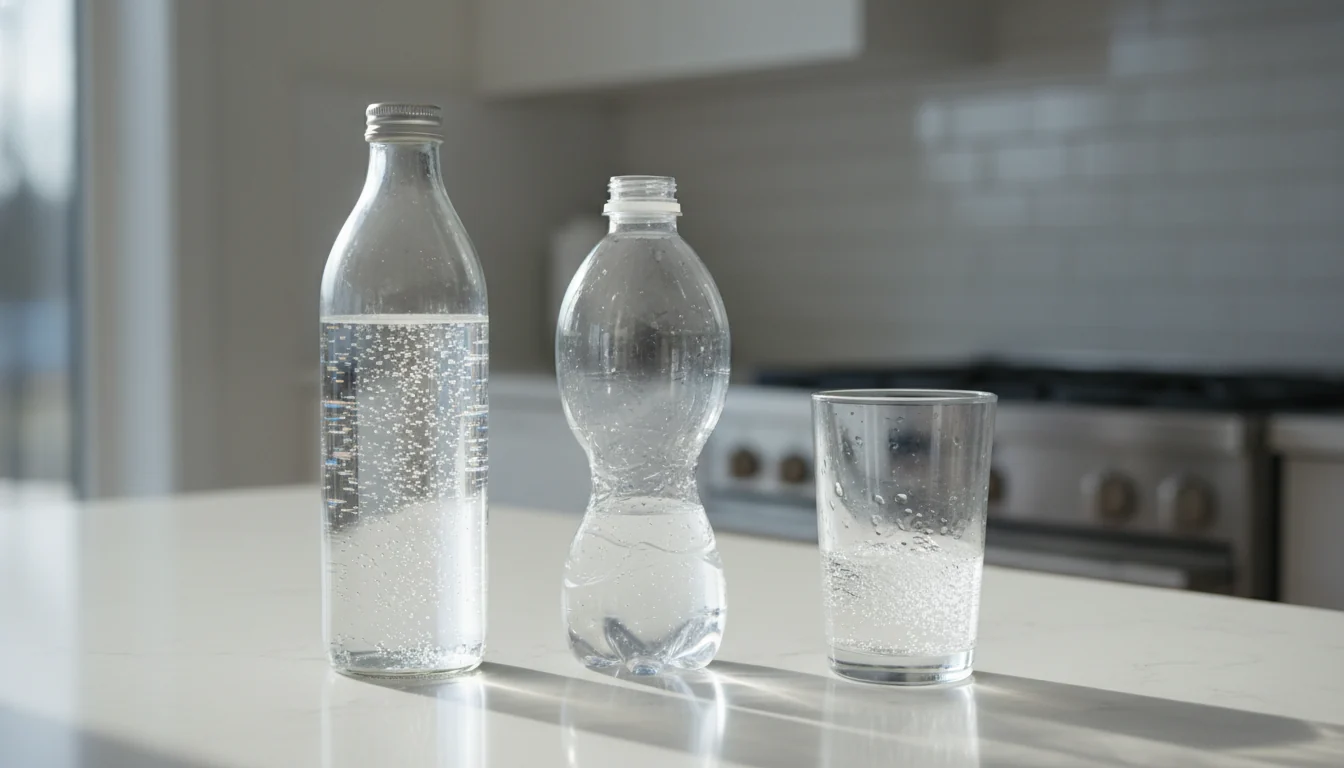
- Carbonation does not appear to be the main reason microplastics may show up in sparkling water.
- Packaging is usually the bigger concern: plastic bottles, caps, can linings, and transport/storage conditions all matter.
- Glass-bottled sparkling water can be a better packaging choice, but it is usually more expensive and still has caps, transport, and source-water questions.
- A SodaStream-style setup can reduce single-use packaging, but the water you carbonate should ideally be filtered first.
- If you drink sparkling water daily, the best money move may be filtering tap water at home and carbonating it yourself.
Is Carbonated Water Worse for Microplastics?
In plain English: not automatically.
Microplastics are tiny plastic particles that can enter water from multiple places, including source water, bottling equipment, packaging, caps, and environmental contamination. Carbon dioxide bubbles are not plastic. So I would not assume that the fizz is the main problem.
That said, sparkling water is often sold in packaging that can introduce or contact plastic materials:
- PET plastic bottles
- Plastic caps
- Aluminum cans with interior linings
- Multi-pack shrink wrap and shipping materials
- Beverage system parts, seals, and tubing
The microplastic conversation is less about “sparkling versus still” and more about “what touched the water before you drank it?”
Plastic Bottles Are the First Place I Look
If you buy sparkling water in plastic bottles, that is where I would start.
Plastic bottled beverages can be exposed to heat, friction, pressure changes, and long storage times. I am not saying every bottle is unsafe. I am saying plastic packaging gives you more plastic contact points than drinking filtered water from a glass or stainless container at home.
Sparkling water in plastic also has pressure inside the bottle. Does that prove it releases more microplastics? No. I do not like making claims stronger than the evidence. But from a practical buyer’s standpoint, a pressurized drink stored in plastic is not my favorite everyday setup.
If plastic-bottled sparkling water is an occasional treat, I would not lose sleep over it. If it is your daily hydration plan, I would look for a lower-packaging option.
Are Glass-Bottled Sparkling Waters Better?
Glass is my preferred packaging material for sparkling water when the budget allows. The water is not sitting against a plastic bottle wall, and glass generally avoids the same plastic-shedding concerns as PET bottles.
But glass is not magic.
Most glass bottles still use caps or closures that may include plastic or liner materials. The water still comes from a source that may or may not be filtered well. The product still gets shipped, stored, and handled. And glass-bottled sparkling brands can get expensive fast.
The Money Angle: Glass Bottles Feel Premium Because They Are Priced That Way
Glass-bottled sparkling water is often the clean-feeling choice, but if you drink it every day, the monthly cost can get silly.
That is why I treat glass sparkling water as a good convenience option, not always the best household strategy. If you love brands like mineral sparkling waters in glass, fine. But if the goal is clean water at home, I would compare the monthly cost against a good home filter and a carbonation system.
Read more: Best Water Filters for Microplastics
What About Canned Sparkling Water?
Cans are convenient, recyclable in many areas, and they avoid plastic bottle walls. But cans usually have an internal lining to keep the beverage from reacting with the metal. That lining is not the same thing as a loose plastic bottle, but it is still a material-contact issue.
I do not put canned sparkling water in the same category as plastic bottled water, but I also do not treat it as perfectly untouched. It is a compromise: better than plastic bottles in some ways, still packaged and processed.
If cans help you avoid soda, that is a win. If you are trying to minimize packaging contact overall, homemade sparkling water is usually a cleaner long-term direction.
SodaStream-Style Alternatives: Cleaner or Just Cheaper?
A SodaStream-style machine can be a smart move, especially if your family burns through cases of sparkling water.
The cleanest version looks like this:
- Filter your tap water first.
- Chill it in a glass or stainless container if possible.
- Carbonate it in the system bottle.
- Drink it fresh instead of storing it for days.
The important point: the carbonation machine does not purify your water. It only adds bubbles. If your tap water has chlorine taste, possible lead from plumbing, PFAS concerns, microplastics, or other contaminants, carbonation will not fix that.
So I would not buy a countertop carbonator and call the problem solved. I would pair it with filtration.
Plastic Carbonation Bottles vs Glass Carafes
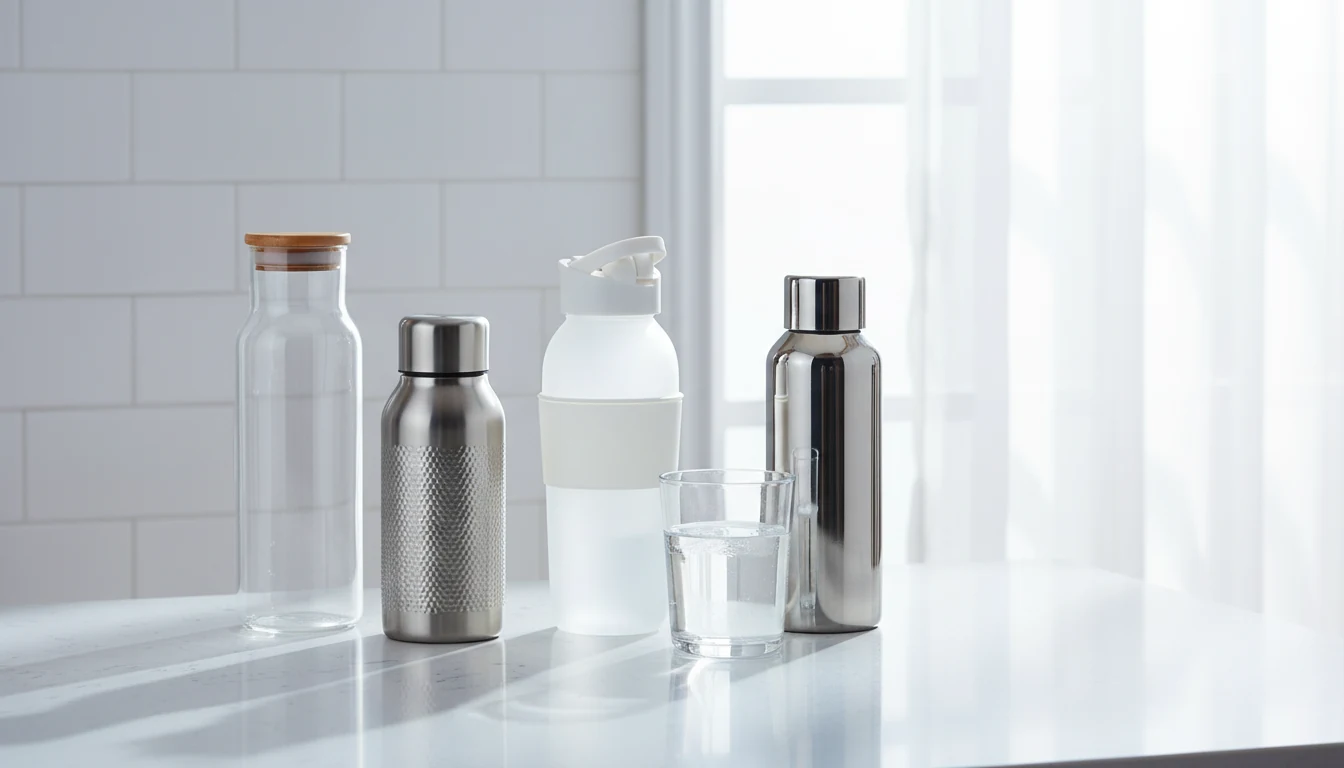
Many home carbonation systems use reusable plastic bottles. Some systems offer glass carafes. If microplastics are your main concern, I would lean toward glass-compatible systems when possible.
If you already own a plastic-bottle system, I would still rather see someone reuse one bottle responsibly than buy hundreds of single-use plastic bottles. Just follow the bottle expiration guidance, do not wash it with high heat unless the manufacturer says it is safe, and replace scratched or worn bottles.
Best Practical Setup for Sparkling Water at Home
If I were setting up a kitchen for daily sparkling water, I would do it in this order:
1. Start with a good water filter
Choose the filter based on your water, not marketing. If you are concerned about microplastics, look for filters with credible testing, fine filtration, or technologies designed to reduce small particles. If you also have lead, PFAS, chlorine, chloramine, or hard-water issues, those may change the best choice.
2. Use glass or stainless storage when practical
Filtered water can sit in a glass pitcher or stainless bottle before carbonation. This reduces unnecessary plastic contact.
3. Carbonate only what you will drink soon
Fresh sparkling water tastes better anyway. Less storage time means fewer material-contact variables.
4. Keep bottled sparkling water as a backup
I like having a few bottles or cans around for guests or travel. I just would not build the whole hydration plan around single-use packaging.
Is Mineral Sparkling Water Worth It?
Some people prefer naturally carbonated or mineral-rich waters. They can taste great. Minerals like calcium and magnesium can affect flavor, and certain glass-bottled mineral waters feel more satisfying than plain seltzer.
But I would be careful not to confuse “expensive mineral water” with “automatically cleaner.” The source, bottling process, packaging, and testing matter. If a brand publishes useful water quality information, that is a plus. If all you get is mountain imagery and vague purity language, I do not give that much weight.
Health Note: What Do Microplastics Mean for Your Body?
Researchers are still studying what long-term microplastic exposure means for human health. I think it is reasonable to reduce avoidable exposure, especially from everyday habits, but I do not think fear is helpful.
Medical disclaimer: I am not a doctor, and this article is for general educational purposes only. If you have a medical condition, immune concerns, pregnancy-related questions, or specific health worries, talk with a qualified healthcare professional.
My Bottom Line
Carbonated water is not automatically worse than still water. The bubbles are not the villain.
If you want to reduce single-use plastic, compare BPA-free reusable bottles, glass bottles, and stainless steel options before choosing.
As an Amazon Associate, Clean Water In Homes may earn from qualifying purchases.
The bigger issue is the delivery system. If you buy sparkling water in plastic bottles every week, I would seriously consider switching to filtered tap water plus a home carbonator. If you love glass-bottled sparkling mineral water, enjoy it, but watch the cost. If you use cans, they are convenient, but still not packaging-free.
For most homes, the best balance is simple: filter your water well, store it in better materials, carbonate it yourself when you want fizz, and keep packaged sparkling water for convenience instead of daily dependence.
FAQ
Does carbonation create microplastics?
No. Carbonation adds dissolved carbon dioxide to water. Microplastics are plastic particles, so the concern is more about source water, packaging, caps, equipment, and handling.
Is sparkling water in glass bottles safer than plastic bottles?
Glass reduces contact with plastic bottle walls, which is a plus. But glass-bottled water can still have cap liners, source-water concerns, and bottling-system contact points. I consider it a better packaging choice, not a perfect guarantee.
Are cans better than plastic bottles for microplastics?
Cans avoid plastic bottle walls, but most cans have internal linings. They may be a better compromise than plastic bottles for some people, but they are not the same as filtered water from home stored in glass or stainless steel.
Does a SodaStream remove microplastics?
No. A SodaStream-style carbonator does not filter water. It adds bubbles. If you want cleaner sparkling water, filter the water first and then carbonate it.
What is the cheapest cleaner sparkling water option?
For frequent drinkers, filtered tap water plus a home carbonation system is usually the best long-term money move. The upfront cost is higher, but you can reduce repeat purchases of bottles and cans.
Should I stop drinking sparkling water?
Not necessarily. If sparkling water helps you drink more water and avoid sugary soda, that is a good thing. I would focus on improving packaging and filtration choices rather than quitting sparkling water out of fear.