
If you buy bottled water, the front label is usually the least useful part of the bottle.
I say that as someone who cares a lot about clean water, but who also lives in the real world. Sometimes bottled water is the only practical option: travel days, emergencies, road trips, hotel rooms, or towns where tap water temporarily tastes off. The goal is not to panic over every bottle. The goal is to read the label with a little more confidence and choose the safer option when you have a choice.
In this guide, I’ll walk through the plastic codes, marketing claims, source language, and bottle types I look for before I spend money on bottled water.
Read more: Best Glass Water Bottles for Home and Travel
Key Takeaways
- The recycling code on the bottom of a bottle tells you the plastic type, not whether the water is automatically safe.
- PET #1 is the most common single-use bottled water plastic; I avoid heat exposure and reuse with these bottles.
- HDPE #2 and polypropylene #5 are generally considered better plastics for reusable containers, but glass and stainless steel are my preferred options when practical.
- “BPA-free” is useful but incomplete because replacement chemicals and other additives may still be a concern.
- Source claims like “spring,” “purified,” “artesian,” and “alkaline” mean different things, and some are more about marketing than meaningful quality.
- For regular use, I’d rather buy a stronger home filter and carry water in glass or stainless steel than rely on disposable bottles.
Start with the Bottle, Not the Mountain Picture
Most bottled water labels show mountains, waterfalls, blue skies, or glaciers. That doesn’t tell me much.
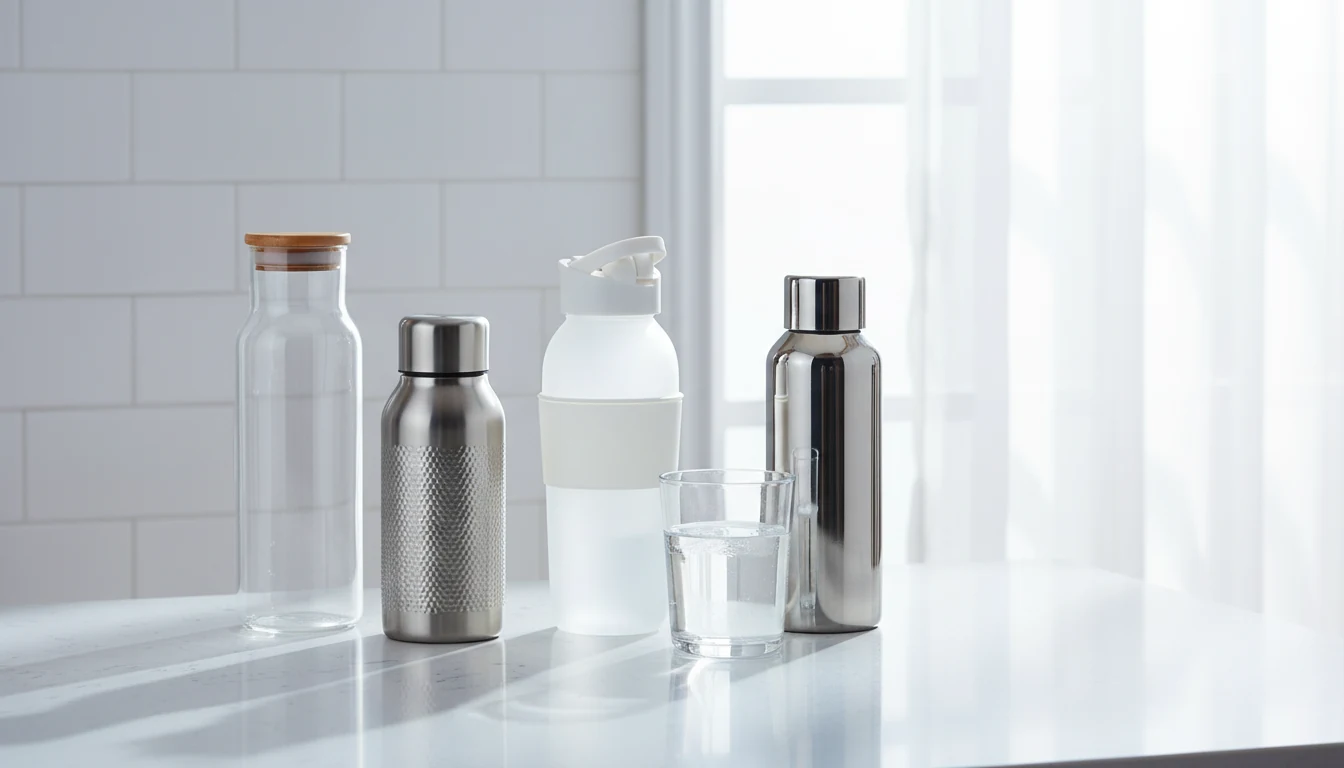
The first thing I check is the bottle itself:
- Is it thin, crinkly plastic that has likely been sitting in a hot warehouse or car?
- Is there a recycling code on the bottom?
- Is the bottle meant for one-time use or a sturdier reusable design?
- Is there an option in glass nearby?
Heat, time, UV exposure, and physical wear can all matter with plastic packaging. I don’t treat every bottle as dangerous, but I do avoid bottled water that has been stored in obvious heat, left in a car, or sold in flimsy plastic when better options are available.
What the Plastic Codes Usually Mean
The number inside the recycling triangle is a resin identification code. It helps recycling systems identify the plastic. It is not a clean-water certification.
#1 PET or PETE
PET is the most common plastic used for single-use bottled water.
This is the clear, lightweight plastic you see in most convenience stores and grocery aisles. It’s popular because it is cheap, light, and easy to transport.
My practical rule: if I buy water in PET, I treat it as a short-term container. I don’t leave it in the car, don’t freeze and refreeze it repeatedly, and don’t keep refilling it for weeks.
#2 HDPE
HDPE is often used for milk jugs, larger water jugs, and some sturdier containers.
It is usually opaque or semi-opaque. I generally consider HDPE a better plastic than flimsy single-use PET for larger emergency water storage, but I still keep it out of heat and direct sunlight.
#3 PVC
PVC is not what I want for drinking water packaging.
If I see #3 on something intended for regular food or drink contact, I avoid it. PVC can involve plasticizers and additives that are not worth inviting into daily drinking habits.
#4 LDPE
LDPE is flexible plastic used in some bags, squeezable containers, and packaging films.
It’s not the typical plastic for bottled water, but it may show up in drink packaging components. I don’t choose bottled drinks based on LDPE alone; I look at the whole package.
#5 PP or Polypropylene
Polypropylene is commonly used in caps, some reusable bottles, and food containers.
If I’m choosing plastic for repeated use, #5 is one of the plastics I’d rather see. Still, my first choice for daily water is glass or stainless steel.
#6 Polystyrene
Polystyrene is used in foam cups and some disposable food packaging.
I avoid hot drinks in polystyrene and don’t consider it a good daily drinking container.
#7 Other
#7 is a catch-all category. It may include polycarbonate, some bioplastics, and mixed or newer plastics.
This is where “BPA-free” often appears, but #7 is too broad to trust blindly. If the packaging doesn’t clearly explain what the material is, I move on.
What “BPA-Free” Does and Does Not Tell You
“BPA-free” means the product is not made with bisphenol A, a chemical that raised concern because of its potential hormone-disrupting effects.
That label is helpful, but it is not the finish line.
Some BPA-free plastics use replacement chemicals. Those replacements may be better, worse, or simply less studied depending on the material. That’s why I don’t buy bottled water just because it says BPA-free. I still care about plastic type, storage conditions, heat exposure, and how often the container is reused.
If you want the simpler choice, glass bottles remove a lot of that uncertainty.
Decoding Common Bottled Water Claims
“Spring Water”
Spring water should come from an underground formation where water flows naturally to the surface or is collected through a borehole tapping the same source.
A spring claim can be meaningful, but I still look for the actual source location and water quality report. A pretty spring name is not enough.
“Purified Water”
Purified water has usually been treated by processes such as reverse osmosis, distillation, deionization, or filtration.
This can be a good thing. Some purified bottled water is essentially municipal water that has been further treated and then bottled. I don’t see that as automatically bad, but I want transparency.
“Mineral Water”
Mineral water contains naturally occurring minerals from its source.
This may improve taste, but minerals are not the same as contaminant testing. I still look for a water quality report.
“Artesian Water”
Artesian water comes from a confined aquifer where pressure helps push the water upward.
It sounds premium, and sometimes it is. But “artesian” does not automatically mean free of microplastics, PFAS, metals, or other contaminants.
“Alkaline Water”
Alkaline water has a higher pH than regular water. Some brands add minerals or use treatment to raise pH.
I’m cautious with big health claims around alkaline water. For most people, hydration and contaminant reduction matter more than chasing a pH number. If you have a medical condition, talk with a qualified clinician before using specialty waters as part of a health routine.
The Money Angle: Which Bottle Types Are Worth Paying More For?
If I’m spending extra money, I want that money to buy a safer package or better transparency — not just a premium label design.
Best Upgrade: Glass Bottled Water
Glass is my preferred bottled water package when I need a ready-made bottle.
Pros:
- No plastic bottle body in contact with the water
- Better for taste
- Often used by brands that publish more complete water quality information
- Reusable at home if the bottle is sturdy
Cons:
- More expensive
- Heavier
- Breakable
- Usually still has a cap or liner that may contain plastic components
For occasional use, glass is the easiest bottled-water upgrade to understand.
Better Emergency Storage: Larger Jugs from Reputable Brands
For emergency water, I prefer sealed containers from reputable brands, stored in a cool dark place, rotated on schedule.
If the container is plastic, I look for sturdy packaging, clear date labeling, and storage away from gasoline, cleaning chemicals, garages with heat swings, or direct sunlight.
Best Long-Term Value: Filter at Home and Carry Your Own
If bottled water has become your everyday habit, the better financial move is usually a quality home filter plus reusable bottles.
A good under-sink reverse osmosis system or high-quality countertop filter can reduce ongoing plastic exposure and lower the cost per gallon. Then you can carry water in stainless steel or glass.
Read more: Countertop vs Under-Sink Water Filters: Which Is Better?
What I Look For on a Brand Website
Before I trust a bottled water brand for regular use, I look for:
- A current water quality report
- Source location, not just source imagery
- Treatment method
- PFAS testing information if available
- Contact information that looks real
- Packaging details, including plastic type or glass option
If a brand charges premium prices but hides basic water quality information, I’m not impressed.
Red Flags I Avoid
Here are the bottled water situations I usually skip:
- Bottles stored outside in sun or heat
- Cases sitting next to chemicals or fuel
- Bottles with a strong plastic smell
- Vague “pure” or “natural” claims with no source details
- Expensive alkaline water with dramatic health promises
- Single-use bottles reused until they are scratched, cloudy, or warped
My Simple Buying Hierarchy
When bottled water is necessary, my order of preference is:
- Glass bottle from a transparent brand.
- Sturdy bottle from a brand with a current quality report.
- Purified water in PET #1 for short-term use only.
- Cheapest mystery bottle only when there is no realistic alternative.
At home, I try to avoid the whole decision by filtering tap water and storing it in glass or stainless steel.
If you want to reduce single-use plastic, compare BPA-free reusable bottles, glass bottles, and stainless steel options before choosing.
As an Amazon Associate, Clean Water In Homes may earn from qualifying purchases.
Health Note and Common-Sense Disclaimer
This article is for general education, not medical advice. If you have a compromised immune system, are preparing infant formula, are under a boil-water advisory, or have a specific medical condition, ask your local health department or qualified clinician what water source is appropriate.
FAQ
Is PET #1 bottled water safe?
PET #1 is widely used for single-use bottled water. I don’t treat one bottle as a crisis, but I avoid heat exposure and long-term reuse. For daily drinking, I prefer filtered water in glass or stainless steel.
Is glass bottled water always better?
Glass avoids the plastic bottle body, which is a major advantage. It can still have caps, liners, transport issues, and cost concerns. But if I’m paying for bottled water, glass is usually the upgrade that makes the most sense.
Does BPA-free mean plastic-free?
No. BPA-free means the product does not contain BPA. It may still be plastic and may contain other additives or replacement chemicals.
Are alkaline water claims worth paying for?
Usually not for me. I care more about contaminant testing, source transparency, and packaging. People with medical conditions should ask a clinician before using alkaline water for health reasons.
Should I stop buying bottled water completely?
Not necessarily. Bottled water is useful for emergencies and travel. But for everyday drinking, a good home filter and reusable bottle is usually cleaner, cheaper, and less wasteful.
Final Thoughts
Reading bottled water labels gets easier once you stop being distracted by the front of the bottle.
I check the plastic code, source language, treatment claims, and brand transparency. If I need bottled water, I choose glass when practical and avoid plastic bottles that have been sitting in heat. If I’m drinking water every day at home, I’d rather invest in filtration and use a reusable glass or stainless bottle.
That’s the cleaner long-term habit — and usually the smarter money decision too.