
You’re loading a 40-pack of Kirkland water into your cart and wondering whether each bottle comes with a side of plastic. It’s a fair question, and the honest answer has a gap in it. Here’s what’s known, what isn’t, and what you can do about it.
Quick answer: Almost certainly yes. Kirkland Signature water comes in single-use PET plastic bottles, and research on bottled water in general keeps finding micro- and nanoplastics. No public lab test has measured Kirkland specifically, so nobody can tell you the exact amount.
Are There Microplastics in Costco Bottled Water?
Almost certainly yes, though the exact level is unknown. Kirkland Signature water is sold in PET plastic bottles, and bottled water in general has been found to contain micro- and nanoplastics. No published lab test has measured Kirkland on its own.
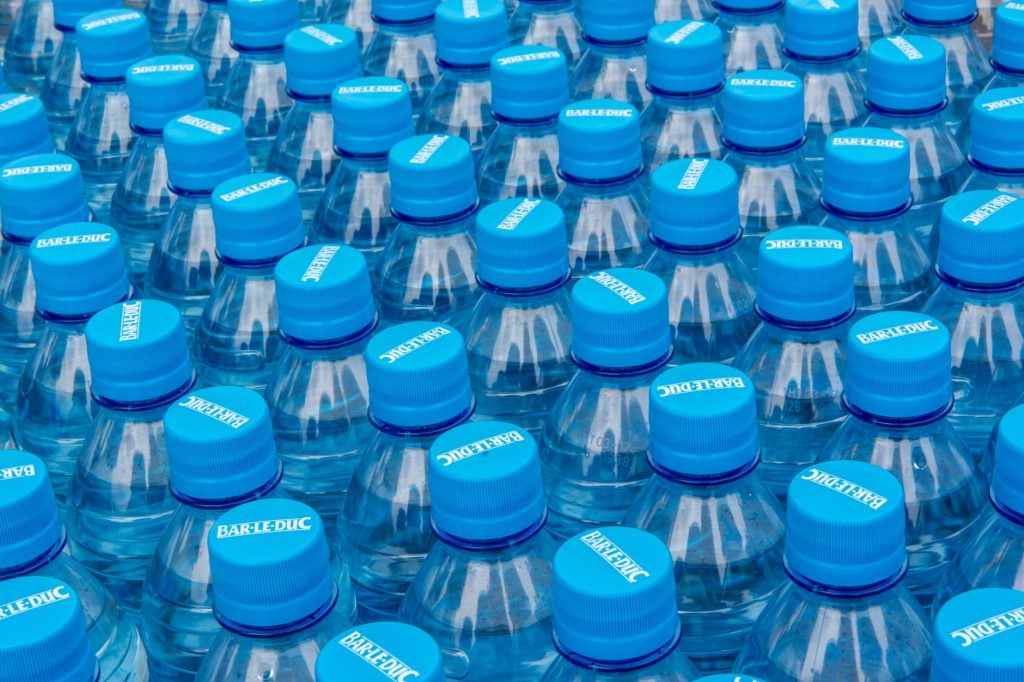
So there are two buckets. What’s known: studies of popular bottled water brands find huge numbers of tiny plastic particles. What’s unknown: how Kirkland compares, and whether it’s better, worse or about the same as other brands. Assuming some exposure is reasonable. Assuming a specific number isn’t.
Below you’ll find the research, where Kirkland water comes from, how much to trust the app ratings floating around, and practical ways to cut your exposure if you want to.
What Do Studies Find in Bottled Water?
A 2024 Columbia University study, supported by NIH, found about 240,000 plastic particles per liter, on average, in three popular bottled water brands. Roughly 90% of them were nanoplastics. That’s far more than older studies had suggested.
Quick definitions. Microplastics are plastic particles 5 millimeters or less, smaller than a sesame seed. Nanoplastics are smaller still, under 1 micrometer. You can’t see them, and they’re tiny enough to pass into cells and tissues.
The team, led by Drs. Wei Min and Beizhan Yan, used a modified form of stimulated Raman scattering (SRS) microscopy. They paired it with a machine-learning algorithm that could identify seven common types of plastic, one particle at a time. The researchers reported their results in PNAS on January 8, 2024, and the National Institutes of Health later summarized the research on its own site.
Why did earlier work find so much less? Older methods mostly couldn’t detect particles at the nanoscale, so they counted only the larger fragments. The new approach caught the tiny ones, and there turned out to be a lot of them.
One caution matters here. The study covered three popular brands, and the NIH summary doesn’t name Kirkland. You can’t assign those 240,000 particles per liter to your 40-pack. Treat the figure as a picture of what single-use bottled water can look like, not a Kirkland measurement.
Where Does Kirkland Signature Water Come From?
A representative of the water-rating firm Oasis says Niagara Bottling produces Kirkland’s bottled water, and that the supply begins as city tap water. It isn’t a spring or glacier product. It’s treated tap water in a plastic bottle.
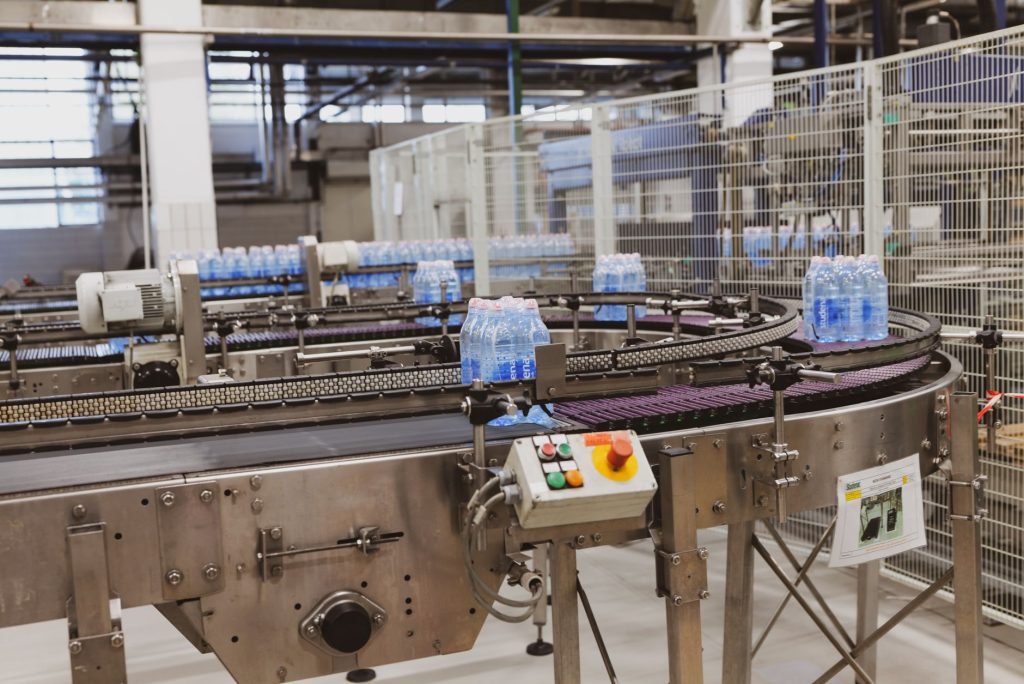
Niagara is a large white-label bottler, meaning it mostly fills bottles for store brands rather than selling under its own name. The municipal water is treated and processed before bottling. In the “mineral” version, minerals are added back after that processing.
Niagara’s 2024 water quality report lists nitrate (as NO3) at 0.1 mg/L for the purified water, which is very low. That tells you about the water going into the bottle. It tells you nothing about what the bottle adds. Source water quality and plastic contamination are separate questions, and a clean source doesn’t rule out particles from the packaging.
How Much Should You Trust Oasis and WaterQualityRank?
Treat app ratings as a prompt for questions, not proof. Oasis’s nanoplastics claim came from a TikTok video, and neither it nor WaterQualityRank’s “High” microplastics label is a peer-reviewed Kirkland test.
The Oasis expert said its rating flagged thousands of nanoplastics in Kirkland water, plus trihalomethanes at about ten times Oasis’s own guideline. The same expert acknowledged these were below legal limits. The numbers back that up: Niagara’s 2024 report puts total trihalomethanes at 0.0014 mg/L, against a legal limit of 0.08 mg/L. The gap comes from a much stricter health guideline of 0.00015 mg/L.
WaterQualityRank gives Kirkland Signature Purified Water (plastic bottle) a 63/100 purity score and rates microplastics “High.” It also lists pH 5.9, TDS 0 ppm and fluoride 0 mg/L. Those last three are typical of heavily purified water, where nearly everything has been stripped out.
Here’s a quick way to size up any score like this:
- Check the method. Did someone test this product in a lab, or is the number modeled from category data?
- Check the source. A company report or a government dataset beats a social media clip.
- Look for “measured” versus “estimated.” A “High” label with no lab data behind it is a guess dressed up as a grade.
Do the Label-Less Kirkland Bottles Have More Microplastics?
Unknown. Some Costco warehouses now stock label-less Kirkland 40-packs with the logo embossed in the plastic, and customers say the bottles use thicker plastic. Some shoppers worry that means more microplastics, but it’s a concern, not a tested finding.
Reports put these packs at around $3.99 to $5.99, about what they cost before the change, and the water reportedly tastes the same. Nobody has measured whether the thicker bottles shed more, fewer or the same number of particles.
There’s a small recycling upside, since there’s no label to peel off. But thicker plastic may undercut that environmental benefit. If microplastics are your main worry, don’t pick a pack based on this. The difference, if any, hasn’t been measured.
How Do Microplastics Get into Bottled Water?
Particles can come from the bottle, the cap and the manufacturing process, and heat and rough handling may make it worse. Researchers haven’t pinned down every source, so treat the list below as likely, not proven.
- The bottle material. PET can shed tiny fragments into the water, and the longer water sits, the more contact time there is.
- The cap. Twisting a cap open and closed can wear off small bits of plastic right at the opening you drink from.
- Heat. Bottles left in a hot car or a garage in July may shed more.
- Long storage. A 40-pack sitting for months in the pantry has more time to interact with its water than one you finish in two weeks.
- Squeezing. Crushing or flexing a bottle to get the last sip may flake off particles.
- Manufacturing and filling. Bottle forming, rinsing and filling lines are another possible entry point.
Are Microplastics in Water Harmful? Is Kirkland Safe?
No one knows yet. Earlier research has turned up plastic particles in human blood, lungs, gut and feces, and even in the placenta and testes. Still, NIH says the health effects of these particles remain unproven and unknown.
Being in the body isn’t the same as being proven harmful. It’s a reason for sensible caution, not panic. But don’t let anyone tell you it’s definitely fine either. The science simply isn’t there.
On the measures that are regulated, Kirkland’s reported numbers look fine. Trihalomethanes, for example, are reported well below the legal limit. Microplastics aren’t covered by that kind of limit.
One practical rule: if you ever see particles floating in a bottle, or the water looks or smells off, stop drinking it. Keep the bottle, note the lot code, contact Costco Member Services and file an FDA consumer complaint.
Is Filtered Tap Water Better Than Kirkland Water?
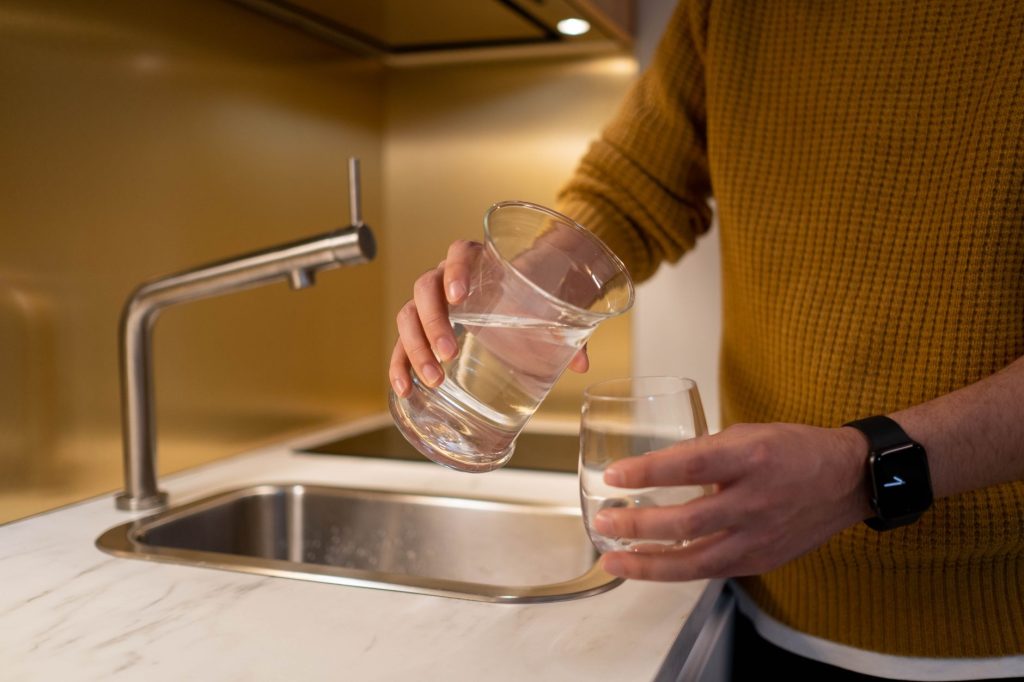
Filtered tap water in a glass or stainless steel bottle likely cuts your plastic contact and costs less per gallon. But no option is proven microplastic-free, so think of this as reducing exposure, not eliminating it.
| Option | Plastic exposure | Evidence level | Cost | Convenience |
|---|---|---|---|---|
| Kirkland 40-pack | Highest; single-use PET | Strong for bottled water in general, none for Kirkland | Roughly $3.99 to $5.99 per pack | Grab and go |
| Pitcher with activated carbon filter | Lower, though the pitcher is usually plastic | Varies by model; check test claims | Low upfront, ongoing filter cost | Easy, refill often |
| Reverse osmosis system | Lower; some parts are plastic | Strong for many contaminants, limited for microplastics | Highest upfront | Always ready after install |
| Glass-bottled water | Lower; caps may still be plastic or lined | Little direct data | Usually costs more than Kirkland | Heavy to carry |
| Stainless steel bottle with tap or filtered water | Lowest contact with plastic | Reasonable, not proven | One-time purchase | Reusable anywhere |
If you filter, the two main types are the activated carbon filter and reverse osmosis. Carbon filters are cheap and handle taste, chlorine and some contaminants. Reverse osmosis is more thorough but costs more and wastes some water. Neither comes with a guarantee on microplastics, so look for manufacturer or third-party test data on small particles instead of assuming.
Before you ditch bottled water, check your local tap water quality report. If PFAS or other contaminants are an issue where you live, pick a filter certified for them. For most people with a decent municipal supply, a filter plus a steel bottle is the better daily setup.
A few habits help whichever way you go:
- Keep bottles out of hot cars and garages.
- Don’t refill single-use bottles over and over.
- See whether your Costco stocks water in glass or aluminum, since stock varies by warehouse.
The Bottom Line
Assume Kirkland water, like most bottled water, contains some micro- and nanoplastics. The exact amount is untested, and the health impact is unknown.
If that bothers you, switch most of your daily drinking to filtered tap in reusable glass or steel. Keep the 40-pack for emergencies, road trips and power outages, stored somewhere cool. You don’t need to throw out what’s in your pantry.
Frequently Asked Questions
Which bottled water has the least microplastics?
No reliable brand ranking exists. Glass or aluminum packaging may reduce plastic contact, but no bottled water should be assumed microplastic-free.
Has Kirkland water had recalls for particles?
None of the sources behind this article point to one. Check Costco’s recall page and the FDA’s recall list for current notices, since a recall would be posted there.
Are microplastics only a problem in bottled water?
No. Tiny plastic particles turn up in many places, including food, air and tap water. Bottled water is one source among several, and it’s the one you have the most control over.
Sources and further reading