
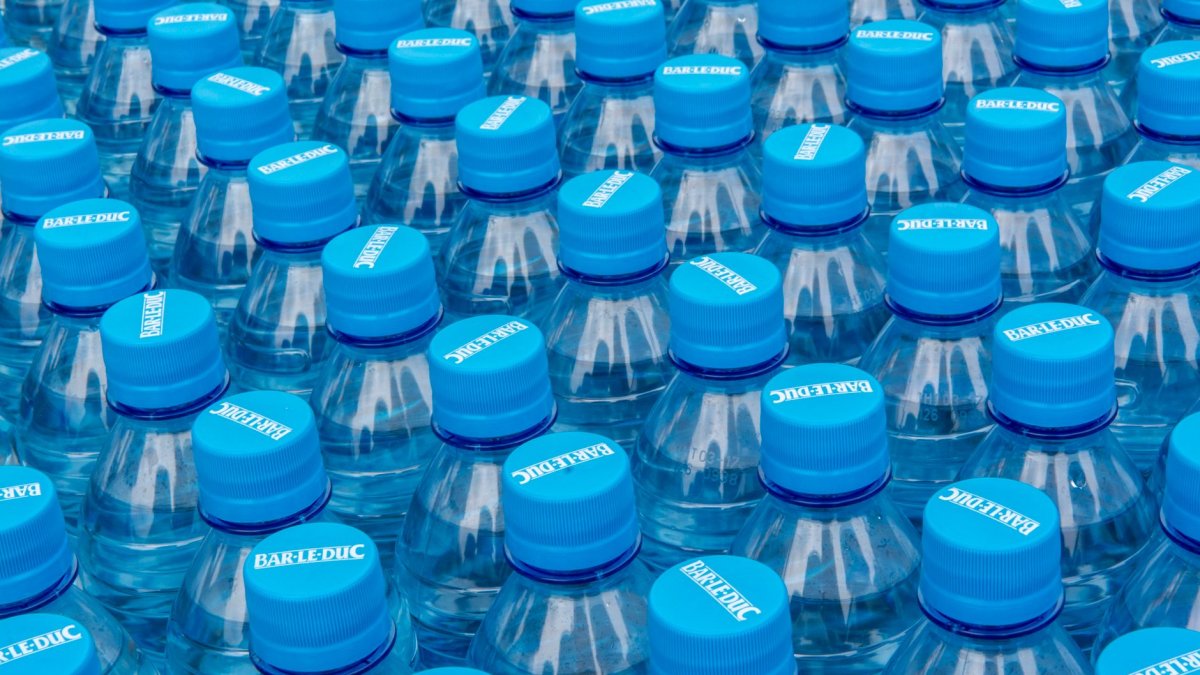
You grab a bottle of water every day, then see a headline saying it holds hundreds of thousands of plastic particles, and you wonder if you should stop. The numbers are startling, but the health picture is much murkier than the headlines suggest. Here’s what’s known, what isn’t, and what’s worth changing.
Quick answer: Nobody has shown that the microplastics in bottled water make people sick, but the exposure is real and the research is early. A fair summary is “possibly a concern, not yet proven.” Cheap fixes like filtered tap water, glass or steel bottles, and keeping bottles out of heat reduce your exposure without panic.
Are Microplastics in Bottled Water Bad for You?
Harm hasn’t been proven, but the exposure is real and the science is young. We know particles are in the water, and we know particles end up in the human body. What we don’t know is whether the amounts from a daily bottle cause disease.
No study has shown that bottled-water microplastics make people sick. That makes this something worth reducing where it’s easy, not something to panic about. Later sections cover the low-cost ways to do that.
How Many Microplastics Are in a Bottle of Water?
A January 2024 Columbia University study in PNAS found about 240,000 plastic particles per liter of bottled water on average. Roughly 90% of them were nanoplastics, which are far smaller than the microplastics most earlier studies counted.
Some quick definitions. Microplastics are plastic particles 5 millimeters or smaller, about the size of a sesame seed or less. Nanoplastics are under 1 micron, and you can’t see them without specialized equipment. Their tiny size is why researchers pay such close attention to them.
The study came from Columbia researchers Wei Min and Beizhan Yan, with NIH support. They used a modified stimulated Raman scattering (SRS) microscopy technique plus a machine-learning algorithm to spot seven common plastic types, particle by particle, in three popular brands.
You may remember an older figure: a 2018 study found only 325 pieces per liter. That gap doesn’t mean bottles got dirtier. The older imaging simply couldn’t see nanoplastics, and the new method can.
How Do Microplastics Get into Bottled Water?
Handling and conditions seem to matter a lot. Opening, closing, squeezing, heat and sunlight all help plastic shed tiny fragments into the water.
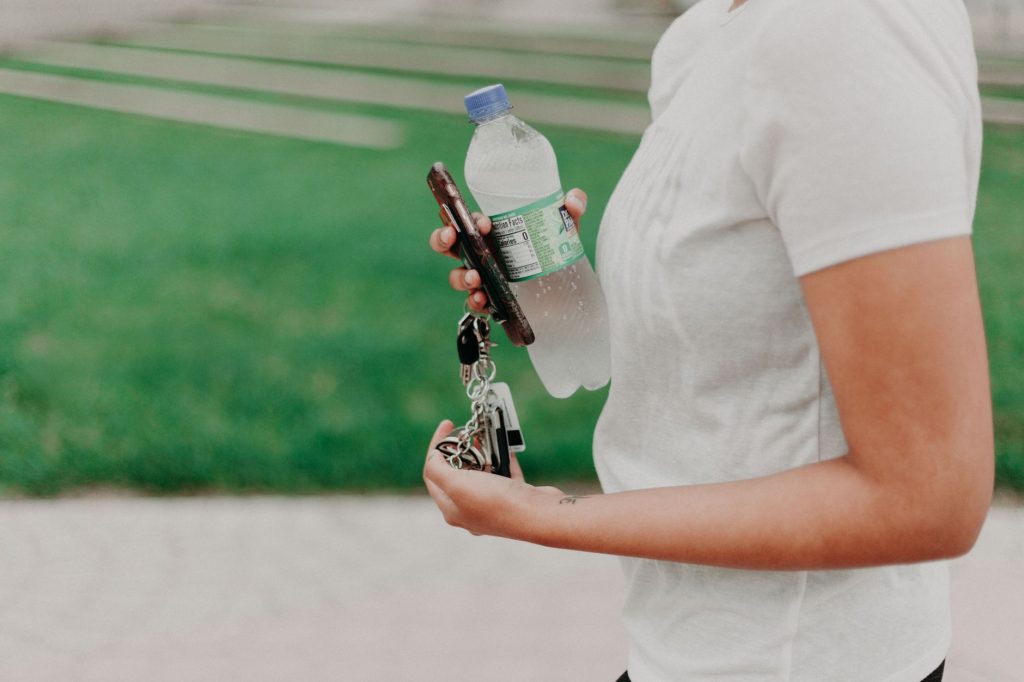
A 2025 review in the Journal of Hazardous Materials reported that twisting the cap and squeezing the bottle can release micro- and nanoplastics. Think about how many times a day you crack a cap or squeeze a bottle in a gym bag. Sunlight and heat add to the shedding too, so a bottle that’s been baking in a hot car is the worst case.
Reusable plastic isn’t automatically safe. One bottled-water company claims that all plastic bottles, including reusable Tritan ones, shed particles, and that dishwasher heat and jostling in a bag make it worse. That’s a commercial claim from a company with something to sell, so file it under “plausible, not settled.”
Separate issue, same material: chemicals such as BPA can leach from some plastics. That’s about dissolved chemicals, not solid particles, but both are reasons to keep plastic bottles cool and away from sun.
What Health Risks Are Researchers Studying?
Researchers are looking at inflammation, hormone disruption and immune effects. Finding particles in the body isn’t the same as proving they cause harm, and that gap is where most of the uncertainty sits.
Here’s how the evidence breaks down:
- Confirmed: Earlier research has detected plastic particles in human blood, lungs and gut, as well as in the placenta and testes. They also show up in feces.
- Possible, but unproven: Early studies point toward links with inflammation, hormonal disruption and changes to immune function. Researchers stress that the work is still catching up.
- Unanswered: Whether the amounts people actually get from bottled water cause any disease, and at what dose.
You’ll see claims linking microplastics to cancer. That’s unproven. Nobody has demonstrated it in people drinking bottled water, so be skeptical of any article that states it as fact.
What Do the FDA and the Bottled Water Industry Say?
The FDA and the industry group IBWA both say the evidence doesn’t justify consumer concern. Independent researchers reply that the data is too new to dismiss. Both positions are fair, and they aren’t really in conflict.
The FDA says it isn’t aware of scientific evidence supporting consumer concern about microplastic or nanoplastic levels in food, including bottled water. The International Bottled Water Association (IBWA) goes further, arguing that drinking water isn’t shown to be a major route for ingesting these particles, since we also take them in from air, food and personal care products. Remember that IBWA represents the companies selling the product.
The counterpoint: absence of proof isn’t proof of safety. In October 2025, the European Food Safety Authority (an EU agency, so this is context, not a U.S. rule) concluded the evidence on exposure from food contact materials wasn’t strong enough to draw meaningful conclusions. That cuts both ways. It doesn’t confirm danger, and it doesn’t clear anything either.
One more warning. Those “10 worst bottled water brands” lists are unreliable. The headline research tested only three brands, so nobody can rank dozens of them honestly.
Is Bottled Water Worse Than Tap Water?
On current estimates, yes, bottled water delivers more plastic particles. The 2025 review estimated that bottled water drinkers may swallow up to 90,000 more micro- and nanoplastic particles per year than people who stick to tap. Treat that as an estimate, since the measuring methods are still being refined.
Tap water and rain contain microplastics too, so switching doesn’t erase exposure. It usually just lowers it. You also take in particles from air, food and packaging, so water is one piece of a bigger picture. Don’t dismiss it, and don’t treat it as the only source.
Plenty of people buy bottled water because they don’t trust their tap, and that’s a legitimate worry in some places. Before you decide, look up your utility’s Consumer Confidence Report. Every U.S. community water system publishes one each year, and it lists what’s in your water and whether it meets federal standards. If your report looks fine, a filter on that tap is a cheaper and lower-plastic habit than cases of bottles.
If your tap has a real contaminant problem, such as lead from old pipes, fix that first. A known contaminant is a bigger concern than an unproven one.
Plastic, Glass, Steel, or Filtered Tap: Which Is Best?
Glass, stainless steel and filtered tap are the lowest-concern choices, but none is proven particle-free. Each trades off cost, convenience or weight, and few brands and packaging types have been tested.
| Option | Microplastic concern | Other considerations | Practical takeaway |
|---|---|---|---|
| Single-use PET plastic bottle | Highest in current research | Heat and sunlight increase shedding; BPA and other chemicals can leach from some plastics | Fine for occasional use; don’t refill or leave in a hot car |
| Reusable plastic (Tritan) | Possible; one company claims it sheds | Dishwasher heat may add wear; light and cheap | Acceptable, but hand wash and replace if scratched or cloudy |
| Glass bottles | Low from the bottle itself | Heavy and breakable; caps may still be plastic-lined | Great at home; a good bottled-water pick when you must buy |
| Stainless steel bottles | Low from the bottle itself | Costs more upfront; some have plastic lids | Best everyday carry option |
| Aluminum bottles or cans | Low to moderate; not well studied | Usually have a thin inner coating; recyclable | A reasonable lower-risk packaged option |
| Tap filtered by reverse osmosis or NSF/ANSI 401 filter | Lowest, if the filter is certified | Upfront cost and filter replacements; RO wastes some water | Best value if you drink water daily |
| Unfiltered tap | Present, but likely fewer particles than bottled | Quality varies by utility; nearly free | A solid default if your Consumer Confidence Report looks good |
If you’re asking which bottled water is best for avoiding microplastics, there’s no honest brand answer. No brand has been shown to be particle-free, and the testing covered very few of them. Glass or aluminum packaging is a sensible lower-risk guess, not a guarantee.
How Can You Cut Your Exposure Without Panic?
Keep bottles cool, stop reusing single-use ones, and filter your tap water with a reverse osmosis system or an NSF/ANSI 401-certified filter. Boiling won’t help, because it doesn’t remove microplastics.
- Store bottles cool. Keep them out of sun and heat, and never leave them in a hot car. UPMC gives the same advice, along with not reusing single-use bottles.
- Stop refilling single-use bottles. They’re built to be used once, and repeated squeezing, washing and twisting wears them down. Use a glass or stainless steel bottle at home and on the go.
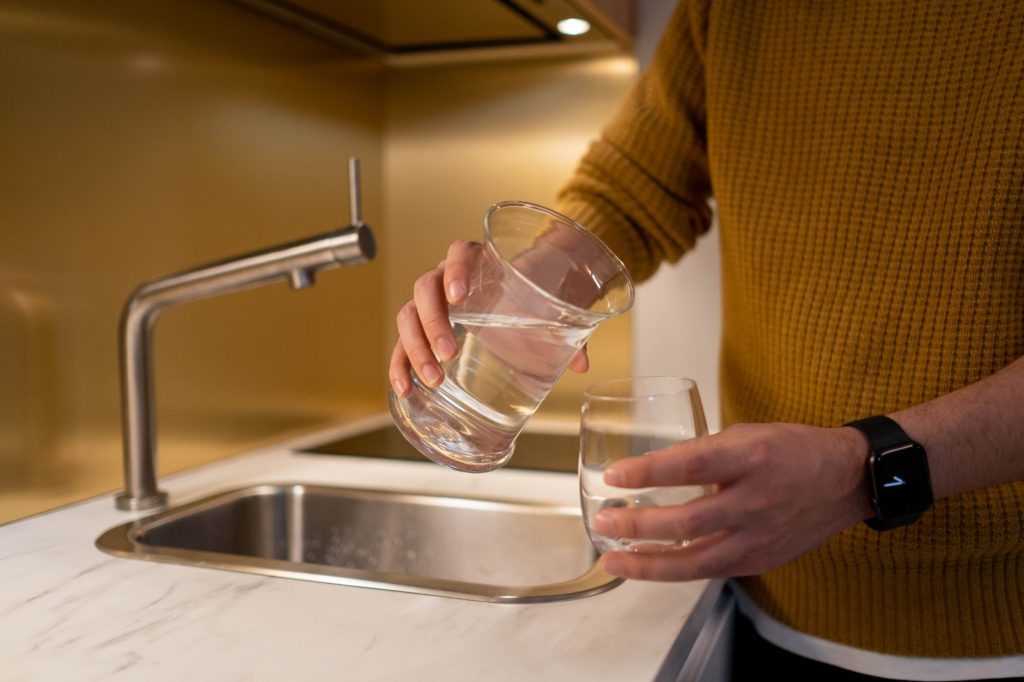
- Filter your tap water. Reverse osmosis, micro-, ultra- or nanofiltration, and certified activated carbon filters can remove microplastics. Look for NSF/ANSI 401 certification for microplastics, which is the best sign you’re getting a filter that works.
- Check the label on pitcher filters. Brands like Brita and Berkey make several models, and certification varies by product. Look at the specific model’s listing instead of assuming.
- Keep bottled water as a backup. For travel, the office or a boil-water advisory, bottles are fine. When you have a choice, grab glass or aluminum.
The Bottom Line on Bottled Water and Microplastics
You don’t need to panic or ban bottled water. But since the exposure is real and the long-term effects are unknown, it makes sense to cut back where it’s easy.
My suggestion: if you drink bottled water daily, put a certified filter on your tap and carry a stainless steel or glass bottle. That one swap handles most of your bottle-related exposure and likely saves money over time. Keep bottled water for the times it’s truly the safest or only option, and store it away from heat.
Frequently Asked Questions
Can you see, smell, or taste microplastics in water?
No. They’re invisible, odorless and tasteless, and there are no at-home test strips. Only a certified laboratory can test for them, so skip any home kit that claims otherwise.
Is it okay to drink bottled water occasionally or in an emergency?
Yes. Occasional use adds little exposure, and safe drinking water matters more than an unproven risk. Just keep the bottles cool and out of sunlight.
How big is a nanoplastic compared with a human hair?
A human hair is about 70 microns wide. Nanoplastics are under 1 micron, so they’re far too small to see.
Are microplastics getting worse over time?
Likely yes. UNEP estimated 2.7 million tons of microplastics entered the environment in 2020, and that total could double by 2040.
Sources and further reading