Why Testing Tap Water At Home Matters
Most people notice water problems only when something tastes, smells, or looks wrong. But some important water issues are not obvious. Lead, nitrate, certain bacteria, and some chemicals may not announce themselves with a strange color or odor.
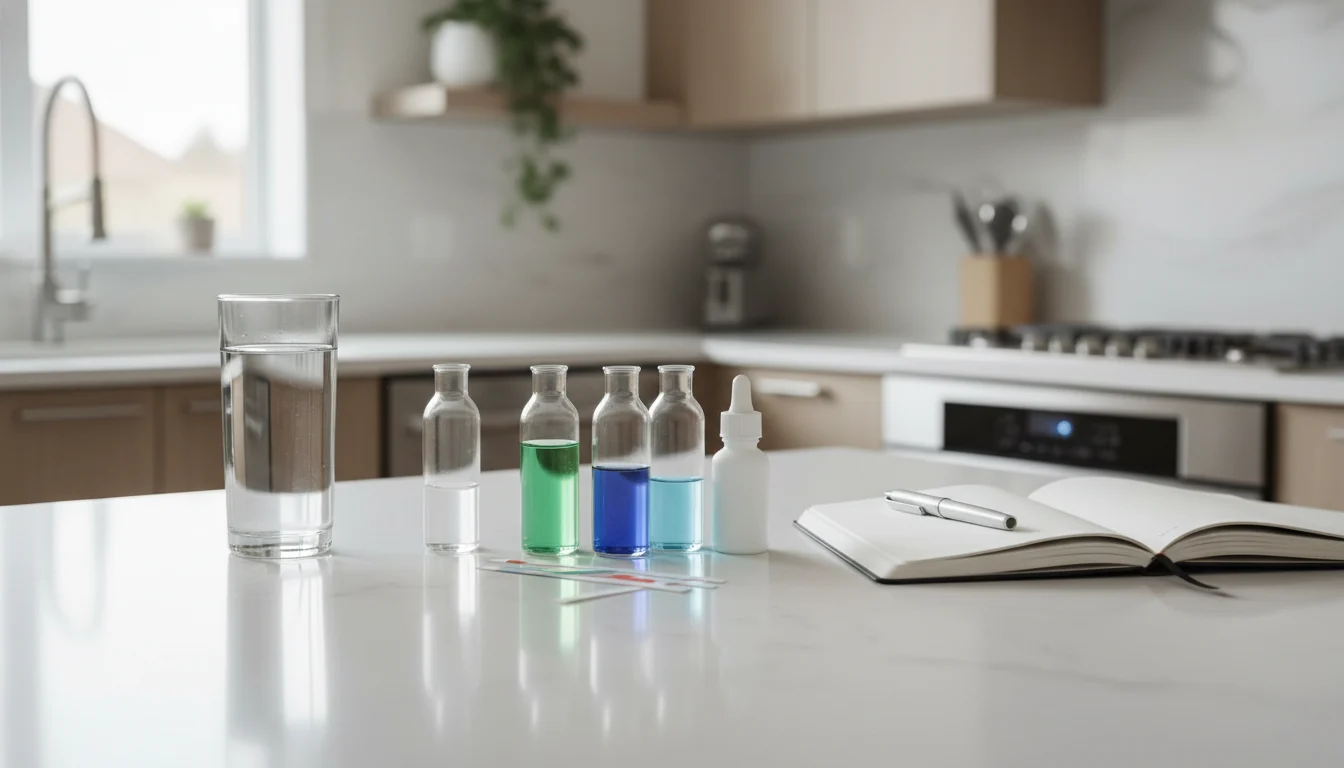
Testing tap water at home helps you move from guessing to making a practical decision. You can decide whether you need a filter, what kind of filter makes sense, whether your plumbing may be contributing to the problem, or whether you need a certified laboratory test.
The best approach is usually a combination of three things:
- Review your local water quality report if you use a public water system
- Use at-home screening tests for basic indicators
- Use a certified lab when health-related contaminants are a concern
A home test kit can be useful, but it is not always the final word. Some tests are good for quick screening. Others require lab methods to be reliable.
First: Know Your Water Source
Before you buy a test kit, identify where your water comes from.
Public water system
If you receive a water bill from a city, town, utility, or community water provider, you are probably on a public water system. Public systems in the United States are regulated and usually publish an annual Consumer Confidence Report, often called a water quality report.
That report can tell you what the utility tested, what it found, and whether the water met applicable standards. It is a helpful starting point, but it may not tell you exactly what comes out of your kitchen faucet. Your home’s service line, solder, fixtures, and building plumbing can affect water after it leaves the treatment plant.
Private well
If you have a private well, testing is your responsibility. There may be no utility report to check. Wells can be affected by geology, septic systems, flooding, agriculture, road salt, nearby industry, and well construction.
Private well owners should take testing seriously, especially for bacteria, nitrate, arsenic, lead, and any contaminants known to be an issue in the local area. Local health departments or extension offices may provide region-specific guidance.
Step 1: Read Your Water Quality Report
For public water, search for your utility name plus “water quality report” or “Consumer Confidence Report.” You can also check your water bill or the utility website.
Look for:
- Detected contaminants
- Reported levels
- The allowed limit or standard, if listed
- Whether the system had any violations
- The water source
- Notes about lead service lines or corrosion control
- Disinfectant used, such as chlorine or chloramine
Do not panic if the report lists contaminants. Regulated reports often list detected substances even when they are below legal limits. The report is a baseline, not automatically a warning.
However, the report may not answer every home-specific question. Lead is a good example: the utility can meet regulatory requirements while some homes with older plumbing still have elevated lead at the tap.
Step 2: Decide What You Need To Test For
A common mistake is buying the biggest test kit available and assuming it covers everything. It is better to test based on your likely risks.
Consider testing for:
- Lead: older homes, old service lines, brass fixtures, plumbing work
- Bacteria: private wells, flooding, sudden illness concerns, bad well cap
- Nitrate: private wells, agricultural areas, infants in the home
- Hardness: scale on faucets, spots on dishes, dry-feeling skin
- Chlorine or chloramine: taste, odor, filter selection
- pH: corrosion, metal taste, plumbing concerns
- Iron or manganese: staining, metallic taste, discoloration
- Copper: blue-green stains, metallic taste, newer copper plumbing
- Arsenic: certain regions and private wells
- PFAS or VOCs: local contamination concerns, nearby industry, firefighting foam history, fuel or solvent odors
Some of these can be screened at home. Others are better handled by a certified lab.
Step 3: Choose The Right Type Of Test
There are three common ways to test tap water at home.
Test strips
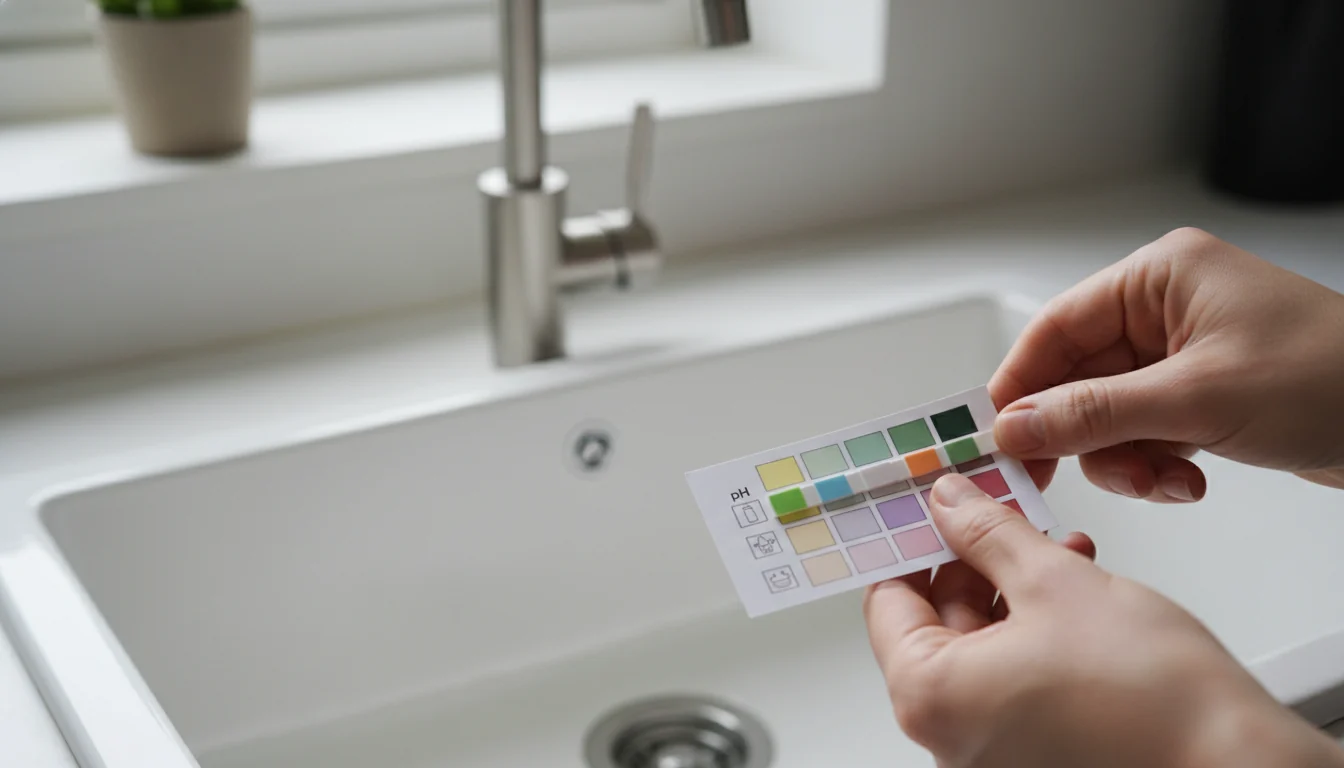
Test strips are easy and inexpensive. You dip the strip, wait the required time, and compare colors to a chart. They can be useful for quick checks like hardness, chlorine, pH, alkalinity, and sometimes nitrate.
The downside is precision. Lighting, timing, wet fingers, expired strips, and subjective color matching can affect results. Test strips are best for screening, not for making high-stakes health decisions.
Drop kits
Drop kits use reagents and a small sample vial. They are common for chlorine, hardness, pH, and pool-style testing. They can be more consistent than strips when used carefully.
They still require following directions exactly. Using too much water, counting drops incorrectly, or reading the result under poor lighting can throw off the result.
Certified lab tests
A certified laboratory test is the better choice for contaminants where accuracy matters, such as lead, bacteria, nitrate, arsenic, PFAS, VOCs, and other health-related concerns.
Lab tests cost more and take longer, but they provide more dependable results. Many labs provide sampling bottles, preservatives if needed, chain-of-custody instructions, and clear collection steps.
If the result could affect a baby, pregnancy, medical condition, real estate decision, or expensive treatment system purchase, use a lab.
What At-Home Kits Are Good For
At-home water test kits can be useful for everyday questions:
- Is my water hard?
- Is there free chlorine at the tap?
- Is my filter reducing chlorine taste?
- Is the pH unusual?
- Is nitrate screening showing a possible concern?
- Did my water change after plumbing work?
They are also good for learning. Testing before and after a filter can show whether the filter changes chlorine, hardness, or other measurable indicators. Just remember that a filter can reduce one thing while doing nothing for another.
What At-Home Kits Are Not Good For
At-home kits are not ideal for confirming that water is safe after contamination, flooding, sewage exposure, or a boil water advisory. They also should not be your only tool for serious contaminants.
Be cautious with kits that claim to test for dozens of contaminants with one strip. Broad screening can be helpful, but it is not the same as a certified lab analysis. A “non-detect” on a home kit does not always mean a contaminant is absent at a level that matters.
How To Collect A Tap Water Sample Correctly
Good sampling matters. A sloppy sample can make a test less useful.
For many home screening tests:
- Read the full instructions before opening anything.
- Use the sample container recommended by the kit.
- Wash your hands.
- Remove aerators only if the instructions say to.
- Use cold water unless the instructions say otherwise.
- Follow the required flush time or first-draw timing.
- Do not touch the inside of the bottle or cap.
- Test immediately if the kit requires it.
- Record the date, time, faucet, and result.
For lab tests, follow the lab’s instructions exactly. Some samples must be kept cold. Some must arrive within a specific time window. Bacteria samples often have strict handling requirements.
First-Draw Vs Flushed Samples
For some contaminants, especially lead and copper, the timing of the sample matters.
A first-draw sample is collected after water has sat in the plumbing for several hours, often overnight. This can show what water may pick up from pipes, solder, or fixtures while sitting.
A flushed sample is collected after running the water for a set period. This can show water quality after stagnant water has been cleared from the plumbing.
Both can be useful, but they answer different questions. If you are testing for lead, use the sampling method recommended by the lab, health department, or testing program.
Testing For Lead
Lead deserves special attention because it can be harmful even at low levels, especially for children and pregnant people. You cannot reliably see, smell, or taste lead in water.
At-home lead screening kits exist, but a certified lab test is the better choice if lead is a real concern. Consider testing if:
- Your home was built before modern lead restrictions
- Your neighborhood may have lead service lines
- You have older brass fixtures
- You recently disturbed plumbing
- You have infants, young children, or pregnant people in the home
- Your utility or city has identified lead concerns nearby
If lead is detected, do not assume any random filter will solve it. Choose a filter certified for lead reduction and maintain it exactly as directed. Also consider whether plumbing replacement or service line work is needed.
FAQs About Testing Tap Water At Home
What is the easiest way to test tap water at home?
The easiest first step is to review your local water report, then use a basic home test kit for screening. Use a certified lab when you need accurate results for lead, bacteria, nitrates, PFAS, or private well concerns.
Are home water test strips accurate?
Test strips are useful for quick screening, but they are not as reliable as lab testing. They can help you spot a possible issue, not prove that water is completely safe.
What should I test for in tap water?
Start with your water source and symptoms. Common checks include chlorine, hardness, pH, lead risk, nitrates for wells, bacteria for wells, and any local contaminant concerns in your area.
Should I buy a filter before testing?
If taste is your only issue, a simple certified carbon filter may be reasonable. For safety concerns, testing first is better because the right filter depends on what you are trying to reduce.
Testing For Bacteria
Bacteria testing is especially important for private wells. Total coliform and E. coli tests are common indicators. A positive result can mean the well or plumbing system needs attention.
For bacteria, use a certified lab or a testing program from a health department when possible. Collection errors can contaminate the sample, and timing matters. Do not rinse the sample bottle unless instructed. Do not touch the inside of the cap. Deliver or ship the sample as required.
If you suspect sewage contamination, flooding, or illness linked to water, treat it as a serious issue and follow local health guidance. A basic pitcher filter is not an appropriate fix for microbiologically unsafe water.
Testing For Nitrate
Nitrate is a concern especially for private wells in agricultural areas and for households with infants. It has no obvious taste or smell at concerning levels.
Test strips can screen for nitrate, but a lab test is better for important decisions. If a baby drinks formula made with well water, ask a local health department or pediatrician what testing is recommended in your area.
If nitrate is elevated, common carbon filters may not solve it. Treatment options can include reverse osmosis or other systems designed for nitrate reduction, but the right solution depends on the level and the household.
Testing For Hardness
Hard water is not usually treated as a health emergency, but it can be annoying and expensive over time. Signs include scale on faucets, spots on dishes, reduced soap lather, and buildup in appliances.
Hardness is one of the easier things to test at home with strips or drop kits. Results are often reported in grains per gallon or parts per million as calcium carbonate.
If your water is hard, a water softener may help protect plumbing and appliances. A standard carbon pitcher filter usually does not soften water in a meaningful way.
Testing For Chlorine And Chloramine
Public water systems often use disinfectants to control microbes in the distribution system. Chlorine can create a noticeable taste or smell. Chloramine is more stable and may require different filter media for effective reduction.
Basic home tests can measure free chlorine, and some kits distinguish free chlorine from total chlorine. If your utility uses chloramine, choose filters rated for chloramine reduction if taste is your concern.
A carbon filter may improve chlorine taste, but performance varies by filter type, contact time, and cartridge condition.
Testing For pH, Iron, Copper, And Manganese
pH affects corrosion and scaling tendencies. Low pH can contribute to corrosion in some plumbing systems, while high pH can affect taste and scale behavior.
Iron and manganese can cause staining, discoloration, and metallic taste. They are common well-water complaints in some areas. Copper can show up as blue-green staining or a metallic taste and may be related to corrosion of copper pipes.
At-home tests can screen for these, but lab testing is more reliable if results are high, symptoms are severe, or you are planning a treatment system.
Testing For PFAS, VOCs, And Other Chemicals
PFAS, volatile organic compounds, solvents, fuels, and pesticides require more specialized testing. Do not rely on a simple dip strip for these concerns.
Consider lab testing if:
- Your area has known PFAS contamination
- You live near industrial sites, airports, landfills, military bases, or firefighting training areas
- Your water smells like fuel, solvent, or chemicals
- A spill or local advisory has been reported
- You use a private well near possible contamination sources
For these issues, contact a certified lab or local health agency. Treatment may require activated carbon, reverse osmosis, ion exchange, or other systems, depending on the contaminant.
When To Test Tap Water
Testing is especially worthwhile when:
- You move into a new home
- You have a private well
- There is a pregnant person, infant, or young child in the home
- You notice sudden changes in taste, odor, or color
- Your area has flooding or construction
- Plumbing has been replaced or disturbed
- You install a new treatment system
- You want to verify a filter is addressing a specific issue
Private wells should be tested regularly based on local recommendations. Public-water households may not need frequent broad testing, but targeted testing can still make sense.
How To Interpret Results Without Overreacting
Water test results can be confusing. A detected contaminant is not always an emergency, and a “pass” on one test does not mean every possible contaminant is absent.
When reading results:
- Check the unit of measurement
- Compare to relevant standards or guidance
- Note whether the sample was first-draw or flushed
- Confirm whether the test was a screen or certified lab result
- Look for patterns, not just one number
- Ask the lab, health department, or utility if you do not understand the result
Do not buy an expensive treatment system based only on a vague home test. Confirm the problem first.
Matching Test Results To Filters
Once you know what is in your water, choose treatment based on the specific issue.
Common examples:
- Chlorine taste: activated carbon filter
- Chloramine taste: carbon filter rated for chloramine
- Lead: filter certified for lead reduction
- Hardness: water softener or scale-control system, depending on goals
- Nitrate: treatment designed for nitrate, often not a basic carbon pitcher
- Bacteria: disinfection or well repair, not a standard pitcher
- PFAS: certified system appropriate for the compounds of concern
Always check certifications and performance data for the exact model. A filter that reduces chlorine may not reduce lead. A softener that handles hardness may not remove nitrate. A reverse osmosis system may reduce many dissolved contaminants but requires maintenance and may not be necessary for every home.
Common Testing Mistakes
Avoid these mistakes:
- Testing hot water instead of cold tap water
- Using expired strips
- Reading strips too early or too late
- Comparing colors under poor lighting
- Touching sterile sample containers
- Ignoring first-draw instructions for lead
- Assuming clear water is safe
- Assuming a filter removes everything
- Forgetting to record results
- Buying treatment before confirming the problem
Small errors can lead to wrong conclusions.
A Simple Home Testing Plan
If you want a practical starting plan, use this:
- Identify whether you use public water or a private well.
- Read your water quality report if you are on public water.
- List your concerns: taste, lead, hardness, well safety, stains, odor, or local contamination.
- Use home tests for basic screening like hardness, chlorine, pH, and possibly nitrate.
- Use a certified lab for lead, bacteria, nitrate decisions, arsenic, PFAS, VOCs, or any serious concern.
- Choose filters or treatment only after you know what you need to address.
- Retest after installing treatment if the issue matters for health or safety.
This approach keeps you from overspending and helps avoid false confidence.
Final Thoughts
Testing tap water at home does not have to be complicated. Start with your water source, review available reports, and choose tests based on realistic risks. Use at-home kits for quick screening, and use certified labs when accuracy matters.
The biggest lesson is simple: water treatment should follow water testing. Once you know what you are trying to reduce, it becomes much easier to choose the right filter, softener, reverse osmosis system, or professional help.
If your water suddenly changes color, smells like fuel or sewage, is linked to illness, or is under an advisory, do not rely on a basic home kit. Follow local health guidance and get qualified testing. For everyday questions, though, a smart testing plan can give you useful answers and peace of mind.