
Hard water stains are one of those bathroom problems that make a clean room look unfinished. You scrub the shower door, polish the faucet, wipe the sink, and a day later the cloudy spots are back. If your home has hard water, the issue is not usually poor cleaning. It is minerals left behind after water droplets dry.
In my bathroom, the biggest improvement came from drying glass and fixtures daily, then using a mineral-safe cleaner weekly instead of trying to rescue everything once a month.
The goal is not to turn your bathroom into a full-time maintenance project. The goal is to reduce buildup, clean existing stains without damaging surfaces, and decide whether a water treatment upgrade is worth it for your home.
This guide covers practical steps that work in real bathrooms: what causes hard water stains, how to clean them safely, how to slow them down, and when to consider a softener or other treatment option.
What hard water stains actually are
Hard water contains dissolved minerals, mainly calcium and magnesium. When water evaporates on glass, tile, faucets, showerheads, and counters, those minerals can remain behind as spots, haze, crust, or scale.
In the bathroom, hard water stains often show up as:
- White or gray spots on glass shower doors.
- Chalky buildup around faucets and drains.
- Crust on showerheads and aerators.
- Cloudy film on tile or fixtures.
- Ring marks where water regularly sits.
- Soap scum that seems harder to remove than usual.
Hard water stains are different from mold, mildew, rust, and biological grime, although they can overlap. A shower can have mineral scale and soap residue at the same time. That is why a cleaner that works for one problem may not fully solve the other.
Why bathrooms show hard water first
Bathrooms create the perfect conditions for mineral deposits. Surfaces get wet repeatedly, water droplets sit long enough to dry, and soap products interact with minerals.
Glass shower doors are especially unforgiving. Clear glass shows every dried droplet. Chrome fixtures also reveal spots quickly because shiny surfaces make mineral residue stand out.
Bathrooms also have many small edges where water collects: faucet bases, drain lips, shower door tracks, grout lines, and around handles. Once scale starts building in those areas, it can trap more residue and become harder to remove.
Start with prevention, not scrubbing
If you only attack hard water stains after they become thick and crusty, cleaning will always feel like a battle. Prevention is the easier half of the job.
The most effective habit is removing water before it dries. You do not need to detail the whole bathroom after every use. Focus on the surfaces where stains bother you most.
Simple prevention habits include:
- Squeegee glass shower doors after showering.
- Wipe faucets and handles with a microfiber cloth at night.
- Keep a small towel near the sink for quick splash cleanup.
- Run the bathroom fan to reduce lingering moisture.
- Fix drips that keep surfaces constantly wet.
- Use a daily shower spray if it is safe for your surfaces.
A 20-second wipe can prevent a 20-minute scrubbing session later. That is the tradeoff that makes hard water manageable.
Clean safely before you clean aggressively
Mineral deposits are alkaline, so mild acids often help dissolve them. That is why vinegar and citric-acid-based cleaners are common choices for hard water spots. But not every bathroom surface likes acid.
Before using vinegar or an acidic cleaner, check the surface. Avoid acid on natural stone such as marble, limestone, travertine, and some cement-based materials unless the product is specifically approved for that surface. Acid can etch or dull stone.
Also be careful with worn finishes, specialty coatings, oil-rubbed bronze, unsealed grout, and manufacturer-treated glass. If you are not sure, test in a hidden area first and follow the fixture maker’s care instructions.
Never mix cleaners casually. In particular, do not mix bleach with vinegar, ammonia, or acidic descalers. Mixing chemicals can create dangerous fumes.
A simple cleaning method for glass shower doors
For typical glass shower doors with mineral spots and soap film, start gently.
- Rinse the glass with warm water.
- Apply a hard-water-safe cleaner or a vinegar-water solution if appropriate for the surface.
- Let it dwell briefly so it can loosen mineral deposits.
- Scrub with a non-scratch sponge or soft pad.
- Rinse thoroughly.
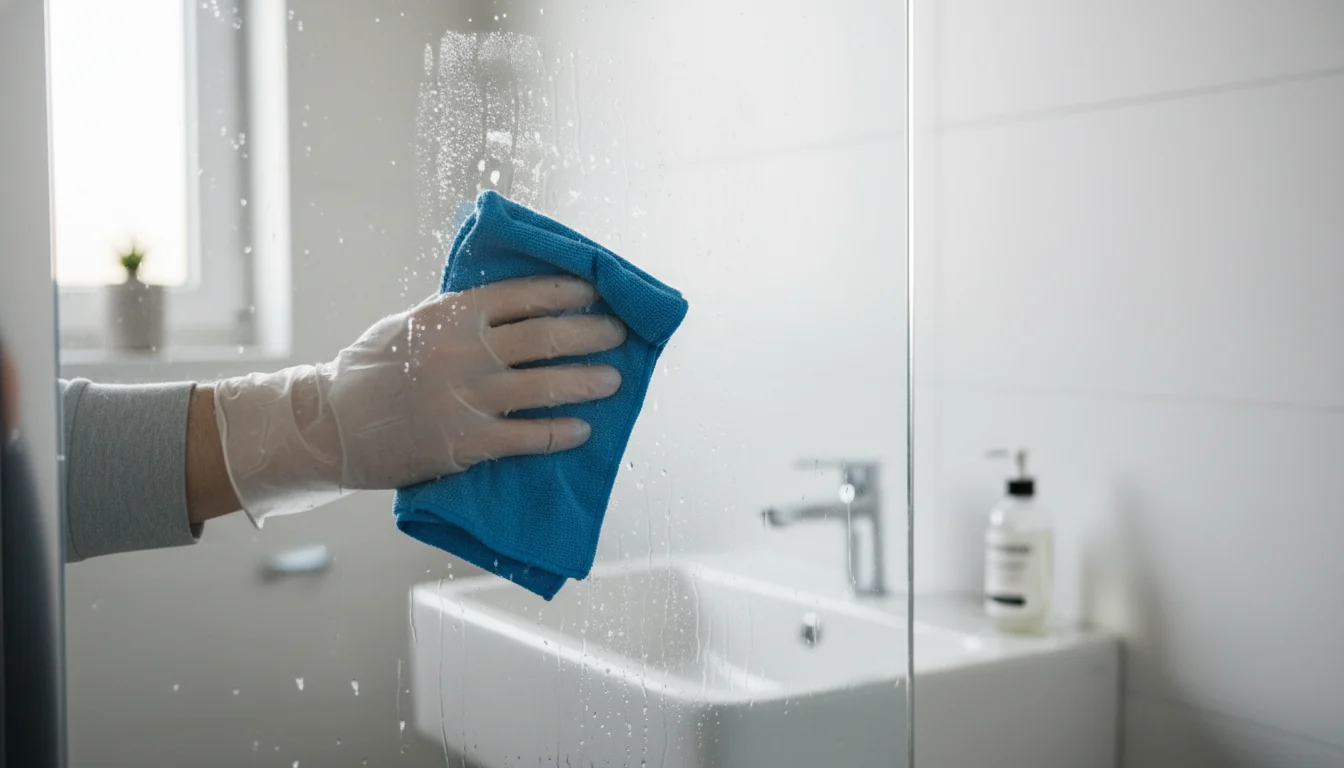
- Dry completely with a microfiber cloth.
If the glass still looks cloudy, repeat rather than jumping straight to harsh abrasives. Heavy scale may need multiple gentle passes.
For stubborn areas, a paste made for glass cooktops or a non-scratch mineral remover may help, but check compatibility. Some shower doors have protective coatings that can be damaged by abrasive products.
How to clean faucets and fixtures
Faucets collect mineral buildup around the base, spout, handles, and aerator. The safest method depends on the finish.
For common chrome or stainless finishes, a mild acidic cleaner used briefly can remove spots. Apply it to a cloth rather than spraying everywhere. Wipe the affected area, rinse, and dry. Do not let acidic cleaner sit on metal longer than the product directions allow.
For faucet bases with crusty buildup, wrap the area with a cloth dampened with an appropriate cleaner for a short dwell time, then gently scrub with a soft brush. An old toothbrush can help around seams.
For aerators, unscrew the aerator if possible, rinse debris, and soak only the removable part if the material allows it. Take a photo before disassembly so you can put screens and washers back in the right order.
If a fixture has a special finish, skip home experiments and follow the manufacturer’s care guide. Replacing a damaged finish costs more than buying the right cleaner.
How to deal with showerhead scale
A showerhead with hard water scale may spray unevenly or look crusty around the nozzles. Many showerheads can be cleaned without removing them.
A common approach is to secure a bag of appropriate descaling solution around the showerhead so the nozzles soak. But again, surface compatibility matters. Some finishes should not sit in vinegar or strong descalers.
After soaking, gently brush the nozzles, run hot water through the showerhead, then wipe it dry. If the spray pattern remains poor, the buildup may be inside the showerhead, or the fixture may be old enough that replacement makes more sense.
A showerhead filter is sometimes marketed as a fix for hard water stains. Be cautious with that claim. Many shower filters are designed mainly for chlorine taste/odor or certain water feel issues, not true hardness removal. A small shower filter generally does not soften water the way an ion-exchange softener does.
The soap scum connection
Hard water stains and soap scum often appear together. Calcium and magnesium can react with soap, creating sticky residue that clings to tile, tubs, and glass. This is one reason hard water bathrooms can feel harder to clean even when the water spots are not severe.
Switching from traditional bar soap to a body wash or detergent-based cleanser may reduce soap scum for some households. It will not remove minerals from the water, but it can reduce the film that minerals stick to.
Regular rinsing also helps. Soap left to dry on glass and tile gives minerals more material to bond with.
Best tools for reducing bathroom hard water stains
You do not need a closet full of specialty products. A small set of safe tools is usually enough.
Useful tools include:
- A shower squeegee.
- Microfiber cloths.
- A non-scratch sponge.
- A soft detail brush or old toothbrush.
- A cleaner labeled for hard water or mineral deposits.
- A spray bottle for approved diluted cleaner.
- Protective gloves.
Avoid steel wool, harsh scouring powder, and aggressive scraper blades unless the surface manufacturer specifically allows them. Scratches create more places for minerals to cling and can make glass or fixtures look permanently dull.
Daily, weekly, and monthly routine
The best cleaning routine is the one you will actually do. Here is a realistic schedule for a hard water bathroom.
Daily or after showers:
- Squeegee glass and tile where spots are obvious.
- Wipe faucet handles and sink edges if they are wet.
- Run ventilation to help surfaces dry.
Weekly:
- Clean glass, tile, and fixtures with a surface-safe bathroom cleaner.
- Dry polished metal after cleaning.
- Check around faucet bases and drains for early scale.
Monthly:
- Inspect showerhead nozzles and faucet aerators.
- Clean buildup before it becomes thick.
- Wash or replace cleaning cloths and squeegee blades.
This routine is not glamorous, but it is much easier than rescuing a shower door that has months of mineral deposits baked onto it.
Should you install a water softener?
If hard water stains are a constant problem throughout the house, a water softener may be worth considering. A traditional ion-exchange softener reduces hardness minerals before water reaches fixtures. That can reduce scale on shower doors, faucets, appliances, and plumbing surfaces.
A softener is a bigger decision than buying a cleaner. It requires installation space, ongoing salt or potassium chloride, maintenance, and sometimes a drain connection. Some households also prefer to keep unsoftened water at the kitchen cold tap for taste or sodium-related personal preferences.
A softener may be a good fit if you notice several of these issues:
- Persistent scale on fixtures and shower glass.
- Soap that does not lather well.
- Dry-feeling skin or hair after showers.
- Scale in kettles, coffee makers, or appliances.
- Frequent cleaning frustration in multiple bathrooms.
- Confirmed high hardness from a water test or local report.
If stains are limited to one bathroom or one fixture, start with cleaning habits and check for leaks before investing in whole-house treatment.
I also check the shower door after one normal week, because my own hard-water marks usually tell me whether a habit is working better than a product label does.
FAQs About Hard Water Stains In The Bathroom
What causes hard water stains on shower glass?
Hard water stains usually come from calcium and magnesium minerals left behind when droplets dry. Soap residue can mix with those minerals and make the film look worse.
Does vinegar remove hard water stains?
White vinegar can help on many glass and chrome surfaces, but it is not safe for every material. Avoid acidic cleaners on natural stone and always test a small area first.
Will a shower filter stop hard water stains?
A basic shower filter may improve chlorine smell or sediment, but it usually will not soften water enough to stop mineral stains. For confirmed hard water, a softener or targeted treatment is more realistic.
How often should I clean hard water buildup?
Light weekly cleaning plus daily drying works better than waiting for heavy scale. The longer minerals sit, the harder they are to remove without stronger products.
What about salt-free conditioners?
Salt-free water conditioners are often marketed as alternatives to softeners. Many do not remove hardness minerals. Instead, they aim to change how minerals behave so scale is less likely to stick.
That distinction matters. If you want actual hardness reduction, verify the technology and claims. If you mainly want less scale adhesion and do not want a salt-based system, a conditioner may be worth researching, but expectations should be realistic.
Look for clear third-party testing, installation requirements, maintenance needs, and honest language about what the system does and does not remove.
Test before you spend big
Before buying a whole-house system, confirm whether hard water is truly the source of the problem. You can use a basic hardness test kit, check your municipal water quality report, or ask your water provider for typical hardness information.
Testing is especially helpful if you are comparing treatment options. “Hard water” is not one exact condition. Mild hardness and very hard water may justify different levels of investment.
A test also helps separate hardness from iron, manganese, pH issues, or other water chemistry concerns that can create stains of their own. Orange-brown stains, black staining, blue-green stains, and slimy growths may point to different causes than simple calcium scale.
Fix leaks and standing water
A tiny drip can create a big stain because it keeps adding minerals to the same spot. If you have a ring around a drain, a crusty faucet base, or a streak under a spout, look for persistent moisture.
Common culprits include:
- Faucet drips.
- Loose handles.
- Splashing at the sink edge.
- Poorly sealed shower door tracks.
- Slow-draining areas.
- Shower niches that hold water.
Repairing the moisture source reduces the stain source. Cleaning without fixing the drip is like sweeping during a dust storm.
Protect surfaces after cleaning
Once surfaces are clean, protection can slow new spotting. Some homeowners use a glass water-repellent product on shower doors. Others rely on daily shower sprays or simply dry the glass consistently.
Only use protectants that are appropriate for the surface. Do not apply automotive products, waxes, or sealers in a shower unless they are safe for indoor bathroom use and compatible with the material. Slippery residue on floors or tubs is a safety risk.
For grout, proper sealing can reduce absorption and staining, but it will not stop minerals from drying on the surface. Sealers help with maintenance; they do not replace cleaning.
When stains may not be hard water
Not every bathroom stain is caused by hardness. If your cleaning approach is not working, reconsider the diagnosis.
- Orange or reddish stains may be iron, rust, or bacteria-related residue.
- Black stains may be manganese, mildew, or deteriorating materials.
- Blue-green stains can be related to copper plumbing corrosion.
- Pinkish film is often associated with airborne bacteria growing on damp surfaces.
- White crust is commonly mineral scale, but product residue can contribute.
If stains are unusual, spreading, or paired with plumbing corrosion, odor, or health concerns, consider water testing or a local water treatment professional.
Bottom line
Hard water stains in the bathroom are caused by minerals left behind when water dries. The most effective strategy is a combination of prevention, surface-safe cleaning, and realistic water treatment decisions.
Start small: squeegee glass, dry fixtures, fix drips, and use a cleaner designed for mineral deposits. If the problem affects the whole house and testing confirms significant hardness, a water softener or properly chosen treatment system may reduce the workload.
You may not eliminate every spot forever, but you can make the bathroom easier to clean and keep it looking clean longer.