
You grab a plastic bottle every day because you trust it more than your tap. Then a microplastics headline makes you wonder if that habit is the problem.
Quick answer: If bottled water is your daily default, yes, it’s worth switching to filtered tap water in a reusable bottle. One analysis puts the drop in exposure at over 90%. Health harm isn’t proven, so treat this as sensible risk reduction, not an emergency.
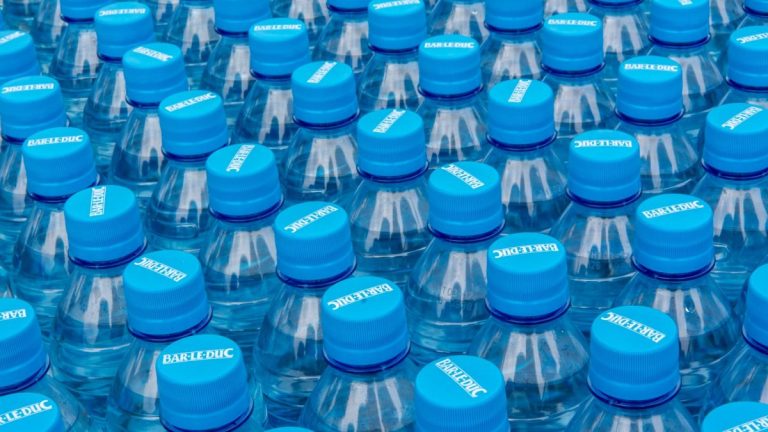
Should You Stop Drinking Bottled Water Because of Microplastics?
If you drink bottled water every day, yes, cut back. The health effects are unproven, so there’s no need to panic, but this is one of the easiest exposure sources to remove.
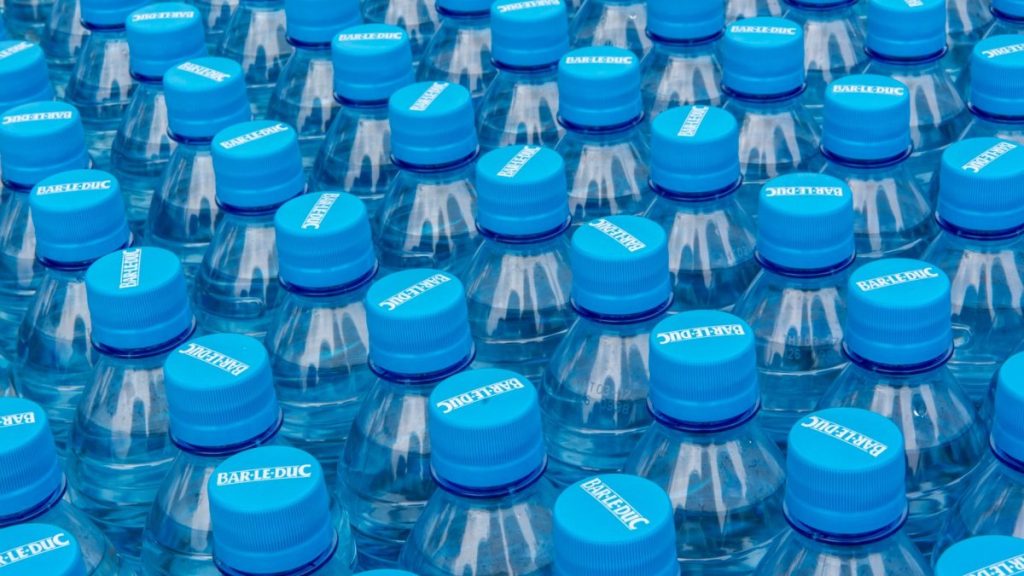
A review from Concordia University estimates that daily bottled water drinkers ingest nearly 90,000 extra microplastic particles a year. A Genomic Press analysis estimated that switching away from bottled water drops that figure to about 4,000 particles a year, a reduction of more than 90%.
Nobody has shown these particles make you sick, so you aren’t harming yourself on a schedule. You’re just carrying a habit that adds a lot of avoidable plastic for no clear benefit.
What Are Microplastics, and How Many Are in Bottled Water?
Microplastics are plastic particles smaller than 5 millimeters, and nanoplastics are smaller than 1 micrometer. Bottled water adds a large load on top of what most people already take in from food and air.
Nanoplastics are far too small to see without specialized equipment. That’s part of why researchers worry: particles this small may pass into tissues more easily than larger ones.
An Italian study cites about 240,000 tiny plastic pieces per liter of bottled water. For context, a Concordia University doctoral researcher, Sarah Sajedi, went through more than 140 scientific papers on plastic bottles and the human body. Her review lands on an average intake of 39,000 to 52,000 particles a year from food and drinking water together.
Counts like these vary a lot depending on the lab method and the particle sizes included. Treat them as rough orders of magnitude, not precise measurements.
Where Do the Particles Come From?
The bottle itself is a main source. Plastic fragments can enter the water at several stages, from production and shipping to shelf storage and breakdown over time. Flexing or warming the bottle makes its inner walls shed even more.
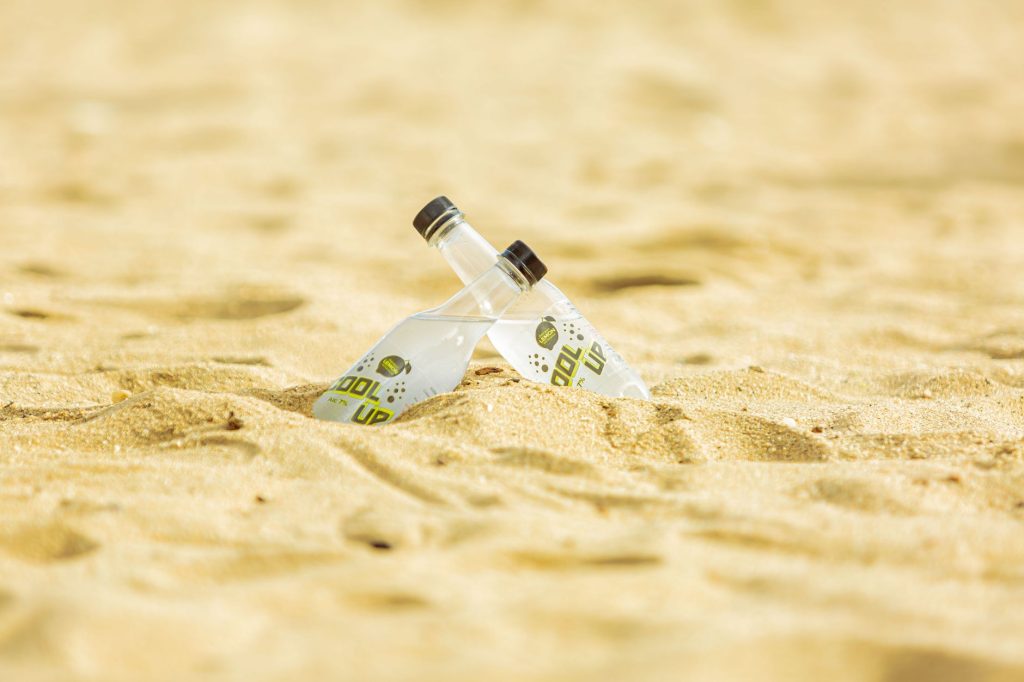
Low-quality plastics shed more under sunlight, temperature swings and rough handling. That has practical consequences:
- Don’t leave bottles in a hot car or on a sunny porch.
- Skip squeezing, twisting and crushing bottles you plan to drink from.
- Don’t refill single-use bottles for weeks. They weren’t designed for repeated use, and the extra wear likely adds more shedding.
Here’s the honest gap: nobody has published an exact “safe” temperature or a number of reuses that makes a bottle fine. The direction is clear, but the thresholds aren’t. Cooler storage and less handling are better, and that’s as precise as the evidence gets.
Are Microplastics in Bottled Water Actually Harmful?
Nobody knows yet. Studies link microplastics to health problems, but those links are associations, not proven causes.
The proposed mechanisms are inflammation and oxidative stress once particles reach the bloodstream and organs. Researchers have also reported associations with hormone disruption, reproductive and nervous system harm, fertility problems, some cancers, and higher microplastic levels in the brains of dementia patients. The long-term effects remain unclear.
The most-cited bottled water data comes from a survey of 45,597 people in Italy. Bottled water consumption was linked to slightly higher odds of hypertension (odds ratio 1.05), diabetes (1.09), gastric or duodenal ulcers (1.21) and kidney stones (1.17). An odds ratio of 1.05 means 5% higher odds, which is a small nudge, and the confidence interval for hypertension (1.00 to 1.11) just touches 1.00.
Read that evidence with care. It’s a cross-sectional survey, so it captures one moment in time. It adjusted for education, age, gender and economic resources, but it can’t prove that bottled water or microplastics caused anything. It’s also Italian data. The authors themselves say the health impacts of micro- and nanoplastics are still largely undetermined.
The scarier numbers you see online usually come from reviews that pool many studies, not from a single study proving harm. Take them as a reason for caution, not a diagnosis.
Bottled vs. Tap vs. Filtered: How Do They Compare?
Filtered tap water in a reusable bottle comes out ahead on both estimated exposure and cost. Bottled water wins only on convenience.
| Option | Estimated microplastic exposure | Cost | Convenience | Best use |
|---|---|---|---|---|
| Daily bottled water | Highest of the four | Highest; adds up fast | Highest, grab and go | Emergencies, travel, unsafe tap |
| Unfiltered tap | Not well measured | Pennies per gallon | High | Home use if your tap tests fine |
| Filtered tap in a reusable bottle | Lowest estimate | Low, mostly filter replacements | Medium, needs refilling | Daily default |
| Glass or stainless steel bottle | Depends on the water you put in; the bottle itself adds little shedding | One-time purchase | Medium to high | Carrying filtered water anywhere |
The exposure rankings rest on one cited paper and are estimates, not lab measurements of your own water. Costs vary by brand, region and how many bottles you buy.
The cost gap is the easy part. A bottle or two a day can run to hundreds of dollars a year, while a pitcher and replacement cartridges cost a fraction of that.
How Do You Cut Exposure If You Distrust Your Tap?
Check your local water quality report first, then pick a certified filter and a reusable bottle. That replaces a gut feeling with evidence.
- Read your Consumer Confidence Report. Every community water utility publishes one each year, usually on its website. Look for any contaminant flagged above a limit. The EPA sets the rules for tap water, while the FDA covers bottled water, and some bottled brands are simply treated municipal water anyway.
- Match the filter to your concern. An activated carbon filter in a pitcher handles taste, chlorine and some common contaminants for a modest price. Reverse osmosis removes a broader range but costs more, takes up under-sink space, and wastes some water.
- Look for NSF/ANSI certification. It tells you the filter does what the box claims for specific contaminants. Be realistic, though: no certification guarantees microplastic removal, so choose the filter for the contaminants you can verify.
- Replace cartridges on schedule. Filter housings are plastic too, and an overdue cartridge works poorly. Follow the manufacturer’s interval.
- Carry it in stainless steel or glass. Either one avoids the shedding problem and holds up to daily use. Keep it out of hot cars.
If your report flags something serious, like lead or a contaminant above a legal limit, call your utility and look for a filter certified for that specific contaminant. Bottled water is a reasonable stopgap while you sort it out.
Is It Worth Switching If You Drink Bottled Water Occasionally?
Occasional bottled water is a minor contributor, so there’s little reason to worry. Daily drinkers gain the most by switching.
- Daily drinker: switch to filtered tap. This is where the big reduction is.
- A few a week: swap where it’s easy, like at home or the office, and don’t sweat the rest.
- Rarely: don’t stress about it.
- Emergencies: Sajedi says bottled water is fine in an emergency but shouldn’t be part of daily life.
- Travel or an unsafe tap: bottled water is still the safer choice when the tap isn’t safe. A known waterborne contaminant is a bigger risk than unproven plastic exposure.
Myths About Microplastics and Bottled Water
Several popular beliefs don’t hold up. No brand is verifiably microplastic-free, and there’s no proven way to flush particles out of your body.
- Myth: a premium brand is microplastic-free. Labels such as “purified” or “electrolyte enhanced” describe how the water was treated, not whether the bottle sheds plastic. Pricey water still comes in plastic.
- Myth: a detox or cleanse flushes microplastics out. No proven method exists. Skip the products that claim otherwise.
- Myth: quitting bottled water eliminates exposure. It doesn’t. The Genomic Press researchers wrote that eliminating exposure completely is unrealistic and that the practical approach is to cut the biggest sources. Food and air still contribute, and Food & Water Watch notes diet may be a main source because of environmental contamination.
- Myth: the headlines prove harm. Current evidence shows associations only. That’s reason for caution, not proof.
Your Next Step: Cut Back, Don’t Panic
Swap your daily bottled water for filtered tap in a reusable stainless steel or glass bottle, and keep a few bottles around for emergencies. Check your Consumer Confidence Report first if the tap worries you, and keep any plastic you do use out of heat. Then stop worrying about what the science hasn’t settled.
Check current options, prices and reviews for reusable water bottles side by side before deciding what fits your home best.
As an Amazon Associate, Clean Water In Homes may earn from qualifying purchases.
Frequently Asked Questions
Why are doctors telling people to stop drinking bottled water?
A March 2025 Genomic Press paper by three US and Canadian physicians called bottled water the biggest source of microplastic intake they examined. It’s the same paper behind the 4,000-particle estimate above.
Are boxed or canned waters better than plastic bottles?
The evidence is thin. Cartons and cans often have plastic linings, so they aren’t proven microplastic-free. Glass and stainless steel are simpler choices.
Is there a federal limit for microplastics in drinking water?
No. In late 2025, New Jersey Governor Phil Murphy and six other governors petitioned the EPA to require nationwide monitoring of microplastics in drinking water supplies, a possible first step toward regulation.
How much plastic am I actually swallowing?
Nobody can say precisely. Food & Water Watch cites an estimate that we could ingest up to a credit card’s worth of plastic per week. Treat it as a rough, attention-grabbing figure, and note that its first tip is the same one covered above: drink tap water instead of bottled.
Sources and further reading