
If your tap water smells like a swimming pool, chlorine is the obvious suspect. Many public water systems use chlorine or chloramine as disinfectants because they help control microbes as water travels through pipes. A faint chlorine smell can be normal in treated municipal water. A sudden strong smell, however, is worth paying attention to.
I do not like drinking water that smells heavily chlorinated, even when it is within normal utility treatment practice. Taste matters. If water smells off, people drink less of it or switch to bottled water. The practical goal is to understand whether the smell is expected, reduce it safely, and know when to call the utility.
Key takeaways
- Chlorine smell usually comes from disinfectant used by a public water system.
- A mild smell is often normal; a sudden strong smell should be investigated.
- Letting water stand may reduce free chlorine smell, but it does not work the same way for chloramine.
- Activated carbon filters can reduce chlorine taste and odor when maintained properly.
- If water has unusual color, illness concerns, or a chemical smell beyond chlorine, contact your utility.
Why utilities use chlorine
Water utilities disinfect water to reduce the risk of harmful microbes. Chlorine and chloramine are common disinfectants because they can remain active in the distribution system. That residual disinfectant helps protect water as it moves through miles of pipe before reaching your faucet.
The same residual that helps protect the system can also create taste and odor. Some people notice it more than others. Temperature, plumbing, seasonal changes, and distance from the treatment plant can all affect what you smell at home.
Chlorine versus chloramine
Free chlorine tends to dissipate more readily. If you fill a pitcher and leave it uncovered in the refrigerator, the smell may fade. Chloramine is more stable, which is useful for utilities but harder to remove by simply letting water sit.
You do not need to identify the disinfectant by smell alone. Your water utility’s annual report or website may say whether it uses chlorine or chloramine. If not, call and ask. That one detail helps you choose a filter more intelligently.
When chlorine smell is normal
A light chlorine smell that has been consistent for a long time is often just part of municipal water treatment. It may be more noticeable in warm water, first thing in the morning, or after water has sat in pipes.
Seasonal treatment changes can also make the smell stronger for a while. Some utilities temporarily switch disinfectants or flush lines. They may post notices when that happens.
When to investigate
Call your water utility if the chlorine smell is suddenly much stronger than usual, affects only your home, comes with discoloration, or is paired with a fuel-like, solvent-like, sewage-like, or rotten egg odor. Also call if neighbors are noticing the same sudden change.
If you have a private well, chlorine smell may come from shock chlorination or treatment equipment, not a municipal disinfectant. Well owners should test and maintain systems carefully rather than guessing.
Simple ways to reduce chlorine taste and smell
For free chlorine, chilling water in an open pitcher may help. Pouring water between clean containers can also release some odor, though this is not a complete treatment method.
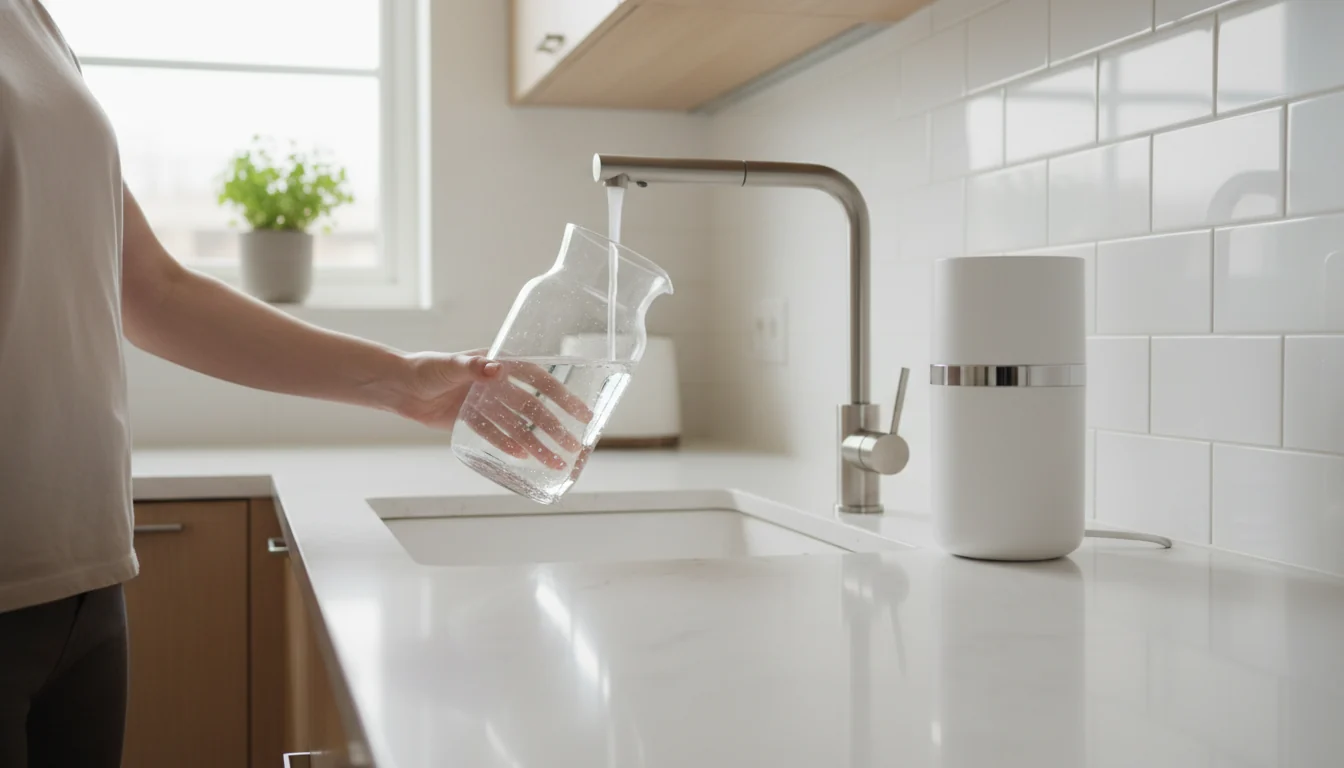
Activated carbon filtration is the most common household approach for chlorine taste and odor. Pitchers, faucet filters, refrigerator filters, countertop units, and under-sink filters often use carbon. The key is choosing a filter with relevant claims and replacing it on schedule.
Choosing a filter
If your main issue is chlorine taste and odor, look for filters certified or tested for that purpose. NSF/ANSI 42 is commonly connected with aesthetic chlorine reduction. For chloramine, check specifically that the filter is designed and rated for chloramine reduction, because not all basic carbon filters perform the same.
Filter capacity matters. A small pitcher may be fine for one person. A faucet or under-sink filter may be better for a family. Whatever you choose, old cartridges can stop performing well, so maintenance is part of the purchase.
What not to do
Do not remove disinfectant from all stored water and then leave it sitting for long periods at room temperature. Once water is filtered, store it cleanly and use it within a reasonable time.
Do not assume boiling is the answer. Boiling can drive off some chlorine, but it uses energy and may concentrate certain non-volatile substances. It is not a general solution for water quality concerns unless an official notice tells you to boil water for microbial safety.
Plumbing factors
Sometimes smell is stronger at one tap. Aerators, faucet screens, old hoses, refrigerator lines, and rarely used taps can hold stagnant water. Clean faucet aerators and flush taps that sit unused. If only hot water smells odd, the water heater may be involved, though chlorine smell is more commonly noticed in cold treated water.
FAQ
Is chlorine smell in tap water dangerous?
A mild chlorine smell in municipal water is often expected because disinfectant is used for safety. Strong, sudden, or unusual odors should be reported to your utility.
Does letting water sit remove chlorine?
It can reduce free chlorine odor, but it is less effective for chloramine. Check what your utility uses before relying on this method.
What filter removes chlorine taste?
Activated carbon filters commonly reduce chlorine taste and odor. Look for relevant certification or test data and replace cartridges on schedule.
Why does my water smell more like chlorine sometimes?
Seasonal utility changes, line flushing, temperature, or changes in water source can make chlorine more noticeable. Your utility can confirm if a treatment change occurred.
Final thoughts
Chlorine smell is usually a sign that treated water still has disinfectant residual, not automatically a sign of danger. Still, water should be pleasant to drink. If the smell is mild and consistent, a well-maintained carbon filter may be enough. If it is sudden, strong, or paired with other changes, I would call the utility and get a clear answer before assuming it is normal.