
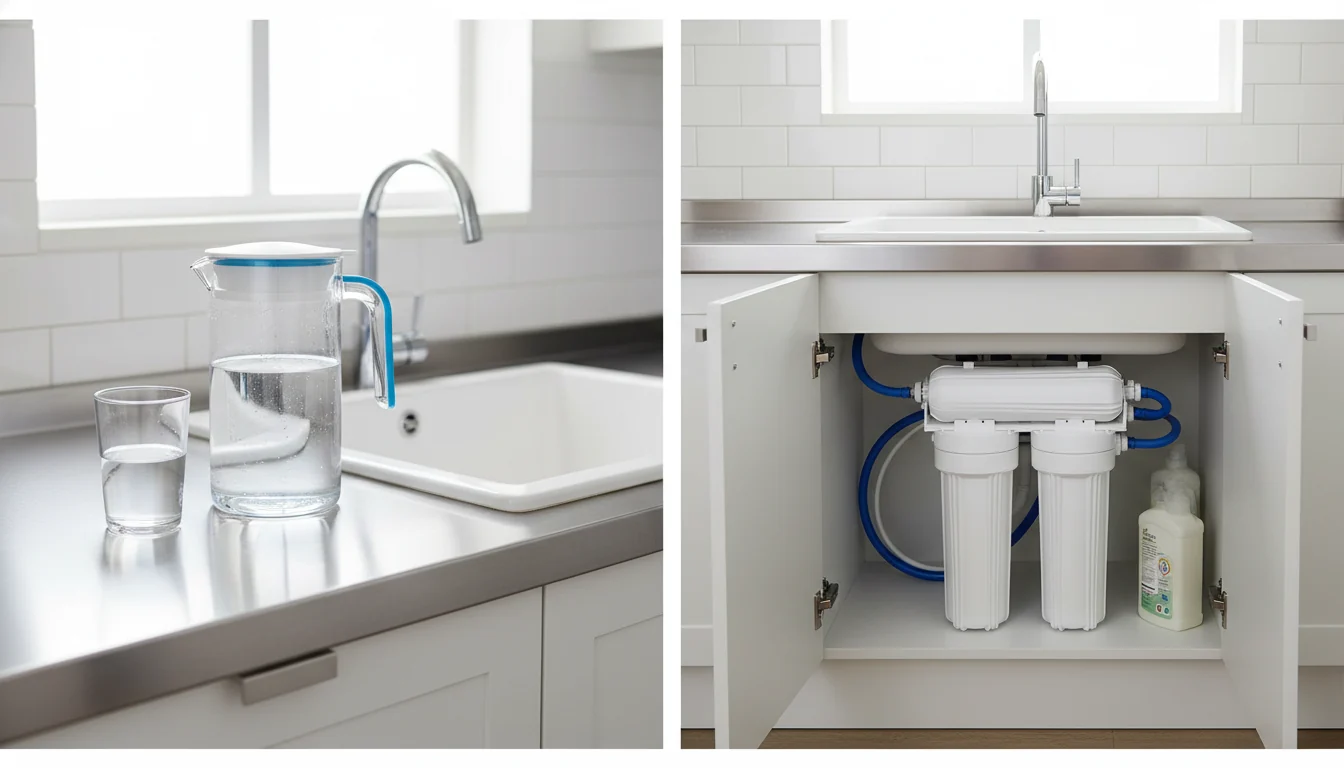
A pitcher filter and an under sink filter can both improve drinking water, but they feel very different in daily life. A pitcher is simple, inexpensive, and portable. An under sink filter is more convenient once installed and usually handles more water with less refilling.
When people ask me which one is better, I usually ask how they live. Are you renting? Do you cook a lot? Are you filtering for taste, lead, PFAS, sediment, or something else? Do you mind installation? The best choice depends on those answers.
Quick answer
Choose a pitcher filter if you want the lowest commitment, easy setup, and portability. Choose an under sink filter if you want filtered water on demand, higher capacity, and a cleaner countertop.
How pitcher filters work
Most pitcher filters use gravity. You fill the top reservoir, water passes through the cartridge, and filtered water collects below. Many use activated carbon and sometimes ion exchange resin.
Pitchers are easy to understand and easy to move. They are also limited by reservoir size and filtration speed. If three people want to fill bottles in the morning, a small pitcher can become annoying.
How under sink filters work
Under sink filters connect to the cold water line beneath the sink. Some use a dedicated faucet; others connect inline to the existing faucet. They may use carbon blocks, sediment cartridges, reverse osmosis membranes, or multi-stage setups depending on the system.
The big advantage is convenience. You turn on a faucet and filtered water is there. The tradeoff is installation, space under the sink, and higher upfront cost.
Taste and odor
For chlorine taste and general odor, both pitcher and under sink carbon filters can work well if they are designed and maintained properly. Under sink carbon block filters often have more media and longer contact time, but pitcher performance varies by brand.
If taste is your only concern and your household is small, a pitcher may be enough. If you cook with filtered water and fill bottles often, under sink convenience can be worth it.
Contaminant reduction
This is where labels matter. Do not assume one category automatically removes more than the other. Some pitchers are certified for specific reductions such as lead or certain chemicals. Some under sink filters are basic taste filters only. Others are much more robust.
Look for NSF/ANSI certifications or credible test data for the exact contaminant you care about. Match the filter to your local water report or test results.
Cost comparison
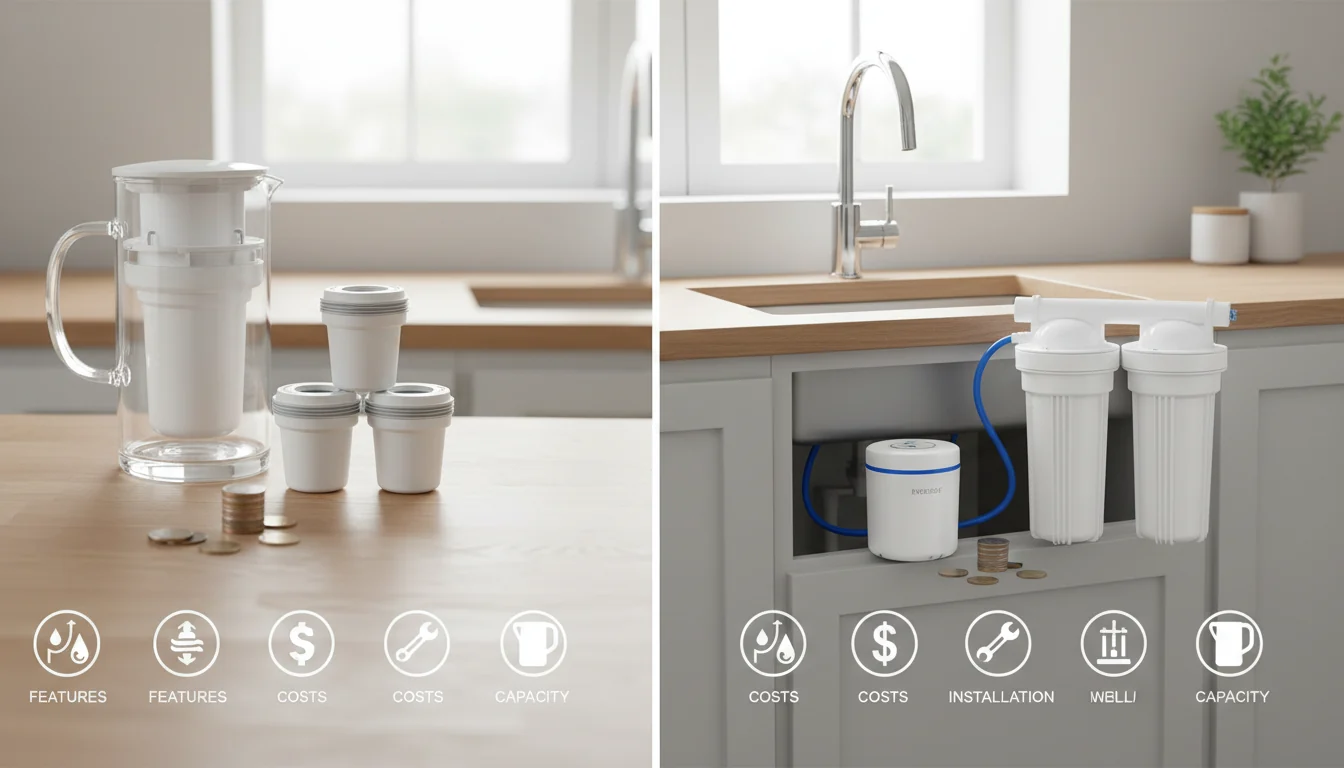
Pitchers usually cost less upfront. Replacement filters can add up, especially if your household uses a lot of water. Under sink systems cost more to buy and may require tools or professional installation, but replacement cartridges may last longer.
The fair comparison is yearly cost, not just purchase price. Include cartridges, replacement parts, and any installation costs.
Installation and renter concerns
Pitchers win for renters because they require no plumbing changes. You can move with them, replace them easily, and use them in any kitchen.
Under sink filters may be renter-friendly if they are reversible, but you should check your lease and comfort level. Systems that require drilling a faucet hole are less appealing in rentals. Inline systems that use existing connections can be easier to reverse.
Counter and fridge space
Pitchers take up fridge or counter space. That sounds minor until you live with a small refrigerator. Under sink filters hide below the sink, but they use cabinet space and may compete with cleaning supplies, trash bags, or a disposal unit.
Measure before buying either one.
Maintenance
Pitchers need frequent refilling and regular washing. The reservoir, lid, and spout can collect residue. Under sink filters need less daily attention but still require cartridge changes. If you forget the hidden filter under the sink for too long, performance can suffer.
I recommend setting reminders for both. Filters are not install-and-forget products.
Which one should you choose?
Choose a pitcher if:
- You rent or move often.
- You want low upfront cost.
- You only filter modest amounts.
- You want no installation.
- You have room in the fridge.
Choose an under sink filter if:
- You own your home or can make reversible changes.
- You want filtered water instantly.
- You cook and fill bottles often.
- You dislike countertop clutter.
- You are willing to maintain a more permanent system.
FAQ
Is an under sink filter always better than a pitcher?
No. It is usually more convenient and higher capacity, but actual contaminant reduction depends on the specific filter and certification.
Can a pitcher remove lead?
Some pitchers are certified for lead reduction, and some are not. Check the exact model and certification.
Do under sink filters reduce water pressure?
Some can reduce flow, especially as cartridges clog. Choose a system with a flow rate that fits your needs and replace filters on schedule.
What is best for an apartment?
A pitcher or countertop dispenser is usually easiest. A reversible under sink or faucet filter may work if your lease and plumbing allow it.
My bottom line
In the pitcher filter vs under sink filter decision, I choose pitchers for simplicity and rentals, and under sink filters for daily convenience and higher use. Either can be a good choice if the filter is certified for your concern and maintained on schedule.