
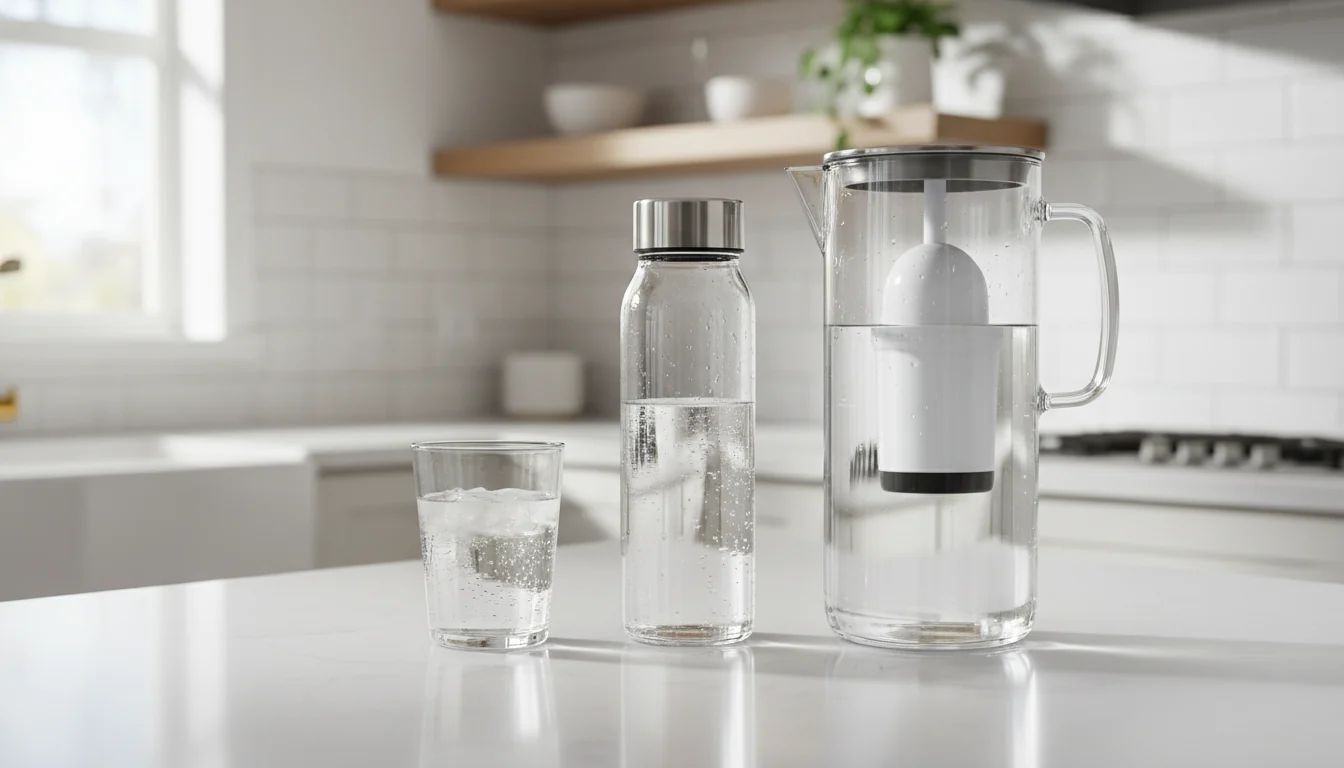
If you are tired of buying bottled water but your tap water tastes off, you have options. You do not need to jump straight to an expensive system. Sometimes better taste comes from cleaning a faucet aerator, chilling water, replacing an old refrigerator filter, or using a simple carbon filter matched to your water.
I like solving tap water taste in layers. Start with free checks, then low-cost habits, then filtration if needed. That way you do not buy equipment before you know what problem you are trying to fix.
Key takeaways
- Flush stagnant cold water before drinking, especially first thing in the morning.
- Clean faucet aerators and pitchers because buildup can create stale tastes.
- Chilling water often improves flavor by reducing how noticeable chlorine and minerals taste.
- Activated carbon filters are a practical first choice for many taste and odor complaints.
Start by identifying the taste
Different tastes point to different causes. Chlorine tastes like pool water. Metallic taste may relate to plumbing, minerals, or corrosion. Earthy or musty taste can come from seasonal source-water changes. Salty, chemical, fuel-like, or sewage-like tastes deserve more caution.
If the taste is sudden, severe, or paired with discoloration, odor, illness concerns, or an official notice, contact your utility or local health department. If you are on a private well, testing is the best starting point.
Step 1: Flush the cold tap
Water that sits in household plumbing can taste stale. Run the cold tap until the water is noticeably colder, then fill your glass or pitcher. Use cold tap water for drinking and cooking, not hot tap water.
This is especially helpful in the morning or after a trip away from home. If flushing fixes the taste, your issue may be stagnation rather than the main supply.
Step 2: Clean the faucet aerator
The aerator is the small screen at the faucet tip. It can collect mineral scale, grit, and biofilm. That buildup can make water taste dirty or stale.
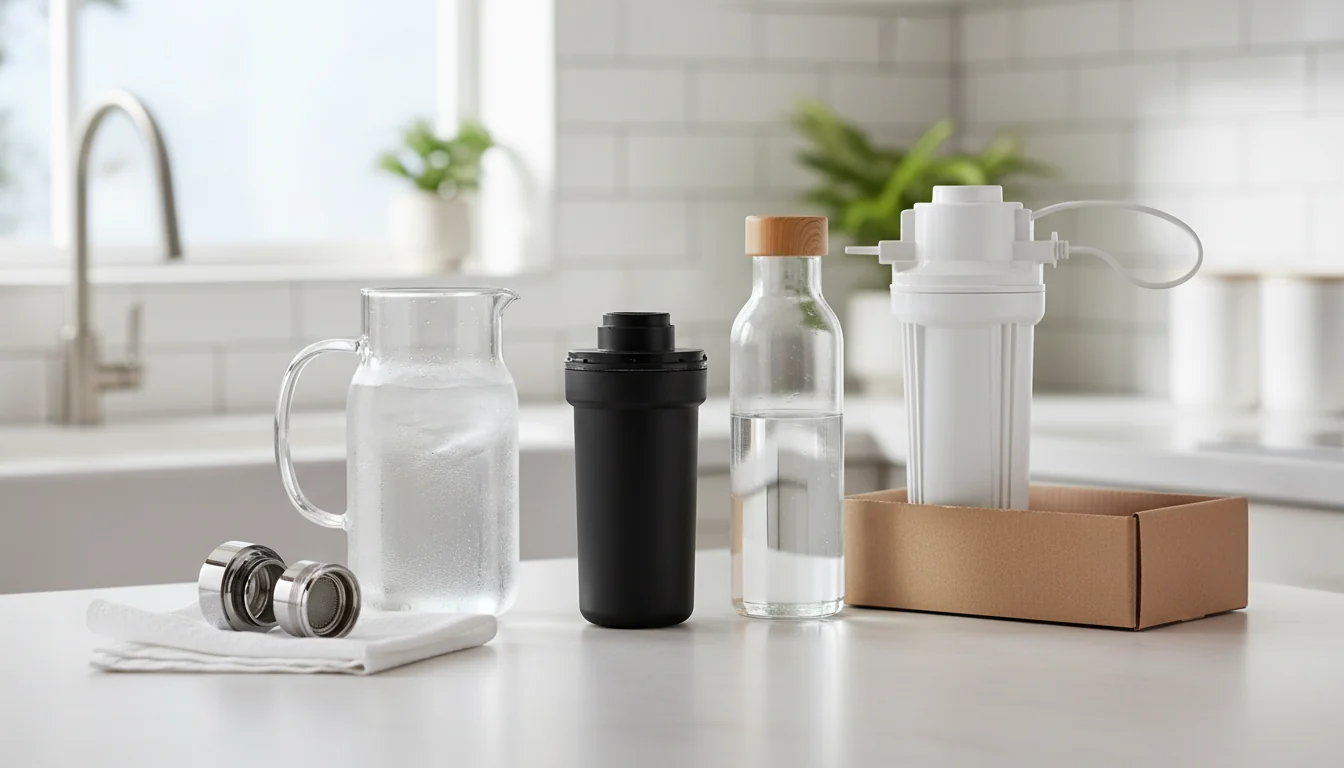
Unscrew it carefully, note the order of parts, rinse debris, and soak mineral scale in vinegar if appropriate for the materials. Then run the tap briefly before reinstalling.
Step 3: Chill water before drinking
Cold water usually tastes better than room-temperature tap water. Chilling can make chlorine and mineral flavors less noticeable. Fill a clean covered pitcher and keep it in the refrigerator.
Use a glass, stainless, or clean BPA free plastic pitcher. Wash it regularly. A neglected pitcher can create the very taste problem you are trying to avoid.
Step 4: Let chlorine dissipate when appropriate
If your main complaint is chlorine smell, letting water sit uncovered for a short time can sometimes reduce the smell. This does not work for every disinfectant or taste issue, and it is not a substitute for safe storage.
For daily convenience, I usually prefer a carbon filter over leaving water out.
Step 5: Use an activated carbon filter
Activated carbon is one of the most practical tools for improving municipal tap water taste. It can reduce chlorine taste and odor and many general taste complaints, depending on the filter design.
Options include pitcher filters, faucet-mounted filters, refrigerator filters, countertop filters, and under-sink carbon filters. Look for certification to relevant NSF/ANSI standards for the claims you need.
Step 6: Replace old filters
An overdue filter can make water taste worse. Refrigerator filters, pitchers, faucet filters, and under-sink cartridges all have replacement schedules. If you cannot remember when you changed it, that is a clue.
After replacement, flush the new filter according to the directions. New carbon filters can release dark fines at first, so discard the first water as instructed.
Step 7: Improve your drinking bottle
Sometimes the water is fine and the bottle is the problem. Old plastic, dirty straws, silicone gaskets, and sports drink residue can all create bad taste. Clean your bottle thoroughly, remove lid parts when possible, and let everything dry open.
If a bottle still smells after cleaning, replace it. Stainless steel and glass tend to hold less flavor than many plastics, though lids still need cleaning.
When to test your water
Testing is smart when taste changes suddenly, you have a private well, you see discoloration or particles, plumbing is old, or you have specific concerns such as lead, nitrate, arsenic, or PFAS. Taste alone cannot confirm safety.
For municipal water, start with your water quality report and utility. For wells, use a certified laboratory or local health department guidance.
FAQ
What is the cheapest way to improve tap water taste?
Start by flushing the cold tap, cleaning the aerator, chilling water, and washing pitchers and bottles. These steps cost little and often help.
What filter is best for taste?
For many municipal water taste issues, a good activated carbon filter is the first option I would consider. Choose based on certifications and capacity.
Why does bottled water taste better to me?
It may have a mineral profile you prefer, lower chlorine taste, or simply be colder. A filter and clean reusable bottle can often close the gap.
Can lemon fix bad-tasting tap water?
Lemon can mask mild taste, but it does not solve water quality issues. If taste is unusual or concerning, investigate the cause.
My bottom line
To improve tap water taste without bottled water, start simple: flush, clean, chill, and check your bottle. If the taste remains, use a properly certified carbon filter and maintain it. You can usually build a better daily water routine without filling your recycling bin with single-use bottles.