
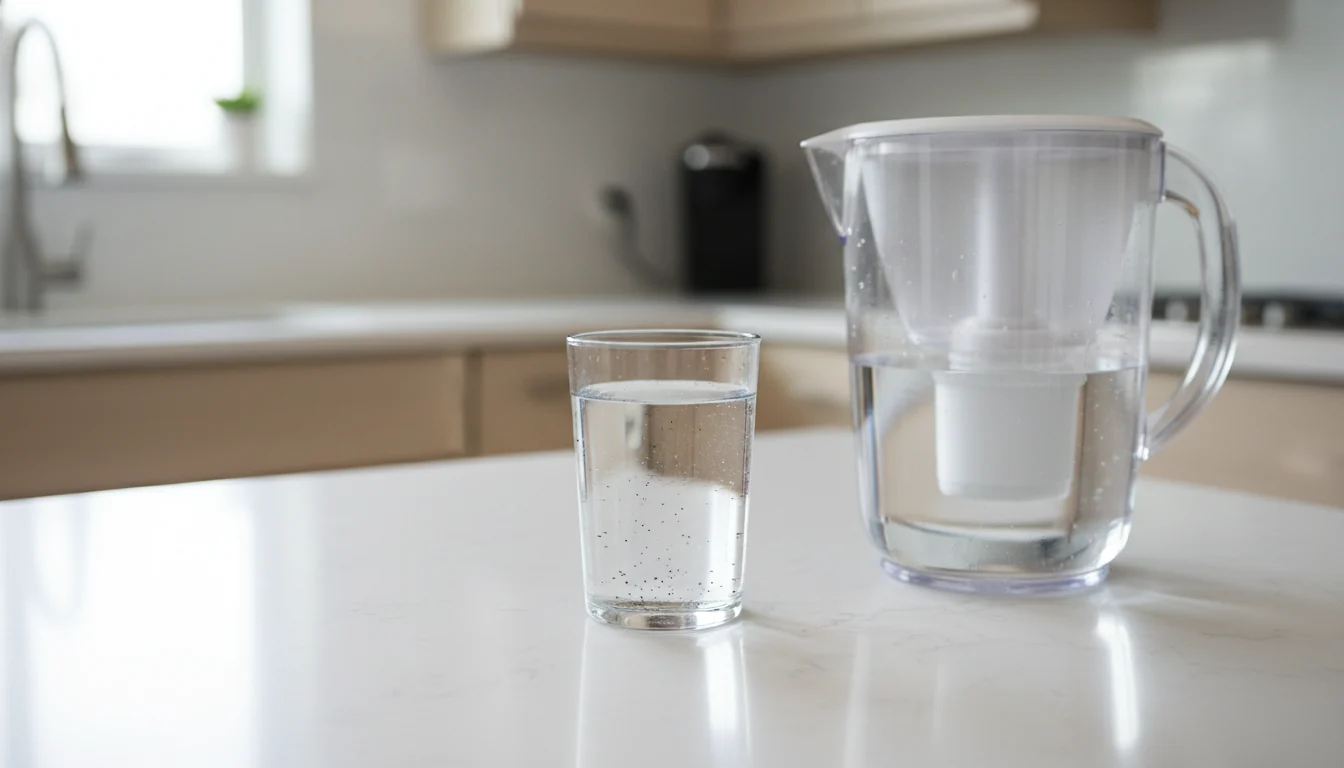
Seeing black specks in filtered water is unnerving. I would pause too. The good news is that the most common cause is loose activated carbon from a new or disturbed filter. The less comforting news is that black particles can also come from old filter media, rubber parts, plumbing debris, or a dirty faucet aerator.
The right response depends on when the specks appeared, which faucet or filter they came from, and whether they clear after flushing.
Key takeaways
- Black specks right after installing a carbon filter are often carbon fines.
- Proper flushing should clear normal loose carbon.
- Persistent specks can mean an old, damaged, poorly seated, or incompatible filter.
- If specks appear in unfiltered water too, check the faucet aerator and plumbing source.
Most common cause: carbon fines
Many drinking water filters use activated carbon. During manufacturing and shipping, tiny carbon particles can loosen. When you install the filter, those particles may rinse out as black or gray specks.
This is why many filters tell you to soak, rinse, flush, or discard the first batches of water. If the specks appear only at the beginning and clear after flushing, carbon fines are the likely explanation.
What to do first
Do not panic, but do not ignore it either. I would do this:
- Stop drinking that glass.
- Check whether the filter is new, overdue, or recently moved.
- Flush the filter exactly as the instructions require.
- Pour water into a clear glass and inspect it under good light.
- Compare filtered water with unfiltered tap water.
This comparison is important. If unfiltered tap water is clear but filtered water has specks, focus on the filter. If both have specks, look upstream at the faucet, aerator, plumbing, or water source.
If the filter is new
Remove and reinstall it according to the instructions. Make sure protective caps, plastic wrap, or shipping plugs are removed. Check that the cartridge is seated correctly and gaskets are in place. Then flush again.
For pitchers, discard the first reservoir or more if directed. For refrigerator filters, you may need to run and discard a larger amount. For faucet and under-sink filters, run cold water for the recommended time.
If black specks keep appearing after the required flush, contact the manufacturer or replace the cartridge.

If the filter is old
An overdue filter can break down, clog, or release trapped particles. It may also taste stale. If your filter has reached its gallon rating or time limit, replace it.
I like writing the replacement date on painter’s tape or setting a phone reminder. Filter life is easy to overestimate, especially in busy households.
Other possible sources
Faucet aerator debris
The aerator screen at the faucet tip can trap grit, rubber fragments, and mineral scale. Unscrew it carefully, rinse the parts, and check for black debris. If the specks appear in unfiltered water, this is a good place to look.
Rubber washers or gaskets
A deteriorating washer, hose, or gasket can shed dark particles. This is more likely if the specks are rubbery, smear when pressed, or appear after plumbing work.
Refrigerator water lines
Fridge dispensers have tubing, reservoirs, valves, and filters. If black specks appear only from the refrigerator, replace the filter, flush thoroughly, and inspect the dispenser area. If it continues, appliance service may be needed.
Well water sediment
Private wells can carry sediment, manganese particles, or other material depending on local conditions. If black specks are present before filtration, consider a lab test and a sediment filter selected for the actual issue.
Are black specks harmful?
Loose activated carbon is generally considered an aesthetic issue in many filter contexts, but I do not like making blanket safety claims from a photo or description. You need to identify the source. Carbon fines that clear quickly after proper flushing are different from unknown particles that keep appearing.
If you see persistent particles, unusual odors, discoloration, or you rely on a private well, take it more seriously and test or call a professional.
How to prevent it next time
- Flush every new filter before drinking.
- Replace filters on schedule.
- Keep pitchers and reservoirs clean.
- Avoid running hot water through filters unless allowed.
- Do not shake or drop filter cartridges.
- Use compatible replacement cartridges from reputable sources.
FAQ
Are black specks from a new filter normal?
They can be normal at first if the filter uses activated carbon. They should clear after the recommended flushing process.
Can I drink water with carbon specks?
I would discard the speckled first water and keep flushing until it runs clear. If it does not clear, replace or troubleshoot the filter.
Why are black specks only in my ice?
Your refrigerator filter, ice maker line, or ice tray area may be the source. Replace and flush the fridge filter and discard early ice batches after replacement.
What if the specks smear?
Smearing may suggest rubber or gasket material rather than carbon granules. Inspect washers, hoses, and appliance parts.
My bottom line
Black specks in filtered water are often loose carbon, especially after a new filter, but they should not continue indefinitely. Flush correctly, compare filtered and unfiltered water, inspect the aerator and gaskets, and replace any overdue or suspect cartridge.