
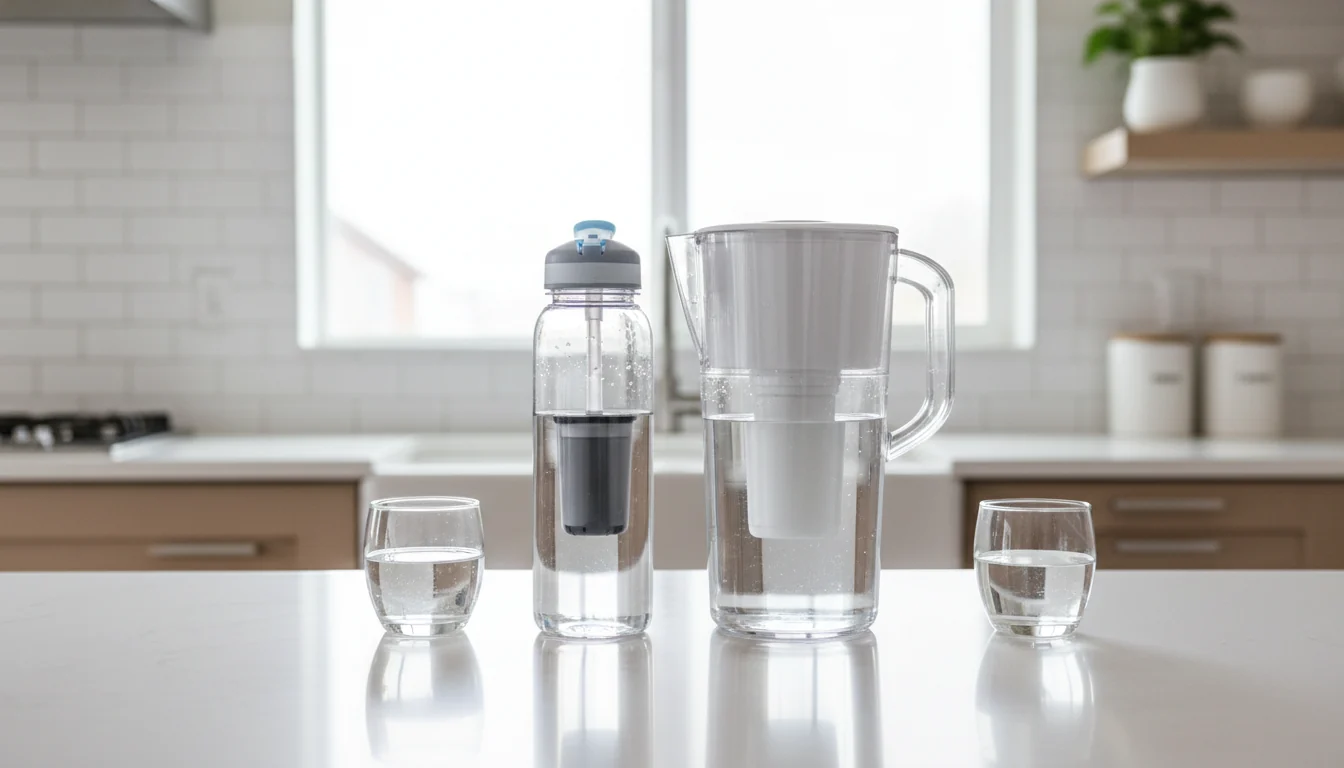
Filtered water bottle vs water filter pitcher is really a question about where you drink most of your water. A filtered bottle is built for movement. A pitcher is built for home. Both can improve taste when used correctly, but they solve different problems.
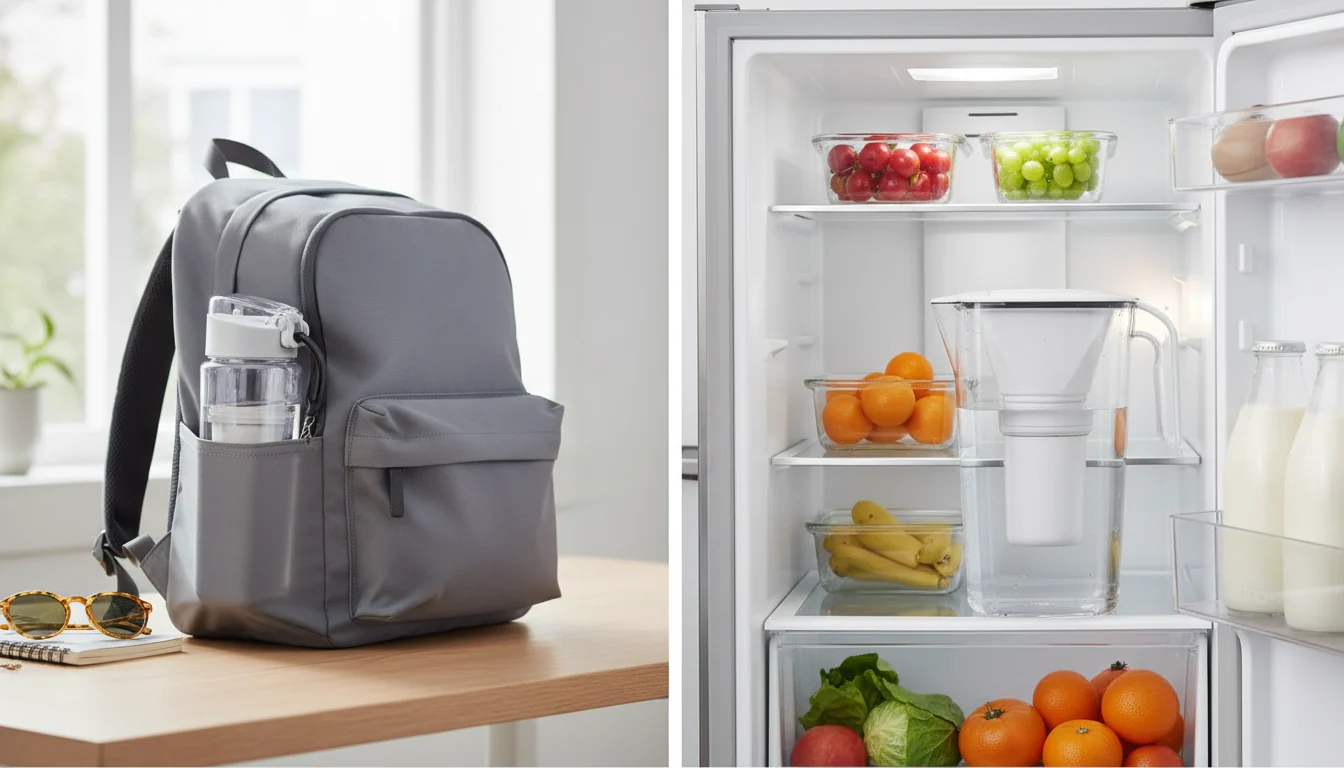
If I were choosing for a kitchen, I would usually pick a pitcher or larger dispenser. If I were choosing for commuting, school, travel, or uncertain taps away from home, I would look at a filtered bottle. Some households can use both without overlap: pitcher in the fridge, bottle in the bag.
Quick answer
Choose a filtered water bottle if you need portable filtration away from home. Choose a water filter pitcher if you want better-tasting water at home for drinking, coffee, tea, and filling bottles.
Choose based on the contaminants each product is designed to reduce. Do not assume every filtered bottle or pitcher handles the same issues.
How filtered water bottles work
Filtered bottles place a small cartridge in the straw, cap, or bottle body. As you sip or squeeze, water passes through the filter. Many are designed for taste and odor improvement, while some travel-focused bottles make stronger claims for certain contaminants or microbes.
Because the filter is small, capacity and flow are limited. You may need to sip harder, replace cartridges often, or accept slower drinking. The benefit is portability. You can fill up at work, school, airports after security, hotels, or public fountains.
How water filter pitchers work
Pitchers use gravity. You pour tap water into the top reservoir, and it passes through a cartridge into the lower chamber. Pitchers are convenient for home because they prepare a batch of filtered water that can be chilled and poured.
They are not ideal for walking around because they are bulky and open when pouring. But for a refrigerator, countertop, dorm room, or office kitchenette, they are simple and familiar.
Taste and odor
Both bottles and pitchers often use activated carbon to reduce chlorine taste and odor. Pitchers usually have more media than bottle filters, so they may offer better capacity or easier pouring for multiple glasses.
Bottles can still taste good, but the drinking experience depends on the lid and filter resistance. If you dislike sipping through a restricted straw, a filtered bottle may annoy you even if the water tastes better.
Contaminant reduction
This is the category where labels matter most. Some pitchers are certified for specific reductions like chlorine taste and odor, lead, or other contaminants. Some filtered bottles are mainly for taste. Others are designed for outdoor or travel use and may address additional concerns.
Read the performance data. A product that says “filters water” is not automatically appropriate for unsafe water. For known contamination, match the filter to the specific issue and consider testing or official guidance.
Capacity
Pitchers win for household capacity. Even a standard pitcher can fill several glasses before needing a refill. Larger dispensers are better for families.
Filtered bottles win for personal capacity on the go. A 20 to 32 ounce bottle is enough for errands, commuting, or workouts, but it serves one person at a time. If a family trip relies on one filtered bottle, everyone may end up waiting.
Maintenance
Pitchers need cartridge replacement and regular washing. The reservoir, lid, and spout can collect residue. Filtered bottles need the same attention, plus careful cleaning of straws, bite valves, and caps.
Bottle filters may dry out or clog depending on design. Pitcher filters may slow down from trapped air or sediment. In both cases, following the startup and replacement instructions is not optional.
Cost
Pitchers are usually cost-effective for home drinking water. Replacement filters vary, but the cost per gallon can be reasonable if the pitcher is used regularly.
Filtered bottles can cost more per gallon because cartridges are small. However, they may save money if they prevent impulse bottled water purchases while traveling or commuting.
Best uses for a filtered bottle
A filtered bottle is best for commuting, school, travel, gym bags, hotel rooms, and people who refill from many taps. It is also useful when you want one personal bottle and do not need to filter water for cooking.
Look for a leakproof lid, easy cleaning, clear filter life, and claims that match your water sources. For backpack use, I prefer a secure cap over a complicated spout.
Best uses for a pitcher
A pitcher is best for the refrigerator, kitchen counter, dorm room, office, or filling other bottles before leaving home. It is easier for multiple people and better for pouring water into kettles or coffee makers.
Look for a comfortable handle, realistic capacity, easy-to-find replacement filters, and a reservoir that does not spill when pouring.
My practical recommendation
If you mostly drink water at home, start with a pitcher. If you already like your home water but dislike buying bottled water when out, choose a filtered bottle. If you want a complete routine, use a pitcher at home to fill a regular reusable bottle, and reserve a filtered bottle for travel or uncertain taps.
FAQ
Is a filtered water bottle as good as a pitcher?
Not always. It depends on the filter design and claims. Pitchers often have more capacity, while bottles offer portability.
Can I fill a filtered bottle with pitcher-filtered water?
Usually yes, if both products are used according to instructions. It may be unnecessary for normal tap water, but some people do it for taste.
Which is better for travel?
A filtered bottle is better for travel because it is portable and can be refilled away from home. Check whether it is designed for the water sources you expect.
Which is cheaper long term?
For home use, pitchers are often cheaper per gallon. For avoiding bottled water on the go, a filtered bottle can still be worthwhile.
Final thoughts
Filtered bottles and pitchers are not rivals so much as tools for different places. A pitcher makes sense where you live. A filtered bottle makes sense where you move. Choose the one that fits your routine, and check the filter claims carefully so you know what it can and cannot do.