
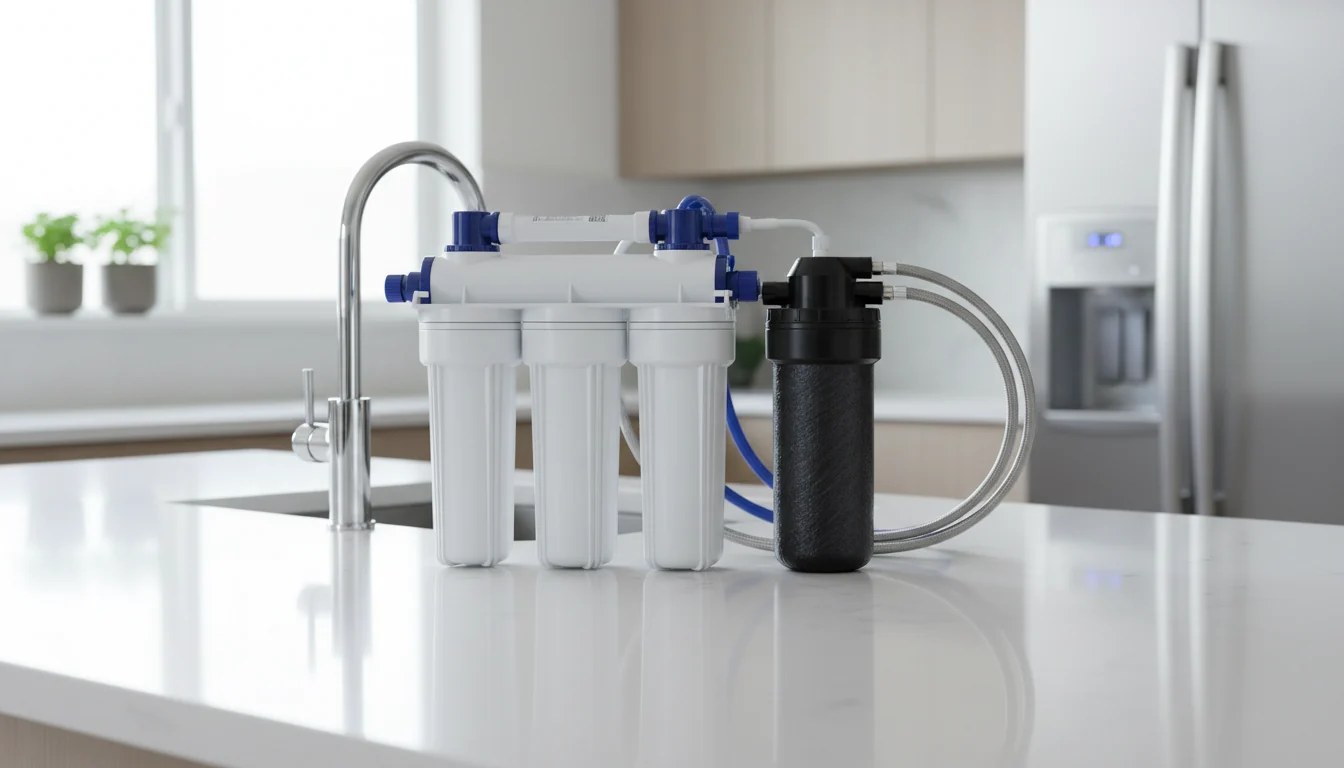
Reverse osmosis vs carbon filter is one of the most important choices in home drinking water. Both can improve water, but they do very different jobs. A carbon filter is often best for taste, odor, and certain chemicals. Reverse osmosis, usually called RO, is a more intensive process that can reduce a broader range of dissolved substances when the system is designed and maintained properly.
I do not think every home needs reverse osmosis. I also do not think a basic carbon filter is enough for every concern. The right answer depends on your water report, your taste complaints, your budget, and how much maintenance you are willing to do.
Quick answer
Choose a carbon filter if your main issue is chlorine taste, odor, or everyday taste improvement from treated municipal water. Choose reverse osmosis if you want broader reduction of dissolved solids or specific contaminants that the RO system is certified or tested to reduce.
If you have known contamination, do not guess. Test the water and match treatment to the results.
How carbon filters work
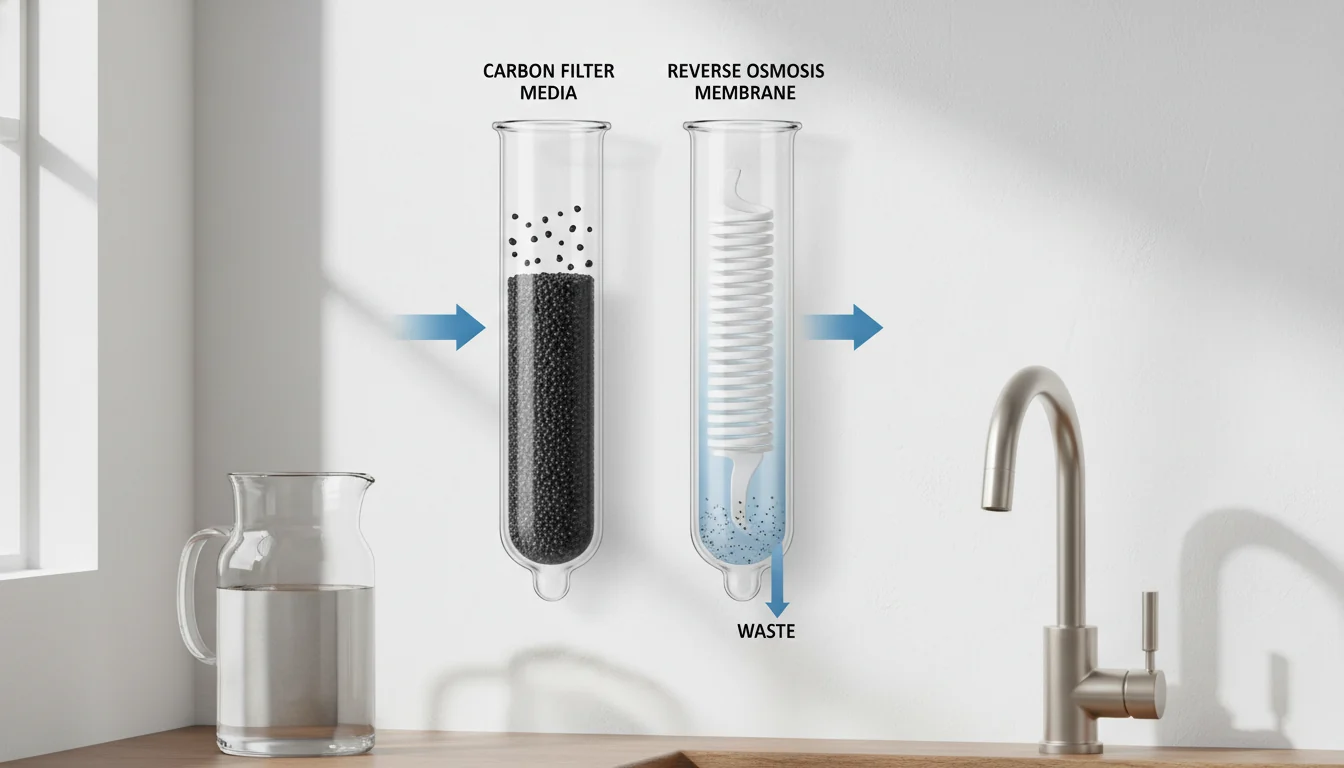
Carbon filters use activated carbon with a large internal surface area. As water passes through, certain substances are adsorbed onto the carbon. Carbon is especially useful for chlorine taste and odor, many organic compounds, and some other contaminants depending on the design.
Carbon filters come in many forms: pitchers, faucet filters, refrigerator filters, countertop units, under-sink cartridges, and whole-house systems. Performance varies widely. A small pitcher and a large carbon block under-sink filter are not the same thing.
How reverse osmosis works
Reverse osmosis pushes water through a semipermeable membrane. The membrane allows water molecules through while rejecting many dissolved substances. Most under-sink RO systems also include sediment and carbon prefilters, a storage tank, and a dedicated faucet.
RO can reduce total dissolved solids and many contaminants, but it works more slowly than basic filtration and creates reject water. The exact reduction depends on the system, membrane condition, pressure, temperature, and maintenance.
Taste differences
Carbon filtration often makes municipal water taste fresher by reducing chlorine. If your water tastes like pool water, a good carbon filter may be all you need.
RO water tastes different. Because it removes many dissolved minerals, some people describe it as clean, flat, or very neutral. Some RO systems add a remineralization stage to adjust taste. Whether that is better is personal preference.
Contaminant reduction
This is where details matter. Carbon filters can be excellent for specific claims, but they do not generally reduce dissolved minerals or salts well. Reverse osmosis can reduce many dissolved substances that carbon does not handle as effectively.
However, neither term is a guarantee by itself. A carbon filter must be certified or tested for the contaminant you care about. An RO system should also have performance data. Look for standards and test results, not marketing phrases.
Cost and installation
Carbon filters range from inexpensive pitchers to higher-capacity under-sink systems. They are usually easier to install and maintain. Many renters can use pitcher, faucet, or countertop carbon filters without permanent changes.
RO systems cost more, take up under-sink space, and often require a dedicated faucet and drain connection. Some countertop RO units avoid permanent installation, but they still need space and routine care.
Maintenance
Carbon filters need cartridge replacements. If you use them too long, taste can return and performance can drop. Some filters also slow down as they clog.
RO systems have more parts. Prefilters, postfilters, and membranes have different replacement schedules. Tanks may need sanitizing. If maintenance sounds like something you will ignore, choose a simpler system or set calendar reminders from day one.
Water use
A standard RO system sends some water to drain while producing filtered water. Efficiency varies by system. This is not always a dealbreaker, but it matters in areas where water conservation or utility cost is a concern.
Carbon filters generally do not create reject water. They treat the water that flows through them, which makes them simpler and less wasteful in operation.
Space and convenience
Carbon filters can be nearly invisible if installed under the sink, or very visible if they sit on the counter. Pitchers need refilling. Faucet filters can crowd the sink.
RO systems need room for cartridges and often a storage tank. The dedicated faucet is convenient once installed, but installation is a bigger commitment.
Which one I would choose
For ordinary city water with chlorine taste, I would start with a certified carbon filter. It is cheaper, simpler, and often solves the complaint.
For well water, high total dissolved solids, nitrate concerns, arsenic concerns, or other specific dissolved contaminants, I would start with testing and then consider RO if the system is rated for the issue. RO is powerful, but it should be chosen for a reason.
FAQ
Is reverse osmosis better than a carbon filter?
It is broader in some ways, but not automatically better for every home. Carbon may be better for simple taste improvement because it is cheaper and easier.
Do RO systems include carbon filters?
Many do. Carbon prefilters can protect the RO membrane from chlorine, and postfilters can polish taste before the faucet.
Does a carbon filter remove minerals?
Basic carbon filters generally do not remove dissolved minerals well. That is why they usually do not lower total dissolved solids much.
Does reverse osmosis remove everything?
No. RO reduces many substances, but performance varies and maintenance matters. Always check the system’s certified claims and testing data.
Final thoughts
Reverse osmosis vs carbon filter comes down to the job. Carbon is my first pick for better taste from typical chlorinated tap water. Reverse osmosis is the stronger option when water testing points to dissolved contaminants or when you want a more comprehensive under-sink system. Start with the problem, then choose the tool.