
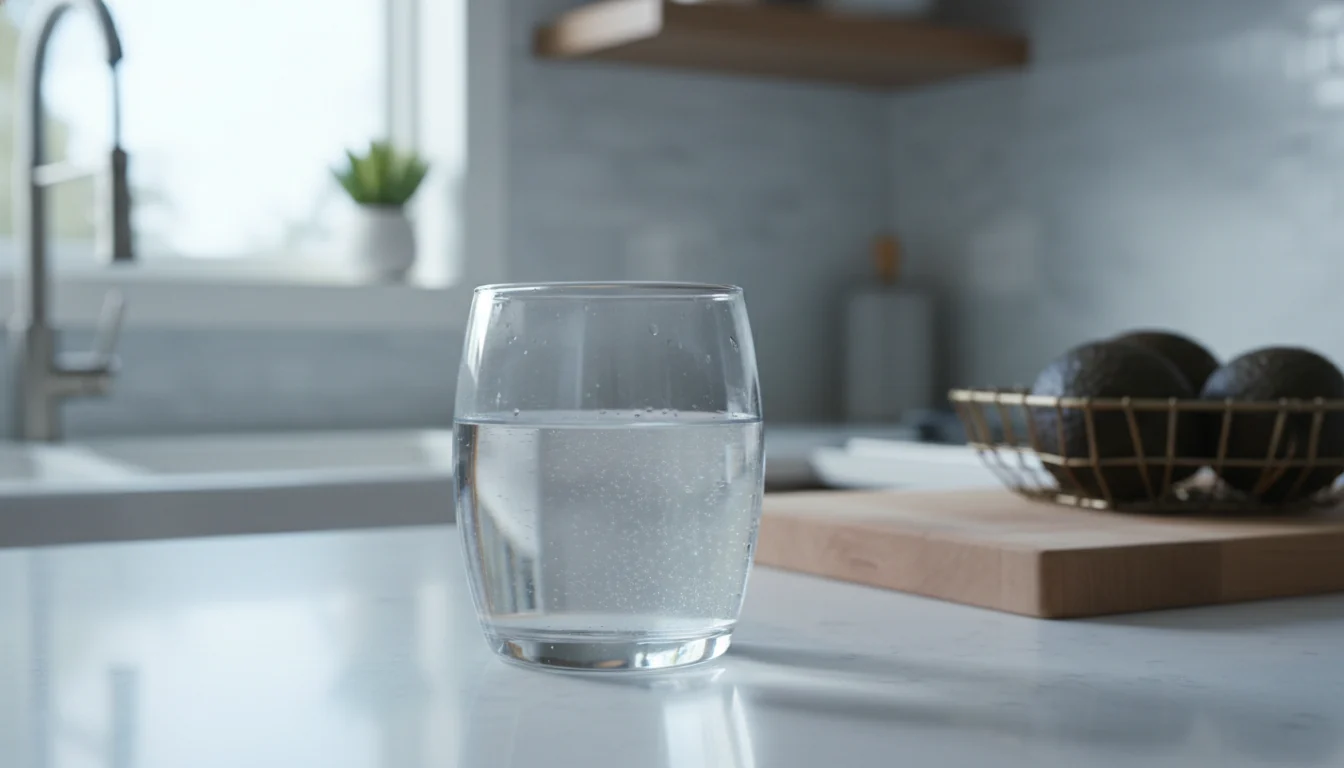
Quick answer
Cloudy tap water is often caused by tiny trapped air bubbles, especially if it clears from the bottom up after sitting for a minute or two. That kind of cloudiness is usually temporary. If the water stays cloudy, has particles, smells unusual, or appears suddenly after plumbing work, it is worth investigating further.
I always start with the simplest test: fill a clear glass and set it on the counter. Watch what happens. If the cloudiness rises and disappears, you are probably seeing air. If sediment settles at the bottom, or the water never clears, you may be dealing with minerals, disturbed pipe scale, or another water quality issue.
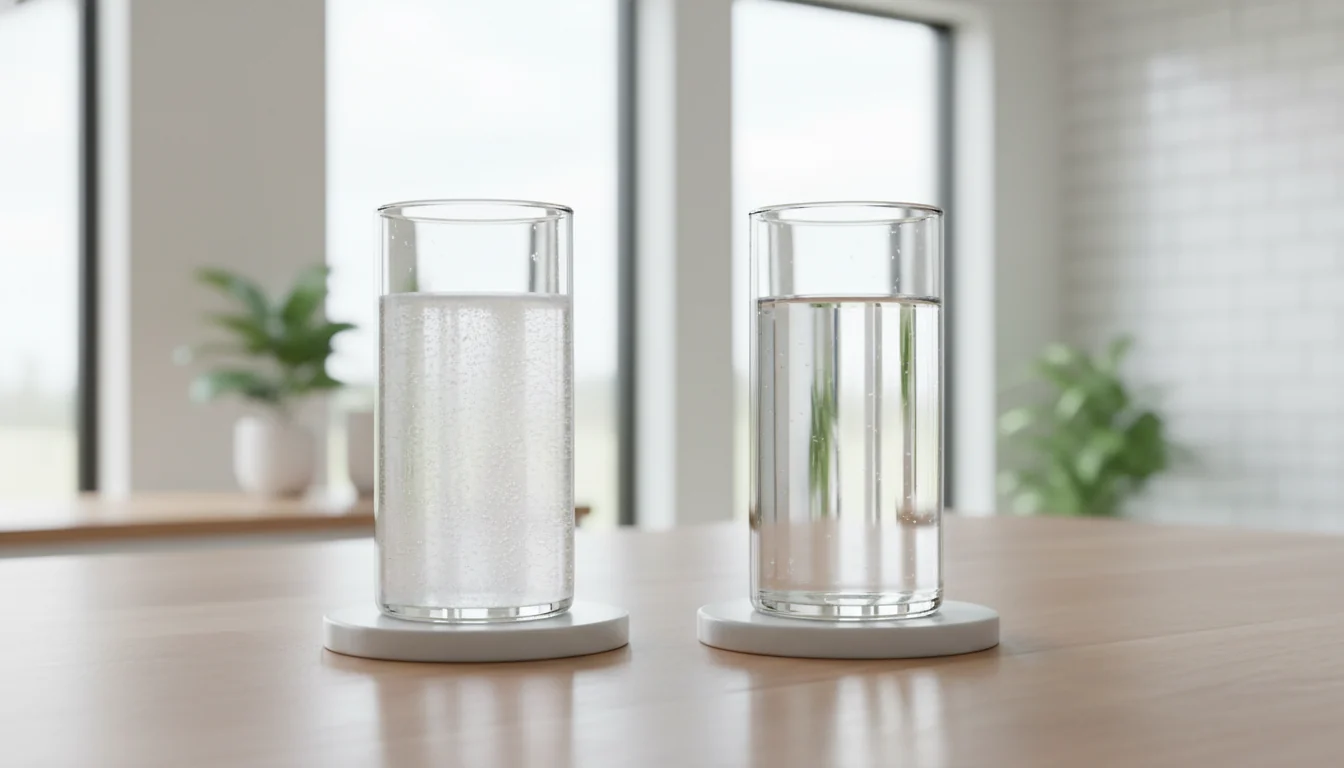
The glass test I use first
Fill a clean, clear glass from the cold tap. Do not use hot water for this first check because hot water can add water heater variables. Place the glass on a white background or near a window and watch it for two to five minutes.
If the water clears from the bottom upward, tiny air bubbles are escaping. This can happen after pressure changes, cold weather, municipal line work, or changes in your plumbing. It can look dramatic, almost like watered-down milk, but it often clears quickly.
If particles sink, float, or remain suspended, make a note of the color and texture. White flakes, brown grit, black specks, and oily-looking films each point in different directions.
Common causes of cloudy tap water
Trapped air
Air is the most common reason tap water looks cloudy for a short time. Water under pressure can hold air, and when it comes out of the faucet, that air forms tiny bubbles. This is similar to what happens when a carbonated drink releases bubbles, though tap water is not carbonated.
Air-related cloudiness is usually harmless, but if it continues for weeks or appears with sputtering faucets, you may want to ask your water utility whether there has been line work nearby.
Hard water minerals
Hard water can look hazy because of dissolved minerals or tiny mineral particles. You may also notice white spots on dishes, scale around faucets, or a crusty shower head. Hard water is common and not automatically unsafe, but it can be annoying.
A basic hardness test strip can give you a rough idea, and a certified lab test can provide a clearer picture if you need one.
Sediment from plumbing
Cloudiness can happen when sediment is disturbed in pipes. This may occur after repairs, hydrant flushing, water main breaks, or work inside your home. Sediment may look tan, brown, orange, or gray.
If the issue starts suddenly, check your utility website or call to ask about local maintenance. Run cold water for a few minutes from a bathtub or utility sink if advised by your utility, but avoid wasting water unnecessarily.
Water heater issues
If only hot water is cloudy, the water heater may be involved. Mineral buildup, an aging anode rod, or sediment in the tank can affect appearance and odor. I do not recommend drinking or cooking with hot tap water, especially from older plumbing. Use cold water and heat it separately.
Faucet aerator debris
Sometimes the water is not cloudy at the source; the faucet aerator is just dirty. Unscrew the aerator, rinse the screen, and check for grit. If cloudiness improves after cleaning it, you found a simple fix.
When cloudy water is more concerning
Cloudiness deserves more attention if it comes with a strong odor, unusual color, oily film, visible particles, stomach illness in the household, or a boil water notice. It also matters if you use a private well, because well owners are responsible for their own testing and maintenance.
If you are on a municipal supply, your utility should publish a water quality report and can often tell you if there was recent line work. If you are on a well, consider testing for bacteria, nitrate, hardness, iron, manganese, and other local concerns.
What to do step by step
- Test cold water in a clear glass.
- See whether it clears from the bottom up.
- Compare cold and hot water.
- Try another faucet.
- Clean the faucet aerator.
- Check for local utility work or alerts.
- If the problem persists, consider a certified water test.
This approach keeps you from buying a filter before you know the likely cause. Filters can be helpful, but the right filter depends on what is actually in the water.
Can a water filter fix cloudy tap water?
Sometimes. If cloudiness is from sediment, a sediment filter or carbon filter with a fine pre-filter may help. If it is from trapped air, a filter may not do much because the water itself is simply releasing bubbles. If hardness minerals are the issue, a pitcher or faucet filter may improve taste but will not usually act like a true softener.
For drinking water, I like starting with a filter that matches the problem: carbon for taste and chlorine, sediment filtration for particles, and more specialized systems only when testing supports them.
FAQ
Is cloudy tap water safe to drink?
If it clears quickly from trapped air and has no odor or color, it is often not a safety concern. If it remains cloudy, has particles, or smells strange, investigate before drinking it.
Why is only my hot water cloudy?
That points toward the water heater or hot-water plumbing. Use cold water for drinking and cooking, and consider having the heater inspected if the issue continues.
Why did my water turn cloudy overnight?
Pressure changes, utility work, or plumbing repairs can introduce air or disturb sediment. Check whether neighbors have the same issue.
Should I test cloudy water?
If the cloudiness persists, appears with color or odor, or comes from a private well, testing is a smart next step.
My bottom line
When someone asks me why is my tap water cloudy, I do not jump straight to panic or straight to a filter. I start with the glass test. If it clears from the bottom up, it is probably air. If it does not clear, or if particles, smells, or color show up, slow down and identify the cause before choosing a fix.