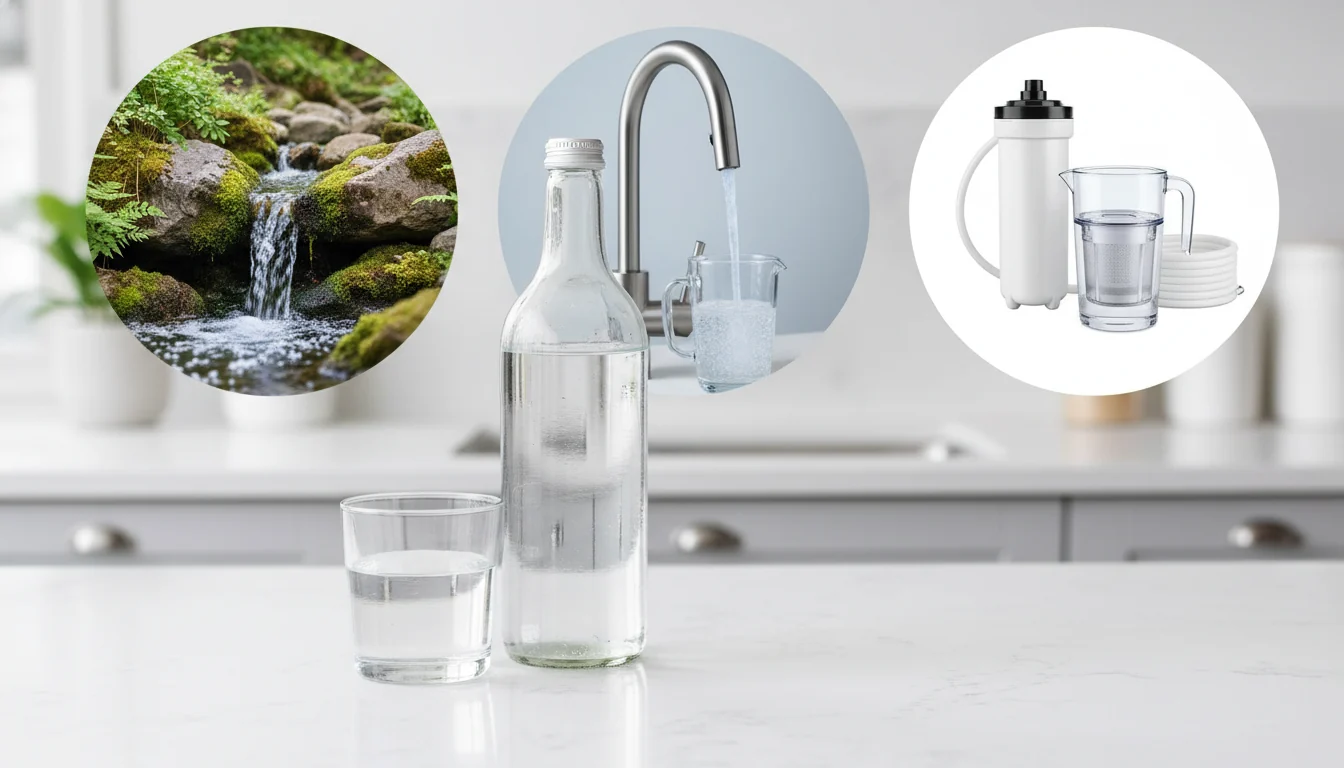
A lot of bottled water marketing is built around one idea: this water came from somewhere cleaner than your tap.
Sometimes that is true. Sometimes the story is more complicated. Bottled water can come from springs, wells, municipal supplies, protected aquifers, or a combination of sources depending on the brand and product line. Some bottled water is basically tap water that has been purified. Some is spring water from a named source. Some is mineral water with a specific profile. And some labels make the source feel more romantic than it really is.
My goal here is not to shame anyone for buying bottled water. I buy it sometimes too, especially while traveling. But if bottled water is your main drinking water at home, it is worth asking what you are actually paying for.
Read more: Bottled Water vs Filtered Tap Water
Key Takeaways
- Bottled water does not all come from mountain springs. It may come from springs, wells, aquifers, or municipal water supplies.
- “Purified water” often starts as municipal or groundwater and is treated by processes such as reverse osmosis, distillation, or deionization.
- “Spring water” must come from an underground formation where water flows naturally to the surface, though it can be collected at the spring or through a borehole under applicable rules.
- Brand source information can change, and many large brands use multiple sources depending on region and bottle size.
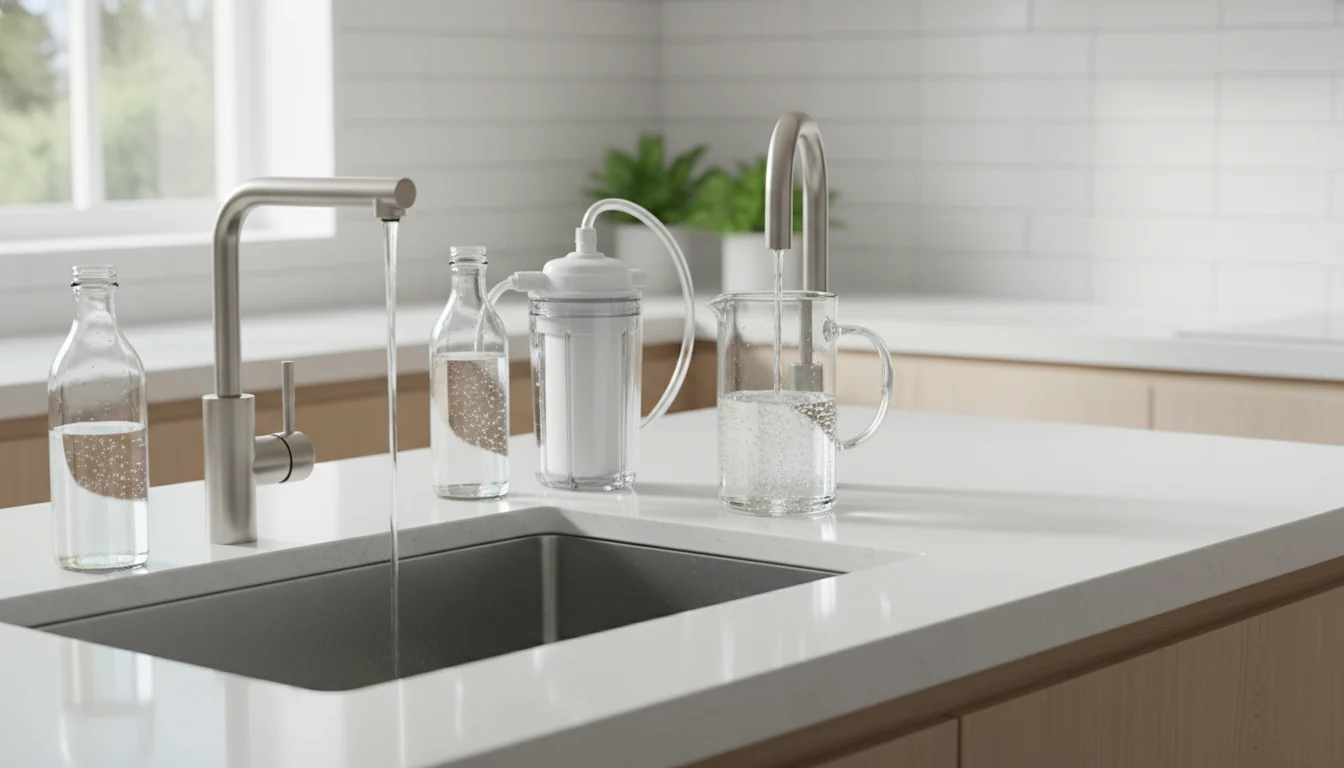
- For daily home use, a good home filtration setup is often more transparent, less wasteful, and cheaper over time than buying bottled water by the case.
The Big Surprise: Bottled Water Is Not One Thing
When people say “bottled water,” they usually mean any clear water in a plastic bottle. But the label terms matter.
Purified water
Purified water has been treated to meet a purification standard. Common treatment methods include reverse osmosis, distillation, deionization, or other filtration processes.
Purified water may start as municipal tap water. That is not automatically bad. Municipal water can be a perfectly legitimate source if it is treated well. But it does mean the bottle may not be the untouched mountain stream people imagine.
Spring water
Spring water comes from an underground source that naturally flows to the surface. It can sound more natural and premium, but quality still depends on source protection, testing, bottling, and storage.
Mineral water
Mineral water contains naturally occurring dissolved minerals and is usually tied to a specific underground source. People often buy it for taste and mineral profile.
Artesian water
Artesian water comes from a confined aquifer where natural pressure can push water upward. The term sounds fancy, but it still needs proper testing and source management.
Distilled water
Distilled water is boiled and condensed, leaving many dissolved solids behind. It is commonly used for appliances and specific needs, but it is not my favorite everyday drinking water unless there is a particular reason.
Brand Sources: What the Labels Usually Mean
Here is the cautious version, because bottled water sourcing can vary by product, plant, and region. Always check the current label and the brand’s water quality report for the exact bottle you are buying.
Aquafina
Aquafina is widely known as purified water. It typically starts from public water sources and is treated through a purification process. The selling point is not a natural spring; it is purification and consistency.
Dasani
Dasani is also widely known as purified water. It typically uses local water supplies that are treated and enhanced with minerals for taste. Again, the main pitch is treatment and flavor consistency, not a remote spring source.
Nestle / BlueTriton regional spring brands
Many regional spring water brands use spring sources and may list source locations on the label or in water quality reports. Examples have included brands such as Poland Spring, Deer Park, Ozarka, Ice Mountain, and Arrowhead under different corporate ownership over time. These brands can use multiple spring sources, so the exact source can depend on where you live and which bottle you bought.
Fiji Water
Fiji Water is marketed as water from an artesian aquifer in Fiji. It is one of the clearest examples of a brand where the source story is central to the product. The tradeoff is shipping distance, cost, and packaging.
Evian
Evian is marketed as natural mineral water from the French Alps region. People often buy it for its mineral taste and source identity.
Smartwater
Smartwater is typically vapor-distilled water with electrolytes added for taste. The source story is less about a spring and more about the treatment process and final taste profile.
Store brands
Store-brand bottled water can vary a lot. Some are purified water from municipal sources. Some are spring water. Some are produced by regional bottlers. The label is your first clue, but the water quality report is better.
Read more: Best Bottled Water Brands Compared
How to Find the Real Source of a Bottled Water Brand
If you want to know where your bottled water actually comes from, do this:
1. Read the front label carefully
Look for terms like purified, spring, mineral, artesian, distilled, or drinking water. These terms are more useful than the mountain picture.
2. Check the small print
Many bottles list a source, bottling location, distributor, or consumer contact. The source may be on the label, cap area, or case packaging.
3. Look for the water quality report
Large bottled water brands often publish water quality reports online or provide them by request. Search the brand name plus “water quality report” or “bottled water report.”
4. Match the report to your exact product
This part matters. A company may sell purified water, spring water, sparkling water, and regional products under related brand names. Do not assume one report covers everything.
5. Watch for multiple sources
Some brands use multiple sources. That does not automatically mean the water is bad, but it does mean “where it comes from” may not have one simple answer.
Is Purified Municipal Water a Scam?
Not necessarily.
If a company takes municipal water and runs it through strong purification, the final product may be clean and consistent. The problem is when consumers think they are paying for rare spring water but are actually buying treated city water in a disposable plastic bottle.
I do not object to purified water. I object to paying premium prices for packaging and marketing when a home system could give you similar or better convenience for less money over time.
The Plastic Bottle Problem
Even if the water source is good, the bottle still matters.
Most everyday bottled water is sold in plastic. That creates several issues:
- Ongoing plastic waste
- Storage and heat exposure concerns
- Possible microplastic contact points
- Cost per gallon that is much higher than tap water
- Heavy cases to transport and store
I am not saying never buy bottled water. I am saying it is a poor default for everyday home drinking if you have a reasonable filtration option.
Read more: Microplastics in Bottled Water
Bottled Water vs Home Filtration: The Money Angle
This is where the decision gets simple.
If your family buys bottled water every week, you may be spending far more than you think. A case here, a case there, a few individual bottles while out — it adds up quietly.
A home filtration system has an upfront cost and ongoing filter replacements. But for daily drinking water, it can be much cheaper per gallon over time. It also gives you more control. You can choose a filter based on your local water report, your plumbing, and your actual concerns.
For many homes, I would rather see money go toward:
- A good under-sink filter
- A certified reverse osmosis system
- A quality countertop filter for renters
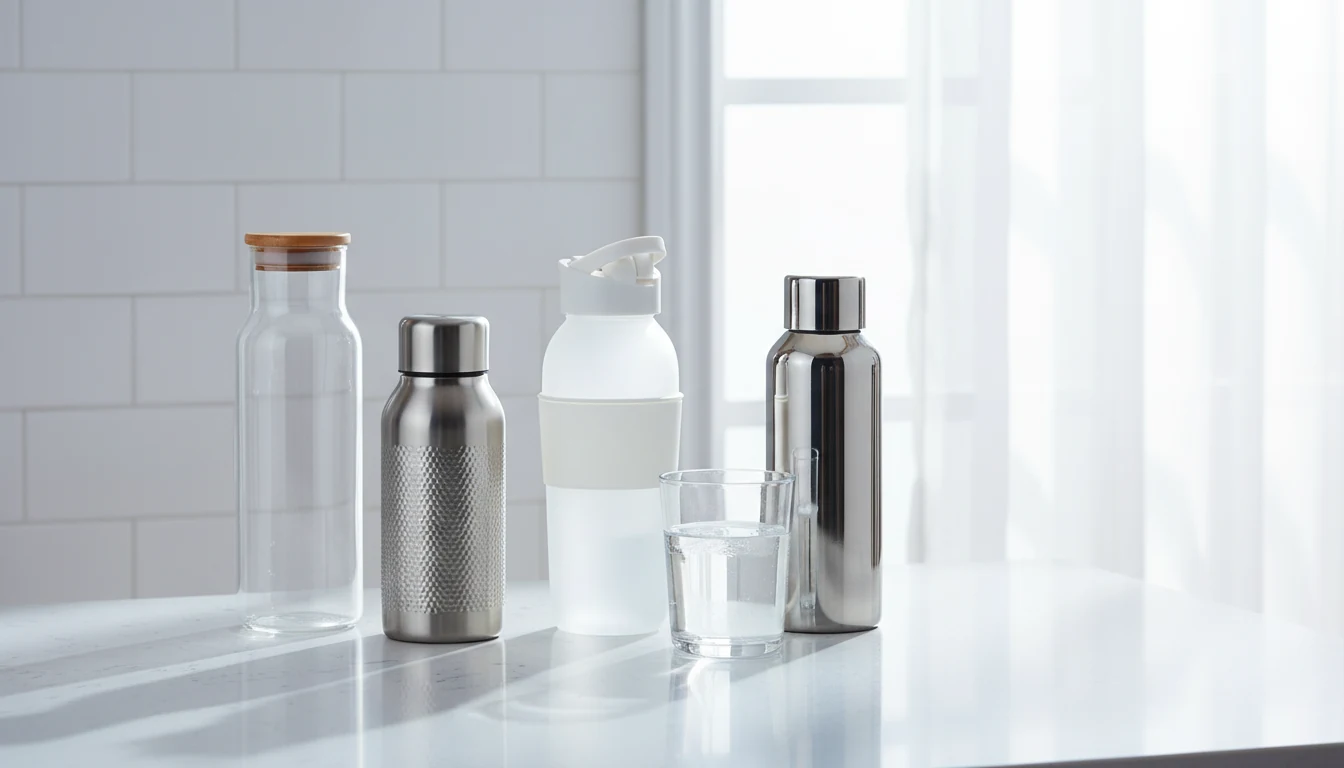
- Glass or stainless reusable bottles
- Periodic water testing when needed
That is a better long-term water strategy than carrying plastic cases from the store forever.
When Bottled Water Still Makes Sense
There are times bottled water is practical:
- Emergency storage
- Travel
- Boil-water advisories
- Outdoor events
- Temporary plumbing problems
- Areas with known water contamination and no immediate filtration option
I keep bottled water in the category of backup and convenience. I just do not like it as the everyday plan for a household that can install or use a decent filter.
What I Would Do at Home
If I were trying to get off bottled water, I would start here:
Step 1: Read the local water report
If you are on city water, look up the annual consumer confidence report. It will not tell you everything, especially about your own home plumbing, but it is a good start.
Step 2: Identify your main concerns
Taste and odor? Lead? PFAS? Chloramine? Hard water? Microplastics? Nitrates? Well water bacteria? Different problems need different filters.
Step 3: Choose the right filtration category
For taste, a carbon filter may be enough. For broader contaminant reduction, consider a stronger carbon block, advanced pitcher, under-sink system, or reverse osmosis.
Step 4: Store water better
Use glass or stainless steel bottles when practical. If you need plastic for kids, sports, or travel, choose durable reusable bottles and replace them when scratched or worn.
Step 5: Keep emergency water separately
Home filtration is great until the water supply is interrupted. Keep emergency water as a separate preparedness item.
Health and Safety Note
This article is general educational information, not medical advice. If you have infants, pregnancy concerns, immune-compromised family members, a private well, or a known contamination issue, consider certified laboratory testing and speak with a qualified professional about the safest water plan.
My Bottom Line
Bottled water can come from real springs, protected aquifers, municipal supplies, or purified source water. The label usually tells part of the truth, but the water quality report tells more.
If you want to reduce single-use plastic, compare BPA-free reusable bottles, glass bottles, and stainless steel options before choosing.
As an Amazon Associate, Clean Water In Homes may earn from qualifying purchases.
The bigger question is not whether bottled water is always good or bad. It is whether it makes sense as your daily home drinking water.
For most families, I think the smarter move is to use bottled water when it is genuinely useful, but build your everyday routine around home filtration. You get more control, less waste, and a better long-term cost structure.
FAQ
Does bottled water come from tap water?
Some bottled water does start as municipal tap water or public water supplies, especially purified water brands. It may then be treated through processes such as reverse osmosis, distillation, or other filtration methods.
Is spring water better than purified water?
Not automatically. Spring water has a natural-source appeal, but purified water can be treated very thoroughly. The better choice depends on source quality, treatment, testing, packaging, and taste.
How can I tell where bottled water comes from?
Check the label for terms like purified, spring, mineral, artesian, or distilled. Then look for the brand’s water quality report and match it to the exact product and bottle size if possible.
Are Aquafina and Dasani tap water?
They are widely known as purified waters that typically start from public or local water supplies and are then treated. Check the current label and brand report for the exact product in your area.
Is expensive bottled water cleaner?
Not always. Expensive bottled water may have a unique source, mineral profile, glass packaging, or premium branding. That does not automatically mean it is cleaner than a properly filtered home water supply.
Should I switch from bottled water to a home filter?
If you use bottled water daily at home, it is worth comparing the cost and waste against a good home filtration setup. For many households, home filtration is the better long-term choice.