
Refrigerator water feels cleaner because it is cold, convenient, and usually tastes better than straight tap water.
But that does not automatically mean it is free from microplastics.
I like refrigerator dispensers for convenience. I also think they can give people a false sense of security. A fridge filter is usually a small cartridge designed to improve taste and reduce certain contaminants. It is not always a complete water treatment system, and it may not be certified for microplastics.
Let’s walk through what fridge water and ice can contain, what the filter may reduce, and when it makes sense to buy a better replacement filter.
Read more: What Are Microplastics in Drinking Water?
Key Takeaways
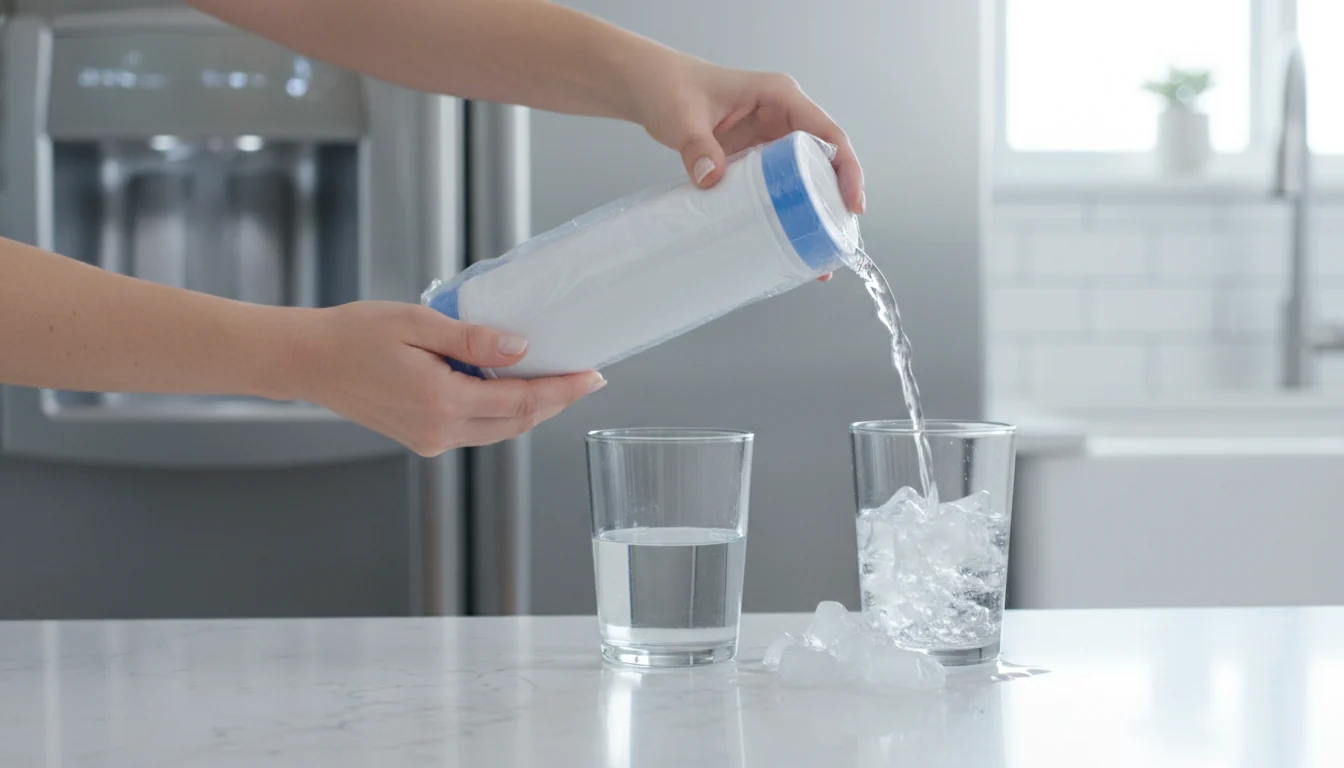
- Refrigerator water and ice start with your home’s incoming water, so they can contain whatever is present in your tap water.
- Many fridge filters improve chlorine taste and odor, but not all are certified for microplastics or broader contaminant reduction.
- Old filters can lose effectiveness and may create taste, flow, or hygiene problems.
- Ice can contain particles from source water, plumbing, the filter, the ice maker, or storage bin dust and debris.
- Replacement filters are worth buying on schedule, but I prefer certified filters over cheap mystery cartridges.
- If microplastics are a major concern, an under-sink system feeding the refrigerator may be a stronger upgrade.
Where Refrigerator Water Actually Comes From
Your refrigerator does not create new water. It uses the same water line that feeds your home.
That water may come from:
- A municipal water system
- A private well
- A whole-house filter
- An under-sink filter connected to the fridge
- A direct tap line with only the refrigerator cartridge as treatment
If microplastics are present in the incoming water, the refrigerator filter may reduce some particles depending on the filter design. But I would not assume every fridge filter handles microplastics well unless the product documentation says so clearly.
Can Refrigerator Water Contain Microplastics?
Yes, it can.
Microplastics are tiny plastic particles that can come from many sources, including synthetic textiles, tire wear, degraded packaging, industrial processes, and plastic plumbing components. Water utilities may remove many particles during treatment, but very small particles can still be difficult to measure and manage.
Inside a home, plastic tubing, connectors, filter housings, and storage parts may also contribute particles over time, especially if materials age or degrade.
That does not mean every glass from the fridge is dangerous. It means the fridge dispenser should be treated as one part of a water system, not a magic safety guarantee.
Can Refrigerator Ice Contain Microplastics?
Yes. If refrigerator water can contain particles, ice made from that water can too.
Ice may also pick up debris from:
- The ice maker tray
- Plastic ice bin parts
- Old water lines
- Dust inside the freezer
- Handling with plastic scoops or containers
If your ice has visible flakes, odors, or odd taste, that is a sign to clean the ice bin, replace the filter, flush the system, and inspect the water line.
What Most Refrigerator Filters Are Designed to Do
Many standard fridge filters are carbon-based. Their main job is often to improve taste and reduce chlorine odor.
Better filters may be certified to reduce specific contaminants such as:
- Lead
- Cysts
- Certain VOCs
- Some pharmaceuticals
- PFAS in some models
- Particulates in some models
But there is a big difference between “reduces bad taste” and “certified to reduce microplastics.” Always check the performance data sheet for the exact filter model.
Certification Language to Look For
When buying a refrigerator replacement filter, I look for real standards, not vague promises.
Useful standards may include:
- NSF/ANSI 42 for chlorine taste and odor
- NSF/ANSI 53 for certain health-related contaminants such as lead or cysts
- NSF/ANSI 401 for some emerging contaminants
For microplastics, I look closely at particulate reduction claims and any specific microplastic test data. If a seller says “removes microplastics” but does not explain testing, particle size, or certification, I’m cautious.
The Problem with Cheap Replacement Filters
I understand the temptation. Refrigerator filters can be expensive, and cheap online replacements look like an easy win.
But the filter is sitting in the water path for drinks, ice, coffee, and cooking. I do not want a mystery cartridge with unclear media, poor seals, or unsupported contaminant claims.
With cheap filters, my concerns are:
- Unknown certification status
- Poor fit or leaking
- Lower carbon quality
- Shorter life than advertised
- Questionable materials in contact with water
- Counterfeit or confusing model compatibility
I’m not saying every third-party filter is bad. I’m saying I want proof before I trust it.
When to Replace a Refrigerator Filter
Most manufacturers recommend replacing fridge filters about every six months, but actual timing depends on water quality and use.
Replace sooner if you notice:
- Slower water flow
- Bad taste or odor
- Cloudy ice
- Black specks
- Filter warning light
- Long periods of non-use
- A filter that is past its rated gallons
After replacing the filter, flush the system according to the instructions. This helps clear carbon fines and trapped air.
The Money Angle: Which Filter Upgrade Is Worth It?
Good: On-Time OEM Replacement
The simplest improvement is replacing the original manufacturer filter on schedule.
This is usually the safest low-effort choice because fit and compatibility are clear. The downside is cost.
Better: Certified Third-Party Filter
A certified third-party filter can save money if it has credible documentation for your refrigerator model.
I would check:
- Exact model compatibility
- NSF listing or certification evidence
- Contaminants reduced
- Rated gallons
- Return policy
- Reviews mentioning leaks or fit problems
Best: Under-Sink Filtration Feeding the Refrigerator
If you want stronger filtration for both sink water and ice, consider an under-sink filter or reverse osmosis system connected to the refrigerator line.
This can be a better setup because the fridge receives already-filtered water. It may require a pressure check, storage tank considerations, and professional installation depending on the system.
Read more: How to Connect Reverse Osmosis Water to a Refrigerator
Don’t Forget the Water Line
A new filter will not fix every issue if the refrigerator water line is old, kinked, dirty, or made from questionable material.
If I were upgrading a fridge setup, I’d inspect:
- The supply line material
- Kinks or damage
- The shutoff valve
- Connection points
- Any signs of leaks
- How long the line has been in place
Braided stainless steel lines or appropriate water-rated tubing may be better than old plastic tubing, depending on your setup and local code.
Cleaning the Ice System
Filter replacement is only one part of fridge water maintenance.
I also recommend periodically:
- Emptying and washing the ice bin
- Discarding old ice after long vacations
- Flushing water after replacing filters
- Cleaning the dispenser area
- Checking the freezer for odors
- Replacing cracked plastic parts when possible
Ice absorbs smells and collects debris more easily than people think.
Check pitcher, countertop, and under-sink water filter options before deciding what fits your home best.
As an Amazon Associate, Clean Water In Homes may earn from qualifying purchases.
Health Disclaimer
This article is for general education and is not medical advice. Research on microplastics and health is still developing. If you have specific medical concerns, a compromised immune system, or an infant in the home, ask a qualified clinician or local health authority about the safest water option.
FAQ
Do refrigerator filters remove microplastics?
Some may reduce particles, but not all refrigerator filters are certified or tested for microplastics. Check the exact model’s performance data sheet.
Is refrigerator ice safer than tap water?
Not automatically. Refrigerator ice is made from the water feeding the fridge. If the filter is old or limited, the ice may not be much different from the incoming water.
Are generic fridge filters safe?
Some certified third-party filters may be fine. I avoid mystery filters with vague claims, poor documentation, or lots of leak complaints.
Why does my fridge water taste bad after replacing the filter?
The system may need flushing, or the filter may not be seated properly. Follow the manufacturer’s flushing instructions. If the taste continues, check compatibility and the water line.
What is the best way to reduce microplastics in fridge water?
For a stronger setup, consider a certified under-sink filtration system or reverse osmosis system feeding both the sink and refrigerator, if compatible with your fridge.
Final Thoughts
Refrigerator water is convenient, but convenience is not the same as complete filtration.
If you use your fridge dispenser every day, replace the filter on schedule, choose certified cartridges, clean the ice bin, and inspect the water line. If microplastics or broader contaminants are a serious concern, consider filtering the water before it ever reaches the refrigerator.
That upgrade can improve the water in your glass, your ice, your coffee, and everything else that starts at the fridge door.