
A water filter is one of those purchases where I don’t want people buying the prettiest gadget first.
I want you to buy the right tool for your water problem.
Countertop and under-sink filters can both make sense for home safety, but they are not the same. Some are great for taste and chlorine. Some are stronger for lead, PFAS, arsenic, or dissolved solids. Some are easy to install but slow. Others cost more upfront but are better long-term systems for a family kitchen.
This guide is my practical way to think through the decision before you spend hundreds of dollars on a filter.
Read more: How to Test Your Tap Water Before Buying a Filter
Key Takeaways
- Don’t shop by brand name alone. Start with your water report or a home water test.
- Carbon filters are good for taste, chlorine, and many organic chemicals, but they are not the same as reverse osmosis.
- Reverse osmosis is often the stronger choice for dissolved contaminants, but it costs more, may waste some water, and usually needs maintenance.
- AquaTru, Berkey-style gravity systems, and Waterdrop under-sink systems can all fit different households, but claims should be checked against certifications and test data.
- “Whole-home safety” starts with drinking and cooking water, but showers, laundry, and plumbing may require different filtration decisions.
- The best filter is the one that matches your contaminants, has credible testing, and gets maintained on schedule.
First: What Do I Mean by Whole-Home Safety?
When people say they want a whole-home water solution, they often mean one of three things:
- Safer drinking and cooking water.
- Better water throughout the house for showers, laundry, and appliances.
- A complete point-of-entry system that treats all water before it reaches any faucet.
This article focuses on countertop and under-sink filters, which are point-of-use systems. They treat water at one location, usually the kitchen. That is still a very important part of whole-home safety because drinking, cooking, coffee, tea, baby bottles, pet bowls, and ice often start at the kitchen sink.
If your problem is hard water scale, sulfur odor, iron staining, or well water bacteria risk, you may need a broader system. But for many households, the kitchen filter is the first and most cost-effective upgrade.
Step One: Identify Your Water Problem
Before buying a filter, I want to know what we’re trying to reduce.
Common concerns include:
- Chlorine taste and smell
- Chloramine
- Lead from old plumbing
- PFAS
- Pesticides and herbicides
- VOCs
- Arsenic
- Nitrate
- Fluoride
- Microplastics
- Sediment
- Hardness minerals
A city water report can be a starting point, but it may not tell you what happens inside your home’s plumbing. If you live in an older house, have a private well, or suspect lead, I’d consider a certified lab test.
Read more: What Is in My Tap Water? A Homeowner’s Testing Guide
Countertop Filters: Best for Renters and Easy Setup
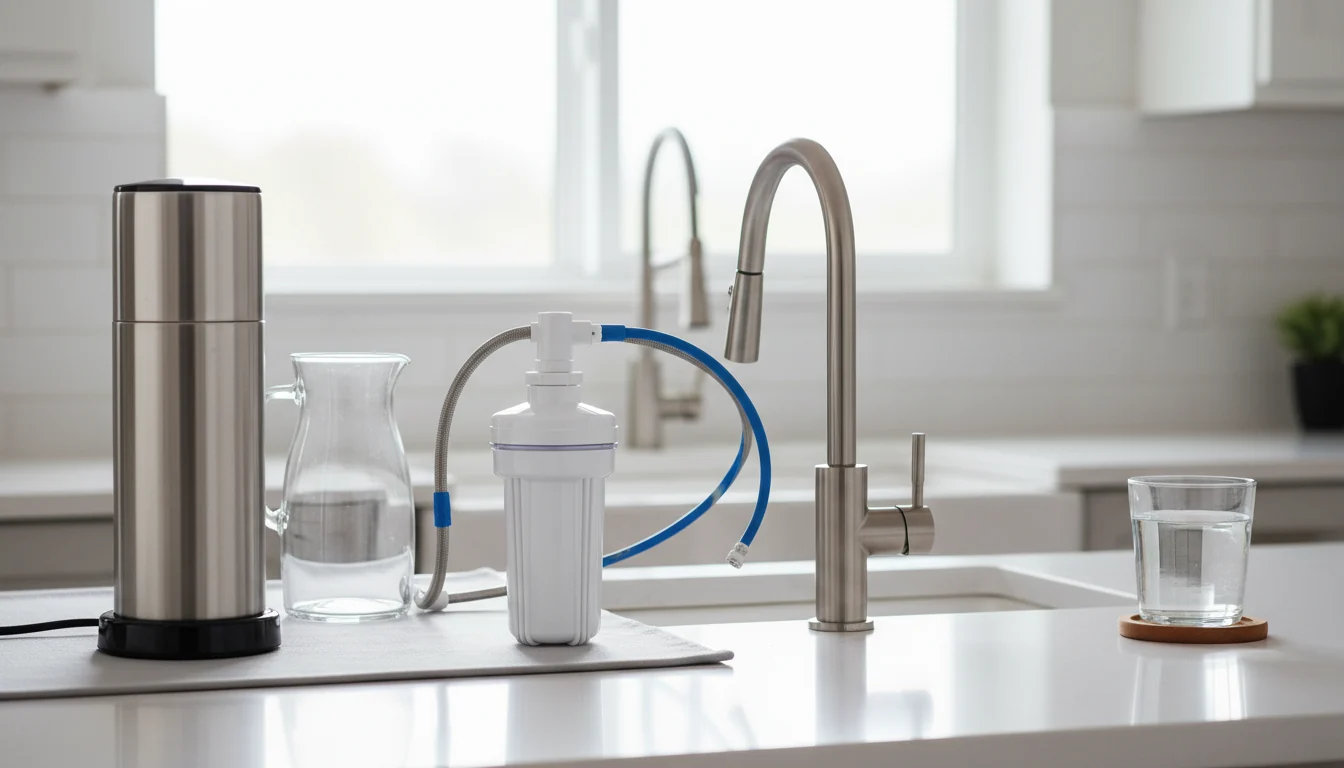
Countertop filters sit on the counter and usually connect to the faucet, hold water in a gravity chamber, or operate as a countertop reverse osmosis unit.
Why I Like Countertop Systems
Countertop filters are useful when you:
- Rent and cannot alter plumbing
- Want simple setup
- Need a portable option
- Want to avoid under-sink installation
- Want filtration before committing to a permanent system
They are also easier to inspect. If something leaks or needs cleaning, you can see it.
Downsides of Countertop Filters
Countertop systems take up space. Some are slow. Some have small reservoirs. Faucet-connected units may not fit every faucet. Gravity systems require manual filling. Countertop RO units often need electricity and periodic tank cleaning.
The best countertop system for one person in an apartment may be annoying for a family of five.
Under-Sink Filters: Best for Daily Kitchen Use
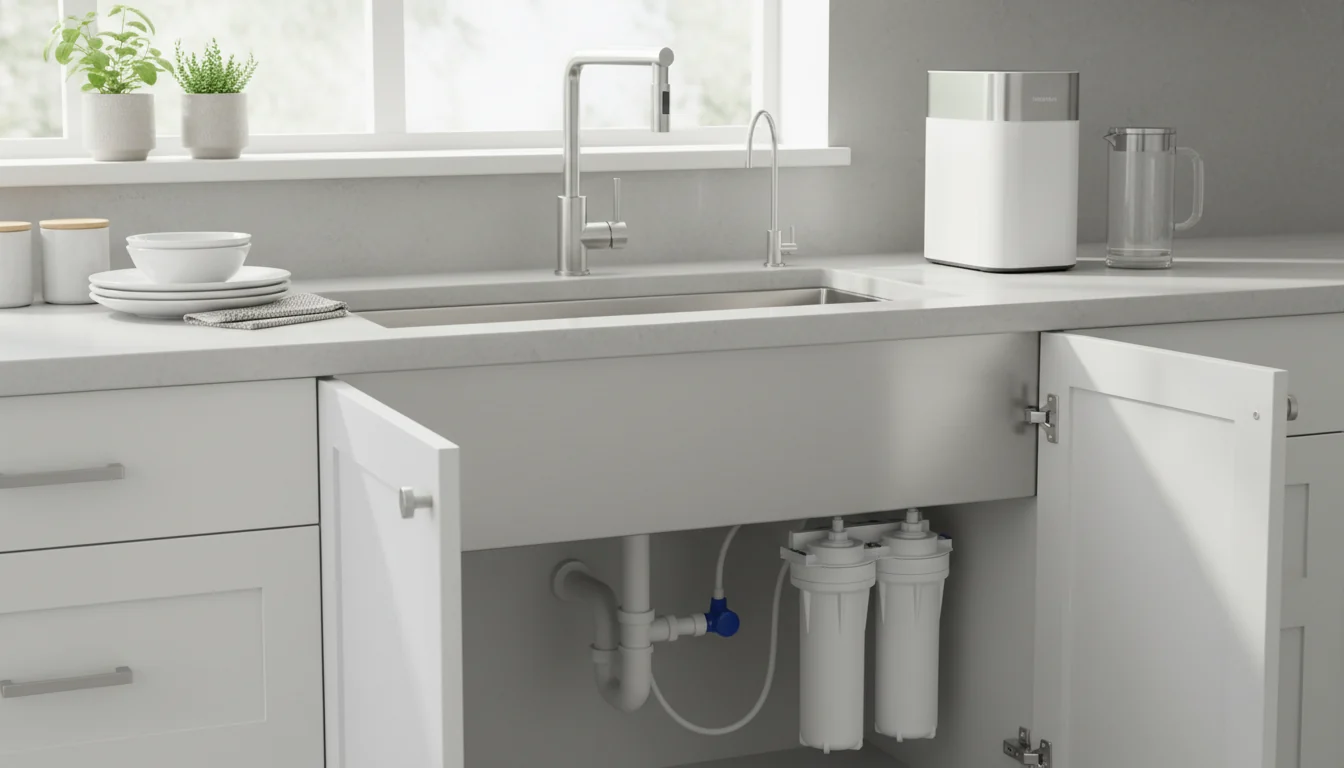
Under-sink systems hide beneath the sink and deliver filtered water through a dedicated faucet or sometimes through the existing cold-water line.
Why I Like Under-Sink Systems
Under-sink filters are often better for households that use a lot of water every day. They save counter space, can produce more water, and feel more like a permanent kitchen upgrade.
A good under-sink reverse osmosis system is one of my favorite high-ticket upgrades for drinking and cooking water when the water test justifies it.
Downsides of Under-Sink Systems
Installation matters. A poor installation can leak. Filters must be replaced on schedule. RO systems need space for cartridges, tubing, and sometimes a tank. Some systems require drilling a hole for a dedicated faucet.
If you are not comfortable with plumbing, budget for professional installation.
Filter Technology: What Actually Does the Work?
Activated Carbon
Activated carbon is excellent for improving taste and reducing chlorine. Higher-quality carbon blocks may also reduce many VOCs, some PFAS, and other chemicals depending on the filter design and certification.
Carbon is not a magic sponge for everything. It has limits, and it must be replaced before it is exhausted.
Reverse Osmosis
Reverse osmosis pushes water through a membrane that can reduce many dissolved contaminants, including lead, arsenic, fluoride, nitrate, and total dissolved solids depending on the system and conditions.
RO is one of the stronger point-of-use options, but it has tradeoffs:
- Higher upfront cost
- Filter and membrane replacements
- Slower production
- Wastewater on many systems
- Possible need for remineralization depending on taste preference
Sediment Filtration
Sediment filters catch particles like sand, rust, and silt. They are useful as pre-filters, especially for wells or old plumbing, but sediment filtration alone does not solve chemical contamination.
Ion Exchange and Specialty Media
Some filters use media designed for lead, fluoride, arsenic, nitrate, or PFAS. These can be helpful, but I want clear test data and maintenance instructions.
Certifications Matter More Than Hype
I look for independent standards and testing where possible. Common NSF/ANSI standards include:
- NSF/ANSI 42 for aesthetic effects like chlorine taste and odor
- NSF/ANSI 53 for certain health-related contaminants like lead
- NSF/ANSI 58 for reverse osmosis systems
- NSF/ANSI 401 for emerging compounds
- NSF/ANSI P473 historically associated with PFAS reduction claims
A product may be certified for one contaminant but not another. Read the performance data sheet, not just the badge on the box.
Brand Notes: AquaTru, Berkey, and Waterdrop
I’m mentioning these because homeowners search for them often, not because any one brand is automatically the best for every house.
AquaTru
AquaTru is known for countertop reverse osmosis systems. It can be a good fit for renters or people who want RO without under-sink installation.
What I like:
- Countertop RO convenience
- No permanent plumbing for many models
- Useful for apartments and small homes
What I’d check:
- Current certifications for the exact model
- Filter replacement cost
- Reservoir cleaning routine
- Daily capacity for your household
Berkey-Style Gravity Filters
Berkey is popular because it is simple, portable, and does not require electricity or plumbing. Many people like the taste.
What I like:
- Gravity-fed design
- Useful for backup water situations
- No under-sink installation
What I’d check carefully:
- Current third-party testing and claims for the exact elements
- Whether the system meets your specific contaminant concerns
- Cleaning and priming requirements
- Flow rate and practical daily volume
Gravity filters can be useful, but I would not treat any gravity system as a universal replacement for water testing and contaminant-specific filtration.
Waterdrop
Waterdrop sells a range of under-sink and reverse osmosis systems, including tankless RO models.
What I like:
- Space-saving under-sink options
- Higher-flow designs in some models
- Modern designs that many homeowners are comfortable installing
What I’d check:
- Certification details for the exact model
- Replacement cartridge pricing
- Installation requirements
- Whether remineralization is included or needed
My Buying Framework
Best for Renters
A countertop RO system or high-quality gravity filter can make sense because you can take it with you. Make sure it fits your water use and storage space.
Best for Families
A high-capacity under-sink RO system is often the better long-term choice if your water test shows contaminants RO is good at reducing. It is more convenient for cooking, coffee, tea, and filling bottles.
Best for Chlorine Taste Only
If your main issue is chlorine taste and odor, a certified carbon block filter may be enough. You may not need a full RO system.
Best for Lead Concerns
Look for systems certified for lead reduction, and test your water. If lead is present, follow local health guidance, especially for children and pregnancy.
Best for PFAS Concerns
Consider high-quality carbon systems or RO systems with credible PFAS reduction data. I want to see test results, not vague “removes forever chemicals” language.
The Money Angle: When a High-Ticket Filter Is Worth It
A $400 to $1,000 system can feel expensive until you compare it with years of bottled water.
A higher-ticket under-sink RO system may be worth it when:
- You currently buy bottled water every week
- You cook at home often
- You make coffee, tea, or ice daily
- Your water test shows contaminants a basic pitcher may not address
- You want a system the whole family will actually use
It is not worth it if you won’t replace the filters. Maintenance is part of the purchase.
Don’t Forget Ice, Coffee, and Cooking
Filtered water is not just for drinking from a glass.
I use filtered water for:
- Coffee and tea
- Soup and broth
- Rice, pasta, and oatmeal
- Ice cubes
- Pet water bowls
- Reusable bottles
That’s why I like kitchen systems. They change the water you actually consume most often.
Check pitcher, countertop, and under-sink water filter options before deciding what fits your home best.
As an Amazon Associate, Clean Water In Homes may earn from qualifying purchases.
Health and Safety Disclaimer
This article is general education, not medical or engineering advice. If your water may contain bacteria, lead, nitrate, arsenic, or other serious contaminants, use certified testing and follow your local health department’s guidance. Private well owners should test regularly and treat based on results.
FAQ
Is a countertop filter as good as an under-sink filter?
It depends on the technology and certification. A countertop RO unit may outperform a basic under-sink carbon filter for some contaminants. A strong under-sink RO system may outperform a simple countertop carbon unit. Match the filter to the contaminant.
Do I need reverse osmosis?
Not always. If your main concern is chlorine taste, carbon may be enough. If you are concerned about dissolved contaminants like arsenic, nitrate, fluoride, or lead, RO may be worth considering.
Are Berkey filters good for everyday water?
Many people like them, especially for taste and backup use. I would check current third-party testing for the exact filter elements and compare it with your water test results before relying on any gravity filter for specific health concerns.
Is Waterdrop a good under-sink option?
Waterdrop has popular under-sink and RO systems. I’d evaluate the exact model by certification, contaminant reduction data, filter replacement cost, and installation fit.
Is AquaTru worth the money?
AquaTru can be a good fit if you want countertop RO without plumbing changes. Check the exact model’s certifications, filter costs, and capacity before buying.
Final Thoughts
The best water filter is not the one with the loudest marketing. It is the one that matches your water, your home, your budget, and your willingness to maintain it.
If you are serious about whole-home safety, start with drinking and cooking water. Test first when possible. Then choose a countertop or under-sink system based on the contaminants you actually need to reduce.
For many homes, that one kitchen upgrade is the cleanest and smartest place to start.