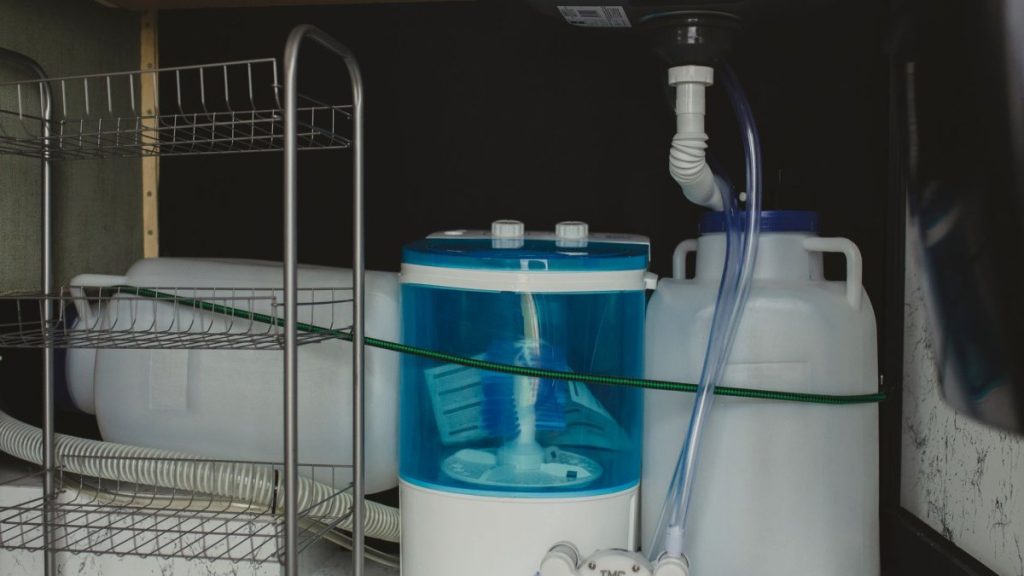

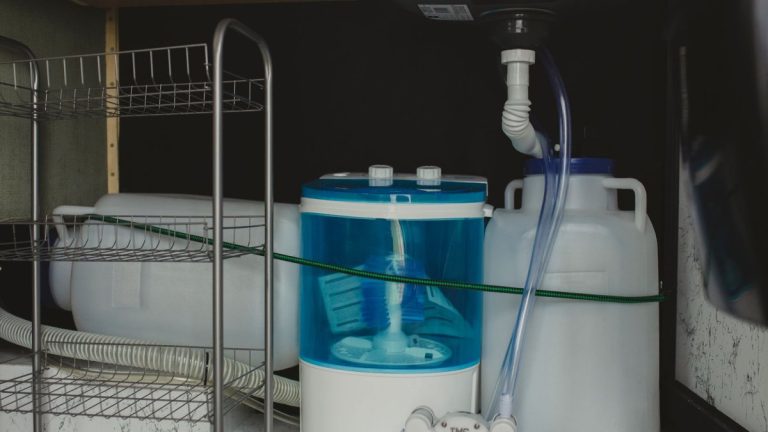
You’re standing at the kitchen sink and hear a faint trickle from the cabinet below. It’s the drain line on your reverse osmosis system, sending water away while you wait for a glass of clean water.
That’s not a leak or a defect. It’s how RO works, and how much water goes down the drain matters more than the fact that it does.
Quick answer: Reverse osmosis systems waste water because the membrane needs a constant stream of reject water to carry the contaminants it filters out down the drain. Many under-sink units send roughly 5 gallons to the drain for each gallon of treated water, and the waste never reaches zero. Efficient or well-tuned systems can get down to 2.3:1 or better.
Why Do Reverse Osmosis Systems Waste Water?
RO wastes water by design. Pressure pushes water through a semi-permeable membrane, and a continuous reject stream (also called concentrate or brine) carries the rejected contaminants to the drain so the membrane doesn’t clog.

The membrane splits your incoming water into two streams. The clean one, called permeate, goes to your storage tank and faucet. The other holds the dissolved solids, metals and salts the membrane held back, and it has to go somewhere.
If that concentrate just sat on the membrane surface, buildup would foul it quickly and output would drop. Flushing it away keeps the membrane working. Every RO system rejects some water. The ratio varies a lot between designs, but it never hits zero. The sections below cover how much is normal and how to cut it, drawing on EPA WaterSense guidance and typical system behavior.
What Do the Drain Line and Flow Restrictor Do?
The drain line carries reject water away, usually clamped to your sink drain pipe with a drain saddle. A flow restrictor inside that line limits how fast the water leaves, which keeps pressure built up on the membrane.
That’s the answer to “why does my RO have a drain at all”: it’s the exit for the concentrate. Every conventional RO system has one.
The restrictor is a small, inexpensive part, but it sets the balance between water pushed through the membrane and water sent away. An oversized or worn restrictor lets too much escape, so waste climbs. An undersized one holds too much back, which can foul the membrane faster. Restrictors are sized for a particular membrane and pressure range, so don’t swap in a random one.
How Much Water Does an RO System Waste?
Expect about 5 gallons down the drain for every gallon of drinking water from a typical under-sink unit. Inefficient models can hit 10 gallons. Systems with the EPA WaterSense label are capped at 2.3 gallons of reject water per gallon produced.
Here’s what that looks like for a household that drinks and cooks with 5 gallons of treated water a day. That’s an assumption, so scale it to your own use.
| Waste ratio | Daily drain water | Yearly drain water | What it represents |
|---|---|---|---|
| 10:1 | 50 gallons | About 18,250 gallons | Inefficient unit |
| 5:1 | 25 gallons | About 9,100 gallons | Typical system |
| 2.3:1 | 11.5 gallons | About 4,200 gallons | WaterSense-labeled maximum |
Moving from 5:1 to 2.3:1 saves roughly 4,900 gallons a year in this example. That’s meaningful, but keep it in proportion: RO drain water is small next to your whole-house indoor use. It matters most if you live in a drought-prone area or rely on a well or septic system.
What Makes the Waste Ratio Higher or Lower?
Five things mainly drive the ratio: incoming water pressure, water temperature, dissolved solids (TDS and hardness), membrane age, and flow restrictor size. A ratio printed on the box comes from test conditions, so your kitchen may differ.
- Incoming pressure: Low pressure means less water gets pushed through the membrane, so more of it goes to the drain.
- Water temperature: Cold water moves through the membrane more slowly. Winter tap water often makes a system waste more than the same unit in July.
- TDS and hardness: Water with more dissolved solids is harder to push through, which slows output and raises waste. Hardness also scales the membrane.
- Membrane age: A worn or scaled membrane passes less water as the years go by, while the restrictor keeps sending the same amount to the drain.
- Restrictor size: A bigger orifice means more reject flow, as covered above.
Ratio is only one factor when choosing a system. Fit under your sink, filter change schedule and placement matter too.
Why Is My RO System Constantly Draining?
Non-stop drain flow usually means the system can’t shut off or can’t build pressure. Common causes are a failed auto shut-off valve, low tank pressure, a bad check valve, a worn membrane, or low incoming pressure.
A high waste ratio alone isn’t a fault. Constant running after the tank has filled is. Work through these in order:
- Check whether the tank is full. Open the faucet until flow slows, then wait an hour or two for the tank to refill. If the drain keeps running with a full tank, the auto shut-off valve is the prime suspect.
- Test the tank’s air pressure. Empty the tank, close its valve, and check the air side with a tire gauge. Most under-sink tanks want somewhere around 5 to 7 psi when empty, but check your manual. Low air pressure means the tank fills slowly, so the system runs longer.
- Inspect the check valve. This is the small one-way valve at the membrane outlet. If it fails, treated water can flow backward and the system never reaches shut-off pressure.
- Consider the membrane. If your system is several years old and output has dropped, the membrane may be spent.
- Check incoming pressure. Most systems want around 40 psi or more at the supply line. Lower than that and the system struggles to finish a cycle.
If you’ve changed parts and it still runs constantly, call the manufacturer or a plumber rather than guessing.
How Can I Reduce RO Waste Water?
You can cut waste by choosing a WaterSense-labeled system, adding a permeate pump, raising incoming pressure, and replacing a worn membrane. Which of these helps most depends on why your system is wasting water in the first place.
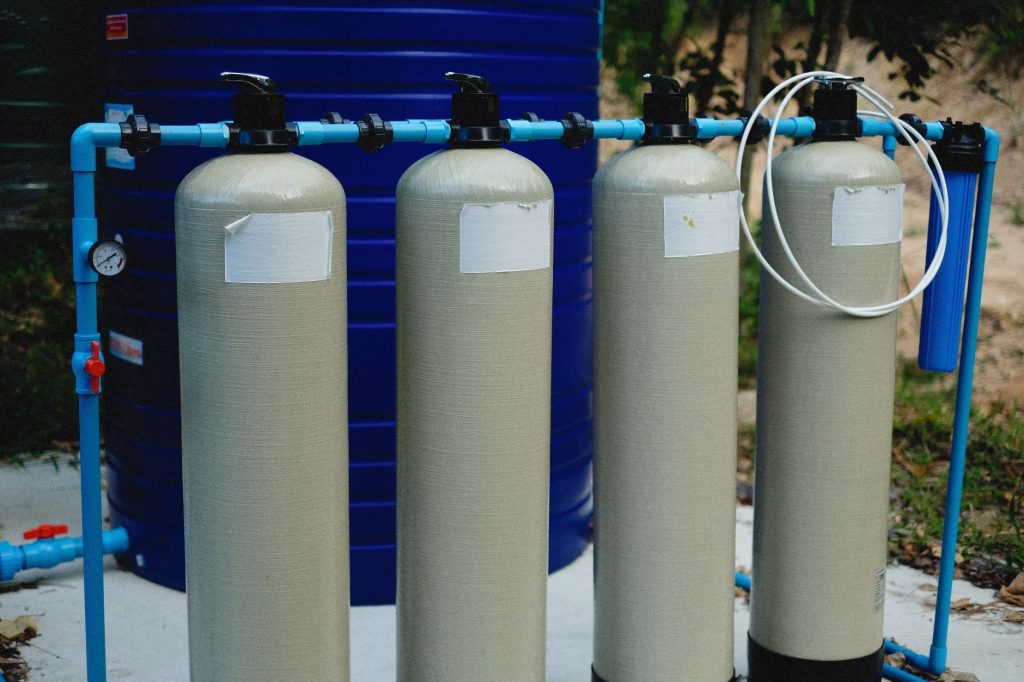
- Buy a WaterSense-labeled system. These are independently certified at 2.3:1 or less, and the specification requires them to treat water as effectively as other units. If you’re shopping, this is the easiest win.
- Add a permeate pump. It uses the reject flow’s own energy to push permeate into the storage tank against back pressure, so the membrane can work harder with less drain flow. It needs no electricity, but it adds a part to maintain.
- Consider a booster pump if your pressure is low. An electric booster raises membrane pressure, which improves recovery. The trade-offs are noise, a power outlet under the sink and one more thing that can fail.
- Replace an old membrane. A scaled membrane makes everything worse. Match the flow restrictor to your actual pressure while you’re at it.
- Treat hardness upstream. If your water is very hard, a softener or sediment prefilter protects the membrane from scale.
Then there’s “zero-waste” or drainless RO. These systems reroute the concentrate, for example into a hot-water line, so you see less drain flow. They don’t eliminate the concentrate, and it still has to be kept apart from your drinking water. Check how the manufacturer handles that before you buy.
Is RO Wastewater Really Wasted, and Can I Reuse It?
The water goes down the drain, but it’s the same tap water with its minerals concentrated, not a toxic liquid. Some people reuse it for non-drinking jobs. Whether that’s wise depends on what’s in your source water.
Common uses include mopping, flushing toilets and watering tolerant outdoor plants. Skip salt-sensitive plants and edible gardens, since the concentrate carries extra salts.
Check your water report first. If your supply has contaminants like lead or arsenic, those are concentrated in the reject stream too, so reuse it more cautiously. Collecting it also means catching a slow trickle, which is a hassle for most households.
On a septic system, the extra flow is generally manageable, but confirm with your installer. The environmental concern is greatest in drought-prone areas, where several gallons of waste per gallon of clean water is hard to justify casually.
When Is RO Worth the Waste?
RO is worth it when you need to remove contaminants other filters miss, such as lead, PFAS or arsenic. It’s usually not worth it if you just want to improve taste by removing chlorine.
Pros
- Can remove lead, VOCs, PFAS, arsenic, bacteria and viruses
- Works at a single faucet, with no whole-house changes
- Efficient certified models keep waste to 2.3:1 or less
Cons
- Sends several gallons to the drain per gallon produced
- Needs filter and membrane replacements
- Takes up cabinet space and can lose pressure over time
Look for NSF/ANSI 58 certification covering the specific contaminants you care about. The Water Quality Association (WQA) offers certification too, and it’s worth checking either mark before you buy.
If your goal is better-tasting water, an activated carbon pitcher or an under-sink carbon filter is cheaper and uses no reject water. WaterSense itself says it doesn’t intend to promote RO for every application because the process is so water-intensive.
Bottom Line: RO Waste Is Normal, Excess Is Fixable
Some reject water is the built-in cost of RO, so don’t expect zero. If you’re buying, pick a WaterSense-labeled system and confirm the NSF/ANSI 58 claims match your contaminants. If you already own one, keep the membrane fresh and the pressure healthy, and troubleshoot any drain flow that continues after the tank is full. If you only dislike the taste of chlorine, skip RO entirely.
Check current options, prices and reviews for reverse osmosis water filters side by side before deciding what fits your home best.
As an Amazon Associate, Clean Water In Homes may earn from qualifying purchases.
Sources and further reading