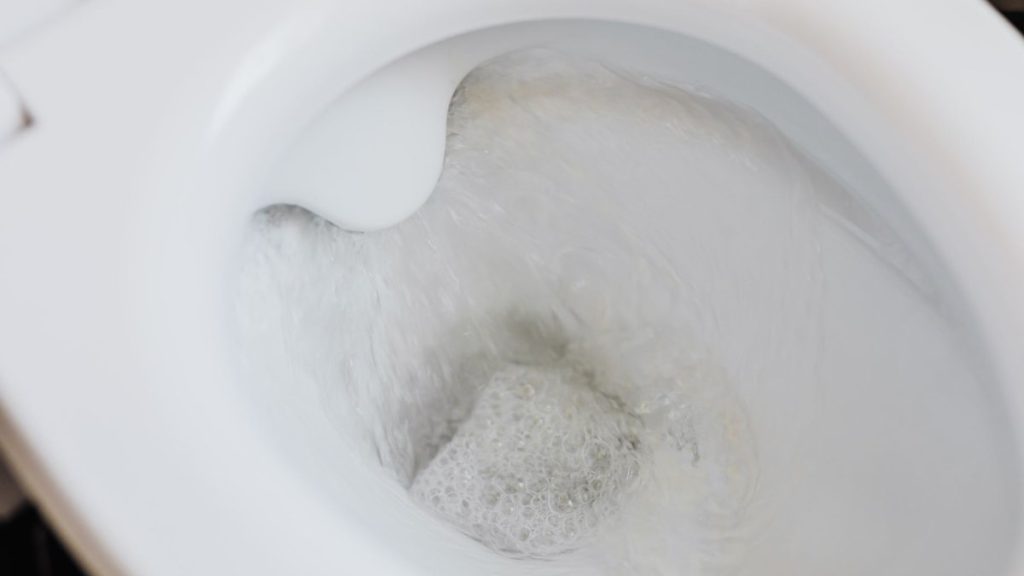

You scrub the toilet, and the white ring, crusty rim or stained rinse holes are back within a week. That’s hard water doing what it does, and brushing alone won’t beat it. The fix takes two steps: dissolve what’s already there, then slow the next round of buildup.
Quick answer: Dissolve existing limescale with white vinegar for light rings or an acid-based toilet cleaner for heavy crust. Then keep it from coming back with weekly brushing, a drop-in tank tablet or puck, or a water softener if your whole house has hard water. Orange, brown or pink stains need different cleaners.
Limescale Is the Likely Cause: Fastest Fix
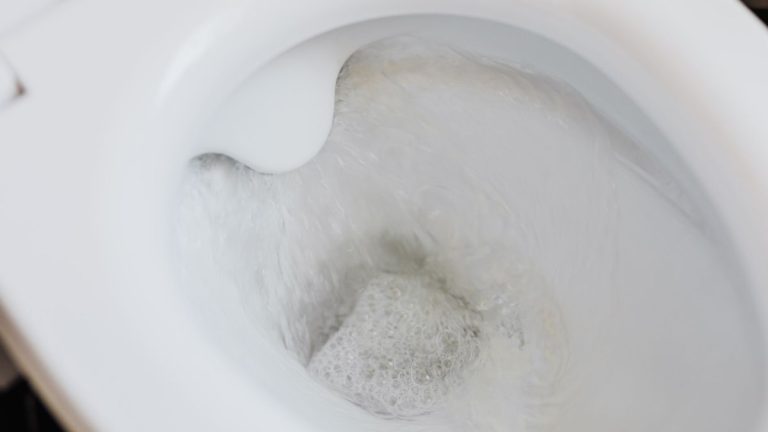
Most white or gray rings and crusty deposits in a toilet are limescale, left behind when hard water evaporates. The fastest fix is to dissolve it with a vinegar soak or an acid-based cleaner, then slow its return.
Hard water carries calcium and magnesium. They’re harmless to drink, but they stick to porcelain as a rough, chalky layer that traps more minerals with every flush. Rings form at the waterline because that’s where water sits and evaporates. Crust builds under the rim, and scale creeps into the rinse holes.
The damage isn’t only cosmetic. Constant mineral deposits wear the flapper and fill valve faster, so you may end up replacing parts that should have lasted years.
Do a quick color check before you buy anything. White or gray means limescale, so the next three sections apply. Orange, brown or pink is something else, so skip ahead to the stain-color section. Then match your fix to what you see: light rings, heavy crust, clogged jets or tank buildup.
Light Rings: Vinegar and Baking Soda Method
White vinegar dissolves light limescale rings, especially with a long soak, and baking soda plus a brush lifts the loosened film. It’s the cheapest option, so start here if the ring is thin and you can’t feel rough crust.
- Lower the water level in the bowl. Close the shutoff valve behind the toilet, flush, and scoop out any leftover water with a cup or sponge. Vinegar works far better on bare porcelain than diluted in a full bowl.
- Pour in about 2 cups of white vinegar and swish it around so it coats the ring. Soak a few paper towels in vinegar and press them onto any rings above the waterline.
- Leave it for several hours, or overnight if the ring is thick. The acid needs time to work.
- Sprinkle baking soda over the area, scrub with a toilet brush, then open the valve and flush.
Repeat once or twice for stubborn rings. Vinegar is a mild acid, so it handles a film but gives up on thick crust. If the ring is still there after two overnight soaks, move up to a commercial cleaner.
One trade-off: vinegar smells strong, and a soak takes the toilet out of action for hours. Do it before bed, and only if you have a second bathroom or can wait until morning.
Heavy Crust: Acid Cleaners, CLR and Pumice
Thick calcium deposits need an acid-based toilet cleaner with real contact time, plus a pumice stone for any spots that survive. CLR is one option if its label covers toilet bowls and you follow the directions.
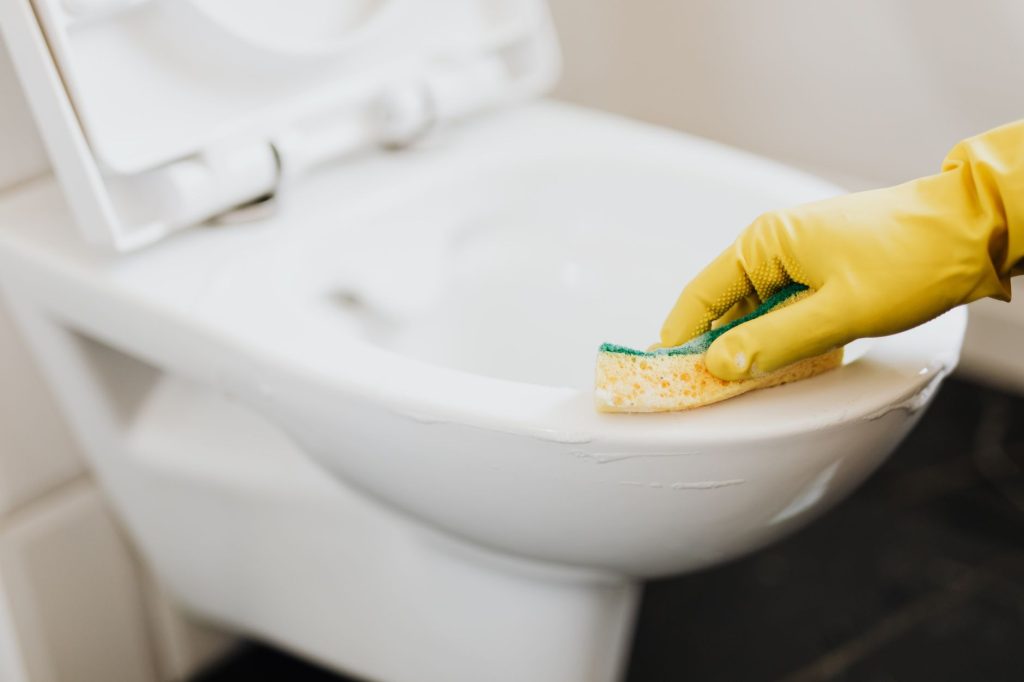
Commercial descalers usually rely on stronger acids than vinegar, which is why they beat it on thick scale. Some bowl cleaners use hydrochloric acid. Read the label for dilution, contact time and whether the product is safe for your porcelain and your septic system, and follow it closely so you don’t damage the finish.
How to Deep Descale a Bowl
- Shut off the water supply, flush, and lower the bowl level as above.
- Open a window or run the exhaust fan, and put on rubber gloves and eye protection.
- Apply the cleaner to the ring and up under the rim, following the label’s dilution.
- Let it sit for the stated contact time. Don’t leave it longer than the label says.
- Scrub under the rim and around the waterline with a brush, then rinse well and flush twice.
Never mix an acid cleaner with bleach. The combination can release toxic chlorine gas. Don’t follow one with the other unless you’ve flushed and rinsed thoroughly in between.
When to Use a Pumice Stone
A pumice stone is for the few spots that remain after cleaning. Wet both the stone and the porcelain, use light pressure and work a small area. Dry pumice or hard scrubbing can scratch the glaze, and a scratched surface collects stains faster. Use it sparingly, not as a routine tool.
Clogged Rim Jets and Rinse Holes
Mineral-clogged rim jets and siphon jet holes cause weak or uneven flushes. Dissolve the scale with vinegar or an acid cleaner, then clear each hole by hand.
The signs are water trickling from only part of the rim, a lopsided flush, or a bowl that doesn’t clear as well as it used to.
- Pack a cloth or paper towels soaked in vinegar (or a cleaner gel) under the rim so it stays in contact with the holes.
- Let it soak for a few hours.
- Use a small brush or a bent piece of wire to work through each hole gently. Go slowly so you don’t scratch the porcelain.
- Check the holes with a hand mirror, flush, and repeat if any are still blocked.
The hole at the bottom of the bowl (the siphon jet) often clogs too. Reach it with the same brush once the water is down.
Orange, Brown or Pink? Not Limescale
Orange or brown stains are usually iron or rust, and pink or black film is typically mold or bacteria. Each needs a different cleaner than limescale, and a vinegar soak won’t touch them.
- Iron or rust: use a rust remover such as Iron OUT, or a CLR-type product, following the label. Iron in well water is a common source, and a standard softener may not fully stop these stains.
- Pink or black slime: scrub with a disinfectant or bleach-based cleaner. This is a living film, so it returns quickly in a bowl that sits unused.
- Wipe test: if vinegar leaves a stain unchanged after a long soak, it’s probably rust, not scale.
Keep bleach away from acid cleaners and rust removers. If you’ve used one, rinse and flush thoroughly before trying the other.
Mineral Buildup in the Tank and Fill Valve
Scale can also form inside the tank, coating the flapper and fill valve. Check every few months and descale if parts look crusty.
- Lift the lid and look for white crust, slime or a gritty film on the valve and flapper.
- Turn off the water and flush to empty the tank.
- Wipe crusty parts with a vinegar-soaked cloth, or pour white vinegar into the tank and let it sit for about 30 minutes. Don’t leave rubber parts soaking for hours.
- Restore the water and flush a couple of times to clear it out.
Replace a flapper or fill valve that’s warped, stiff or still leaking after cleaning. Both are inexpensive parts. Then check that the tank refills quietly and the flapper seals fully, with no trickle into the bowl.
Preventing Buildup: Tablets, Pucks and a Routine
Drop-in tank tablets and pucks use polyphosphate or similar ingredients to slow scale, but they only help alongside regular cleaning. Most last roughly 3 to 6 months, depending on the product.
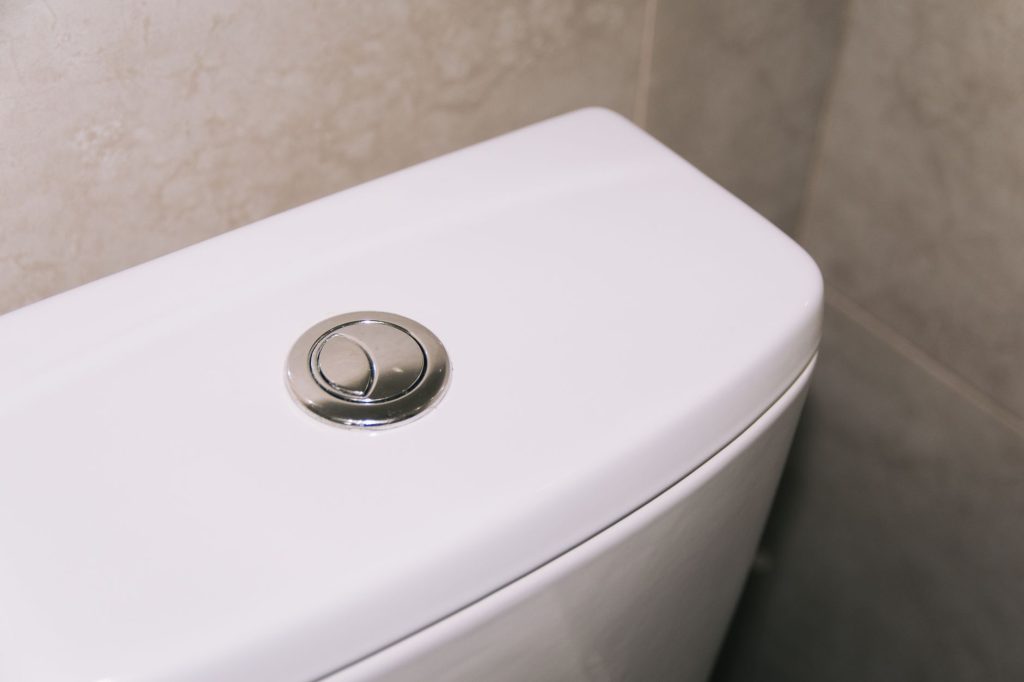
The Nuvoh2O Toilet Scale Preventer Puck uses slow-release polyphosphate pearls with a citrus boost to help with existing limescale, and it should be replaced every 3 months. Toilet Guard is marketed at up to 180 days per tablet. Scrubbing Bubbles Continuous Clean is another drop-in option.
- Check the label for flapper and seal compatibility. Skip bleach-based tank tablets, which can wear down rubber parts.
- Brush weekly and use a mild descaler monthly if your water is hard.
- Set expectations. You’ll get fewer rings, not zero. A tablet won’t remove old crust, so descale the bowl first.
Tablets are worth buying if your hardness is moderate and you want to cut down cleaning time. If your water is very hard, they’ll help only a little.
Softener or Filter: Treat the Water Itself
A whole-house water softener is the only fix that stops scale at every tap and fixture. Toilet-only filters offer limited relief.
Start by testing your hardness with a strip kit or your water utility’s report. Results are usually in grains per gallon (gpg), and water above roughly 7 gpg counts as hard. If you’re well under that, a tablet and a routine are probably enough.
Be careful with filters. Sediment filters, inline hose filters and bidet filters mainly catch grit, not dissolved calcium, so read what the product actually removes. Amazon’s toilet hard water filter results include plenty of products that sound like fixes but may not soften anything.
A softener costs the most up front, but it also protects the water heater, faucets and appliances. If you rent, ask the landlord rather than installing one yourself. Remember that a softener won’t clear deposits already on the bowl, so descale first.
Fixes Compared and What to Buy
Cleaners remove existing buildup, while tablets and softeners prevent new scale. Match the product to the stain.
| Method | Removes or prevents | Best for | Effort | Cautions | Cost |
|---|---|---|---|---|---|
| White vinegar and baking soda | Removes | Light rings | Low, but needs a long soak | Weak on heavy crust | Very low |
| Acid-based cleaner (CLR) | Removes | Thick limescale | Moderate | Never mix with bleach; check septic and porcelain notes | Low |
| Pumice stone | Removes | Spots that survive cleaning | Moderate | Can scratch the glaze | Low |
| Rust remover (Iron OUT) | Removes | Orange or brown stains | Moderate | Follow the label | Low |
| Tank tablet or puck | Prevents | Slowing new rings | Very low | Avoid bleach-based tablets | Low, recurring |
| Whole-house softener | Prevents | Very hard water throughout the home | Professional install usually | Won’t fix mold stains; may not fully handle iron | High |
For a basic kit, buy an acid-based limescale cleaner, a pumice stick and one brand of tank tablets or pucks. Look for clear contact times and septic-safe, porcelain-safe wording on the label.
Bottom Line: Dissolve First, Then Prevent
Identify the stain, then use the mildest cleaner that works: vinegar for light rings, an acid cleaner for heavy crust, a pumice stone for stragglers. Once the bowl is clean, add a tank tablet and a weekly brush. If hard water is wearing down everything in the house, a softener is the real fix. And never mix acid cleaners with bleach.
Check current options, prices and reviews for hard water toilet cleaners side by side before deciding what fits your home best.
As an Amazon Associate, Clean Water In Homes may earn from qualifying purchases.
Frequently Asked Questions
Is hard water bad for my health?
No. The calcium and magnesium that cause limescale aren’t harmful to drink. The trouble is to your plumbing and fixtures, not your body.
Why does the ring come back a few days after I clean?
Minerals redeposit every time water sits and evaporates at the waterline, and a rough or etched surface grabs them faster. Rarely used toilets are the worst, so flush a guest bathroom toilet at least weekly.
Can I use these cleaners with a septic system?
Occasional vinegar is generally fine. For acid cleaners, check that the label says septic-safe, and don’t pour in heavy doses regularly.
When is a toilet too far gone to save?
Consider replacing it if the glaze is cracked or pitted, stains return within days of a thorough cleaning, or the flush stays weak after you’ve cleared the jets and replaced worn tank parts. At that point, more cleaners mostly waste money.
Sources and further reading
- Amazon.com : toilet filter for hard water (amazon.com)
- Toilet Scale Preventer Puck | Nuvoh2O – NuvoH2O (nuvoh2o.com)
- Robot or human? (walmart.com)