
Home water testing is the step most people skip before buying a filter, and it’s the one that saves the most money. A good test tells you whether your problem is lead, hardness, chlorine taste, bacteria, PFAS or something else entirely, so you buy the right fix instead of guessing.
This guide compares the two kinds of kits worth considering (certified lab mail-in tests and quick DIY strips), names the real kits most often recommended in 2026, and explains which one fits city water, older homes and private wells.
If a health concern is serious, use a certified lab, your local water report or a qualified professional. This article is educational, not medical advice.
Key Takeaways
- The best home water test kits should match your water source and the contaminants you actually need to check.
- Lab kits usually give stronger contaminant-specific confidence; DIY strips are faster but more limited.
- For wells, lead, PFAS, bacteria, nitrates, hardness, and metals should not be treated as one-size-fits-all.
- A test kit is often the smartest first purchase before buying a larger filter system.
- Use results to choose a filter, not to replace professional guidance during a serious contamination warning.

Best Home Water Test Kits for 2026
These are the kits most consistently recommended by independent reviewers, grouped by how they work. Prices and test panels change, so check the current listing before buying.
| Kit | Type | Best for | Main limitation |
|---|---|---|---|
| Tap Score (SimpleLab) | Certified lab, mail-in | Best overall; separate city-water and well-water panels plus PFAS and lead tests | Costs more and takes days to get results |
| Safe Home Ultimate | Certified lab, mail-in | Broad contaminant screening in one kit | Higher price than DIY kits |
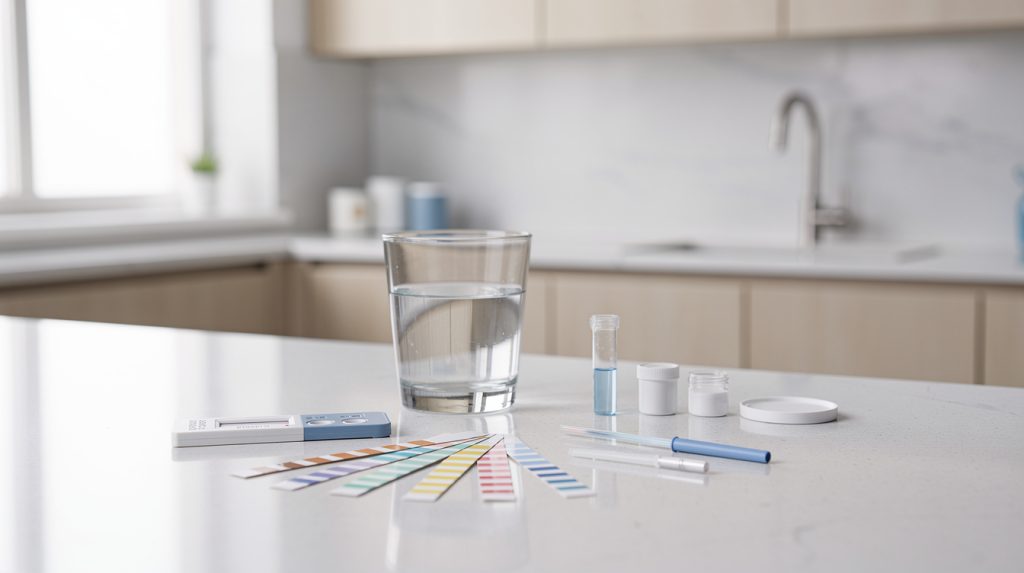
| Varify 17-in-1 | DIY test strips | Best value for quick checks of hardness, chlorine, pH and more | Strips screen; they don’t give lab-grade numbers |
| Health Metric | DIY kit | Repeat monitoring, with lead, copper and bacteria tests included | Colour-matching results can be hard to read |
| First Alert WT1 | DIY kit | Simple lead and basic safety screening | Narrow panel; some results are hard to read |
1. Tap Score (SimpleLab): Best Overall Lab Test
Tap Score is the kit reviewers recommend most. You collect samples at home, mail them to a certified lab, and get a detailed report online. It offers different panels for city water and private wells, plus targeted tests for lead, PFAS and other specific worries. Best for: anyone deciding on a serious filter purchase or testing a private well.
2. Safe Home Ultimate: Broadest Single Lab Kit
Safe Home sells both DIY and lab-based kits; its Ultimate lab test screens a wide range of contaminants in one go. Best for: homeowners who want one comprehensive baseline test.
3. Varify 17-in-1 Test Strips: Best Budget Screening
A low-cost pack of multi-parameter strips that checks things like hardness, chlorine, pH, iron and nitrates in about a minute. Best for: quick checks, spotting hard water, or confirming a filter is still working.
4. Health Metric Home Water Test Kit: Best for Repeat DIY Checks
A DIY kit with enough tests for periodic monitoring, including lead, copper and bacteria screens. Best for: households that want to recheck regularly without paying lab fees each time.
5. First Alert WT1: Simple Lead Screening
A basic drinking-water kit focused on lead plus a few common checks. Best for: a fast first look in an older home, followed by a lab test if anything shows up.
Rule of thumb: use DIY strips to screen and monitor, and a certified lab test before making a health decision or buying an expensive treatment system.
Who this guide is for
This guide is for a reader who is close to buying or testing something, not just browsing a definition. If you searched for best home water test kits, you probably want a practical decision: which kit to buy, which filter type to trust, whether a brand claim is enough, or how to avoid wasting money on the wrong solution.
I am deliberately cautious with water claims. A pretty product photo, a high review count, or a broad “removes contaminants” line is not enough when the concern involves drinking water. I want the product to say what it does, what it does not do, and what the homeowner still needs to verify.
With home water decisions, the best purchase is usually the one that reduces uncertainty, not the one with the loudest promise.
Lab test kit vs DIY test kit
| Testing option | Best for | Main limitation |
|---|---|---|
| Certified lab mail-in kit | PFAS, lead, bacteria, nitrates, metals, broad well-water checks | Costs more and takes longer |
| DIY strips | Fast screening for hardness, chlorine, pH, sometimes lead | Less precise and easy to misread |
| Digital meters | TDS, conductivity, some basic checks | Does not identify every contaminant |
| Local water report plus kit | City-water context before filtering | May not reflect your own plumbing |
For serious issues, I lean toward lab testing because it creates a clearer baseline before buying filters. DIY kits are useful for fast screening, but they can create false confidence if you use them for problems they were not designed to measure.
Contaminants and conditions to include
A good home water test kit choice starts with the source. City water often raises questions about chlorine, chloramine, lead from older plumbing, taste, odor, and hardness. Private wells can add bacteria, nitrates, iron, manganese, sulfur smell, arsenic, and local agricultural or industrial concerns.
| Water situation | What I would test first | Why it matters |
|---|---|---|
| Older home or apartment | Lead, copper, pH | Plumbing can change water after the city treats it |
| Private well | Bacteria, nitrates, hardness, iron, sulfur, metals | Well water is the homeowner’s responsibility |
| PFAS concern | PFAS-specific lab kit | PFAS cannot be confirmed by taste or smell |
| New filter purchase | Before-and-after targeted testing | Shows whether the treatment choice makes sense |
How I would make the decision for home drinking water testing
- Write down the exact concern: taste, lead, PFAS, fluoride, chloramine, bacteria, iron, sulfur smell, hardness, or sensitive skin.
- Decide whether the issue is drinking water only, shower water, or the whole home.
- Look for documentation that names the concern clearly.
- Compare first-year cost, replacement cost, and maintenance frequency.
- Choose the simplest option you will actually use and maintain.
Common mistakes to avoid
- Buying from a marketplace listing without checking the model-specific manual.
- Assuming all filters from the same brand have the same contaminant claims.
- Using taste improvement as proof of contaminant reduction.
- Ignoring replacement cartridges until the filter is overdue.
- Skipping water testing when the concern is serious or source-specific.
Cost and maintenance reality
The cheapest product is not always the cheapest household solution. If cartridges are small, hard to find, or expensive, the long-term cost can pass a better system quickly. I like to compare the first purchase separately from the second year, because the second year tells you what ownership really feels like.
I also check whether the product has a realistic replacement indicator. Calendar reminders are boring, but they keep filters from becoming forgotten plastic under the sink. For test kits, I save the result date and retest after major plumbing work, new well symptoms, flooding, or a local water advisory.
Questions I would ask before trusting a claim
First, is the claim specific? Second, does it apply to this exact model? Third, can I find the replacement cartridge or refill test later? Fourth, does the product solve the problem I actually have, or does it only improve taste?
Those questions keep the buying process grounded. A product can still be useful without solving every water problem. The key is knowing where it fits and where it does not.
How this fits Clean Water In Homes
Clean Water In Homes is not built around one perfect product type. A reader comparing bottled water, a renter buying a countertop system, a homeowner checking lead, and a private-well owner testing bacteria all need different paths. The common thread is evidence before confidence.
That is why I prefer practical buying guides that connect testing, documentation, filtration, and maintenance. The goal is cleaner decision-making, not panic and not blind trust.
Extra buying notes for cautious readers
One thing I have learned from comparing water products is that the household routine matters as much as the lab claim. If a filter is too slow, too awkward to install, or too expensive to maintain, people quietly stop using it. That turns a promising purchase into another item under the sink.
For best home water test kits, I would save the product manual, cartridge number, certification page, and purchase date in one place. This makes replacement easier and gives you a record of why you chose the product in the first place. If a later test result or local water notice changes the concern, you can compare the old decision with the new evidence instead of starting from confusion.
I would also avoid treating any single article, including this one, as a substitute for local data. City-water reports, private-well tests, building plumbing, and regional contamination history all affect the right decision. The more specific your starting point, the less likely you are to overbuy or underbuy.
FAQ
What is the first thing to check before buying best home water test kits?
Start with the exact water concern and then check whether the product or kit is designed for that specific issue.
Are product reviews enough to trust a water product?
No. Reviews help with usability, leaks, taste, and customer service, but contaminant claims should come from testing, certification, or a performance data sheet.
Should I test my water before buying a filter?
If the concern is lead, PFAS, bacteria, nitrates, arsenic, iron, sulfur smell, or a private well issue, testing first is usually the smarter path.
Is the most expensive option always better?
No. The best option is the one that matches your source water, documented concern, budget, space, and maintenance habits.
How often should I replace filters or retest water?
Follow the manufacturer schedule for filters. Retest when water taste, odor, plumbing, well conditions, flooding, or local notices change.
Shopping shortcut: Compare current options for home water test kit before you buy.
Check Current Prices on Amazon
As an Amazon Associate, Clean Water In Homes may earn from qualifying purchases.
Final verdict
My final rule is simple: do not buy a water product until you know what problem it is supposed to solve. If the documentation answers that clearly and the maintenance feels realistic, it is worth comparing. If the claim stays vague, keep looking.
For most homes, the best decision is not the biggest system or the trendiest brand. It is the option that matches the water source, verifies the concern, fits the routine, and stays maintainable after the first month.