
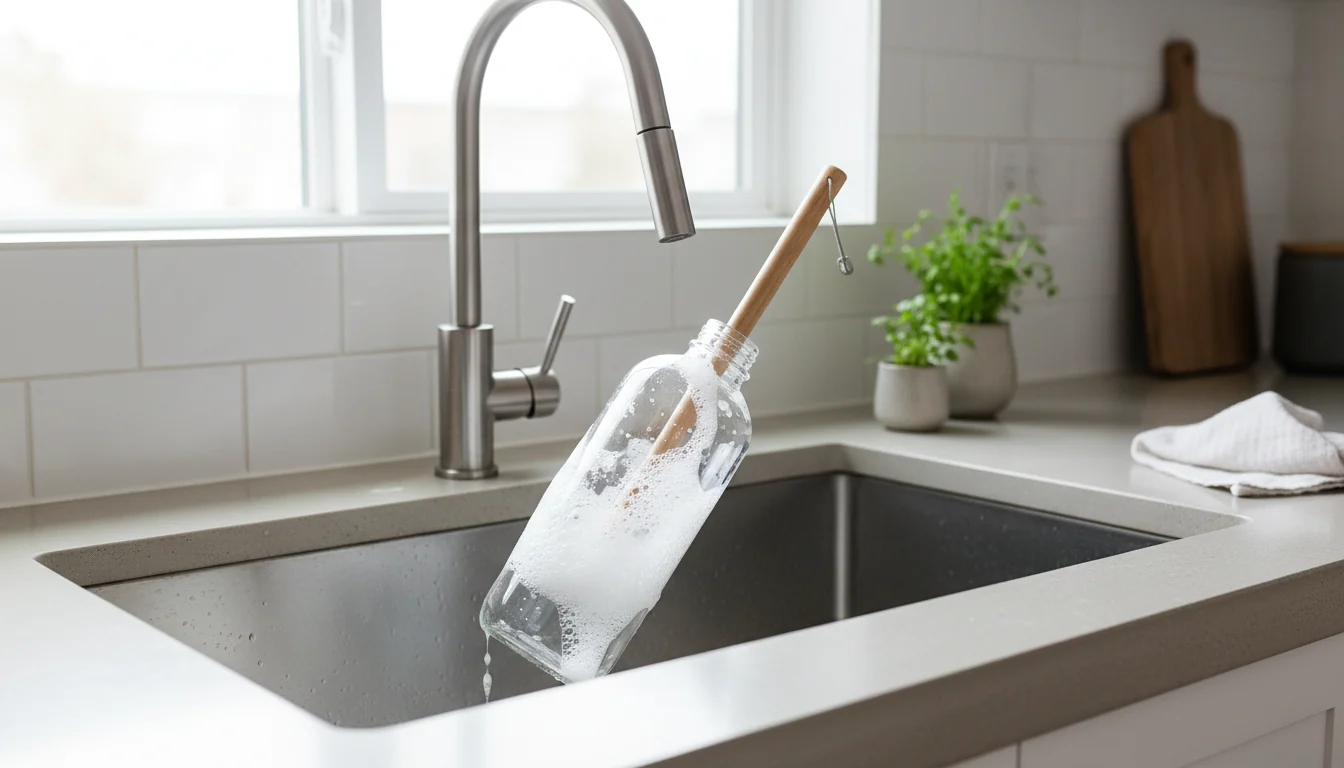
I clean a daily water bottle every day. That may sound fussy, but it is the simplest habit I know for keeping bottles from developing stale smells, slippery lids, or mystery buildup around the gasket. If the bottle only held plain water and I used it lightly, a thorough rinse might get me through the day. But before I use it again the next morning, I want it washed.
Reusable bottles spend a lot of time in warm cars, gym bags, desks, backpacks, and hands. Even when the water itself is clean, the bottle mouth and lid pick up residue from normal use. Cleaning is not about panic. It is about making the bottle pleasant enough that you keep using it.
The short answer
Wash your water bottle once a day if you use it daily. Clean the lid, threads, straw, spout, and gasket, not just the main bottle. If you use anything besides plain water, wash it as soon as possible after use.
For bottles used occasionally, wash them before storage and again before use if they have been sitting for a while. Store bottles open and dry, not sealed with moisture inside.
Why daily cleaning matters
A reusable bottle is a damp container with small crevices. The lid often has silicone seals, hinges, straws, bite valves, or sliding parts. Those areas can hold moisture and residue. Over time, that can lead to odors or visible buildup.
Plain water leaves less residue than juice, electrolyte drinks, protein shakes, or flavored water. But your mouth touches the drinking surface, your hands touch the cap, and the bottle may sit at room temperature for hours. A daily wash keeps small issues from becoming stubborn ones.
What needs the most attention
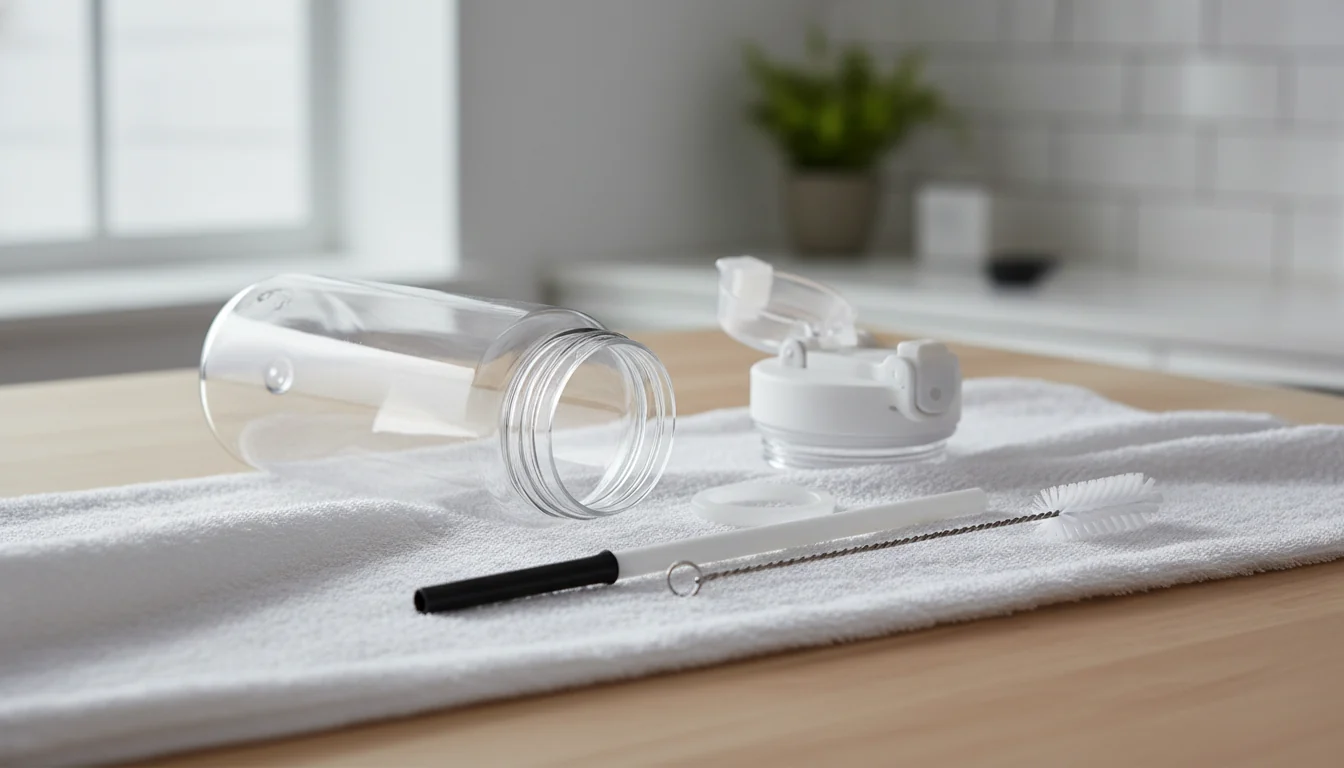
The lid is usually the dirtiest part. I pay attention to the drinking spout, screw threads, underside of the cap, straw connection, and rubber gasket. If the gasket is removable, I take it out occasionally and clean underneath it. Always check the manufacturer’s instructions because some seals are not meant to be pried out.
Straws need a narrow straw brush. Rinsing water through a straw is better than nothing, but it may not remove film inside the tube. Wide-mouth bottles are easier because you can see and reach more of the interior.
A simple daily cleaning routine
Empty the bottle. Rinse it with warm water. Add a little dish soap and warm water, then scrub the inside with a bottle brush. Wash the lid separately with a small brush or sponge. Run soapy water through straws and spouts. Rinse everything well.
Then let the parts air dry fully. I place the bottle upside down at an angle and leave the lid off. Sealing a damp bottle is one of the fastest ways to create a stale smell.
When to deep clean
Deep clean if the bottle smells musty, has visible residue, held something other than water, or was left in a car or bag for a long time. You can often use warm soapy water plus extra brushing. Some manufacturers allow diluted vinegar soaks or baking soda cleaning, but follow the bottle’s care instructions.
Avoid mixing cleaning chemicals. Do not combine bleach, vinegar, ammonia, or other cleaners. If a manufacturer provides sanitizing instructions, follow them exactly.
Dishwasher or hand wash?
Dishwashers are convenient, but not every bottle belongs there. Some plastic bottles can warp. Some insulated stainless bottles may lose finish quality or have manufacturer warnings against dishwasher use. Lids may be top-rack only.
If the bottle is dishwasher-safe, I still inspect the lid afterward. Dishwashers do not always reach inside straws, bite valves, or gasket channels. Hand cleaning those pieces may still be needed.
Cleaning after flavored drinks
Flavored water, sports drinks, coffee, tea, and smoothies change the cleaning rules. Wash the bottle as soon as you can. Sugars, acids, oils, and proteins can cling to lids and seals. Even a stainless bottle can smell like yesterday’s drink if the cap is neglected.
If you use a bottle for coffee or protein drinks, consider dedicating that bottle to those beverages instead of switching back to plain water. It keeps expectations realistic.
Signs your bottle needs replacing
Cleaning cannot fix everything. Replace a bottle if it has cracks, deep scratches, stubborn odors, damaged insulation, rust-like spots that do not clean away, or a lid that no longer seals. Replace straws and gaskets when they are worn or discolored if replacement parts are available.
For plastic bottles, scratches and cloudiness are especially important because they make cleaning harder. For stainless bottles, inspect dents around the mouth and lid threads if leaks start.
Storage tips
Store bottles dry with lids off or loosely placed. Keep parts together but allow airflow. If you store a bottle sealed, make sure it is completely dry first.
I also avoid leaving bottles half full overnight. Empty, rinse, wash, and dry is easier than dealing with stale water in the morning.
FAQ
Do I need to wash my water bottle every day if it only has water?
Yes, that is the best habit for a daily bottle. Plain water reduces residue, but the mouthpiece, lid, and hands still introduce normal grime.
Can I just rinse my bottle?
A rinse helps during the day, but it is not the same as washing with soap and scrubbing. Rinsing does not reliably clean lid crevices or straws.
Why does my bottle smell bad after washing?
The odor is often hiding in the lid, gasket, straw, or spout. Take apart removable pieces and let everything dry fully.
Are stainless steel bottles easier to clean than plastic?
Often, yes. Stainless steel tends to hold odors less than plastic, but the lid design matters more than the body material.
Final thoughts
If you use a bottle every day, clean it every day. Keep the routine simple: soap, warm water, a brush, attention to the lid, and complete drying. A clean bottle makes water taste better and makes the habit easier to keep.