
Apartment water filtration is a balancing act. You want better-tasting water, but you may not be allowed to drill holes, change plumbing, or install a large system under the sink. That is why countertop filters are so useful. The best countertop water filters for apartments are renter-friendly, movable, and practical enough for daily use.
I think of countertop filters as the middle ground between a simple pitcher and a permanent under-sink system. Some sit by the sink and connect to the faucet. Others are gravity-fed containers you fill by hand. A few are compact dispensers designed for the fridge or counter. Each style has strengths, and the right choice depends on your sink, space, water concerns, and patience for refilling.
Key takeaways
- Gravity countertop filters are easy to move and do not need faucet compatibility.
- Faucet-connected countertop filters can produce filtered water on demand, but they need the right faucet threads.
- Look for certifications or test data tied to the contaminants you care about.
- Measure your counter space before buying, especially in small kitchens.
- Renters should avoid systems that require drilling or permanent plumbing changes unless approved.
What counts as a countertop water filter?
A countertop water filter is any non-permanent filter system that sits on a counter or nearby surface. It may connect to the faucet with a diverter valve, or it may be filled manually like a dispenser. Most are designed to reduce taste, odor, chlorine, sediment, or specific contaminants depending on the filter media.
The important point is that countertop does not mean one-size-fits-all. A stainless gravity filter and a small faucet-connected carbon block unit are both countertop filters, but they behave very differently.
Best type for easiest apartment setup: gravity filters
Gravity filters are popular with renters because there is no plumbing connection. You pour water into the upper chamber, and gravity pulls it through the filter into the lower chamber. This style can be good for people with unusual faucets, pull-down sprayers, or lease restrictions.
The tradeoff is speed and footprint. Gravity filters take time, and larger units can dominate a small counter. They also need regular cleaning because stored water and damp parts require attention.
When comparing gravity filters, check the filter life, replacement cost, chamber material, and contaminant reduction claims. I also look for a stable base and a spigot that feels sturdy. A leaky spigot on a counter is no fun.
Best type for filtered water on demand: faucet-connected countertop filters
These units sit beside the sink and connect to the faucet with a small hose and diverter. Turn the diverter one way for regular tap water and the other way for filtered water. I like this style when it fits because you do not have to refill a reservoir.
The main issue is faucet compatibility. Many modern apartment faucets have pull-down sprayers, hidden aerators, or unusual threads. Those may not work with a standard diverter. Before buying, inspect the faucet tip and read the manufacturer compatibility notes carefully.
Faucet-connected units can also clutter the sink area. In a tiny kitchen, the hose and filter housing may feel intrusive. Still, for people who cook often and want filtered water for coffee, tea, and drinking, this can be a convenient setup.
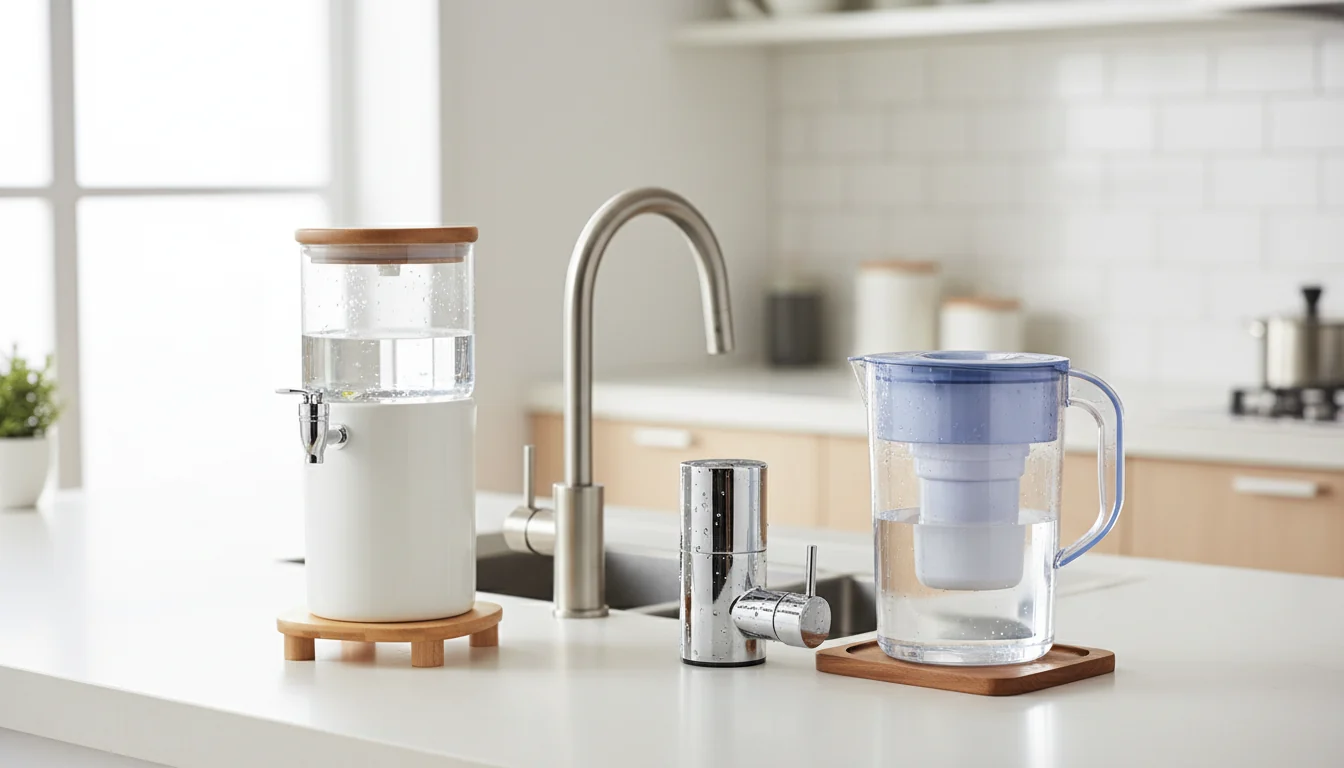
Best compact option: countertop dispensers and large pitchers
If space is tight, a large filter pitcher or countertop dispenser may be enough. These are simple, affordable, and easy to move. They are not always as fast or as high-capacity as faucet-connected systems, but they work in almost any apartment.
The downside is constant refilling. If two or more people drink filtered water daily, a small pitcher can feel like a chore. A larger dispenser can help, but then you need counter or fridge space.
Match the filter to your water concern
Do not buy based only on looks. Start with what you want the filter to do. If your main complaint is chlorine taste or odor, many activated carbon filters may help. If you are worried about lead, PFAS, VOCs, or other specific contaminants, look for independent certifications or clear third-party test data for those reductions.
If you are on a public water system, your annual water quality report can give useful context. If you are in an older building, lead can come from plumbing, so certified lead reduction may matter. If you have a private well, consider proper testing before choosing a filter.
Certifications and claims
I like seeing NSF/ANSI certifications because they connect a filter to specific performance standards. For example, a filter may be certified for chlorine taste and odor, lead reduction, cyst reduction, or other claims. Not every good product has every certification, but vague phrases like “removes toxins” are not enough for me.
Read the fine print. A filter can be certified for one contaminant and not another. It can also reduce something without being a complete solution for unsafe water. If your water is known to be contaminated above safety limits, get advice from your utility, health department, or a qualified water professional.
Apartment-friendly buying checklist
- Does it require permanent installation?
- Will it fit your faucet, if it connects to one?
- How much counter space does it need?
- What contaminants is it certified or tested to reduce?
- How often are filters replaced?
- What does replacement cost over a year?
- Is it easy to clean and refill?
Maintenance matters
A neglected filter can become unpleasant. Replace cartridges on schedule, wash reservoirs, and follow startup flushing instructions. If you travel or leave water sitting for a long time, clean the system before returning to normal use.
I also label replacement dates. It is easy to forget when a filter was installed, and guessing usually leads to using it too long.
FAQ
Are countertop water filters good for apartments?
Yes, they can be a strong choice because many do not require permanent plumbing changes. The best style depends on your faucet, counter space, and water concerns.
Do countertop filters remove lead?
Some do, but not all. Look for a filter specifically certified or tested for lead reduction. Do not assume all carbon filters handle lead.
Can I use a countertop filter with a pull-down faucet?
Usually not with standard faucet-connected models. A gravity filter or pitcher-style dispenser is often better for pull-down faucets.
How often should I replace the filter?
Follow the manufacturer schedule based on gallons or months, whichever comes first. Heavy use or poor source water may shorten practical life.
Final thoughts
For most apartments, I would choose the simplest filter that solves the real problem. If your faucet is compatible and you want on-demand filtered water, a faucet-connected countertop unit is convenient. If your faucet is unusual or you want zero installation, a gravity filter or dispenser is safer. Measure first, check claims carefully, and choose a system you will maintain without resentment.