
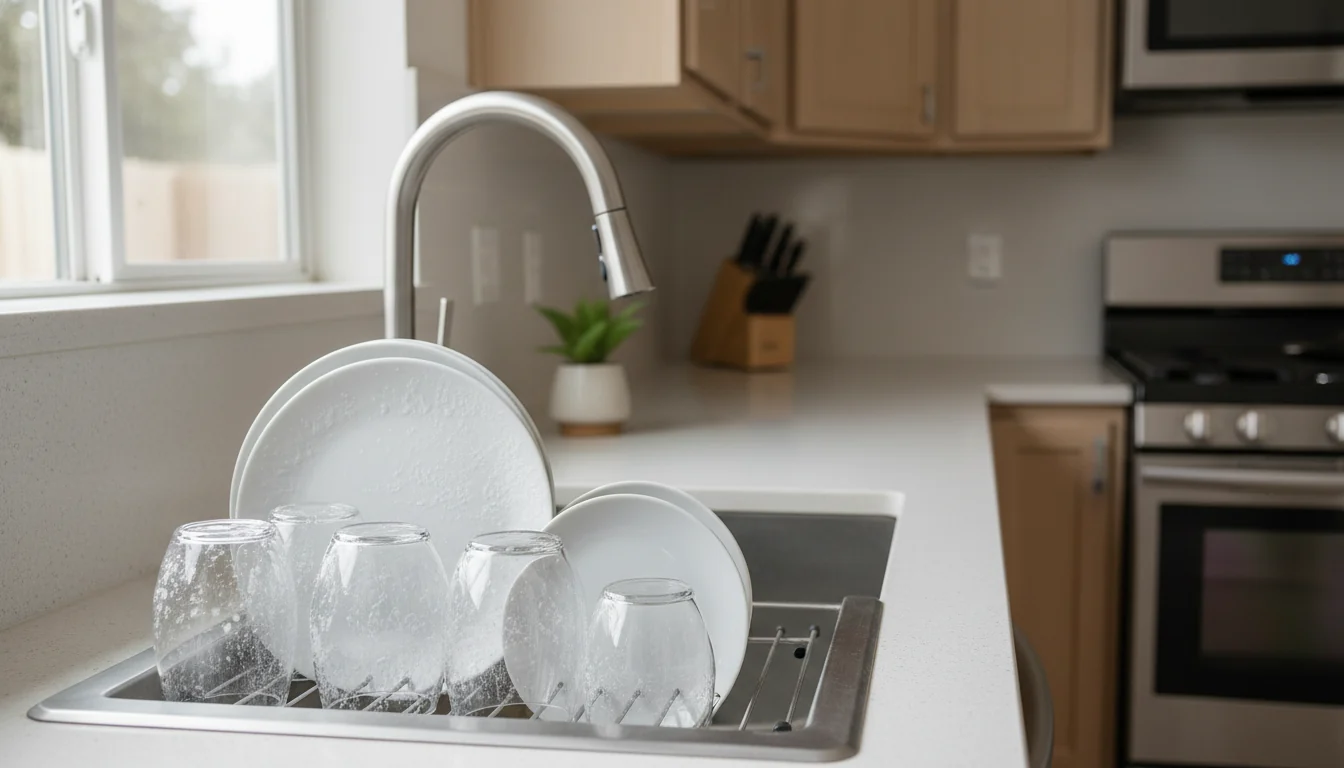
When I see a chalky white film on dishes, my first thought is usually hard water. Minerals in the water can dry on glassware, plates, silverware, and dishwasher walls, leaving that cloudy or dusty look. But hard water is not the only possible cause. Detergent residue, too much rinse aid, not enough rinse aid, low water temperature, and dishwasher loading can all make dishes look less clean than they are.
The good news is that white film is usually a practical nuisance, not a mystery. With a few simple checks, you can often narrow down the cause and decide whether you need to adjust the dishwasher, change detergent, clean the machine, or consider water treatment.
Key takeaways
- White film on dishes from water is commonly caused by hard water minerals.
- Detergent residue can look similar, especially if too much detergent is used.
- Vinegar can help you test whether the film is mineral scale, but use it carefully and do not mix it with cleaners.
- A dishwasher cleaner, better loading, and rinse aid adjustments may help.
- If hard water is severe, a softener or targeted filtration approach may be worth considering.
What the white film usually is
In many homes, the white film is mineral residue. Hard water contains dissolved minerals, especially calcium and magnesium. When water evaporates during drying, those minerals can stay behind as spots, haze, or chalky streaks.
You may notice it most on clear glasses, dark plates, stainless utensils, and plastic containers. Plastic can be especially frustrating because it dries differently and may hold residue more visibly.
If the film wipes away with a damp cloth or dissolves with a little white vinegar, minerals are likely part of the problem. If it feels slippery or soapy, detergent residue may be more involved.
Hard water versus detergent residue
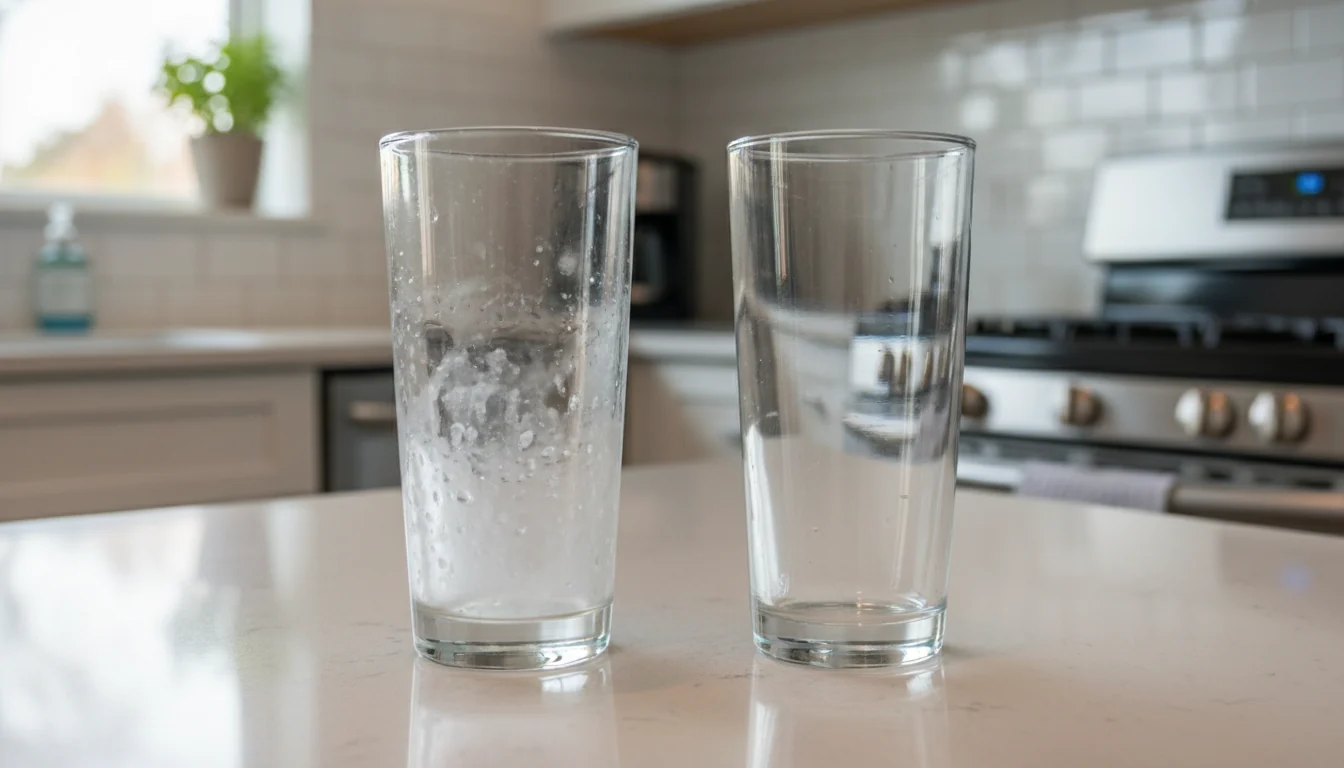
Hard water film often looks chalky, powdery, or cloudy. It may appear on the inside of glasses and around the dishwasher tub. Detergent residue can look cloudy too, but it may feel slick or leave a faint taste or smell.
One simple test is to soak a cloudy glass in plain white vinegar for a few minutes, then rinse it well. If the cloudiness improves, mineral deposits are likely. If nothing changes, the glass may be etched or the residue may not be mineral-based.
Etching is different from film. Etched glass has permanent microscopic damage and will not clear up with cleaning. It can happen over time from very soft water, high heat, harsh detergent, or repeated dishwasher cycles.
Why hard water leaves spots
Hard water is not necessarily unsafe by itself, but it can be annoying. The minerals can interfere with soap performance and leave scale on fixtures, kettles, shower doors, and dishes. In a dishwasher, the minerals meet heat and evaporation, which makes the residue more obvious.
If you also see crust around faucets, cloudy shower glass, or white buildup in a kettle, that supports the hard water theory. A simple hard water test strip can give you a rough idea of your water hardness. For a more complete picture, a lab test or local water quality report may be useful.
Dishwasher settings that can make it worse
Sometimes the water is only part of the story. A dishwasher that is overloaded, set to a short cycle, or not getting hot water at the start may leave residue behind. Detergent needs water movement, time, and proper temperature to rinse away well.
Before starting the dishwasher, I like to run the kitchen tap until the water is hot. That helps the machine begin with warmer water. I also avoid nesting bowls and spoons because blocked spray patterns can leave film in pockets.
Detergent amount matters
More detergent is not always better. In softer water, too much detergent can leave residue. In harder water, too little detergent may not clean well. Pods are convenient, but they are one-size-fits-most. If you have a smaller load or unusual water conditions, powder or gel can give you more control.
If you suspect detergent residue, try using less detergent for a few cycles, especially if your dishes feel slick. Also make sure the detergent is fresh and stored dry. Clumped or old detergent may not dissolve properly.
Rinse aid can help with spotting
Rinse aid helps water sheet off dishes during the drying cycle. That can reduce spots because fewer droplets are left to evaporate. If your dishwasher has a rinse aid dispenser, check whether it is empty and whether the setting is too high or too low.
Too little rinse aid may leave spots. Too much may create a different kind of residue. I adjust gradually and give it a few loads before judging the result.
How to reduce white film on dishes
Start with the low-cost fixes first. Clean the dishwasher filter if your model has one. Run a dishwasher cleaning cycle with a product designed for that purpose, following the label. Check spray arms for blocked holes. Load dishes so water can reach every surface.
Then adjust detergent and rinse aid. If you have very hard water, choose a detergent that performs well in hard water. If residue continues, test your water hardness. That tells you whether you are dealing with a dishwasher issue or a whole-home mineral issue.
When to consider water treatment
A standard drinking water filter may improve taste, but it usually will not solve dishwasher scale throughout the house. For hard water problems across fixtures and appliances, a water softener is the traditional solution. Some homes use scale-reduction systems, though results vary depending on water chemistry and expectations.
If you rent, you may not be able to install a softener. In that case, dishwasher adjustments, rinse aid, periodic cleaning, and realistic expectations may be the best path.
FAQ
Is white film on dishes harmful?
It is often mineral residue or detergent residue. That does not automatically mean the water is unsafe, but if you notice sudden changes in taste, odor, color, or health concerns, contact your water utility or test the water.
Can vinegar remove white film?
Vinegar can help dissolve mineral deposits on glassware. Use it separately from other cleaners, rinse well, and avoid using vinegar in ways your dishwasher manufacturer warns against.
Why are only my glasses cloudy?
Glass shows mineral spots more clearly than many materials. If vinegar does not improve the cloudiness, the glass may be etched, which is usually permanent.
Will a water filter fix white film on dishes?
A drinking water filter usually will not fix dishwasher film unless it treats the water feeding the dishwasher and is designed for the issue. Hard water problems often require softening or dishwasher-specific adjustments.
Final thoughts
White film on dishes is usually solvable once you stop guessing. Check whether the film reacts to vinegar, clean the dishwasher, adjust detergent and rinse aid, and test hardness if the problem keeps coming back. I like starting with the simple fixes, then using water treatment only when the pattern points clearly to hard water throughout the home.