

The filter light just came on, and you’re standing in the store aisle looking at a wall of white cartridges that all look about the same. Grabbing the cheapest one is tempting, but it’s a bad move. Fridge water filters aren’t universal, and a cartridge that doesn’t seat properly can leak or let water skip filtration entirely.
Quick answer: No, fridge water filters are not universal. Each brand, and often each model line, uses its own cartridge shape, seals and locking connection, so you need to match the filter to your fridge’s model number. Your real choices are an OEM filter or an NSF-certified compatible one, and “universal” inline filters are an add-on, not a replacement.
Are Fridge Water Filters Universal?
No. Every refrigerator maker designs its own cartridge, with its own shape, seals and locking mechanism, so nothing built to fit one slot is meant to fit them all.
Mechanically, a filter has three jobs. It must latch securely into the filter head, keep a leak-proof seal against the pressure of the incoming water, and trigger the valve in the housing so water can travel through the filter media. If any one of those fails, you get drips at the housing, a sluggish dispenser, or water that slips past the filter completely.
Brands don’t stick to a single design, either. Two fridges from the same manufacturer and the same year, say a French door and a side-by-side, can use completely different cartridges. Knowing it’s a Samsung or a GE tells you very little.
The most common buying mistake is going by looks. In a product photo, two cartridges may seem nearly the same yet differ in O-ring design or in where the locking tabs sit. Choose by shape alone and you’ll frequently bring home a filter that refuses to seat. If one doesn’t click in smoothly, don’t force it. Pulling it back out beats cracking the housing.
What Types of Fridge Filters Are There?
Most built-in filters are push-in, quarter-turn, grille or kick-plate mounted, or in-door and rear-mounted. Each type only fits housings designed for it. Where the filter lives tells you the type, but it never tells you the exact part number.
| Type / Location | How It Connects | Cross-Brand Fit | Check Before Buying |
|---|---|---|---|
| Push-in cartridge | Clicks straight into the filter head | Rare, and only through shared parts | Part number and O-ring style |
| Quarter-turn cartridge (inside fresh food compartment) | Twists a quarter turn to lock | Rare, and only through shared parts | Part number and tab position |
| Grille / kick-plate filter | Sits behind the grille at the bottom front of the fridge | Rare, and only through shared parts | Part number from your manual or the old filter |
| In-door or rear-mounted | Found on some older or smaller models | Rare, and only through shared parts | Model number, since older designs get discontinued |
| Universal inline filter | Mounts on the water supply line outside the fridge | Fits any fridge, but never touches the filter housing | What it’s certified to remove, and your supply line size |
The inline row is the only one that’s genuinely brand-neutral, and that’s because it never goes inside the fridge.
How Do I Find the Right Filter for My Fridge?
Start with your fridge’s model number, then match it to the filter listed in the owner’s manual or the manufacturer’s filter finder. It takes about five minutes and beats any guesswork.

- Find the model number. It’s usually on a sticker inside the fresh food compartment, along a side wall or the top. Snap a phone photo so you have it at the store.
- Check the manual. The owner’s manual lists the correct filter for your model. If you’ve lost it, search the model number on the manufacturer’s site for a PDF.
- Use the brand’s filter finder. Frigidaire, for example, has a “Find Your Water Filter” tool under Filter & Parts, and its support page advises using the same filter type that’s currently in your fridge.
- Read the old filter. The part number is usually printed on the cartridge body. Twist it out and look.
- Cross-reference before you pay. On any retailer listing, scroll to the compatible models list and look for your exact model number, not just your brand.
If you can’t find the model number, or the filter has been discontinued, the old cartridge is your best clue. Search its part number to see whether a newer number replaced it. If that goes nowhere, contact the manufacturer with your model number and ask what superseded it.
Are Samsung, Whirlpool, LG, GE and Frigidaire Filters Interchangeable?
Generally no. Each brand makes filters for its own housings, and the exceptions come from shared parts, not universality. Here’s the brand-by-brand picture:
- Frigidaire: Use the same type already in your fridge, and confirm it against your model number.
- Whirlpool: Runs several designs across its lines, so the filter in a neighbor’s Whirlpool may not fit yours.
- Samsung and LG: Each uses its own cartridge designs, and both vary by model line.
- GE: The GE MWF is a common one, but GE also has other designs, so check your model.
- Kenmore: Kenmore fridges are built by other manufacturers, so its filter numbers often overlap with another brand’s.
Real overlap does exist. The IcePure RFC0600A, for instance, is made as a replacement for both the GE MWF and the Kenmore 46-9991. That overlap exists because manufacturers reuse parts, and it doesn’t make the filter universal. Confirm it against your model number every time.
Are Compatible Filters as Good as OEM Filters?
Not always. “Compatible” often means only that the filter physically fits, and two filters made for the same model can perform very differently.
Frigidaire says its genuine filters offer three levels of carbon filtration and are NSF certified, and that look-alike filters aren’t guaranteed to deliver the same water quality. The type of carbon, the amount of media and the internal construction all shape how steady the flow stays, how prone the filter is to leaking, and how well it holds up across its service life.
Price matters, but it’s a poor quality signal on its own. OEM filters can run around $50, and with two changes a year that’s roughly $100 annually. A certified compatible filter designed for your exact model typically costs less and still fits correctly, so the savings can add up over several years. Extremely cheap filters, though, often cut corners on materials, testing and durability.
If your fridge is under warranty, read the warranty wording before switching to a non-OEM filter. If it’s unclear, ask the manufacturer.
To spot a bad listing, watch for these:
- No certification claim, or a claim you can’t verify
- Odd or misspelled branding
- A price far below every other seller
What Does NSF/ANSI Certification Actually Verify?
NSF/ANSI certification means a filter was independently tested to confirm it reduces the specific contaminants it claims to. It’s the best way to separate a real filter from a cartridge that merely fits.
- NSF 42 covers aesthetic effects, such as chlorine taste and odor.
- NSF 53 covers health-related contaminants, such as lead.
- NSF 401 and 372 also exist, covering other specific contaminants and lead-free materials.
Don’t trust a logo on the box alone. Look up the exact filter model in the NSF database and see which claims are listed. Some filters are certified only for taste and odor. That’s fine for better-tasting water, but it says nothing about lead or other health-related contaminants.
Is There a Universal Inline Filter for a Fridge?
Yes, but inline filters mount on the water supply line outside the fridge and never replace a built-in cartridge. When a product is sold online as “universal,” this is almost always what you’re getting.
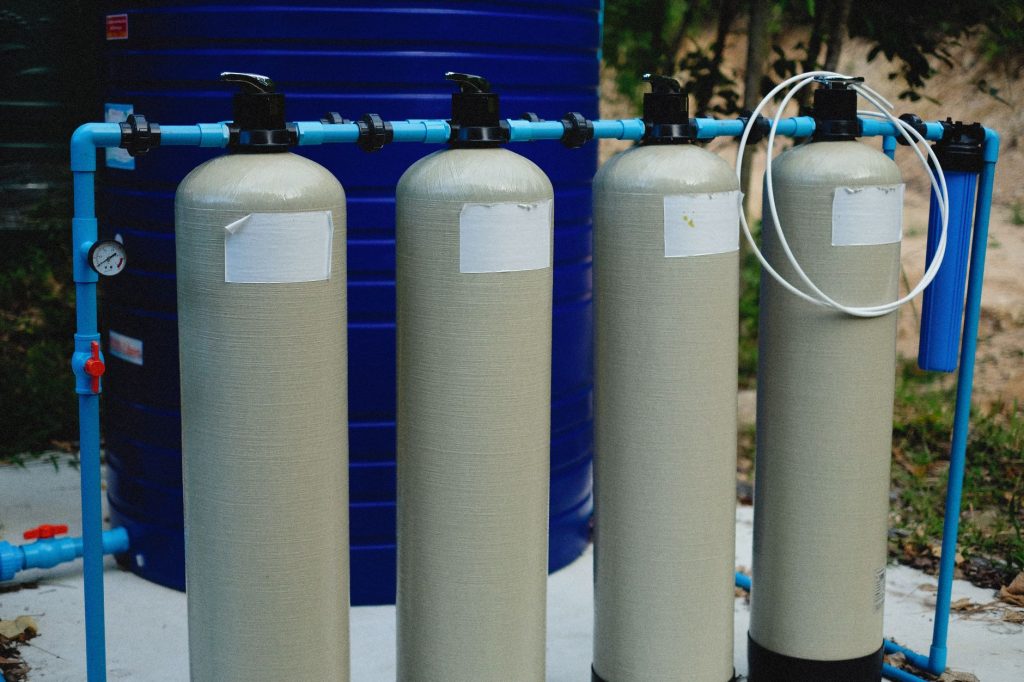
They make sense in two cases: your fridge has no built-in filter, or you want extra filtration upstream of the one you have. Installation means tapping into the supply line, usually with a connector kit in the box.
Capabilities vary a lot by product. Check what it’s certified to reduce, such as chlorine or lead, and compare that with your built-in cartridge. Pair the two and you’re adding coverage, not swapping parts.
What Happens If I Use the Wrong Filter or None at All?
A filter that doesn’t seat can leak, slow the dispenser or let water bypass filtration, and running with no filter leaves your water untreated.
Watch for drips around the housing, weak flow from the dispenser, or water that tastes the same as before. Any of those points to a poor seal or a mismatched part. Stop using the filter, wipe up any water, and recheck the part number against your model before trying again.
Most fridges can run with a bypass plug in place of the filter. It’s a reasonable short-term fix while you wait on a delivery, but the water isn’t being filtered, and taste and ice quality may suffer.
As for timing, plan on a change roughly every six months. The indicator light often comes on around then, and one Frigidaire owner reported exactly that after about six months of ownership. An exhausted filter stops doing its job and can slow your water flow.
The Bottom Line: Match the Filter to Your Model
Fridge filters aren’t universal, so buy by model number. Confirm the part number first, then choose either the OEM filter or a compatible one whose NSF certification you’ve verified. If you want extra protection, add an inline filter on the supply line, but don’t count on it to fill the cartridge slot.
Check current options, prices and reviews for refrigerator water filters side by side before deciding what fits your home best.
As an Amazon Associate, Clean Water In Homes may earn from qualifying purchases.
Frequently Asked Questions
Do I need to flush a new filter?
Yes. Run water through it as your manual directs, usually a few gallons, to clear trapped air and loose carbon fines. Expect some sputtering and cloudy water at first.
How do I reset the filter light?
Hold the reset button on the control panel, usually for a few seconds. Exact steps differ by model, so check your manual.
Do I need to shut off the water before swapping a filter?
Your manual has the final word. Many built-in filters twist or click out without tools, but a little water can spill, so keep a towel handy.
Do unused filters expire?
Sealed filters keep for a limited time. Store them dry and in their packaging, and check the box for any date guidance.
Sources and further reading
- Refrigerators – How do I know which water filter I need for… (owner.frigidaire.com)