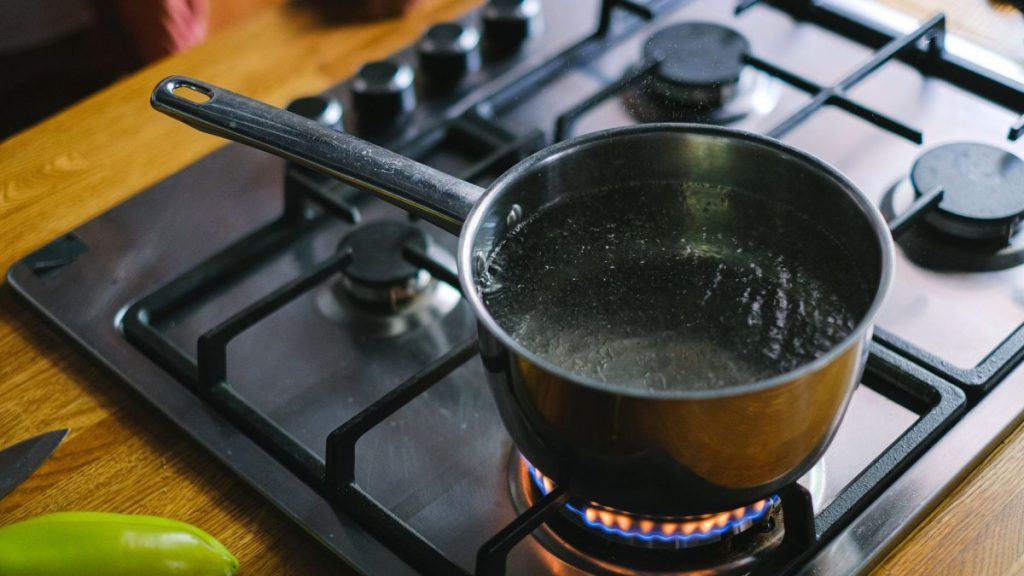

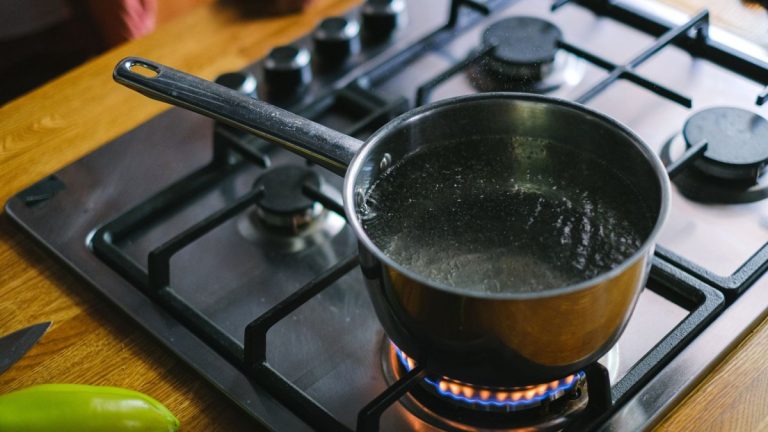
A lot of people assume boiling makes any tap water safe. For lead, that’s wrong. Lead is a dissolved metal, not a germ, so a rolling boil leaves it in the pot.
Quick answer: No, lead does not boil out of water. Boiling can even raise the lead concentration slightly as water evaporates. To cut your exposure, use cold tap water, flush the tap, run it through a filter certified for lead, and test your water.
Does Lead in Water Boil Out?
No. Boiling doesn’t remove lead, and it can nudge the concentration up as water turns to steam, because the metal stays behind in the pot. Both the Minnesota Department of Health and the NRDC say so plainly.
Heat works on living things and gases. It kills bacteria and viruses, and it drives off some dissolved gases. Lead is neither, so there’s nothing for heat to destroy or release.
The myth probably comes from boil-water advisories, which really do tell you to boil. Those are about microbes. A lead notice is a different problem with a different fix.
What if you’re under both? Boiling still kills germs, so don’t skip it. Run cold water through a lead-certified filter first, then boil that. The sections below cover what actually works for lead.
Where Does Lead in Tap Water Come From?
Almost always, from your pipes. Lead rarely shows up in rivers, lakes or aquifers. It usually gets into water after it leaves the treatment plant, leaching or flaking from old plumbing, either the service line from the street or the pipes inside your home.
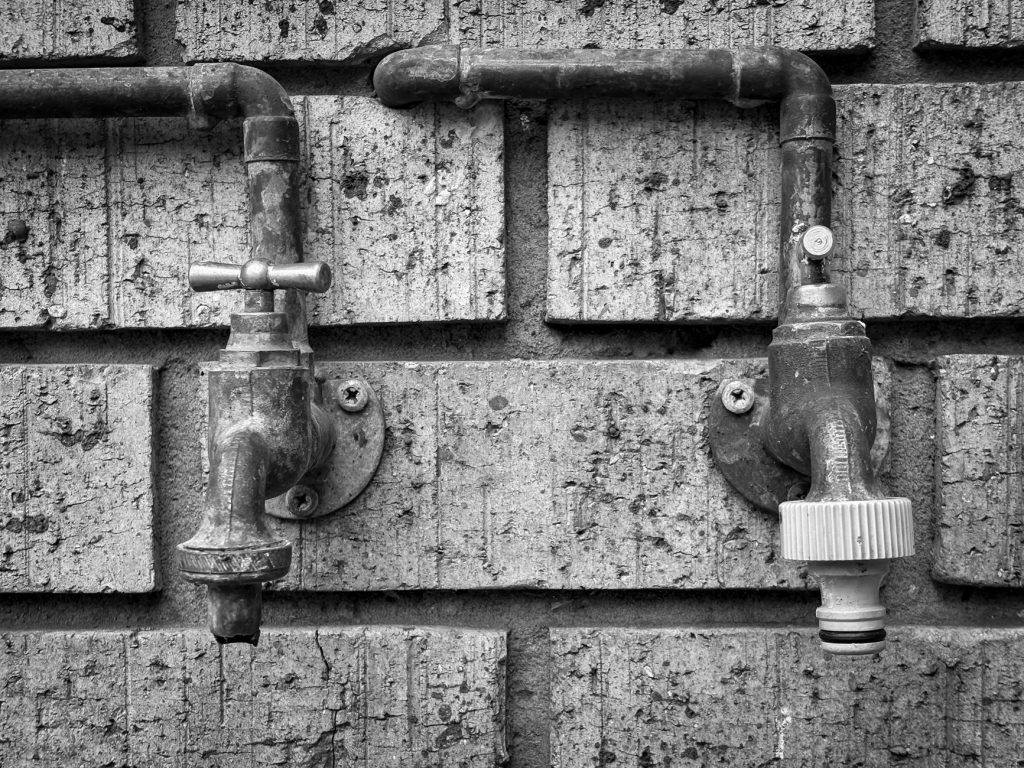
Homes built before 1940 may have a lead service line connecting them to the public main. Plumbing installed before 1986 may include lead parts. Even newer “lead free” pipes and fittings can legally contain up to 0.25% lead, and brass fittings, including many faucets, may contain some too.
Corrosion matters a lot. When a utility doesn’t adequately control how corrosive its water is, far more lead comes off the pipes. Flint, Michigan is the best-known example of what happens when that goes wrong.
You can’t see, smell or taste lead. Clear, good-tasting water can still carry it. Only testing tells you.
How Dangerous Is Lead, and Who Is Most at Risk?
Health experts agree there is no safe level of lead exposure. Infants, young children and pregnant women face the greatest risk.
Lead can damage the brain and kidneys, and it interferes with making the red blood cells that carry oxygen. In children, its effects on the brain have been linked to lower IQ. In adults, exposure can do lasting harm to the heart and blood vessels, the nervous system, fertility and thinking ability. Adults with high blood pressure or kidney problems are affected by low levels more than healthy adults.
Lead also lingers. It can be stored in bones and released later in life. During pregnancy, a baby can receive lead from the mother’s bones, so past exposure matters too.
If you have kids and just got a notice or a positive result, ask your pediatrician about a blood lead test. It’s a simple draw, and it tells you where you actually stand.
Is Water with Lead Safe to Drink, Cook with, or Shower In?
Don’t drink or cook with it untreated. Use only cold tap water, because hot water pulls more lead from pipes. Showering and bathing are low risk, since swallowing lead is the main danger.
Cold water applies to everything you eat or drink: drinking, cooking, coffee, soup and baby formula. Never take water from the hot tap and boil it. It starts with a higher lead load, and boiling won’t fix that. For the same reason, don’t use water from a water heater tank for cooking.
Filter cold water for formula. Infants take in a lot of water relative to their size, mostly through formula, so this is where to be most careful.
Skin absorbs very little lead. Showers, baths, laundry and dishwashing are generally fine. Brushing teeth is the gray area. Use filtered water so you don’t swallow any.
How Long Should I Run the Tap to Flush Lead?
Run the cold tap until the water turns noticeably colder. After the water has sat for hours, that usually takes 30 seconds to a few minutes. Flushing lowers lead but doesn’t eliminate it.
- Wait until you need the water, then turn on the cold tap fully.
- Let it run until it feels distinctly colder. That means fresh water is arriving from the main rather than water that sat in your pipes.
- If you know you have lead pipes outside, keep it running longer than that.
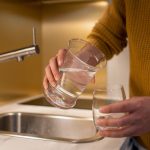
- Fill a pitcher or bottle for drinking and cooking.
Do this after the water has been stagnant, such as overnight or while you’re at work. It’s a habit for the first draw of the day, not for every glass.
Take the faucet aerator off and rinse it every so often. The little screen traps debris, including lead particles.
Tip: Catch the flush water in a bucket and use it for houseplants or the garden. Just know flushing does little if the lead is coming from the faucet itself, such as brass fittings. For that, you need a filter.
Which Filter or Method Actually Removes Lead?
A filter certified for lead reduction (NSF/ANSI 53 or 58) or a reverse osmosis system works. Boiling doesn’t. Replacing lead pipes is the only permanent fix.
| Method | Removes lead? | Caveats |
|---|---|---|
| Boiling | No | Can concentrate lead as water evaporates |
| Flushing the tap | Reduces it | Doesn’t eliminate lead or help with lead from the faucet |
| Certified filter (NSF/ANSI 53) | Yes | Must be rated for lead; replace cartridges on schedule |
| Reverse osmosis (NSF/ANSI 58) | Yes | Costs more; usually treats one tap; wastes some water |
| Distillation | Yes | Slow and small-batch |
| Water softener | Not reliably | Don’t count on it for lead |
| Bottled water | Usually lower lead | Ongoing cost; good short-term for formula |
| Replacing lead pipes | Fixes the source | Costly; may depend on your utility and your home’s plumbing |
Not every filter handles lead. Many pitchers and fridge filters only improve taste, so look for the NSF/ANSI 53 lead claim on the package. Then follow the replacement schedule. A clogged or expired cartridge stops doing its job.
Before you buy, check the filter’s capacity and whether it fits your faucet. A faucet-mount unit won’t suit every spout, and under-sink systems need a bit of installation.
Tip: Look up the filter’s model on the NSF certification database rather than trusting the front of the box. The listing shows exactly what it’s certified to reduce.
How Do I Test My Water and Check for Lead Pipes?
Use a state-certified lab to test your tap water, and check your utility’s service line inventory and Consumer Confidence Report to learn what pipes serve your home.
Start with your utility, since some offer free or low-cost test kits. Otherwise, find a certified lab and follow its sampling instructions closely. Most ask for a “first-draw” sample, meaning water that sat in the pipes for several hours before you collect it.
To check your pipes, begin with your home’s age. Then find the pipe where water enters, usually near the meter. Scratch it gently with a key. Lead is soft and shows shiny silver under the scratch, and a magnet won’t stick to it. Your utility’s inventory may also list the material of your service line.
When results come back, remember the EPA action level is a regulatory trigger for utilities, not a safe level. Since no level is safe, a low but detectable result is still a reason to filter.
Your Consumer Confidence Report is the annual water quality report your utility sends. It shows lead data for the whole system, which makes it a good starting point, but it doesn’t replace testing your own tap.
What Does the EPA’s Lead Rule Require of Utilities?
Under federal rules, water utilities must replace almost all lead service lines by 2037. That’s the target of the EPA’s Lead and Copper Rule Improvements, released in October 2024.
The rule also requires better lead testing and a complete inventory of lead service lines. Separately, the Safe Drinking Water Act obliges community water systems to send customers an annual water quality report and to respond if lead contamination turns up. A water utility trade association has taken the 2024 rule to court, so the schedule could change.
Thirteen years is a long wait, so don’t count on it. Ask your utility what your service line is made of and when it’s scheduled for replacement. Until then, keep filtering and testing.
Your Next Steps
Skip the boiling. Start with a test, then put a lead-certified filter on the tap you drink from and flush the cold tap first thing in the morning.
Prioritize infants and pregnant women. Then check your records, ask your doctor about a blood lead test for the kids, and keep pressing your utility on replacing lead pipes.
Check current options, prices and reviews for lead-removing water filters side by side before deciding what fits your home best.
As an Amazon Associate, Clean Water In Homes may earn from qualifying purchases.
Frequently Asked Questions
What kills lead in water?
Nothing, because lead is a metal, not a living organism. You can only remove it with a lead-certified filter or reverse osmosis, or by replacing the source.
Is my water safe if my home was built after 1986?
Not automatically. Newer plumbing is much better, but “lead free” parts and brass faucets can still contain small amounts. A test is the only way to know.
Is water with lead safe for pets?
Pets can be harmed by lead too. Give them the same water you’d give the family.
Can lead exposure be reversed?
Stopping exposure prevents further harm, but damage can be irreversible, and lead stored in bones can be released later. See a doctor about testing.
Sources and further reading
- Let it run … and get the lead out! – MN Dept.… (health.state.mn.us)
- How to Protect Yourself from Lead-Contaminated Water (nrdc.org)